Blue apatite and angelite pair a clarifying stone with a calming one. Apatite is traditionally kept for clear thinking and honest speech, while angelite is kept for gentleness and quiet reassurance. Together they suit anyone who needs to say something difficult kindly.
Key takeaways
- Blue apatite is traditionally kept for clarity, focus and speaking plainly.
- Angelite is kept for calm, reassurance and gentle communication.
- Both are soft. Apatite sits around 5 on the Mohs scale and angelite around 3.5, so neither belongs in a ring.
- Angelite must stay dry. It is an anhydrite, and prolonged water changes the mineral over time.
- Both sit with the throat centre in chakra practice, which is why they pair so naturally.
What blue apatite brings
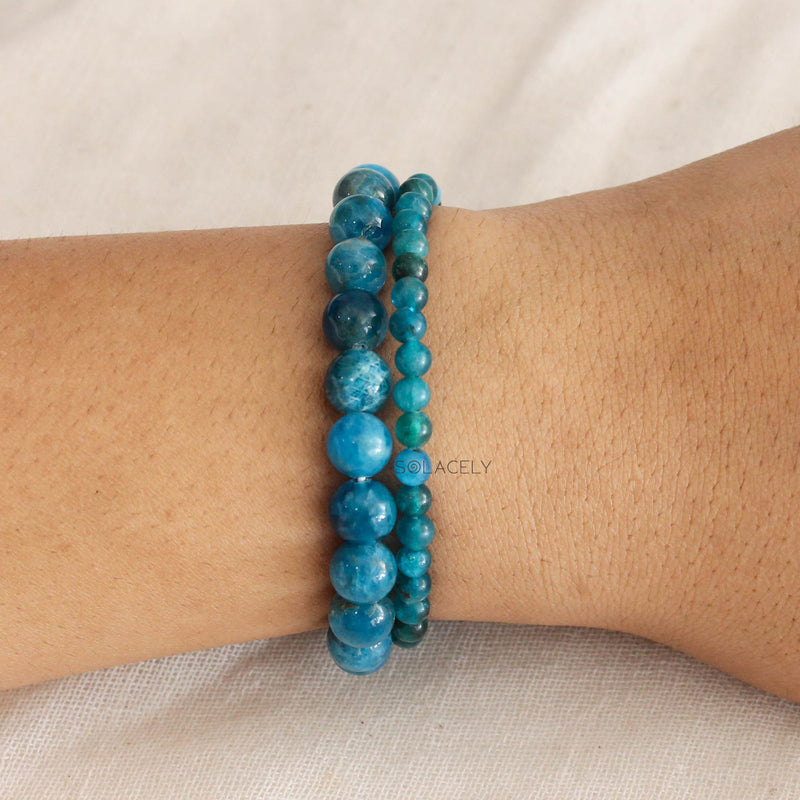
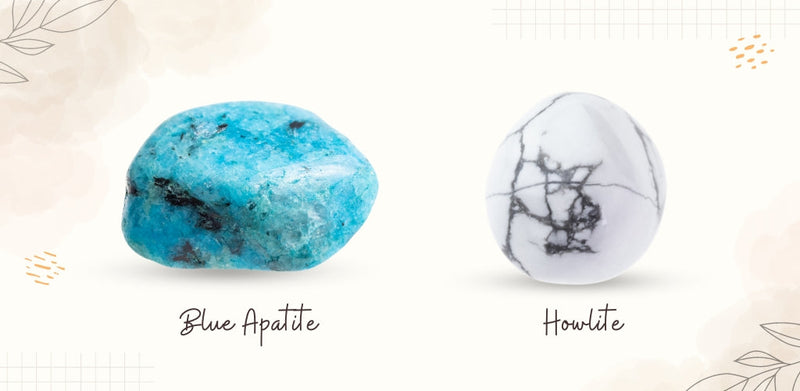
Blue apatite is a calcium phosphate, and its colour ranges from a soft sea blue through to a vivid neon teal that is genuinely striking in daylight. That brightness is a large part of why people are drawn to it.
In crystal tradition it is the clarity stone, kept for cutting through mental fog and for saying what you actually mean. People reach for it before conversations that have been circling for a while, and before any task where the difficulty is not effort but knowing where to begin.
Its one practical limitation is softness. Apatite sits around 5 on the Mohs scale, which is soft enough that everyday knocks will mark it, so pendants and tumbled pieces suit it far better than rings. That is worth knowing before you fall for the colour.
What angelite brings
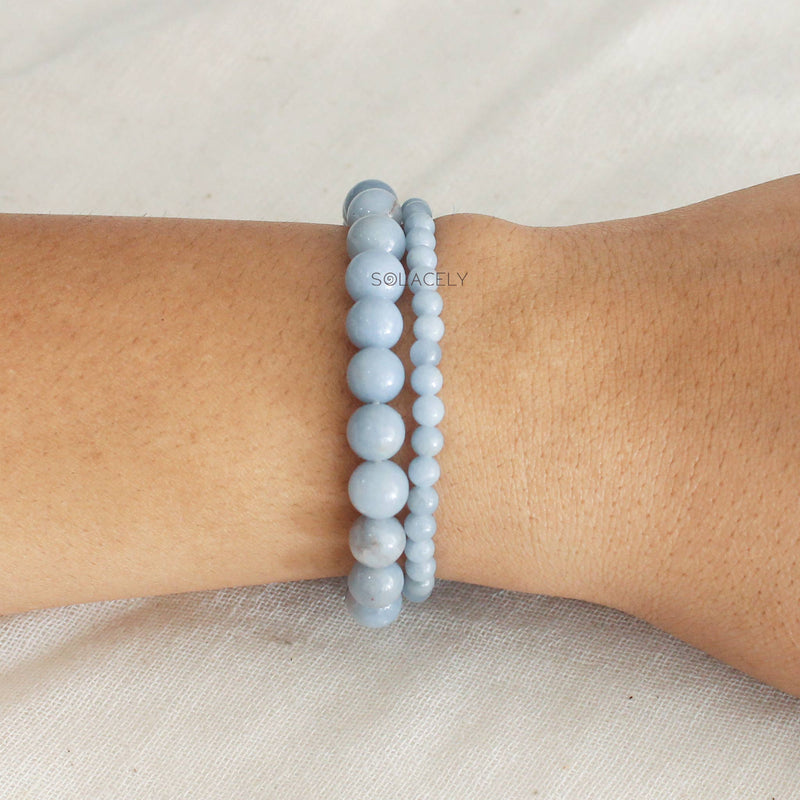
Angelite is the trade name for a pale blue anhydrite, and its soft, almost powdery blue with fine white marbling is unmistakable. It looks like a clear sky seen through thin cloud, and the name follows the look.
Traditionally it is kept for calm, reassurance and the sense of being accompanied rather than alone with something. It is a gentle stone in every respect, and people commonly keep it during periods of grief, waiting, or any stretch where the difficulty is holding steady rather than deciding.
It is also the softer and more delicate of this pair, at around 3.5 on the Mohs scale, and it needs to stay dry. Anhydrite reacts with water over time, so angelite should never be soaked, cleansed in water, or kept anywhere humid. A dry cloth is all it wants.
Why the pairing works
Both stones sit with the throat centre in chakra practice, which is the traditional reason they are put together, and in practice they cover two halves of the same difficulty: knowing what to say, and saying it kindly.
Apatite handles the clarity. It is the stone for working out what the actual point is, underneath everything that has accumulated around it. Angelite handles the delivery, and the softness that keeps a clear statement from landing as a blunt one.
That makes the pairing unusually specific. People reach for it before a conversation with a family member, before raising something at work that has been left too long, and before any exchange where being right is less important than being understood.
Comparing blue apatite and angelite
| Blue apatite | Angelite | |
|---|---|---|
| Mineral | Calcium phosphate | Anhydrite, a calcium sulfate |
| Look | Sea blue to vivid neon teal | Pale powdery blue with white marbling |
| Hardness | Around 5 Mohs | Around 3.5 Mohs |
| Traditionally kept for | Clarity, focus, speaking plainly | Calm, reassurance, gentle delivery |
| Water | Brief wipe only | Never. Keep it dry |
| Best format | Pendant, tumbled stone | Tumbled stone, display piece |
Neither is a hard stone, so the practical rule for this pair is simple: keep both away from the quartz family in storage, and give each its own pouch.
How to use the pair
Because both are soft, the sensible practices are gentle ones. Nothing here needs to be worn hard.
- Before a difficult conversation. Apatite held while you work out the point, angelite held while you decide how to say it.
- On a desk. Apatite where you write, since that is where clarity is needed.
- Bedside. Angelite, which suits the quieter end of the day.
- As tumbled stones. The most practical format for both, and the easiest to keep safe.
If communication is the whole reason you are here, crystals for the throat chakra covers the wider group, and crystals for clarity and peace covers the calmer half of the same intention.
Caring for both
Angelite is the one to be careful with. Keep it dry, always. No water cleansing, no salt, no humid bathroom shelf, and no soaking of any kind. A soft dry cloth restores the surface, and that is genuinely all it needs.
Blue apatite tolerates a brief wipe with a barely damp cloth, dried straight away, but it is happier kept dry too. Avoid ultrasonic and steam cleaners entirely for both stones, since neither is hard enough to take the vibration.
For energetic cleansing, moonlight, sound or a rest on selenite all suit the pair, and none of those risk the surfaces. Store them separately from harder stones, and check the edges occasionally for chips, since both mark more easily than most of a collection. For the other apatite pairings, see blue apatite and howlite and blue apatite and lapis lazuli.
Who this pairing suits
It suits people with something to say and a reason to say it carefully. The recurring picture is somebody who has been avoiding a conversation, not because they do not know what they think, but because they are worried about how it will land.
It suits less well anyone wanting drive or protection, since neither stone is traditionally kept for either. And for anyone who wants a set they can wear roughly every day, both stones are soft enough that a harder pairing would simply survive better.
Choosing the two stones
With blue apatite, colour is the whole decision. It runs from a soft, almost dusty sea blue through to a vivid neon teal, and the brighter material commands more attention while the softer tones are easier to live with daily. Both are properly apatite, so choose the one you would rather see on a shelf.
Look for an even polish without dull patches, and check the edges carefully. Because apatite is soft, pieces pick up small chips in transit more often than harder stones, and a chipped edge on a tumbled piece is the most common thing to spot.
With angelite, look for that characteristic pale blue with fine white marbling running through it. A piece with some visible veining generally reads more interesting than a completely flat one, and the material is inexpensive enough that you can simply pick the pattern you like best.
Using the pair before a conversation
The practice most people settle into is small and takes a couple of minutes, which is why it survives the weeks when it is most needed.
- Apatite first. Held while you write down, in one sentence, what the actual point is.
- Angelite second. Held while you consider how the other person will hear it.
- Both in a pocket. Carried on the day itself, so the preparation stays with you.
- Afterwards. Set them down together, which marks the thing as finished rather than replayed.
The properties described here reflect traditional and cultural belief around crystals. They are offered for reflection and wellbeing and are not medical advice, a diagnosis, or a treatment for any condition. If you are managing a health concern, please speak with a qualified healthcare professional. Keep small stones away from young children, and never place crystals in drinking water.
Sources
Written by Chetena Sharma. Reviewed by the Solacely editorial team.
Frequently asked questions
About the author


Written by Chetna Sharma, crystal healing practitioner and co-founder of Solacely. Chetna has worked with healing crystals for over a decade and curates Solacely's protective stone collection.