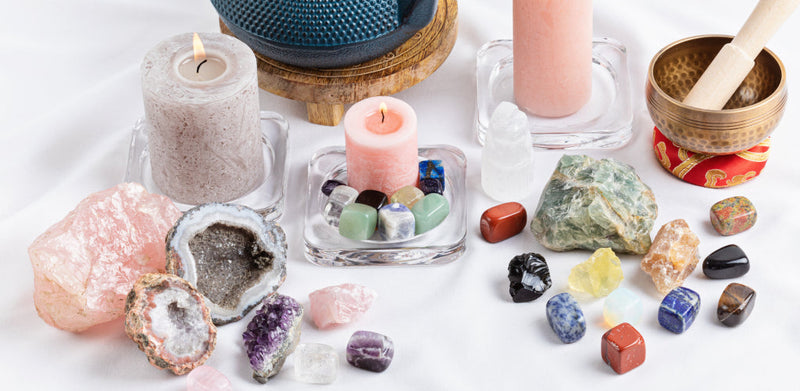
The safest birthday crystal is the recipient's birth-month stone: garnet for January, amethyst for February, and so on down the calendar. The better gift is usually the one matched to what is actually going on in their life, a new job, a hard year, a first home.
Key takeaways
- A birth-month stone is the dependable default. A stone chosen for the year they have just had is the more personal gift.
- Several months give you more than one stone to choose from. June has pearl, moonstone and alexandrite. December has turquoise, zircon and tanzanite.
- Choose by what the person is dealing with if you know them well. Fall back on the birth month if you do not.
- Match the format to the person: bracelets for daily wearers, tumbles for beginners, trees and pyramids for people who already own jewellery.
- Match hardness to habits. Quartz-family stones at 7 on the Mohs scale suit someone hard on their belongings, while softer stones shine as display pieces.
Which crystal makes the best birthday gift?
The best birthday crystal is the one that fits the person, with their birth-month stone as a reliable fallback. Birthstones work because the choice explains itself. If you know what the past year has thrown at them, a stone picked for that situation lands harder than a calendar stone does.
Two questions settle most of it. Does this person wear jewellery, and do they already own crystals? Someone who wears a watch and nothing else will not start with a beaded bracelet, and someone with a shelf of tumbles does not need an eleventh rose quartz. Answer those two, and the shortlist shrinks fast.
Budget matters less than people assume. A single well-polished tumbled stone in a small box reads better than a cheap strand that snaps in a fortnight. Spend on finish and presentation rather than size. If you want the whole calendar in one place, our birthstones by month guide lists every option with its alternates.
What is the birthstone for every month?
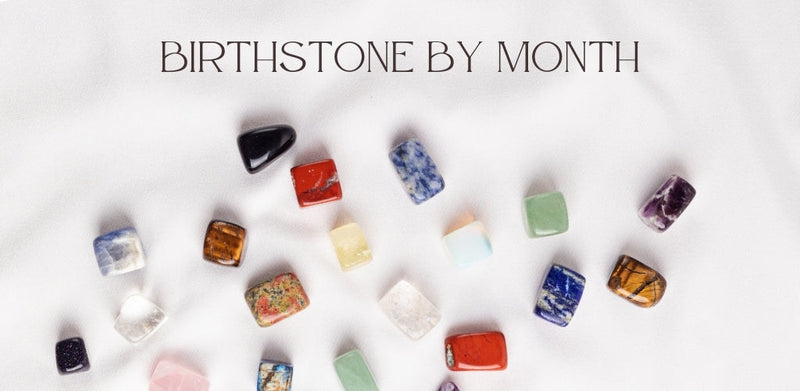
Every month has at least one modern birthstone, and five months have several. The list jewellers work from today was standardised in 1912 by the American National Association of Jewelers, and stones have been added to it since. Where a month offers a choice, take the one that suits the person.
| Month | Modern birthstone | Worth knowing |
|---|---|---|
| January | Garnet | Deep red is standard, but garnet also occurs in orange and green. |
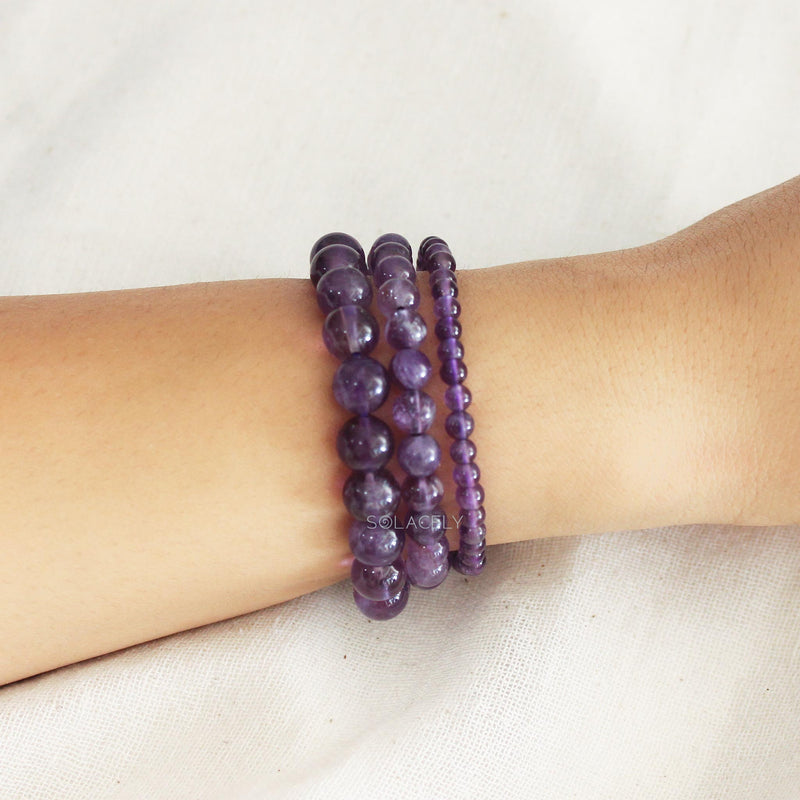
| February | Amethyst | Purple quartz, hard-wearing at 7 on the Mohs scale. |
| March | Aquamarine, bloodstone | Pale blue or the green stone flecked with red. |
| April | Diamond | Clear quartz is the usual stand-in on a crystal budget. |
| May | Emerald | Green aventurine and jade are common lower-cost substitutes. |
| June | Pearl, moonstone, alexandrite | Three official stones. Moonstone is the easiest to source. |
| July | Ruby | Red garnet and carnelian stand in at a fraction of the price. |
| August | Peridot, spinel, sardonyx | Spinel is the newest addition to the month. |
| September | Sapphire | Lapis lazuli and sodalite are the popular blue alternatives. |
| October | Opal, tourmaline | Opal needs careful handling. Pink tourmaline travels better. |
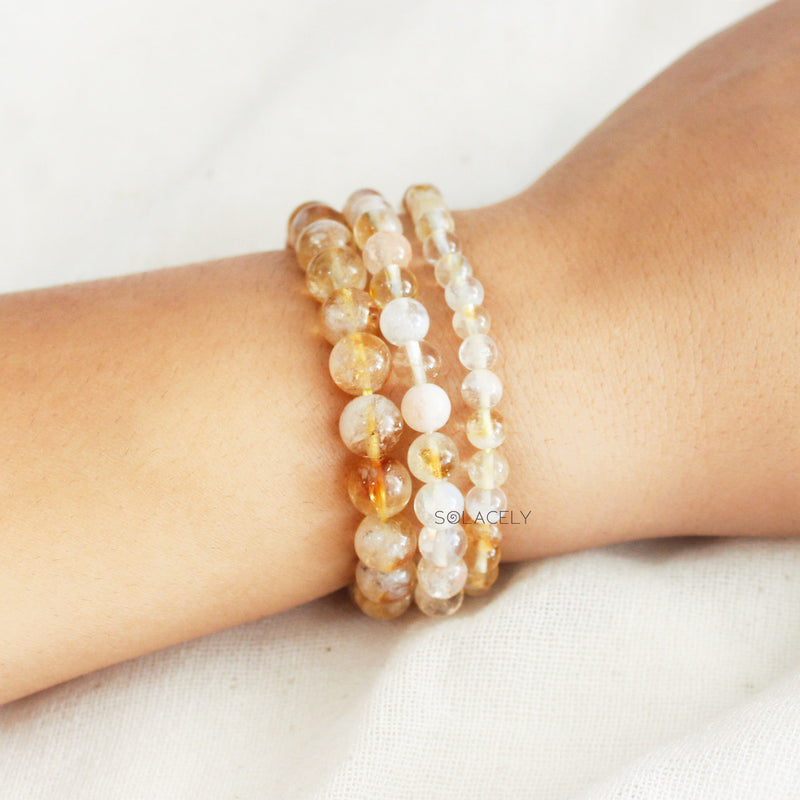
| November | Topaz, citrine | Citrine is the affordable, widely stocked option. |
| December | Turquoise, zircon, tanzanite | The most generous month on the whole list. |
The list has grown within living memory. Tanzanite was added as a December birthstone in 2002, and spinel joined peridot and sardonyx for August in 2016. So if an aunt insists the December stone is turquoise, she is quite right. Turquoise still holds that month. The newer stones sit alongside it rather than in place of it, which simply gives you three good options instead of one.
June trips gift buyers up most. Pearl, moonstone and alexandrite all count for June, and those three could hardly be less alike. Pearl is organic and soft, moonstone is a feldspar with a milky blue sheen, and fine alexandrite is priced well beyond most gift budgets. Moonstone is the practical pick for most buyers.
Should you choose by the month or by the person?
Choose by the person whenever you know enough about their year. The birth month is a dependable default rather than an obligation, and nobody will mind if you go your own way. A stone picked because of a house move or a new job carries a message that a calendar stone simply cannot.
Here is how that plays out in practice, based on the gift questions we get asked most often.
- Someone starting a new job or course. Citrine, tiger's eye and clear quartz are the conventional picks for confidence and focus. Our guide to crystals for new beginnings covers the usual shortlist.
- Someone going through a hard stretch. Rose quartz, amethyst and lepidolite are the traditional choices. Keep the card light. A gift should not read like a diagnosis, and the crystals for emotional healing guide is a better place for the detail than a birthday note.
- Someone who already owns a lot of crystals. Give a format they are missing rather than another stone they have. A sphere, a carved piece or one properly cut pendant beats a fourth bracelet.
- Someone marking a big life change. First home, new baby, a move abroad. Pick the stone for the event and say so on the card. That is what makes it memorable.
Is the birthstone ever the stronger choice? Yes, when you do not know the person well. Colleagues, in-laws and friends of friends are exactly the cases where a birthstone does the heavy lifting for you.
Which crystal format suits which recipient?
Match the format to how the person actually lives. Bracelets suit daily wearers, tumbled stones suit beginners and smaller budgets, and trees, pyramids and spheres suit people who would rather have something on a shelf than something on their wrist. Get this wrong and a good stone sits in a drawer.
| Format | Best for | Keep in mind |
|---|---|---|
| Beaded bracelet | Daily wearers, first-time crystal owners | Check wrist size. Elastic strands stretch over time. |
| Tumbled stones | Beginners, pocket carrying, low budgets | Easy to lose. A small dish or pouch helps. |
| Crystal tree | People who want decor rather than jewellery | Wire branches bend. Needs a stable shelf. |
| Pyramid or sphere | Desks, and collectors who own plenty of bracelets | Polished points chip if knocked off a surface. |
| Pendant | Anyone who dislikes wrist jewellery | Match the chain metal to what they already wear. |
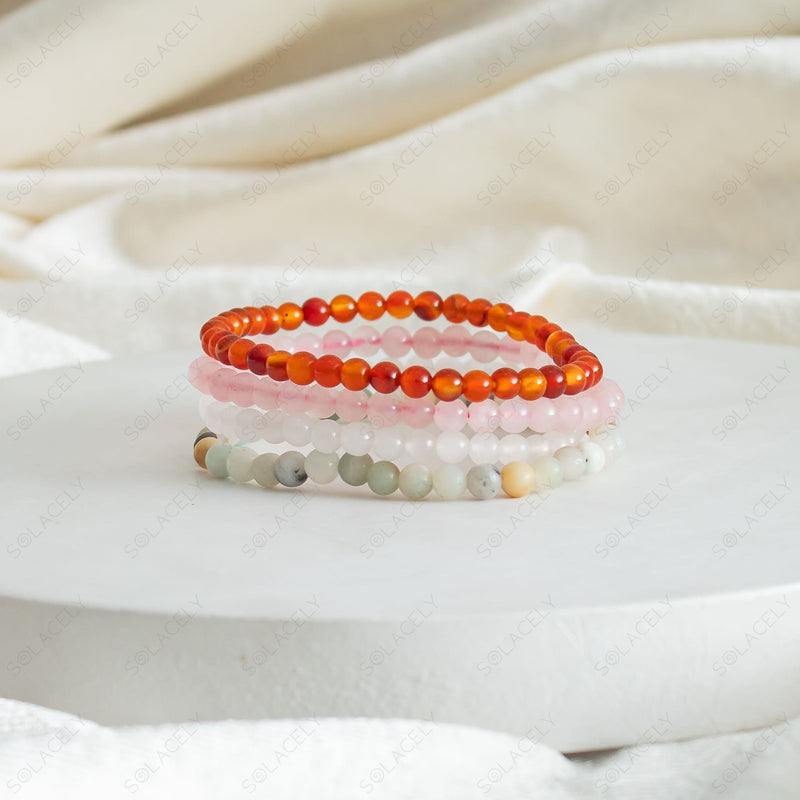
Bracelets remain the default gift for good reason: no sizing anxiety, no explanation needed, and they suit almost every wardrobe. If that is the route you take, our notes on crystal bracelets for beginners cover fit and everyday care.
Trees and pyramids are the safer choice for someone who does not wear accessories at all. A wire tree reads as an ornament first and a crystal second, which is often exactly what you want. The background to that shape sits in our crystal tree symbolism guide.
What should you avoid giving as a birthday gift?
Match the stone to the person's habits rather than ruling whole categories out. The Mohs hardness scale runs from 1 to 10, and stones sitting below roughly 5 are at their best on a shelf or worn now and then. Quartz-family stones at 7 take daily wear in their stride.
Selenite sits near 2 and keeps its satin finish beautifully on a windowsill or bedside table. Malachite, around 3.5 to 4, is a striking display piece as long as it stays dry and away from acids. Fluorite at about 4 rewards a stand rather than a pocket. Opal prefers steady humidity, and pearl is organic, so it is happiest away from perfume. All lovely stones, and all better suited to occasional wear or a set spot at home than to someone who keeps everything loose in a bag.
For a recipient who is hard on their things, the easy zone is the quartz family at 7 on the scale: amethyst, rose quartz, citrine, clear quartz, tiger's eye and smoky quartz. Garnet, black tourmaline and jade also hold up to daily wear. Those are the pieces that survive a school run, a gym bag and a washing-up bowl.
The one thing worth avoiding altogether is the wrong framing. Do not present a crystal as something that will treat an illness, help someone conceive, or replace medication or therapy. It puts the recipient in an awkward position. Give it as a beautiful object with a meaning attached, which is exactly what it is.
How do you present it, and what if they are sceptical?
Presentation does most of the work. A small box, a folded card with one line about why you chose that stone, and no lecture. That single line is the whole gift for most people. It is the difference between a rock in a bag and something they keep on a bedside table for years.
Keep the card short and specific. "Moonstone, for your June birthday" or "Citrine, because of the new job" beats a paragraph of properties. If you want to include care notes, one sentence is plenty: rinse it, dry it, keep it out of long sun. Anything longer starts to feel like an instruction manual.
What about a recipient who is unconvinced by crystals? Lead with the object, not the meaning. A polished piece of amethyst is a lovely thing to own on its own terms, and that framing removes any pressure to agree with you. People who are unsure tend to be delighted by a beautiful stone and put off by being told what it will do for them.
One practical note: for a child or a pet-heavy household, skip small tumbles and choose a larger piece that cannot be swallowed. Size solves that better than any warning label.
The properties described here reflect traditional and cultural belief around crystals. They are not medical claims and are not a substitute for professional healthcare. If you are managing a health concern, speak to a qualified practitioner.
Sources
Written by Chetena Sharma. Reviewed by the Solacely editorial team.
Frequently asked questions
About the author


Written by Chetna Sharma, crystal healing practitioner and co-founder of Solacely. Chetna has worked with healing crystals for over a decade and curates Solacely's protective stone collection.