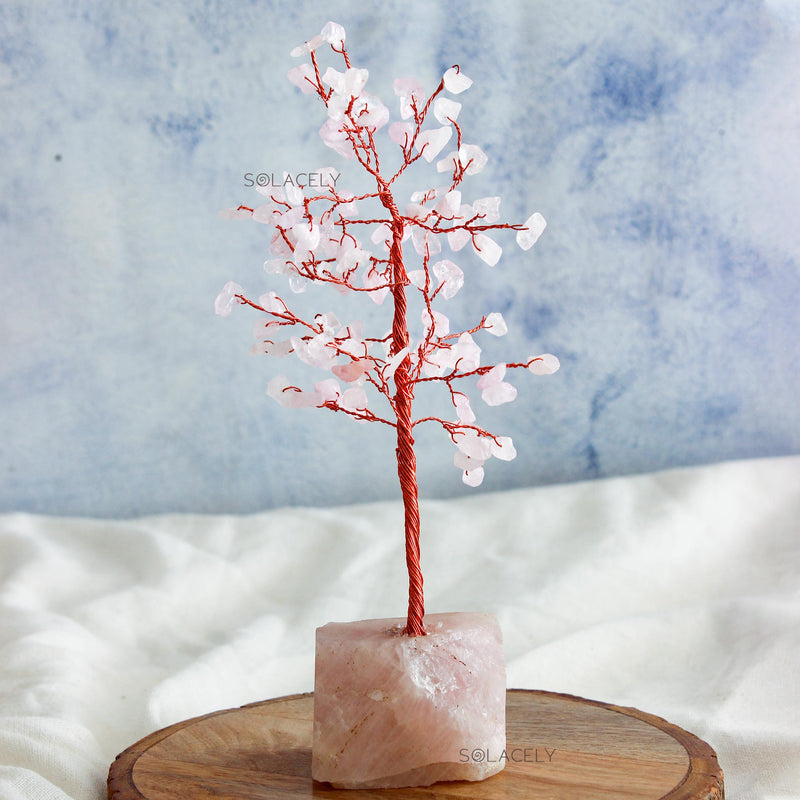
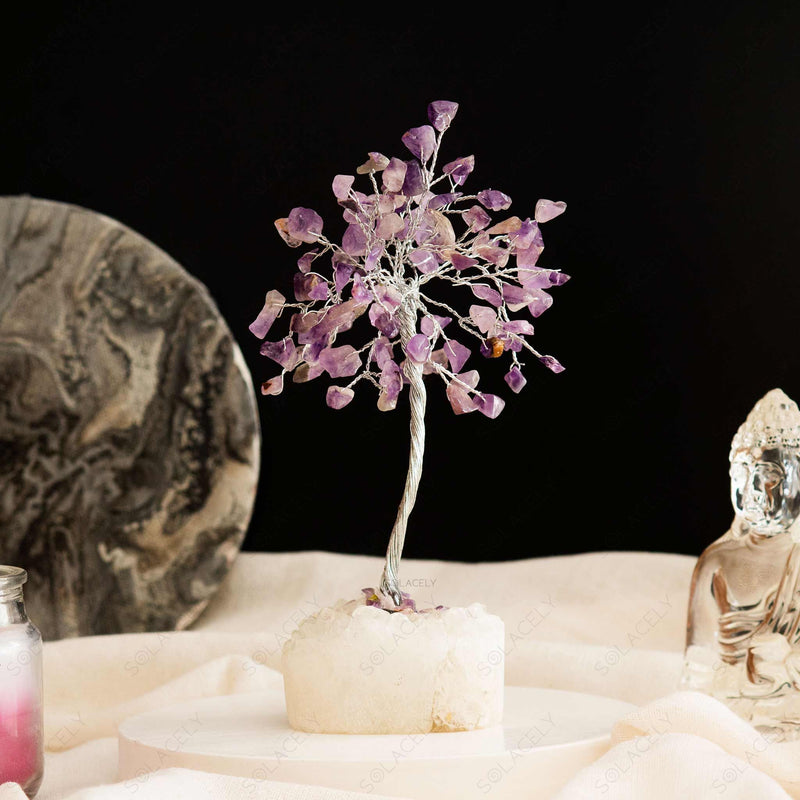
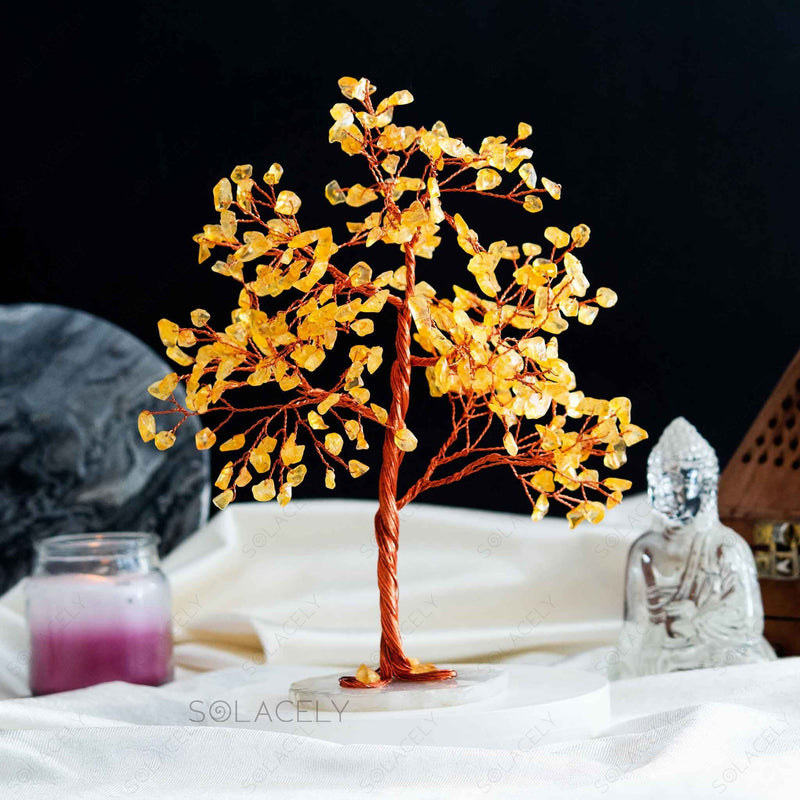
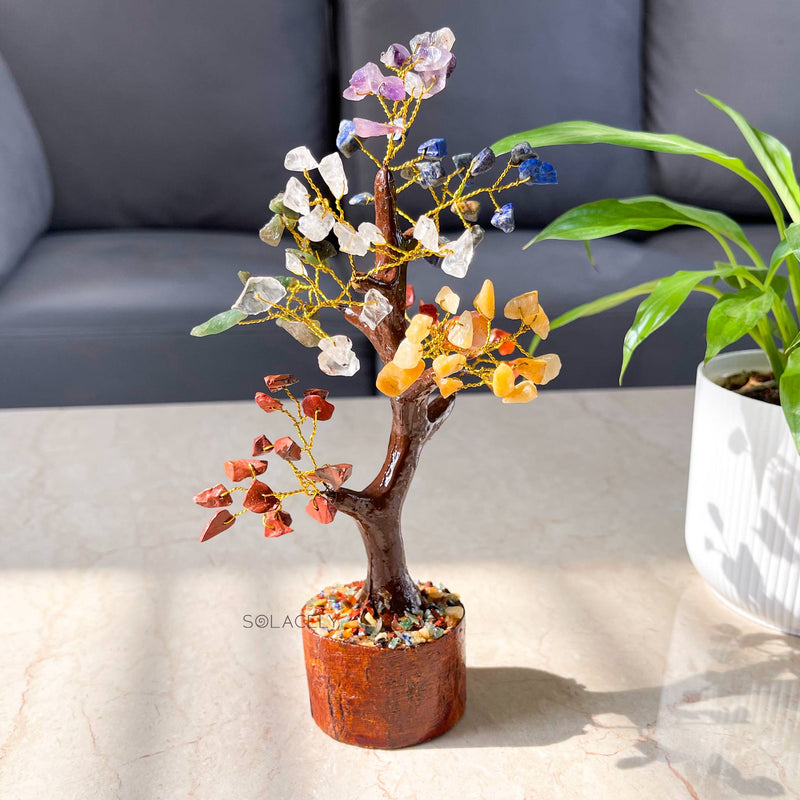
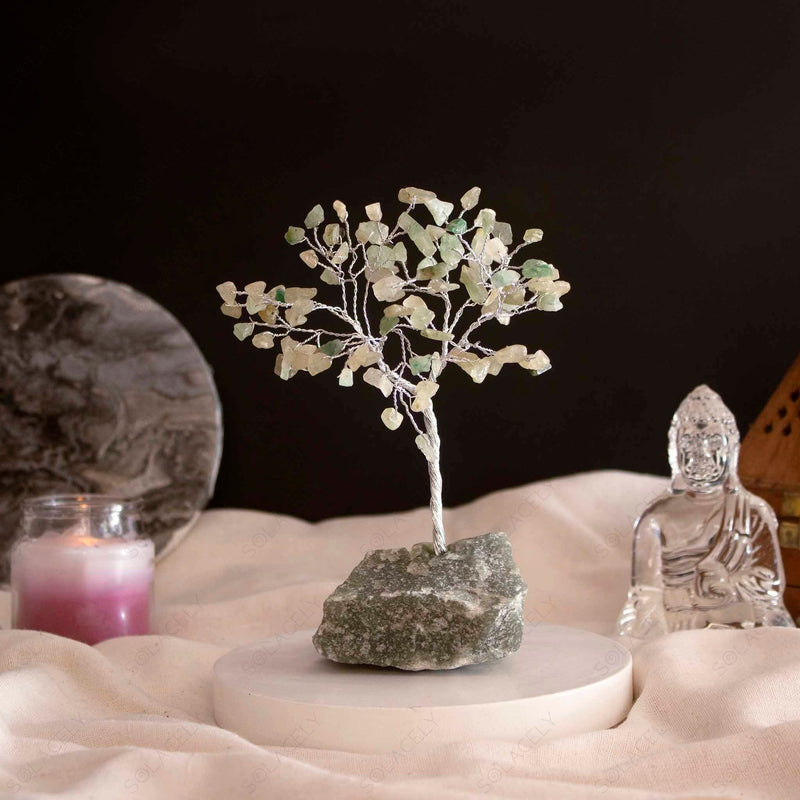
A crystal tree stands for growth from a fixed root. The base is where you stand, the trunk is the effort, and the branches are what comes of it. It is the tree of life motif, found across many cultures, built from wire and tumbled stone.
Key takeaways
- The form reads bottom to top: base, trunk, branches. Root, work, result.
- Choose by the stone, not the size. The stone decides what the tree is for.
- Rose quartz for a warm home, amethyst for a calm one, citrine for prosperity.
- The base is a stone too, and a good pairing is deliberate rather than decorative.
- Bead counts of 108, 300 and 365 are the traditional ones.
- Dust with a dry brush. Never under a tap. Water reaches the base adhesive.
What the form actually says
The tree of life appears independently in a great many traditions, and the crystal version borrows the shape rather than any one of them. What survives across all of them is a single idea: something rooted that keeps growing.
Read a crystal tree from the bottom up and it has three parts, each of which means something. The base is stability, the place you are standing, which is why it is a solid mineral slab rather than a plinth. The trunk is the wire, twisted and single, the effort that runs through everything. The branches spread out and carry the stones, which are the outcomes, the many small results of one rooted decision.
That is why the object is given at housewarmings, weddings and the openings of businesses, all of which are the same event in different clothes: someone putting down a root.
What each stone tree is kept for
| Tree | Traditionally kept for | Usual placement |
|---|---|---|
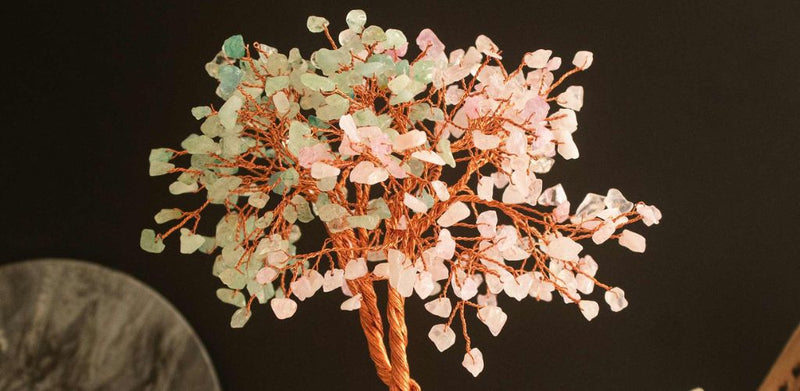
| Rose quartz | A warm household, family harmony | Bedroom or living room |
| Amethyst | A calm, settled home | Living room, meditation corner |
| Citrine | Prosperity and abundance | Southeast of a room, or a desk |
| Green aventurine | Luck, growth, new ventures | Entrance or workspace |
| Clear quartz | General purpose, the all rounder | Anywhere |
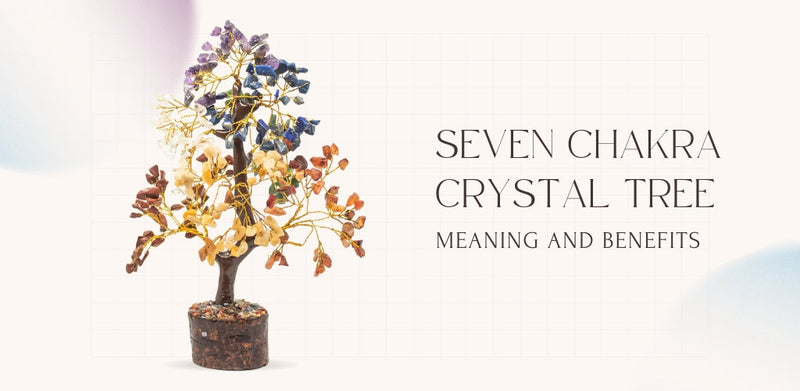
| Seven chakra | Balance across the whole rather than one thing | Central shelf, hallway |
Choose by the stone. A larger tree in the wrong stone does less than a small one in the right one, and the price difference between sizes is mostly a question of how many beads have been wired on by hand.
The base is a stone as well
This is the part most buyers overlook, and it is half the object.
A crystal tree sits on a slab of agate, amethyst, aventurine or raw quartz, and in a well made piece the pairing is deliberate. Citrine on an agate base is the classic prosperity arrangement, agate for steadiness underneath the growth. Rose quartz on a rose quartz base doubles the one intention rather than mixing two. Amethyst branches on a clear quartz cluster base pair calm with clarity.
A tree glued to a wooden disc or a resin base is a decorative object rather than a traditional one. Nothing wrong with it, but it is worth knowing which you are buying.
Bead counts and why they are what they are
Trees are commonly made with 108, 300 or 365 stones, and the numbers are not arbitrary.
108 is the count of a mala, used across Hindu and Buddhist practice, and a 108 bead tree is essentially a mala rendered as an object rather than a string. 365 is the year, one stone per day, and is chosen for trees given at a new beginning. 300 is the common commercial size and sits between the two.
In practice the useful test is visual. A tree needs enough stones that the branches read as full. A sparse tree looks like a wire frame that has lost something, whatever the count on the label.
Where to put one
Two rules cover most of it. It should be seen daily, and it should not be somewhere it gets knocked.
A hallway console is the traditional spot, because it is the first thing seen on entering. A living room shelf at eye height works. A desk works, particularly for citrine and green aventurine. What does not work is a windowsill, since sustained direct sunlight will pale amethyst, citrine and rose quartz over the years, and a bathroom, where humidity gets into the base.
Our guide to crystal luck trees covers placement by direction in more detail, and the seven chakra crystal tree has its own arrangement, since the stones on it are ordered rather than uniform.
Giving one
A crystal tree is the easiest crystal gift to give well, because it reads first as an ornament and only second as a practice. Nobody has to believe anything to put one on a shelf.
Rose quartz and green aventurine are the two usual wedding and housewarming choices, and there is a whole small tradition of crystal trees as wedding return gifts. Citrine is the one for a new business or a promotion. Amethyst suits someone who has had a difficult year and would find a calm object more welcome than a prosperous one.
Looking after it
Dust with a dry soft brush, into the branches rather than across them. A clean makeup brush or a wide paintbrush is exactly the right tool.
Do not run a crystal tree under a tap. Water gets into the wire wraps where it will not dry, and into the adhesive joining trunk to base, which is the join that fails first on any tree. If you want to cleanse it, use smoke or a night of moonlight on an indoor sill.
The branches are bendable copper or brass wire, and they are meant to be adjusted. If a tree arrives looking flat, spread the branches out by hand into a rounded canopy. Most trees look considerably better after five minutes of this than they do out of the box. More on placing stones around a home in crystals for home decor.
The meanings described here reflect traditional and cultural crystal practice. They are not medical claims and are not a substitute for professional advice. Crystal trees are decorative objects and are not suitable as toys for small children, since the beads and wire are small parts.
Sources
Written by Chetena Sharma. Reviewed by the Solacely editorial team.
Frequently asked questions
About the author


Written by Chetna Sharma, crystal healing practitioner and co-founder of Solacely. Chetna has worked with healing crystals for over a decade and curates Solacely's protective stone collection.