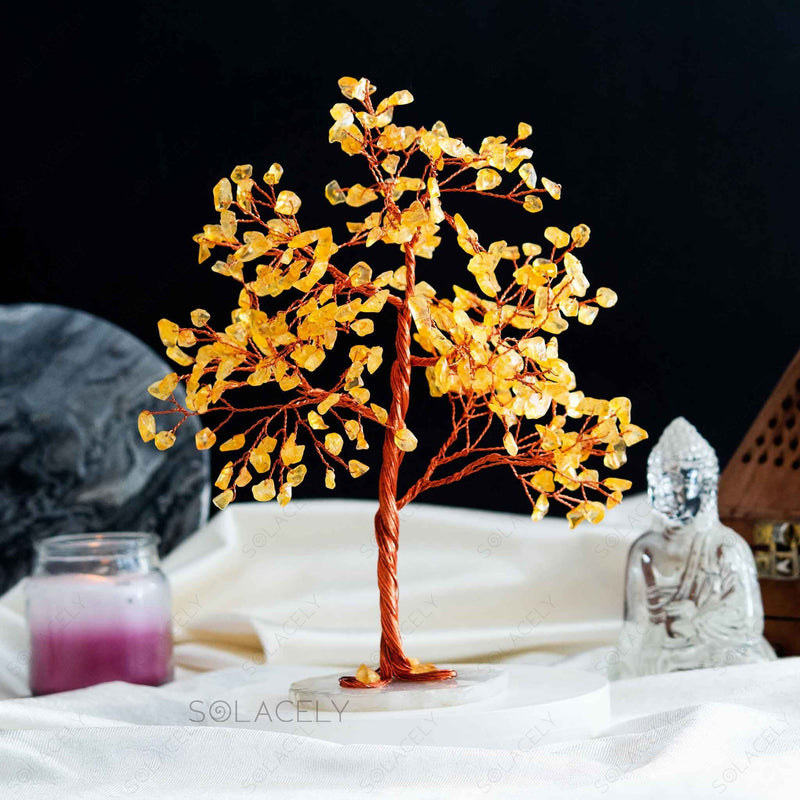
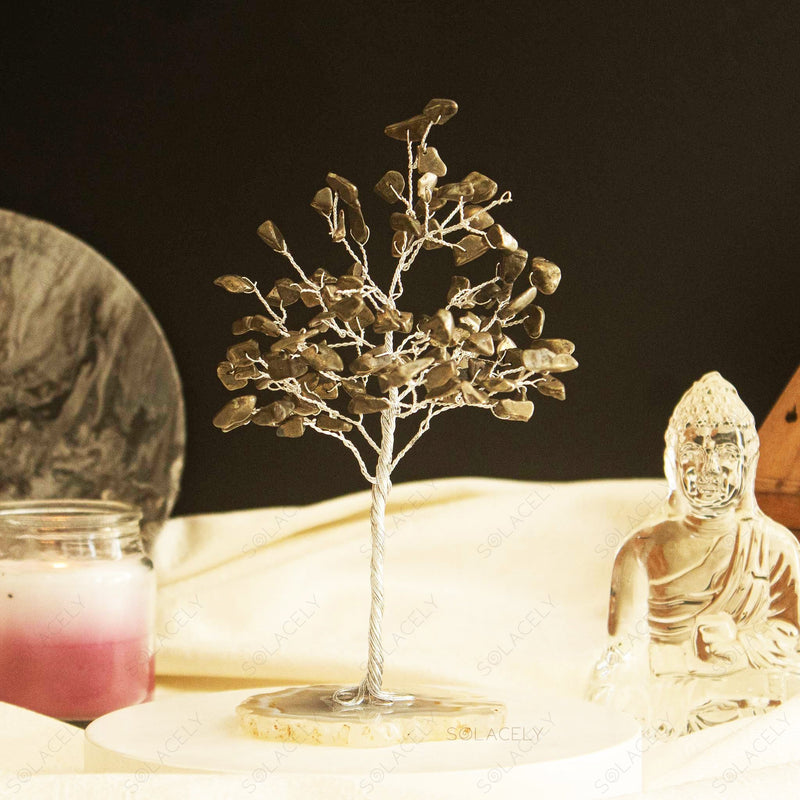
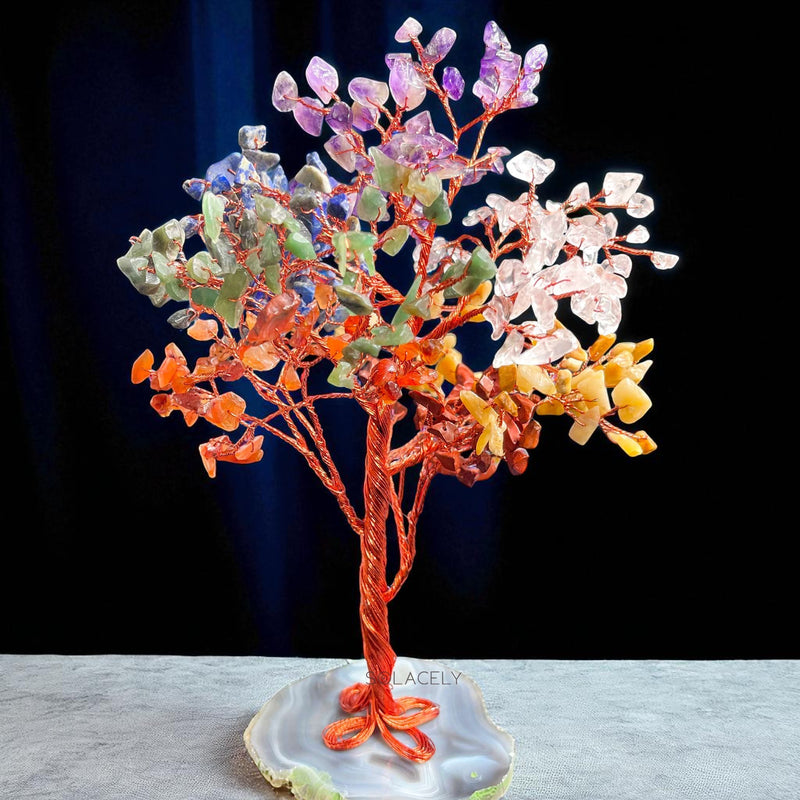
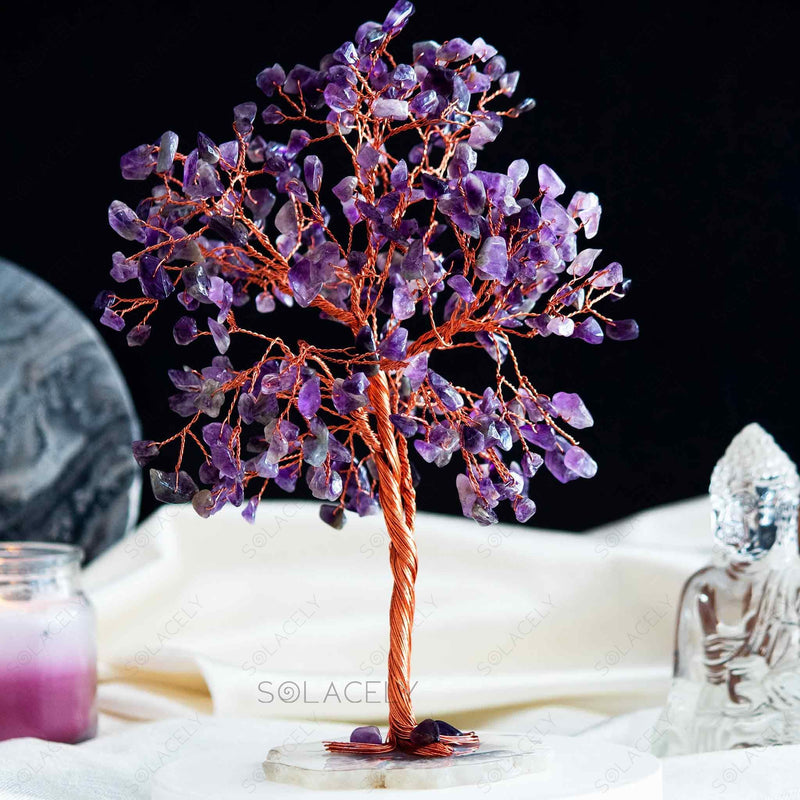
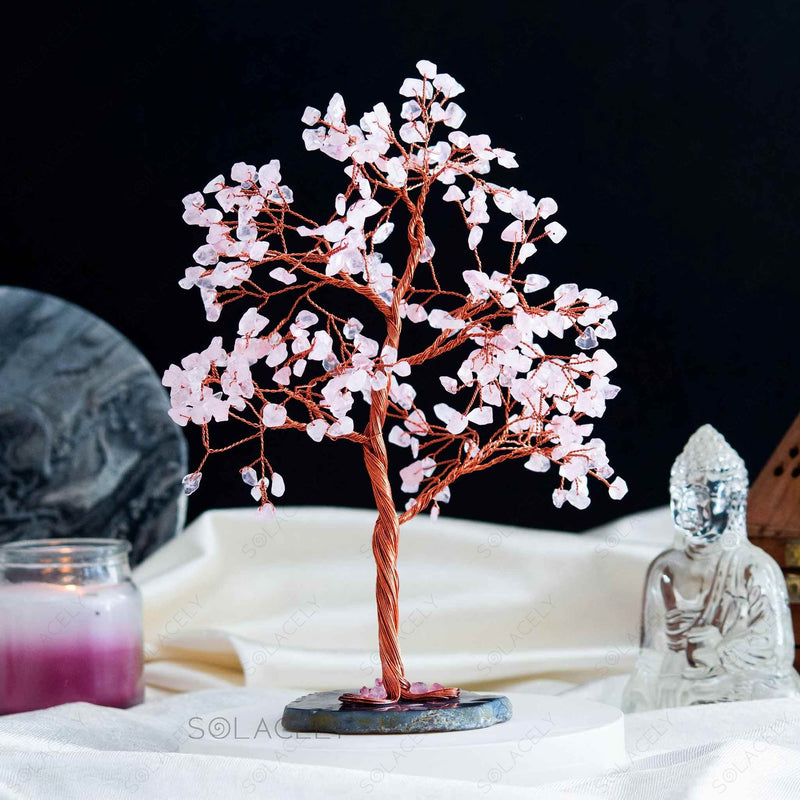
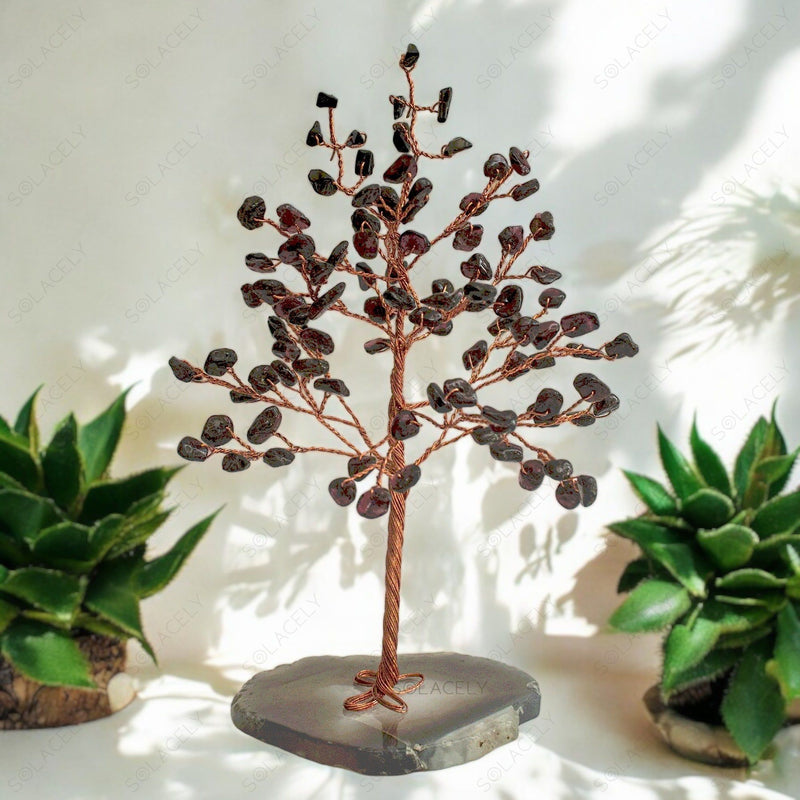
A crystal luck tree is a wire-and-stone ornament, usually a twisted copper or brass trunk set on an agate slice, with chips of a chosen gemstone as leaves. It is a feng shui inspired decor object used as a visual intention anchor for prosperity, not a functioning charm.
Key takeaways
- A crystal luck tree is wire branches, gemstone chips, and an agate or crystal base. Nothing about it is mined as one piece.
- The stone determines the intention: citrine and green aventurine for prosperity, amethyst for calm, rose quartz for the home.
- Standard feng shui placement is the southeast corner of a room for wealth, or an entrance for general good fortune.
- Chips are small and the wire is sharp. Keep trees out of reach of toddlers and pets.
- The luck association is cultural tradition, not a demonstrated effect.
What a crystal luck tree actually is
It is an assembled object, and knowing that makes buying one much easier. A length of wire, usually copper or brass coloured, is twisted into a trunk and split into branches. Small tumbled chips are threaded on as leaves. The whole thing is seated in a base, most often a polished agate slice or a small cluster.
Because it is assembled, quality varies enormously and price tells you very little on its own. What separates a good tree from a poor one is the count and consistency of the chips, whether the wire is a single continuous run or many short pieces glued together, and whether the base is a real agate slice or dyed and resin filled.
The tree of life form it borrows is very old and appears across many cultures. In its modern crystal shop version it functions as decor with a stated intention attached. The crystal tree symbolism guide covers where the shape comes from.
Which stone for which intention
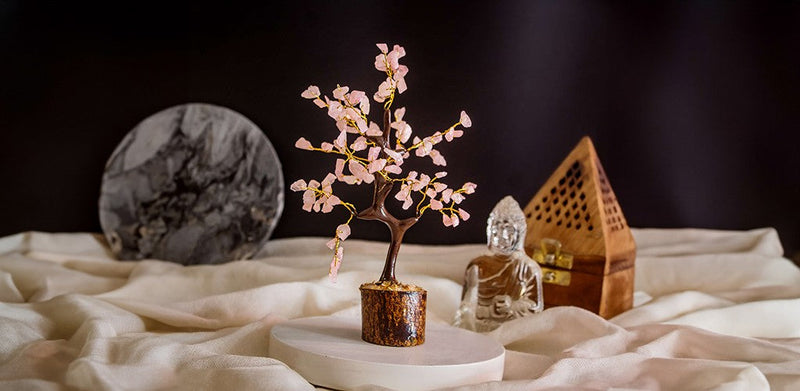
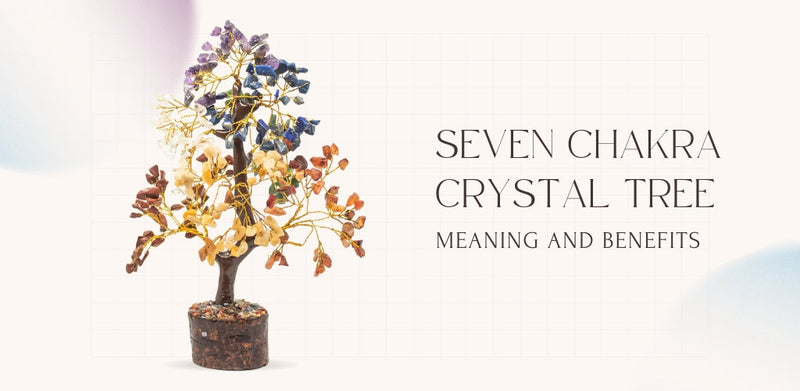
The choice of chip is the entire point, because the tree form itself is neutral. Citrine and green aventurine dominate the prosperity end. Amethyst is the usual choice for a bedroom, rose quartz for a shared living space, and seven chakra trees mix stones for a general purpose piece.
Two of those choices are worth a mineral note. According to the Gemological Institute of America, citrine is the yellow to orange variety of quartz, and warming amethyst to bring out that golden tone is a long established practice. On a chip tree either is entirely at home.
Green aventurine is quartz with mica or fuchsite inclusions that give it a faint glitter. Geology.com notes quartz is one of the most abundant minerals on Earth, which is why chip trees in these materials are inexpensive. The green aventurine guide covers its traditional associations.
Where to place a luck tree
| Placement | Traditional reasoning | Practical note |
|---|---|---|
| Southeast corner of a room | The wealth sector in classical feng shui bagua | The most cited placement for citrine and aventurine trees |
| Entrance or hallway | Welcoming fortune into the home | Keep it off the floor and away from the door swing |
| Office or desk | Career and business growth | A small tree only. Large ones dominate a desk |
| Living room | Shared prosperity and harmony | Rose quartz or seven chakra suit this better |
| Bedroom | Rest rather than wealth | Amethyst only. A prosperity tree here works against the room |
| Bathroom or kitchen sink | Avoid | Humidity corrodes the wire and dulls the chips |
Two placements to genuinely avoid: anywhere a toddler or cat can reach, because the chips are choking sized and the wire ends are sharp; and anywhere persistently damp, because the base wire is usually plated rather than solid and will corrode.
How to judge one before you buy
Handle it if you can, and look at four things.
- Chip density. A thin tree with visible bare wire looks sparse from day one and gets worse as chips work loose.
- Wire construction. Continuous twisted strands hold shape. Short glued sections shed branches.
- The base. A real agate slice shows banding and slight translucency at the edge. Dyed slices have unnaturally uniform colour, often bright blue or pink.
- Balance. It should stand without leaning. A tree that needs propping will eventually topple and lose chips.
Size matters more than people expect. A tree under about 15 cm reads as a desk ornament, and one above 25 cm becomes a statement piece that needs its own surface. Buy for the space you actually have. If you want the multi-stone version, the seven chakra crystal tree guide explains how those are put together.
Care and cleaning
Dust is the real enemy, not energy. Chips have a lot of surface area and they collect a grey film surprisingly fast, which is what makes an old tree look dull rather than any loss of quality in the stones.
Use a dry soft brush, a make-up brush or a clean paintbrush, and work from the top down. For a deeper clean, a barely damp cloth on the chips and an immediate dry is safe for quartz family stones. Do not submerge a tree at any point: water gets into the wire twists, sits there, and corrodes them from the inside.
Reshape branches gently with your fingers rather than pliers, which crush the plating. If a chip comes loose, a dot of clear jewellery glue on the wire is a better repair than trying to rethread it. Check where the chips sit on the Mohs hardness scale before using anything abrasive, since softer stones will scuff.
What a luck tree can honestly do
It is a reminder, well made and pleasant to look at, sitting in a place you pass every day. That is not nothing. Objects placed deliberately do change how often you think about the thing they represent, and for a lot of people a prosperity tree by the door is a daily nudge toward a goal they would otherwise forget between Mondays.
What it does best is hold a meaning somewhere you pass every day. Bought as a beautiful object with an intention attached, a luck tree earns its place easily, and the work it marks is still yours to do. For the wider set of stones used this way, see crystals for happiness and good luck.
Choosing a size and a base
Base material is the part most buyers ignore and the part that most affects how the tree ages. An agate slice base is heavy, stable, and looks better as it picks up wear. A resin or composite base is lighter, which sounds convenient until the tree topples the first time someone closes a drawer too hard.
You can usually tell them apart by weight and edge. Real agate has a cool, dense feel and its cut edge shows faint concentric banding with slight translucency where the slice is thin. Dyed slices give themselves away through unnaturally saturated colour, often an even electric blue or magenta that no natural agate produces.
On height, be honest about the surface. A tree under 15 cm is a desk piece and disappears on a sideboard. Between 15 and 25 cm is the usual living room size. Above that you are buying a centrepiece, and it needs clearance on all sides or the branches get knocked and shed chips within weeks.
Gifting a luck tree
Luck trees are given far more often than they are bought for oneself, which is worth planning for. Housewarmings, new business openings and Diwali are the three occasions they turn up most, and the stone should follow the occasion rather than the recipient's birth chart.
Citrine or green aventurine for a new business, amethyst for someone moving into a first home alone, rose quartz for a couple. If you genuinely do not know, a seven chakra tree is the safe choice, since it carries no single specific claim and suits any room. Include a line about what the stone is for, because a tree without context just reads as an ornament.
The properties described here reflect traditional feng shui and cultural belief around crystals. They are not financial guidance, medical claims, or a substitute for professional advice. Crystal trees carry small chips and sharp wire ends and are not suitable for young children or pets. Keep them out of reach.
Sources
Written by Chetena Sharma. Reviewed by the Solacely editorial team.
Frequently asked questions
About the author


Written by Chetna Sharma, crystal healing practitioner and co-founder of Solacely. Chetna has worked with healing crystals for over a decade and curates Solacely's protective stone collection.