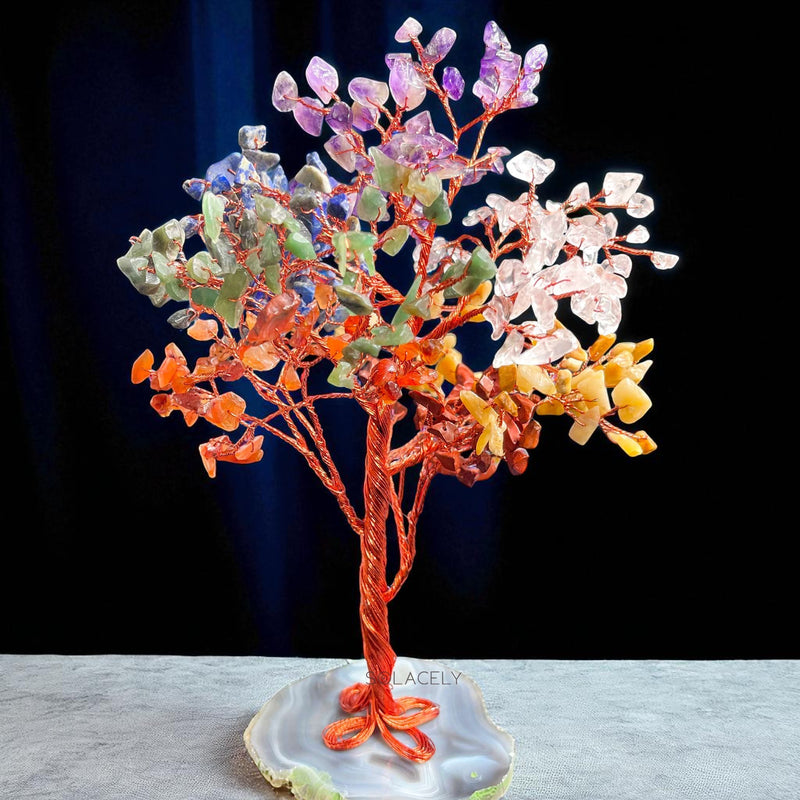
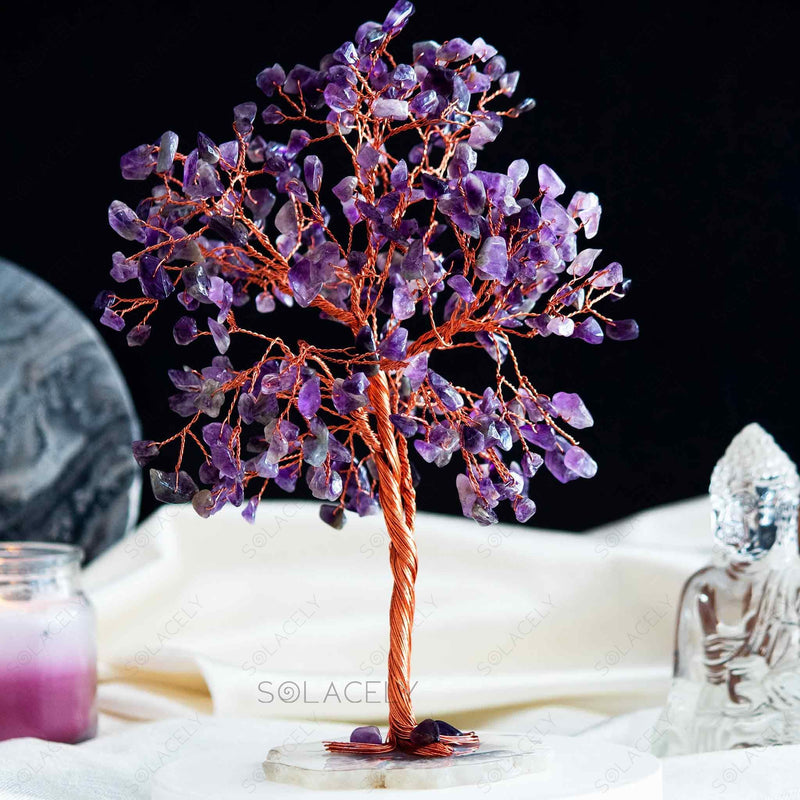
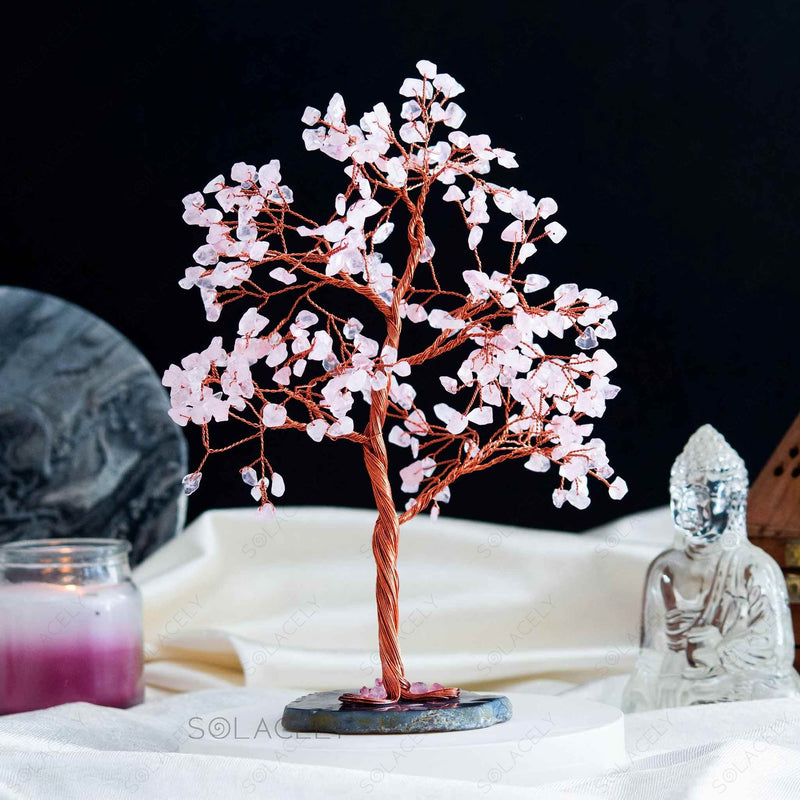
A seven chakra crystal tree gathers one stone for each of the body's seven energy centres onto a single wire tree. It is kept as a reminder that the whole system is meant to sit in balance, and it is one of the most given pieces in crystal practice because it reads as decor and carries the full set at once.
Key takeaways
- Seven stones, one per chakra, following the classic red through violet colour order.
- Traditionally placed in a shared space rather than a bedroom, kept for flow through the whole home.
- The tree is an old symbol of growth and rootedness, which is why the seven stones are arranged on one.
- Keep it out of water and off a bright windowsill so the amethyst and citrine hold their colour.
- A common housewarming and new-start gift.
What the seven stones stand for
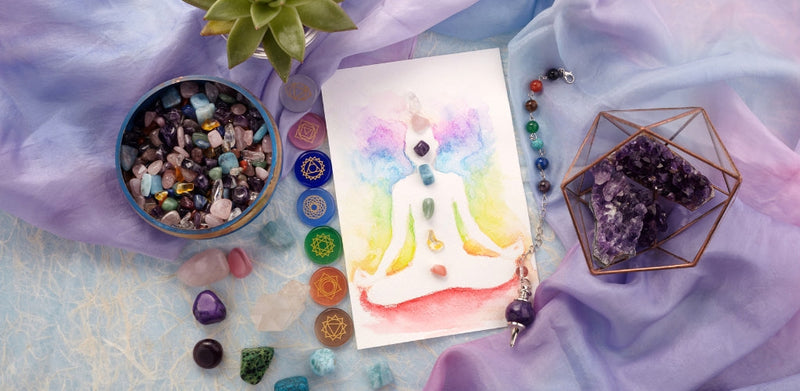
Each stone sits with one of the seven centres described in yogic tradition, and the sequence runs bottom to top in colour order. Once you know the order, you can read any tree at a glance, whichever maker built it.
| Chakra | Colour | Usual stone | Traditionally kept for |
|---|---|---|---|
| Root | Red | Red jasper | Feeling planted and secure |
| Sacral | Orange | Carnelian | Creativity and drive |
| Solar plexus | Yellow | Citrine | Personal power and will |
| Heart | Green or pink | Green aventurine | Warmth and connection |
| Throat | Blue | Blue lace agate or sodalite | Speaking clearly |
| Third eye | Indigo | Amethyst | Insight and calm |
| Crown | Violet or clear | Clear quartz | Perspective and openness |
Makers vary the exact stones, particularly at the heart and throat, and that is normal. The colour sequence is the constant. If you are new to the system, our beginner's guide to chakra stones walks through all seven properly.
Why the stones sit on a tree
The tree of life is one of the oldest symbols there is, turning up across cultures as an image of growth, continuity and being rooted while still reaching. Putting the seven chakra stones on a tree marries two ideas that already fit: a system that runs base to crown, and a form that runs root to canopy.
That is also why the base matters. Most trees are set on an agate slice or a raw quartz cluster, which gives the piece weight and finishes the root end of the symbolism. A tree with a heavy natural base sits better and reads better than one on a light moulded stand.
Practically, the form does something a bowl of tumbled stones cannot. It holds a sightline. A tree stays visible in a room for years, while loose stones on a shelf stop registering within about a week.
Where to place a chakra tree
Traditional placement puts it in shared space rather than private space, because it is kept for balance across a whole home rather than for one person's sleep or work.
- Living room. The most common spot. A shelf, mantel or side table where the room can see it.
- Entrance hall. Popular in feng shui influenced practice, so it is the first thing you pass coming in.
- Study or home office. Chosen when the intention is steady focus rather than household harmony.
- Meditation corner. Alongside a cushion, where the seven stone set supports a full body practice.
- Not the bedroom. Citrine and carnelian are traditionally kept out of a room meant for winding down.
Our room by room placement guide covers the wider household conventions, and crystals for home decor covers making it look intentional rather than cluttered.
How people work with one
Most owners simply keep it in view, and that is a legitimate way to use it. If you want something more deliberate, the common practice is to work with one branch at a time.
- Pick the centre you want to sit with. Throat if you have something to say, root if you feel unsteady.
- Touch that stone on the tree. One deliberate contact, not a rummage.
- Breathe out longer than you breathe in. Four in, six out, five rounds.
- Name what you want in one plain sentence. Short beats poetic.
- Come back to the same branch daily for a week before moving on.
The tree is useful here precisely because it is a fixed object in a fixed place. You are not hunting for a stone in a drawer. For seated practice more generally, our crystals for meditation guide covers which stones suit which difficulty, and root chakra crystals goes deeper on the base of the system.
Choosing a well made tree
A few things separate a piece that lasts from one that sheds chips within a year.
Wire count and thickness. More strands mean the branches hold their shape when you bend them. Thin single strand branches droop.
Base weight. A genuine agate slice or quartz cluster anchors the tree. Test that it does not tip when a branch is pushed to one side.
Chip attachment. Chips should be wound into the wire rather than glued on top of it. Wound chips survive dusting; glued ones do not.
Colour spread. All seven colours should be clearly readable. Some trees drift heavily toward purple and green because those chips are cheapest, which loses the point of a seven chakra piece.
Height against the spot. Measure the shelf first. The most common regret is a tree that is too small for where it ends up.
Caring for it
These are assembled pieces rather than solid stone, so the care is a little different from a tumbled crystal.
Dust with a dry soft brush, working from the top branches down, then wipe the base. Do not run the tree under water: the wire, the winding and any adhesive all resent soaking, and moisture trapped between chips takes days to leave. Keep it off a sunny windowsill, since the amethyst and citrine branches will pale over months of direct light. Quartz is one of the most abundant mineral families on earth, which is exactly why these trees are affordable enough to keep several around a home.
For energetic cleansing, sound, incense smoke or a night of moonlight all suit it. Monthly is a comfortable rhythm, and doing it at the same time as the dusting makes it more likely to actually happen.
One household note: keep smaller trees away from young children and cats, since loose chips are exactly the wrong size to be swallowed and a light base tips easily.
Who a chakra tree suits
People who want the whole seven stone set without buying seven separate pieces, and people who want something that works as an object in a room rather than a stone in a pocket. It is the standard housewarming choice in crystal practice for good reason: it carries a full intention and still looks like something you would put on a shelf.
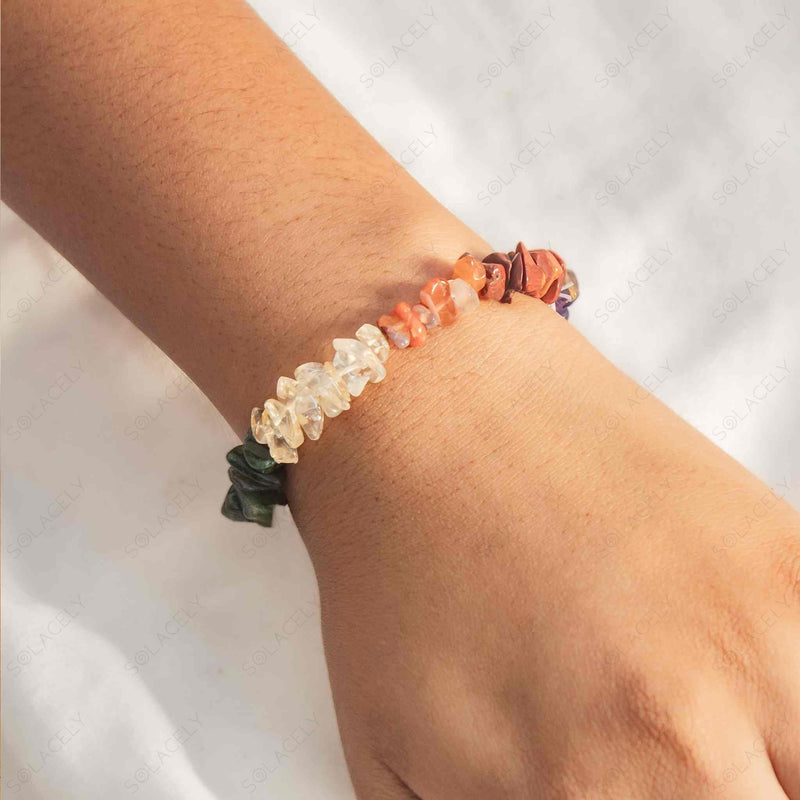
It suits less well anyone who wants a stone to carry. A tree stays where it is put. If you want something on you through the day, a bracelet or a pocket piece is the better format, and the tree can hold the room while the bracelet holds you.
Crystals and chakra practices are offered here for reflection and wellbeing and are part of a spiritual tradition rather than a medical one. They are not a treatment for any condition and are not a substitute for professional healthcare. Keep small stones and chips away from young children and pets, since they present a choking risk.
Sources
Written by Chetena Sharma. Reviewed by the Solacely editorial team.
Frequently asked questions
About the author


Written by Chetna Sharma, crystal healing practitioner and co-founder of Solacely. Chetna has worked with healing crystals for over a decade and curates Solacely's protective stone collection.