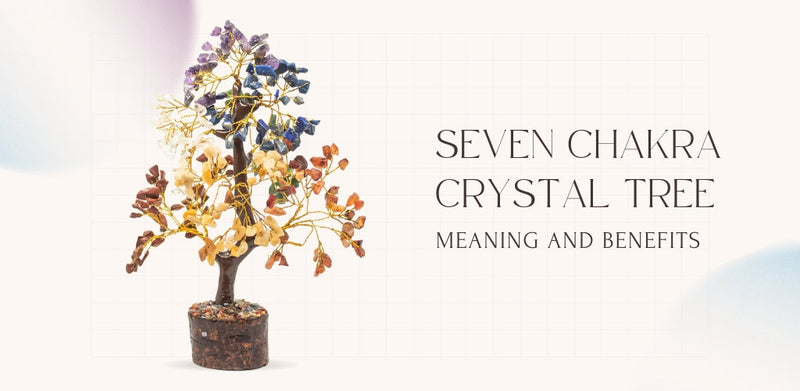
The chakra system describes seven energy centres running from the base of the spine to the crown of the head: root, sacral, solar plexus, heart, throat, third eye and crown. Each has a colour, a theme and a set of stones traditionally kept for it, and working with one is a matter of attention rather than technique.
Key takeaways
- Seven centres, running bottom to top: root, sacral, solar plexus, heart, throat, third eye, crown.
- The word chakra is Sanskrit for wheel, and the system comes from the yogic and tantric traditions of India.
- Each centre has a colour, and the stones kept for it almost always share that colour.
- Work with one at a time. Trying to balance all seven at once is the commonest beginner mistake.
- A short daily practice with a single stone does more than an elaborate seven-stone layout.
What are the chakras?
Chakra is Sanskrit for wheel, and the system describes seven centres of energy set along the body's midline. It comes from the yogic and tantric traditions of India, where it developed over many centuries as a map of inner experience rather than of anatomy.
The idea is that each centre governs a particular area of life: safety at the base, creativity above it, will above that, then love, then speech, insight and connection at the crown. When a centre is described as blocked, what is meant is that its theme feels stuck or unavailable.
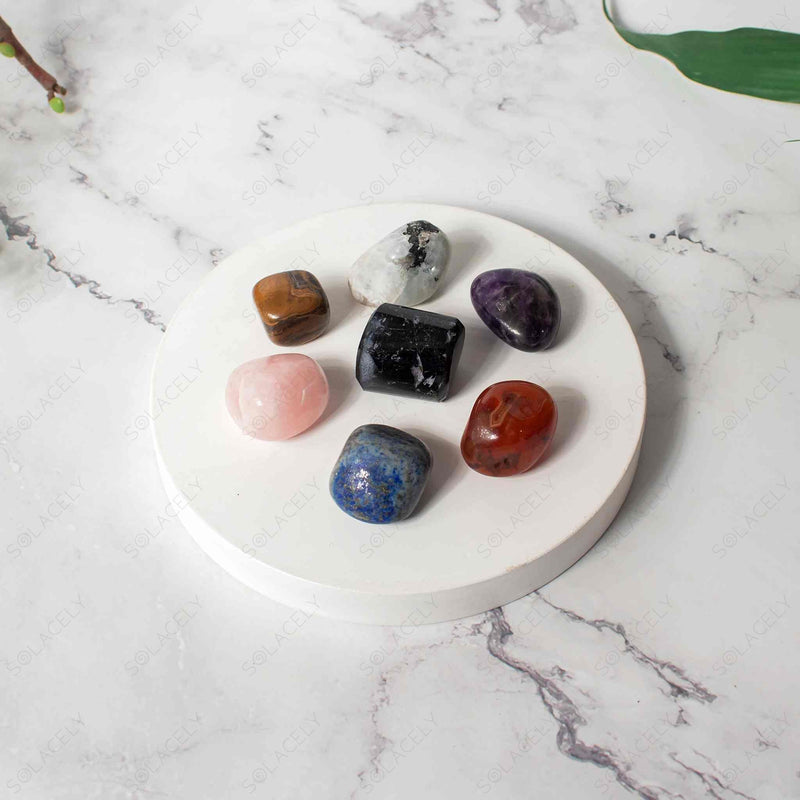
Crystal practice attaches stones to those centres, almost always by colour. Red and black stones for the root, orange for the sacral, yellow for the solar plexus, green and pink for the heart, blue for the throat, indigo for the third eye, violet and white for the crown.
The seven chakras at a glance
The table gathers the whole system: name, location, colour, theme and the stones most commonly kept for each. It is worth reading as a whole before choosing where to start.
| Chakra | Location | Colour | Theme | Stones |
|---|---|---|---|---|
| Root, muladhara | Base of the spine | Red | Safety, belonging, stability | Black tourmaline, hematite, red jasper |
| Sacral, svadhisthana | Below the navel | Orange | Creativity, pleasure, feeling | Carnelian, sunstone, orange calcite |
| Solar plexus, manipura | Above the navel | Yellow | Will, self-worth, confidence | Citrine, tiger's eye, pyrite |
| Heart, anahata | Centre of the chest | Green and pink | Love, compassion, forgiveness | Rose quartz, green aventurine, jade |
| Throat, vishuddha | Base of the throat | Blue | Speech, truth, expression | Lapis lazuli, aquamarine, amazonite |
| Third eye, ajna | Between the brows | Indigo | Intuition, insight, perspective | Amethyst, sodalite, labradorite |
| Crown, sahasrara | Top of the head | Violet and white | Connection, meaning, stillness | Amethyst, clear quartz, selenite |
The three lower chakras
The root is the foundation, and in tradition it is the centre worked with first. It governs safety, belonging and the sense of being planted, and it is what feels shaky during a house move, a job change or a family upheaval. Black tourmaline and hematite are the classic root stones, and our guide to crystals for the root chakra covers them.
The sacral sits just below the navel and governs creativity, pleasure and feeling. It is the centre associated with making things, with appetite in the broad sense, and with allowing yourself to want something. Carnelian is its stone above all others, and our note on crystals for the sacral chakra sets out the set.
The solar plexus sits just above the navel and governs will and self-worth: the sense that your judgement is worth acting on. Citrine, tiger's eye and pyrite are its stones, all warm and golden, and this is the centre most people are working with when they say they want more confidence.
The heart chakra
The heart sits at the centre of the chest and is the hinge of the whole system, the point where the three lower centres meet the three upper ones. In tradition it governs love, compassion and forgiveness, both towards other people and towards yourself.
Its colours are green and pink, which is why rose quartz and green aventurine are the two stones most associated with it. Rose quartz is the tenderness one, kept for self-kindness. Green aventurine and jade are the growth and good-fortune ones, kept for opening rather than softening.
A pendant that sits at the sternum is the traditional form for heart work, since it rests exactly where the centre is described. Holding a stone at the chest while lying down is the other common practice, and both are simple enough to do without any instruction.
The three upper chakras
The throat governs speech, truth and expression, and it is the centre worked with when something needs to be said. Lapis lazuli, aquamarine and amazonite are its stones, all blue. Our guide to crystals for the throat chakra covers the set in detail.
The third eye sits between the brows and governs intuition, insight and the ability to see a situation whole. Amethyst, sodalite and labradorite are its stones, deep blue and violet. This is the centre most associated with meditation and with the sense of knowing something before you can explain it.
The crown sits at the top of the head and governs connection and meaning, the widest of the seven themes. Amethyst, clear quartz and selenite are its stones, violet and white, and a stone placed just above the head while lying down is the traditional way to work with it.
How to work with one chakra
Choose one centre, not seven. Read the themes in the table, find the one that describes what is actually difficult at the moment, and work with that alone. The commonest beginner mistake is buying a seven-stone set and trying to balance everything at once, which spreads the attention too thin to be useful.
The basic practice is short. Lie down or sit comfortably, place the stone on or near the centre, and breathe slowly into that part of the body for five minutes. Let your attention rest there. Then name, plainly, the thing you want to shift.
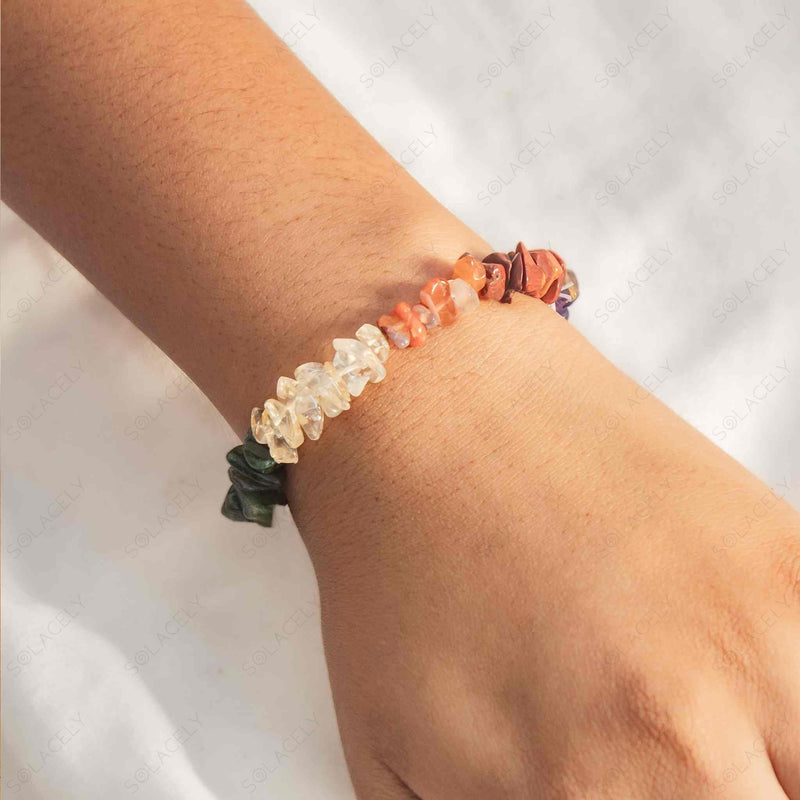
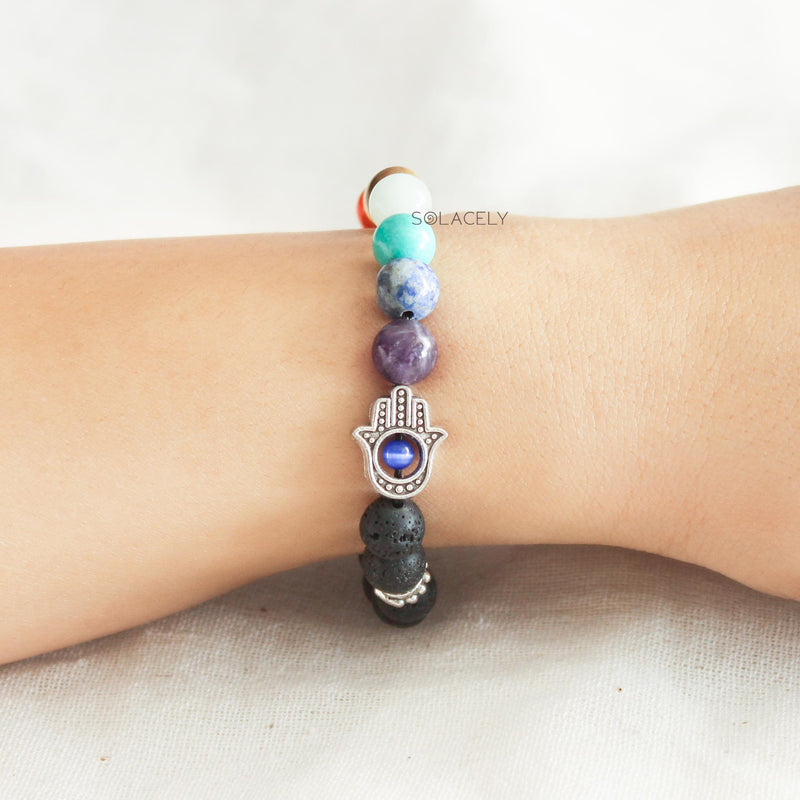
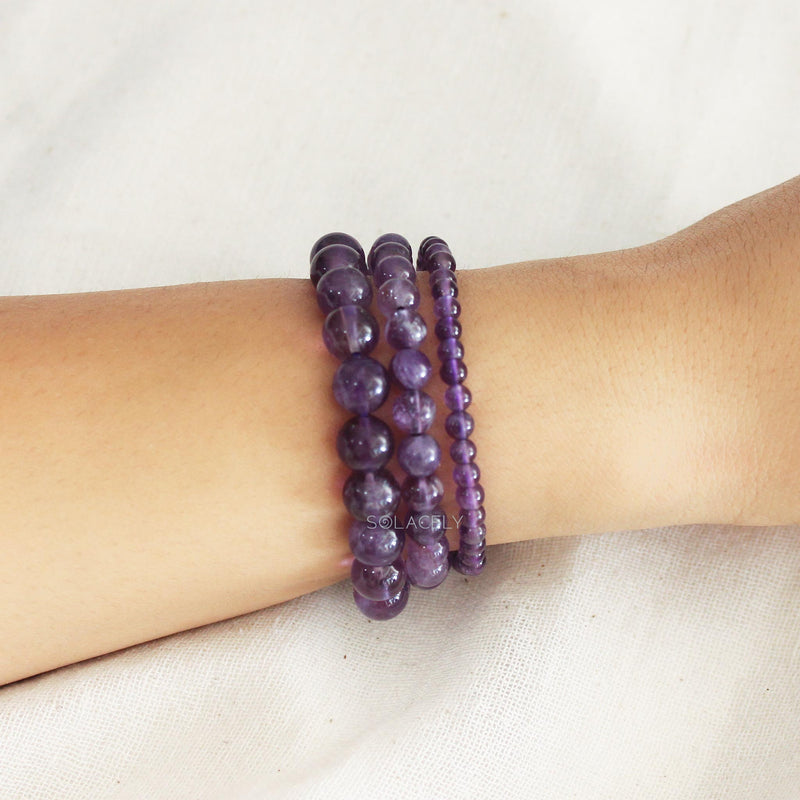
Wearing works too and takes no time at all. A pendant for the heart or throat, a bracelet for the solar plexus, a stone in a pocket for the root. In crystal tradition the left wrist is the receiving side and the right is the giving side.
Give it weeks. Chakra work is described by everyone who practises it as slow and cumulative, noticed first in small changes of behaviour rather than in any dramatic feeling. Our companion guide, chakra stones for beginners, goes stone by stone.
Caring for chakra stones
Hardness varies a great deal across the seven sets, so care does too. The quartz-family stones, amethyst, rose quartz, citrine, clear quartz and carnelian, all sit at 7 on the Mohs scale and need nothing beyond warm soapy water and a soft cloth.
Three need real attention. Selenite dissolves in water and must stay completely dry. Pyrite contains iron sulphide and must never be rinsed or salt-cleansed. Hematite develops surface rust if left wet, so dry it thoroughly. Lapis lazuli dislikes harsh chemicals and prolonged soaking.
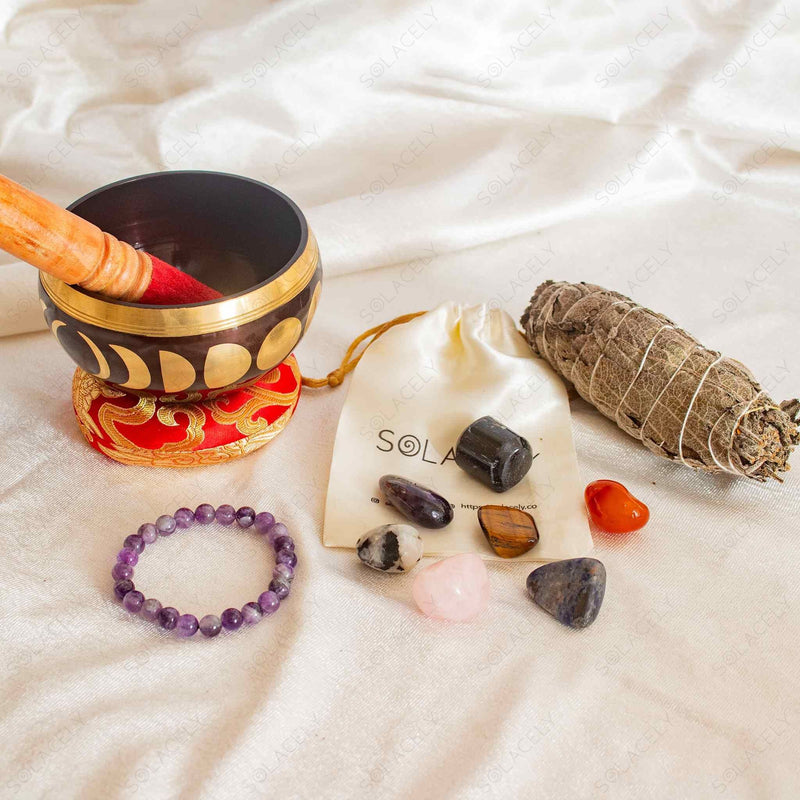
Amethyst, rose quartz and citrine all fade permanently with long hours of hard direct sun, so charge those in moonlight. For cleansing in the spiritual sense, sound, incense smoke and moonlight suit every stone in the system and risk none of them. Our step-by-step on how to cleanse and charge crystals covers each method in order.
Chakra work and crystals are part of a long-standing spiritual and cultural tradition. They are not a medical device or treatment, and they do not diagnose, treat, cure or prevent any physical or mental health condition. Nothing here replaces advice from a doctor, therapist or other qualified professional, and you should never delay or stop medical care because of a crystal or an energy practice. Selenite and pyrite must be kept dry, stones must never be placed in drinking water, and small tumbles and beads are a choking risk for babies and young children.
Sources
Written by Chetena Sharma. Reviewed by the Solacely editorial team.
Frequently asked questions
About the author


Written by Chetna Sharma, crystal healing practitioner and co-founder of Solacely. Chetna has worked with healing crystals for over a decade and curates Solacely's protective stone collection.