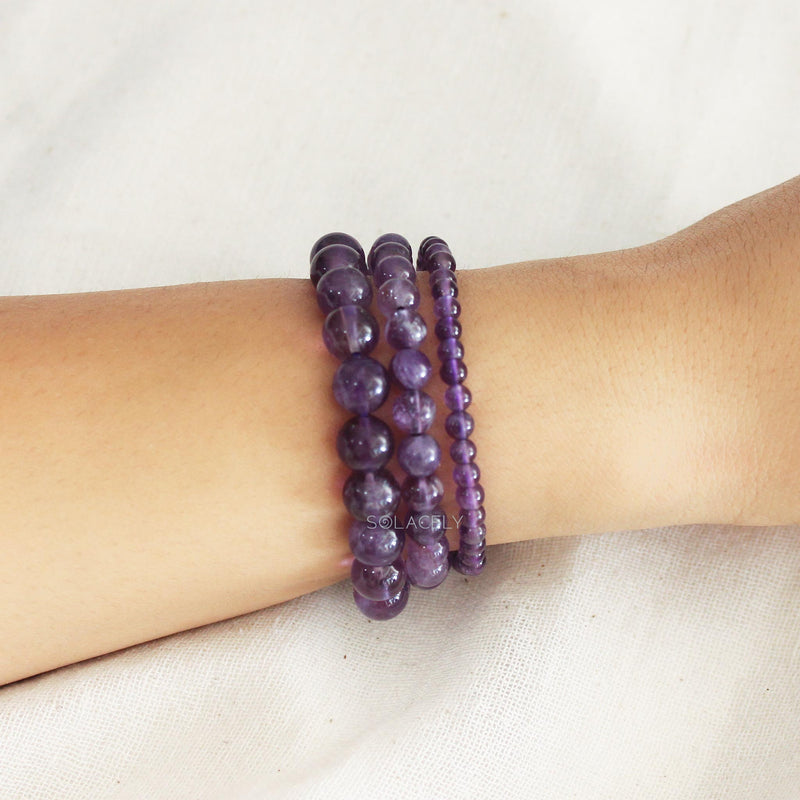
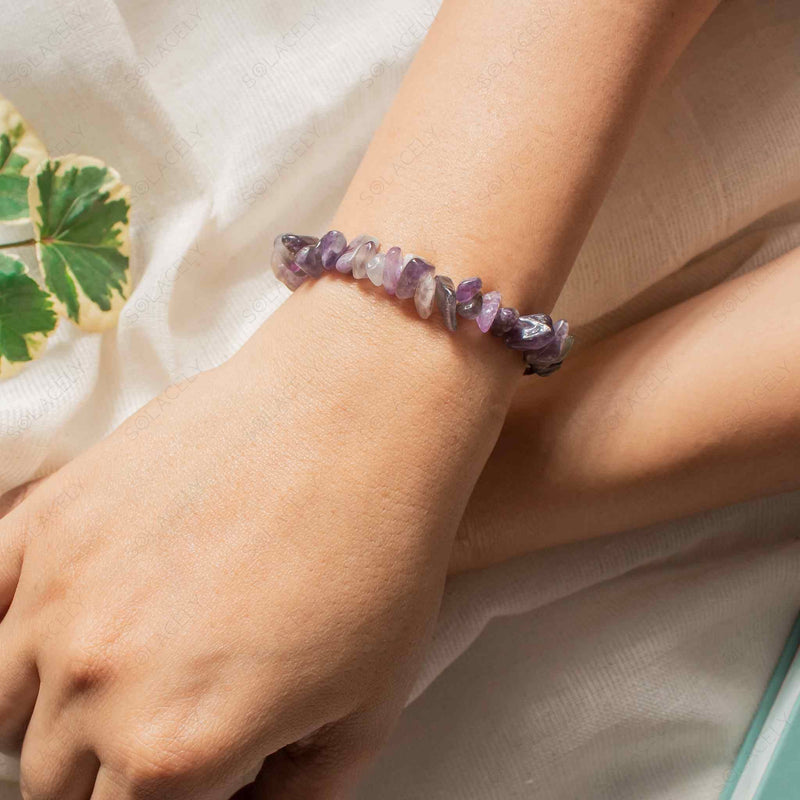
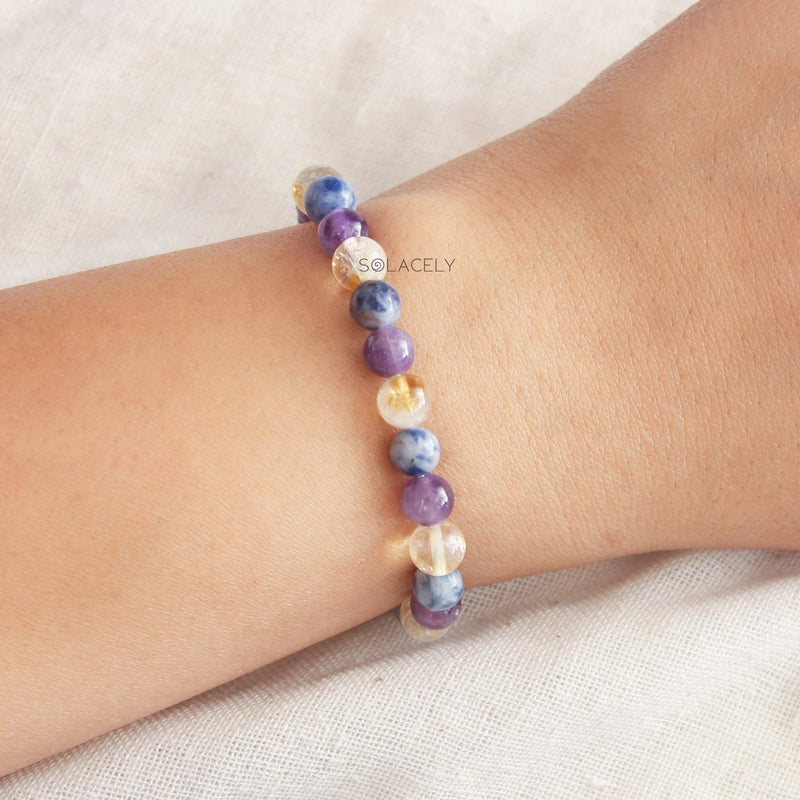
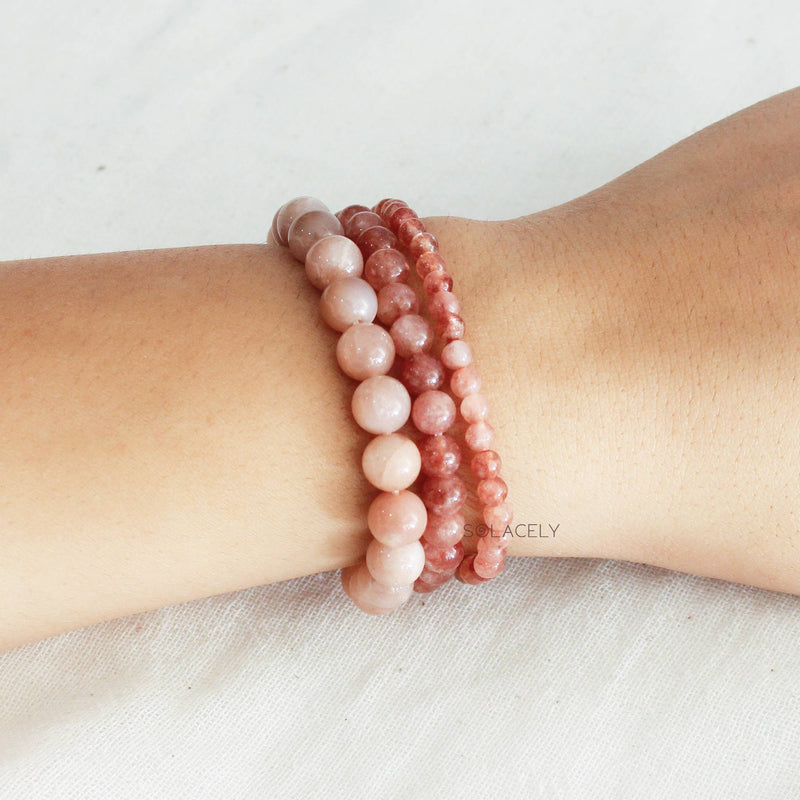
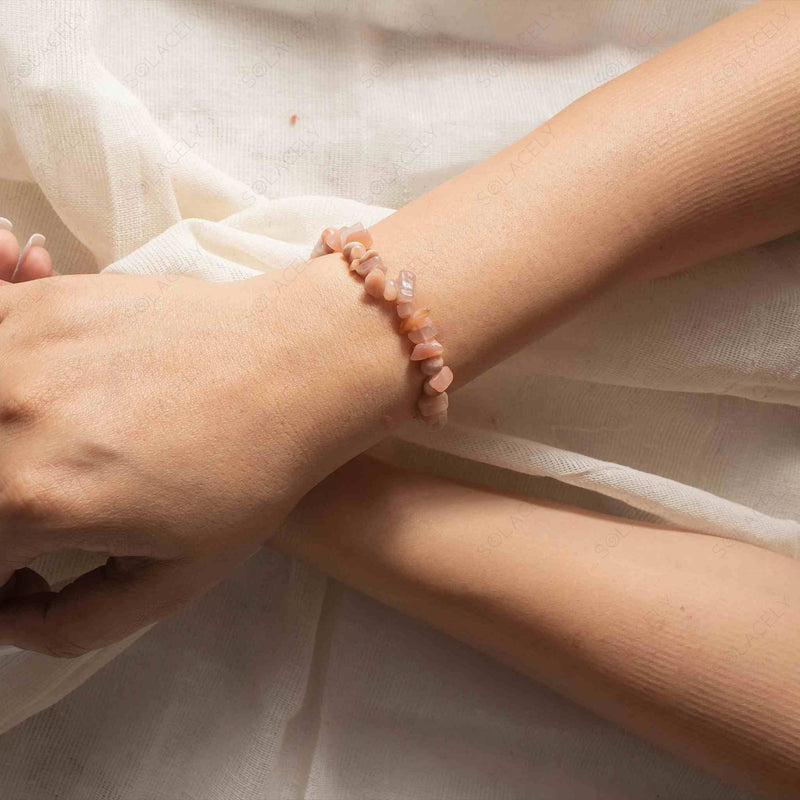
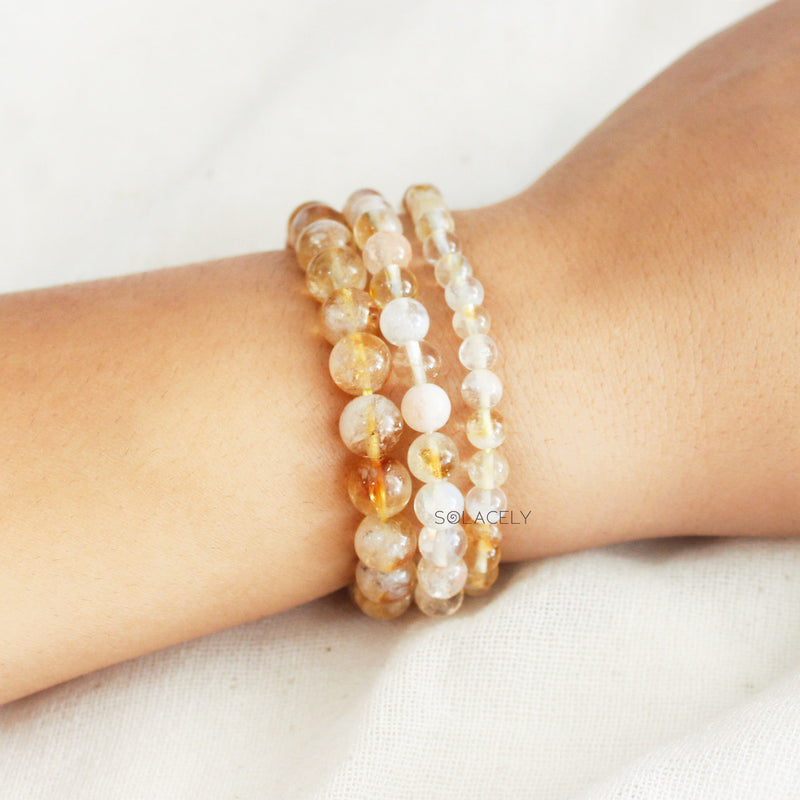
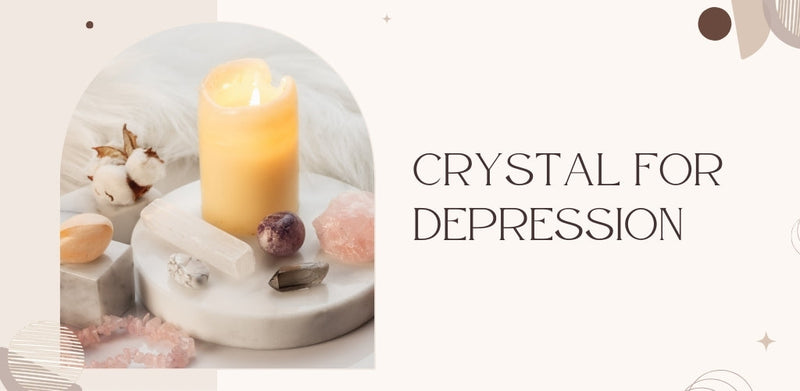
During a low stretch, people have long kept a few stones close: amethyst for calm, rose quartz for kindness towards yourself, citrine and sunstone for warmth and daylight, smoky quartz and black tourmaline for steadiness. Strung as a bracelet, those stones sit where you can see them all day. Most people wear one as a daily cue for a routine they have already chosen with support behind it.
If you are going through it right now, the kindest first step is to speak to a doctor or a qualified mental health professional. Depression responds well to care, and help is usually closer than it feels. Free and confidential support lines operate in most countries, and a GP or local health service can point you to the right one for where you live.
Key takeaways
- Depression is treatable. The National Institute of Mental Health describes it as a common but serious mood disorder that usually responds to psychotherapy, medication, or both, and a doctor or mental health professional is the route that treats it.
- A crystal bracelet is company alongside that care, something on your wrist that keeps the routine you agreed on in view.
- The stones traditionally kept close during a low stretch are amethyst, rose quartz, citrine, sunstone, smoky quartz, lepidolite and black tourmaline.
- Tie the bracelet to one small daily habit: daylight in the morning, a short walk, a wind down at night.
- Keep it dry, out of long sunlight and off during showers and the gym, and restring elastic pieces once a year.
Why do people reach for a bracelet during a low period?
Because it is something you can actually do on a day when doing anything feels like a lot. Choosing a stone, putting it on and touching it are small actions with a visible result. That pull is real, and it is one of the oldest reasons people have worn stones at all.
In our experience selling to people in exactly this position, the same reasons come up again and again. Someone wants a marker for the day they decided to try. Someone wants a private object nobody else has to ask about. Someone was given one by a friend who did not know what else to offer, and the gesture mattered as much as the stone.
A physical cue does a few small things well. It reminds you that you set an intention this morning. It gives your hands something to hold during a difficult phone call. It can mark a bad hour as only an hour, because you look down and remember you have had this one before and it passed.
Wear it as company rather than as a task. Nothing about a bracelet asks more of you than you can manage today. Our wider guide to crystals and low mood covers the same ground, and our crystals for emotional healing piece looks at how people use stones through a longer stretch of feeling flat.
Which stones are traditionally chosen for low mood?
Seven come up again and again: amethyst, rose quartz, citrine, sunstone, smoky quartz, lepidolite and black tourmaline. Each carries a long association with calm, warmth, self compassion or grounding, and each is durable enough to be strung on a bracelet you wear most days.
Knowing why a tradition picked a stone makes choosing one easier. Bright yellow and orange stones were tied to sun and warmth. Deep purple was tied to clear thinking and rest. Dark opaque stones were tied to weight and steadiness. Those associations are several centuries old, and they still explain why one bracelet feels right in your hand and another does not.
| Stone | Traditional association | Practical note |
|---|---|---|
| Amethyst | Calm, clearer thinking, rest | Quartz family, hard enough for daily wear, fades in long sun |
| Rose quartz | Self compassion, kindness towards yourself | Also quartz. Pale pink can read grey under office lighting |
| Citrine | Warmth, optimism, brightness | Golden quartz, tough enough for every day. Pick the depth of yellow you like |
| Sunstone | Energy, motivation, daylight symbolism | A feldspar, softer than quartz, dislikes knocks |
| Smoky quartz | Grounding, letting heavy feelings settle | Durable, though the brown colour can pale with sun exposure |
| Lepidolite | Emotional steadiness | A soft lithium mica, roughly 2.5 to 3 on Mohs, chips easily |
| Black tourmaline | Boundaries, grounding, protection | Durable but brittle along its length. Keep off hard surfaces |
The minerals underneath are ordinary geology. Amethyst is the purple variety of quartz and the February birthstone, sitting at 7 on the Mohs hardness scale. Tourmaline is a group of boron silicate minerals, and the opaque black variety, schorl, is the one you will usually see on a bracelet.
You do not need all seven. Most people settle on one, usually whichever they find themselves looking at. If you like the idea of more than one, a bracelet strung from two or three works perfectly well. Amethyst with rose quartz is a common pairing for rest and self kindness. Sunstone with citrine reads warm and bright. Smoky quartz with black tourmaline is the steadiest of the three and the easiest to wear with anything.
Where does a bracelet fit alongside sleep, daylight and movement?
Alongside, and never instead. Depression is treatable, and a doctor or mental health professional is the route that treats it, usually through psychotherapy, medication, or both. Around that care sit the everyday things clinicians tend to recommend as well: regular sleep, time outdoors in daylight, gentle movement and contact with other people. The bracelet is company for all of it.
A small reminder tends to work better than a big resolution. A bracelet that means put your shoes on and walk to the end of the road is asking for something achievable, and on a heavy day that counts for more than ambition does.
Here is how people tend to attach it to a routine:
- Put it on before the curtains open. Fastening it becomes the cue for getting daylight on your face, which is one of the more consistently recommended habits for anyone with disrupted sleep or mood.
- Use it as an appointment marker. Some people wear a specific piece only on therapy days. It stops the appointment from disappearing into a fog of identical days.
- Take it off at night. A deliberate removal marks the end of the day and the start of a wind down. Our crystals for sleep guide covers the bedside version of the same habit.
- Turn it during a hard moment. Rolling a bracelet on your wrist is private, nobody notices, and it buys you a few seconds of breathing.
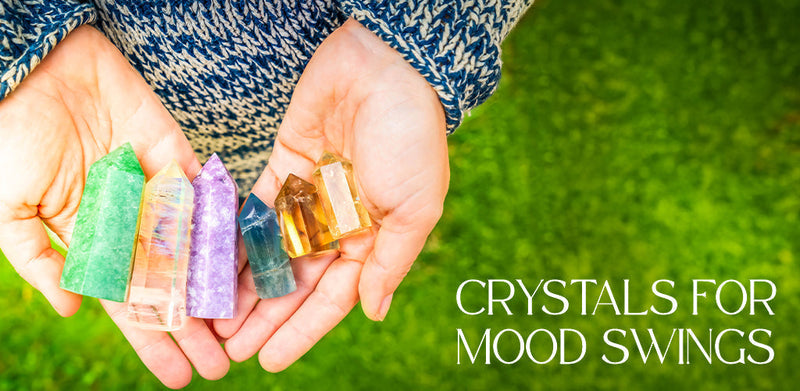
Whichever version you use, the bracelet keeps the intention in view. For days when mood shifts rather than sits flat, our crystals for mood swings guide covers a different set of habits.
How do you choose and size a crystal bracelet?
Choose the one you will actually keep on, then size it properly. Wrap a strip of paper or a soft tape measure around the widest part of your wrist, note the measurement, and add roughly one to one and a half centimetres for a comfortable fit with eight millimetre beads. Larger beads sit higher and need a little more room.
Bead size changes how a piece feels more than most people expect. Six millimetre beads are easy to forget, which is a problem when the point is that you notice it. Ten millimetre beads have real weight but catch on sleeves. Eight millimetre is the usual compromise.
Stringing matters too. Elastic cord is cheap, comfortable and eventually stretches out, particularly if it gets wet regularly. Knotted or wire strung pieces cost more and last far longer. If you are buying something you intend to wear every day for a year, that difference is worth the extra.
On which wrist, tradition offers the left for receiving and the right for giving out. Plenty of people follow that, and plenty wear it wherever they look most. Our guide to which hand to wear a crystal bracelet on walks through both. Wear it where you will see it.
How do you care for a crystal bracelet?
Keep it dry, keep it out of long sunlight, and take it off before showers, swimming and the gym. Hardness decides most of the rest, and the Mohs hardness scale is the quickest way to judge what a new stone will tolerate in daily wear.
The quartz family stones here, amethyst, rose quartz, citrine and smoky quartz, sit around 7 and handle ordinary wear. They still fade in prolonged sun, so keep a purple or brown bracelet off the windowsill. Lepidolite is the fragile one, soft and flaky, and should not share a pouch with harder beads.
Perfume, hairspray and hand cream dull polished beads and rot elastic cord faster than anything else. Put jewellery on last, once everything else has dried. Wipe beads with a soft dry cloth now and then, and restring elastic pieces once a year before they fail on their own.
For energetic cleansing, moonlight, sound or a short rest on selenite suit every stone here. Skip salt water, which is unkind to soft stones and to cord.
The properties described here reflect traditional and cultural belief around crystals. They are not medical claims, and nothing on this page is a substitute for professional healthcare, diagnosis or treatment. Depression is a serious medical condition, and it is treatable. If you are struggling, please speak to a doctor or a qualified mental health professional, and keep taking any treatment they have prescribed for you. If you or someone else is at immediate risk of harm, contact your local emergency services or a crisis line straight away.
Sources
- National Institute of Mental Health, Depression
- Gemological Institute of America, Amethyst Description
Written by Chetena Sharma. Reviewed by the Solacely editorial team.
Frequently asked questions
About the author


Written by Chetna Sharma, crystal healing practitioner and co-founder of Solacely. Chetna has worked with healing crystals for over a decade and curates Solacely's protective stone collection.