A protection necklace comes down to three decisions: the stone, the format, and the chain length. Black tourmaline, black obsidian, labradorite, amethyst, smoky quartz and hematite are the six that suit being worn, and hardness decides which of them survives daily wear.
Key takeaways
- Black tourmaline is the default, at 7 to 7.5 on the Mohs scale and opaque, which makes it the most forgiving stone to wear every day.
- Pendant or beaded is the first decision. A pendant is kinder to a soft stone, a beaded strand is kinder to a busy day.
- Chain length places the stone. Most protective practice puts it at the heart, which means 20 to 24 inches.
- Skip magnetic hematite. Many pieces sold that way carry rare earth magnets, which are genuinely dangerous if swallowed.
- Layering more protective pendants is not more protection in the tradition. One clear intention is the practice.
- Everything described here is traditional belief and cultural practice.
Pendant or beaded, and which suits you
This decision does more work than the stone choice, because it determines how much wear the piece actually takes.
A single pendant hangs clear of the body, meets far less abrasion than a wrist or a strand of beads, and is the only sensible format for a softer stone. It also reads as jewellery first, which matters if you work somewhere that would notice a full strand.
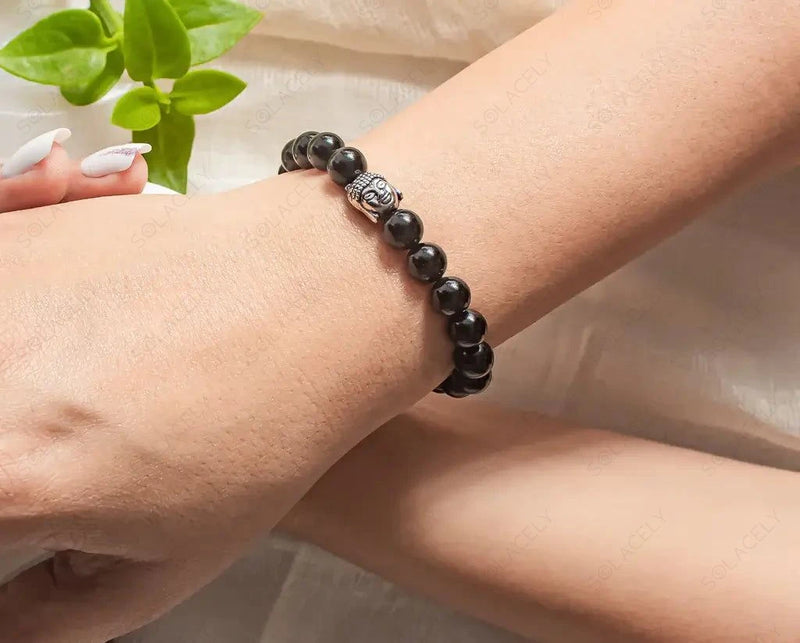
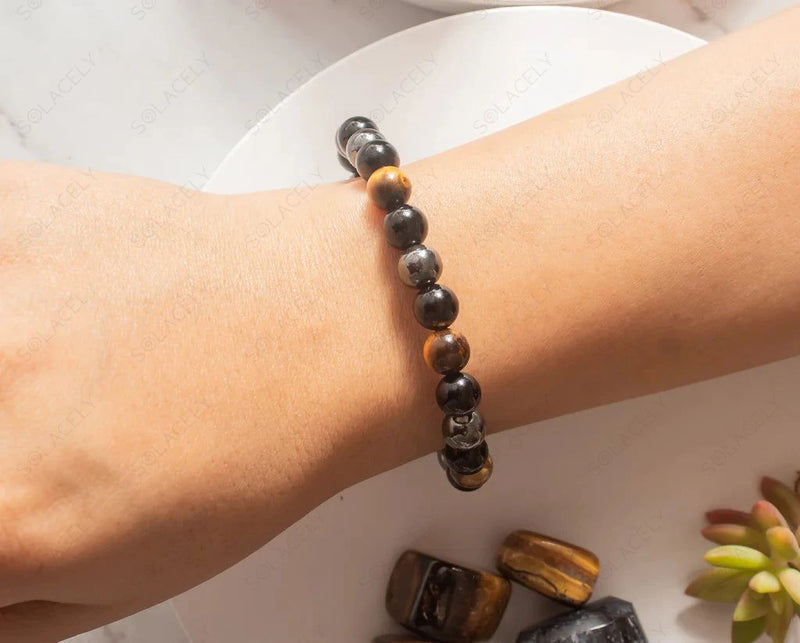
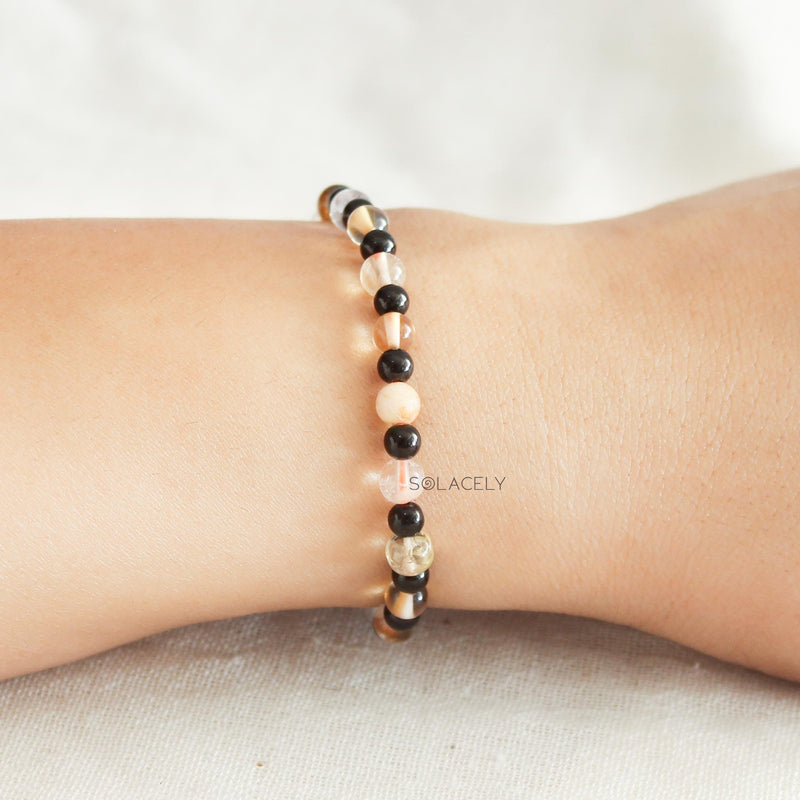
A beaded strand puts far more stone against skin, which is what a lot of practitioners want, and it survives a physical day better because there is no single point of failure. Beads knock against each other constantly, so a strand wants stones of a similar hardness or a spacer between them.
A cage or wrap setting is the answer for a raw piece or a stone you do not want drilled. It is also the format that lets you swap the stone with the season without buying a new chain.
Hardness, and what survives daily wear
The Mohs scale is the practical guide here, since a necklace meets clothing, seatbelts and other jewellery all day.
| Stone | Mohs | Best format |
|---|---|---|
| Black tourmaline | 7 to 7.5 | Anything, including a daily strand |
| Amethyst | 7 | Anything, but keep it out of long sun |
| Smoky quartz | 7 | Anything |
| Black obsidian | 5 to 5.5 | Tumbled pendant, not a raw edge |
| Hematite | 5.5 to 6.5 | Pendant or strand, non-magnetic only |
| Labradorite | 6 to 6.5 | Pendant, since it has cleavage |
Anything at 7 or above takes a strand without much thought. Below that, a pendant is the kinder choice, and a piece with cleavage like labradorite wants to hang clear rather than knock against neighbours all day.
The six stones worth wearing
Each is kept for a slightly different job, and the choice usually follows what prompted the search.
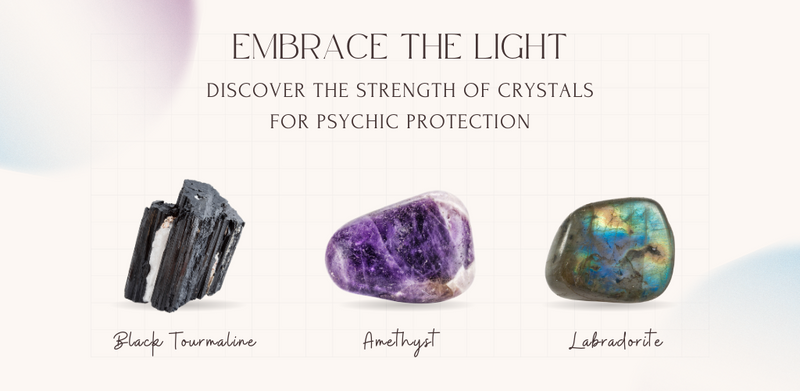
Black tourmaline is the default and the most worn protective stone there is. It is schorl, opaque, hard, and it does not show the marks a transparent stone would. Our black tourmaline guide covers the mineral.
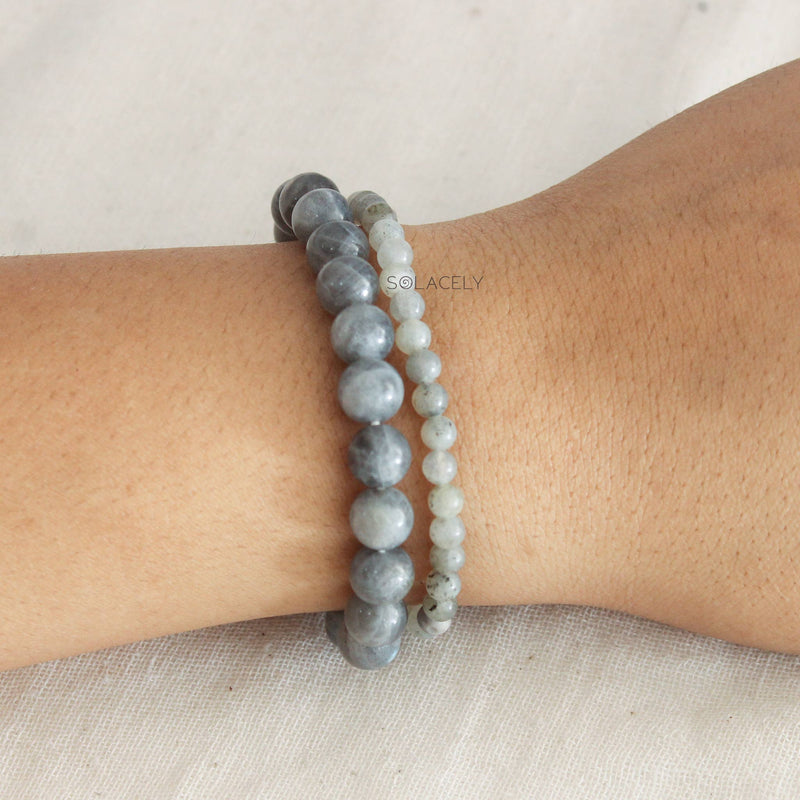
Labradorite is the empath's stone, associated in tradition with reflecting rather than absorbing, which is why it is the piece recommended to nurses, teachers and therapists. Its flash makes it the most striking pendant on this list. Our labradorite guide goes deeper.
Black obsidian is volcanic glass, kept for boundary work that wants deliberateness. Wear it tumbled or set, since a raw edge chips into genuinely sharp shards.
Amethyst is the quiet one, worn by people who want the protective association without the weight of a dark stone. Keep it out of sustained sun, since it pales and the colour does not come back.
Smoky quartz is the everyday grounding stone for anyone who finds tourmaline too heavy to wear all day.
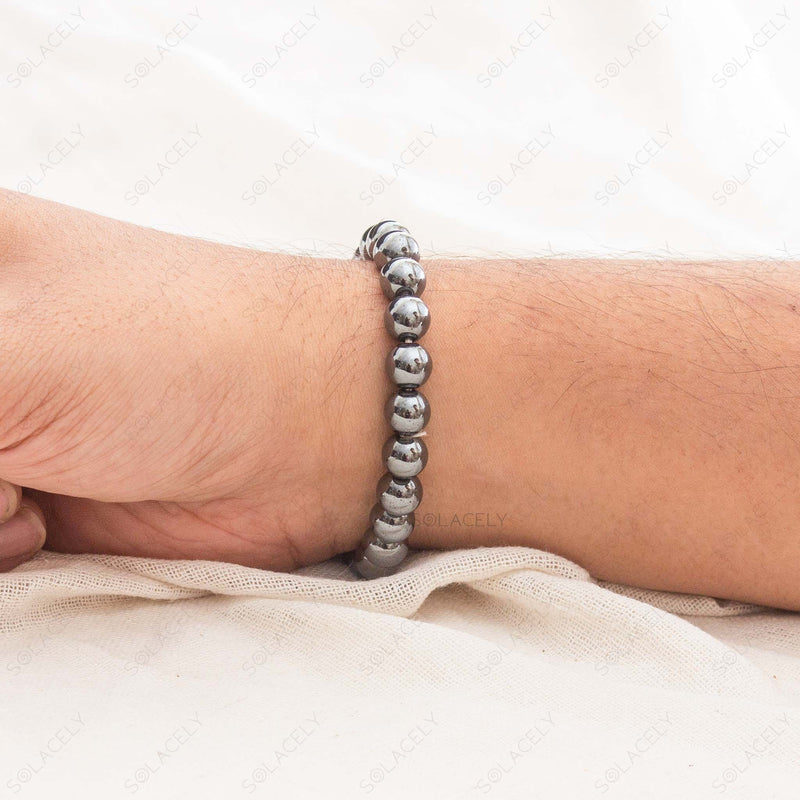
Hematite is dense, cool against the skin, and the traditional choice through a transition. Non-magnetic only, for reasons covered below.
Chain length, and where the stone sits
Length is not only a styling decision. In the tradition it determines which centre the stone rests against.
| Length | Where it sits | Suited to |
|---|---|---|
| 16 inches | The base of the throat | Speaking clearly, being heard |
| 18 inches | Just below the collarbone | The everyday default |
| 20 to 24 inches | The heart | Most protective practice |
| 28 inches and over | The solar plexus | Confidence and nerve |
Twenty to twenty four inches is where most protective pieces are worn, and it has the practical advantage of sitting under a collar. If you want the stone visible, eighteen inches is the length that reads as jewellery without looking like a statement.
Clasps, skin and safety
These are the details that decide whether a piece gets worn or ends up in a drawer.
Skip magnetic hematite. A good deal of what is sold under that name contains rare earth magnets rather than plain hematite, and swallowed magnets can cause serious internal injury. Ordinary non-magnetic hematite behaves better anyway, and magnetic pieces should stay out of any home with small children or pets.
Children need breakaway hardware. Any cord or chain worn by a child should have a clasp designed to release under load, and no necklace belongs on a child under three at all.
Nickel is the usual culprit when a chain irritates. Sterling silver, surgical steel and gold filled findings all sidestep it, and it is worth asking before you buy if you have reacted to jewellery before.
Keep malachite and pyrite off a necklace. Both sit high on the International Gem Society's gemstone toxicity table, and both belong on a shelf rather than against skin.
Layering, and how to care for a worn stone
The layering rule worth knowing is that the tradition treats protective stones as singular rather than cumulative. Three protective pendants at once is not three times the practice, and most practitioners settle on one clear piece carrying one clear intention. That is as true of a long established collection as it is of a first purchase.
Where you do layer, keep the hardness gap in mind. A labradorite pendant swinging against a tourmaline one all day will lose that argument, so give them separate chains of different lengths rather than a single crowded one.
For care, warm water, mild soap and a soft cloth suit the quartz family and tourmaline, then dry thoroughly around any drill hole. Hematite takes a dry wipe rather than a rinse, since it marks around holes. Skip ultrasonic and steam cleaners on everything here.
For cleansing, moonlight overnight, sound or a rest on a selenite plate suit every stone on this page, and a worn piece gets it far more often than a placed one. Daily is the traditional rhythm for something against skin all day. For the wider practice around the house rather than the body, our home protection guide covers the threshold ritual.
The properties described here reflect traditional and cultural belief around crystals. They are offered for reflection and wellbeing and are not medical advice, a diagnosis, or a treatment for any condition. If you are managing a health concern, please speak with a GP or a qualified practitioner. Never put a necklace or cord on a child under three, use breakaway clasps for older children, avoid magnetic hematite jewellery, keep pyrite and malachite away from skin and out of reach of children and pets, and never place crystals in drinking water.
Sources
Written by Chetena Sharma. Reviewed by the Solacely editorial team.
Frequently asked questions
About the author


Written by Chetna Sharma, crystal healing practitioner and co-founder of Solacely. Chetna has worked with healing crystals for over a decade and curates Solacely's protective stone collection.