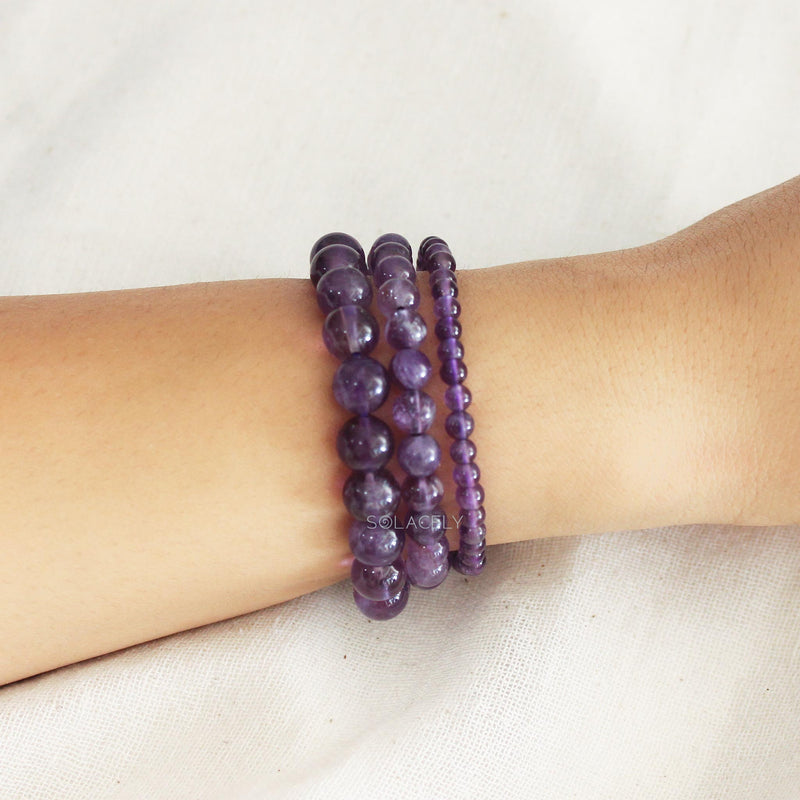
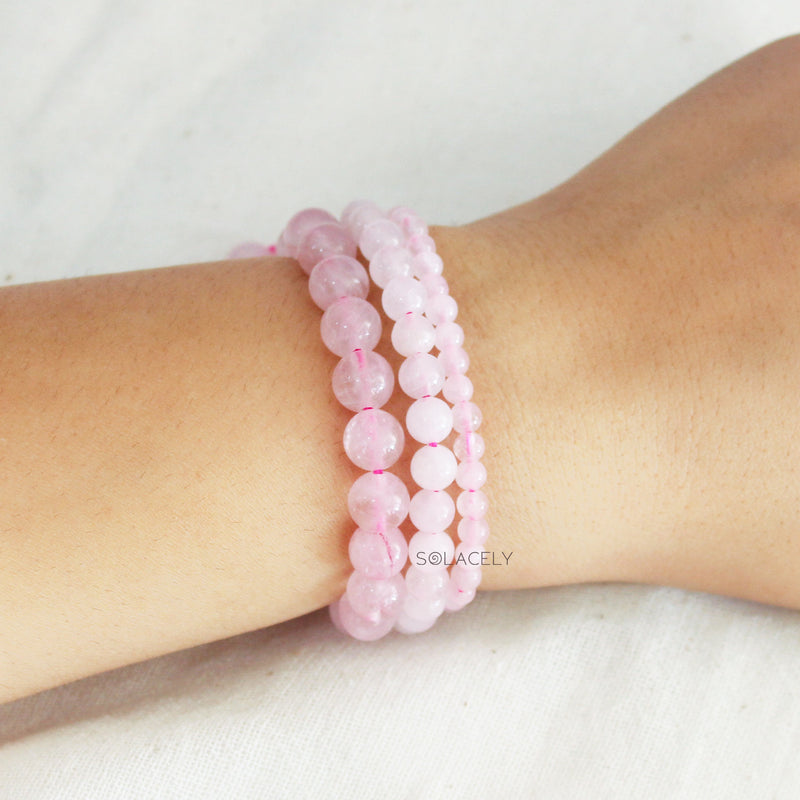
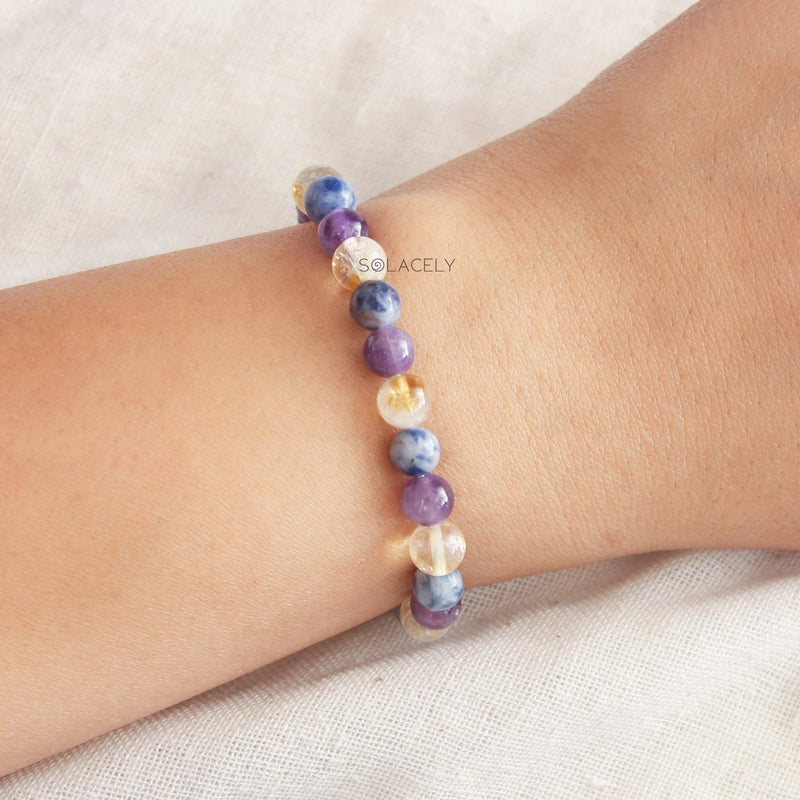
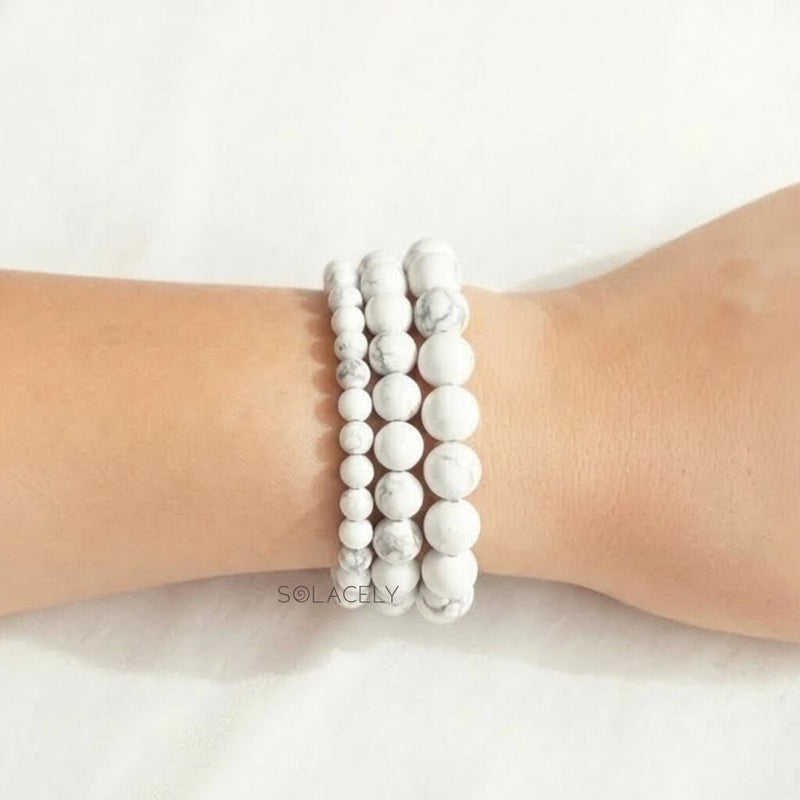
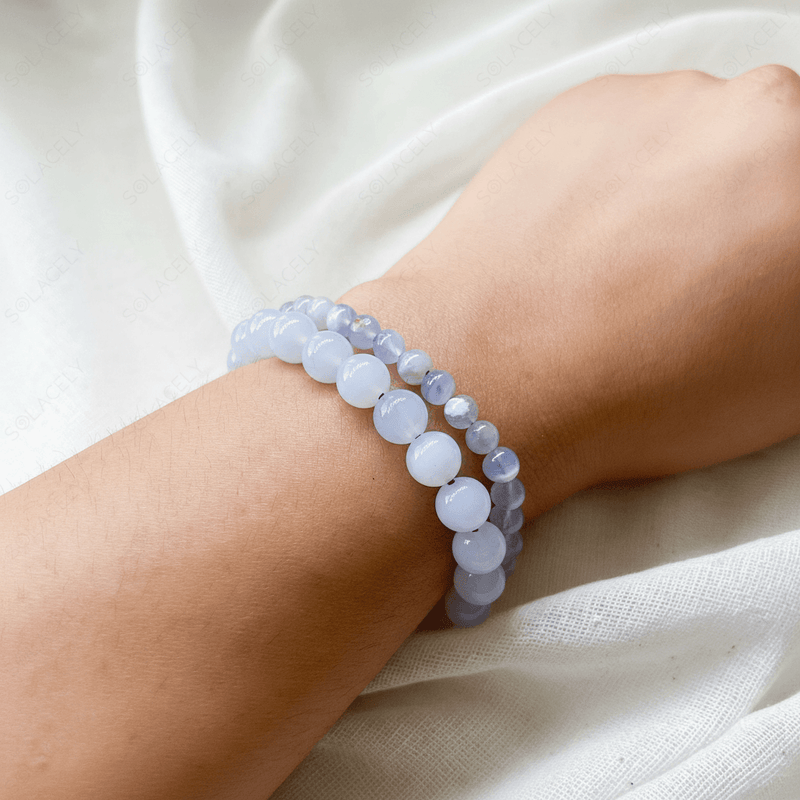
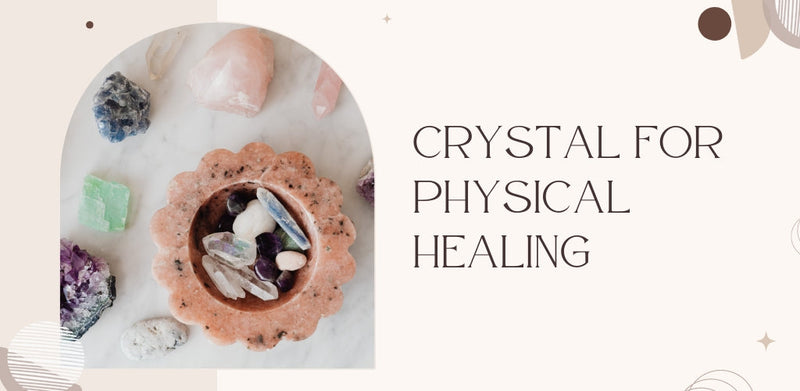
Amethyst and howlite for the sleep a flare disrupts, rose quartz and rhodonite for self-image on the harder days, blue lace agate for the anxiety of being looked at. These are the stones people keep close through a skin condition, chosen for how it feels to live with rather than for the skin itself, and held alongside a dermatologist's care.
Please see a dermatologist. Acne, eczema, rosacea and psoriasis all have effective treatments, and prescription care works far better and faster than anything else available. Early treatment also reduces the chance of lasting scarring. Everything on this page is a traditional practice kept as company alongside that care.
Key takeaways
- The traditional set is directed at how you feel: sleep, self-image, and being looked at.
- Stress can make several skin conditions harder to manage, which is where a calming practice may help around the edges.
- Never put crystals in water you drink or apply. This one matters.
- Face rollers are fine on intact skin, kept clean, but not on active breakouts or broken skin.
- Dermatological treatment is what addresses the skin.
What people are living with
A visible skin condition affects people well out of proportion to its medical severity. It changes how you feel walking into a room, how much of the morning goes on covering it, and how often you catch yourself checking a reflection. Acne in particular is strongly associated with lowered self-esteem, and the fact that it is common does not make it small for the person living with it.
Treatment addresses the skin. It does not address that, and the gap is where a crystal practice sits: a small daily ritual that belongs to you while the treatment does its slower work.
The stones people keep close
| Stone | What it is kept for |
|---|---|
| Amethyst | Sleep, which itching and discomfort disrupt badly |
| Howlite | Racing thoughts at night during a flare |
| Rose quartz | Self-image and how you speak to yourself |
| Rhodonite | Self-acceptance when appearance has changed |
| Blue lace agate | The anxiety of being looked at |
| Lepidolite | The emotional swing of an unpredictable condition |
Every entry points at the person rather than the skin, which is the shape of the tradition here. Our crystals for emotional healing guide covers them in wider context, and crystals for confidence covers going out in public.
Stress, and where a calming practice fits
Stress can make several skin conditions harder to manage. That is the one place where a calming daily practice may genuinely help around the edges, by taking a little pressure out of a difficult stretch.
Worth saying gently: stress is rarely the sole cause, and being told your skin is your own fault for being stressed is something people with visible conditions hear far too often. It is not a useful thing to carry.
If a crystal practice is what gets you to sit down and breathe for ten minutes a day, that is a good enough reason to keep it. Our crystals for sleep guide covers the night-time side, which is often where a flare bites hardest.
Face tools: what is safe
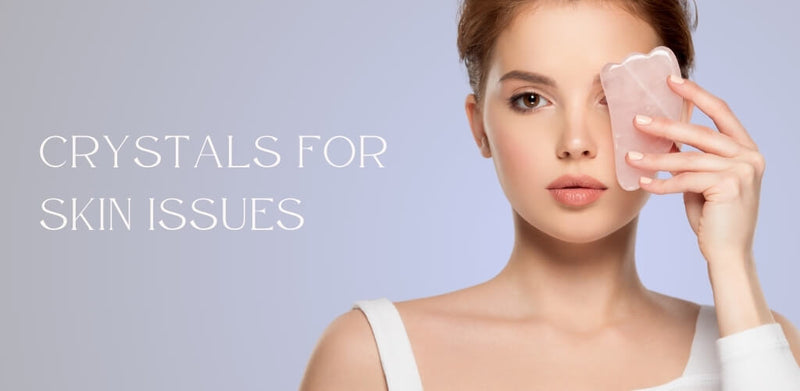
Rollers and gua sha stones are the one place crystals genuinely touch skin, and there are real rules.
- Safe on intact skin. Light pressure, clean tool, moisturiser or oil as a slip layer.
- Not on active breakouts. Pressure and dragging can spread bacteria and inflame things further.
- Not on broken or weeping skin. Do not introduce anything to a compromised barrier.
- Not during a rosacea flare. Friction and warmth are both triggers.
- Wash the tool every time. Warm soapy water. A stone living on a bathroom shelf collects a lot.
What a roller does is mechanical and pleasant: a cool surface plus light massage, which can temporarily reduce puffiness.
The one safety rule that matters
Do not put crystals in water you intend to drink or apply to your skin. This is the one genuinely unsafe practice that circulates, and it is worth being plain about.
Many minerals contain metals. Malachite contains copper, galena contains lead, and others contain aluminium or arsenic. Tumbled pieces of unknown provenance may also be stabilised with resins. Water sitting on any of these can pick up material, and a jar of stone water left on a windowsill is not sterile either.
There is nothing to gain on the other side of that, so it is an easy one to skip. Keep the stones dry and keep them near you instead.
What looks after skin
The basics are unglamorous and effective: a gentle cleanser, sunscreen daily, moisturiser suited to your skin, and not adding six new products at once when something flares.
Beyond that, see a dermatologist rather than cycling through products. Prescription treatment for acne, eczema and rosacea is genuinely effective and cheaper over time than a shelf of things that did not work. Do not pick at lesions, do not scrub inflamed skin, and protect your sleep, since barrier repair happens overnight.
For where crystal practice honestly sits alongside physical health, see crystals and physical healing, and our companion piece crystals for skin issues.
Caring for these stones
Amethyst is quartz at 7 on the Mohs scale and takes warm water and a soft cloth, though it pales in sustained sun, so charge it in moonlight. Howlite is soft at around 3.5 and marks easily, so store it on its own. Lepidolite flakes along its layers and prefers to be kept dry.
For energetic cleansing, sound, smoke, moonlight or a rest on selenite all suit the group, and weekly suits anything carried daily.
This article is general information about a traditional practice, not medical advice. Crystals do not treat acne, eczema, psoriasis, rosacea or any skin condition. Never ingest or apply water that has held crystals. Consult a qualified dermatologist about any persistent skin concern, and do not delay treatment.
Sources
Written by Chetena Sharma. Reviewed by the Solacely editorial team.
Frequently asked questions
About the author


Written by Chetna Sharma, crystal healing practitioner and co-founder of Solacely. Chetna has worked with healing crystals for over a decade and curates Solacely's protective stone collection.