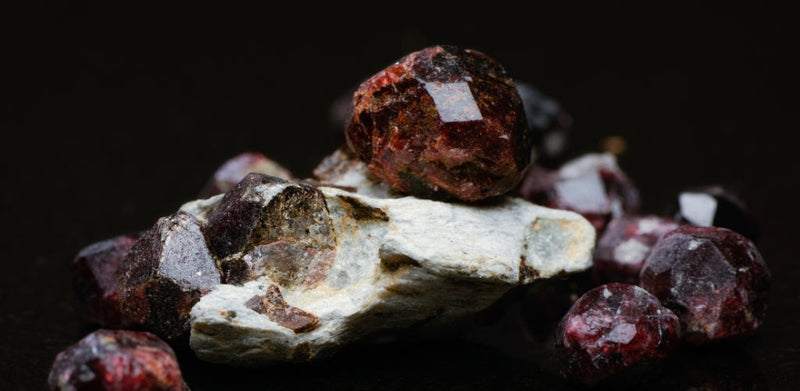
January's birthstone is garnet. Garnet is not a single gemstone but a group of related silicate minerals that crystallise in colours from deep red to bright green, rating 6.5 to 7.5 on the Mohs scale. That range makes it one of the most varied birthstones on the calendar.
Key takeaways
- Garnet is the modern January birthstone in the standard list jewellers use worldwide.
- Garnet is a group of silicate minerals, not one species. Almandine, pyrope, spessartine, grossular, andradite and uvarovite all belong to it.
- Colours run from deep red and orange through to green tsavorite and demantoid, plus rare near-black stones.
- Hardness sits at 6.5 to 7.5 on the Mohs scale, durable enough for daily wear if the setting protects the stone from knocks.
- Garnet is traditionally kept for drive, warmth and loyalty, and is linked with the root chakra in crystal practice.
What is the January birthstone?
Garnet is the birthstone for January, and it is not one mineral but a set of closely related species and hybrids. That is why January babies can wear anything from a deep claret red to a vivid grass green and still be wearing their birthstone.
The modern birthstone list that most jewellers follow was standardised during the twentieth century, and garnet has held January throughout. Older traditions assigned stones by zodiac sign rather than calendar month, so you will also see garnet linked to Capricorn and Aquarius. Both readings sit happily side by side, and plenty of people wear the stone for either reason.
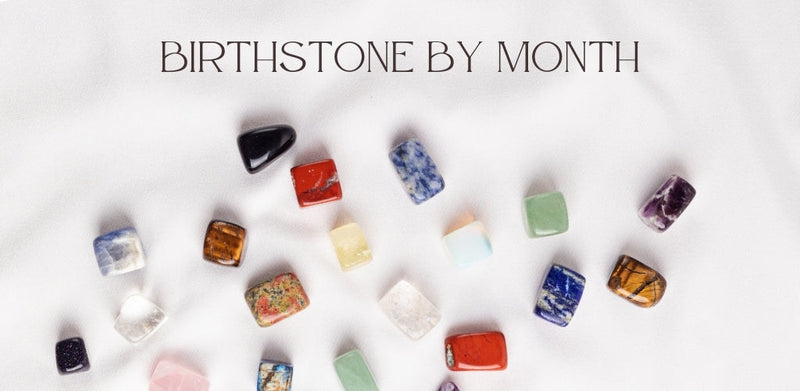
If you want the whole calendar rather than one month, our birthstones by month guide lays out all twelve alongside their traditional and modern alternates.
What is the garnet group, and why is it not one stone?
Garnet is a family of silicate minerals that share one crystal structure while differing in chemistry. Mineral references describe the group as minerals with a common structure and widely varying composition, which is exactly what produces the colour spread. Group members form in metamorphic and igneous rocks on every continent.
Six species do most of the work in jewellery. The names sound technical, but each one simply reflects a different mix of elements sitting inside the same structural framework. Swap iron for magnesium or manganese, and the colour changes.
| Garnet species | Typical colour | Worth knowing |
|---|---|---|
| Almandine | Deep red to reddish brown | The most common garnet in jewellery |
| Pyrope | Rich blood red | The Bohemian garnet of antique pieces |
| Spessartine | Orange to reddish orange | Sold as mandarin garnet when vivid |
| Grossular | Green, yellow, orange, colourless | The green variety is tsavorite |
| Andradite | Green, yellow, black | Green is demantoid, black is melanite |
| Uvarovite | Bright emerald green | Crystals are usually too small to cut |
Several of the best known trade names are varieties rather than species. Tsavorite is green grossular. Demantoid is green andradite. Hessonite is the warm brown-orange grossular sometimes called cinnamon stone, and rhodolite is a purple-red blend sitting between pyrope and almandine.
Colour is also the main price driver. Red almandine is the friendliest on the wallet in bead and tumble form, while fine demantoid and tsavorite are collector stones priced to match. If the red is what draws you, our red crystals guide puts garnet alongside carnelian, red jasper and ruby.
What does garnet mean, and where does the lore come from?
Garnet's symbolism grew out of its history rather than the other way round. The stone turns up in Egyptian jewellery, in Roman signet rings used to stamp wax seals, and in the kit medieval travellers carried for safe passage. Those documented uses seeded its links with loyalty, protection and vitality.
The name points at the look of the stone. It traces back to a Latin root meaning grainy or seed-like, a nod to the resemblance between clusters of small red crystals and pomegranate seeds. That pomegranate connection runs through the old stories too, from the Persephone story to Victorian keepsake jewellery.
One of the best loved tales has Noah steering the ark by the light of a garnet lantern hung at the prow. It has been retold for centuries because it captures something people have long felt about the stone: a source of light and direction in the dark. That image is part of why garnet is still given for safe travel today.
Bohemian pyrope garnet dominated European jewellery through the eighteenth and nineteenth centuries, cut into dense clusters of tiny stones. That period explains why so many antique garnet pieces still circulate, and why a deep, slightly brownish red is what most people picture when they hear the word.
What is garnet used for in crystal practice?
In modern crystal practice, garnet is kept for drive, warmth and commitment. Practitioners associate it with the root chakra and treat it as a grounding stone that adds energy rather than calm. It is the stone many people reach for when they want to feel settled and switched on at the same time.
The usual reasons people reach for it are straightforward. A flat stretch where motivation has drained away. The start of a demanding project. A relationship milestone where the stone's long link with devotion feels fitting. Garnet tends to be worn as an everyday bracelet rather than saved for occasions.
Placement comes down to preference. Some people wear garnet on the left wrist so it stays in contact with the skin through the day. Others keep a tumbled stone in a work bag, or sitting on a desk where it catches the eye during a long afternoon. What matters is seeing it often enough that it keeps the intention you chose it for in view.
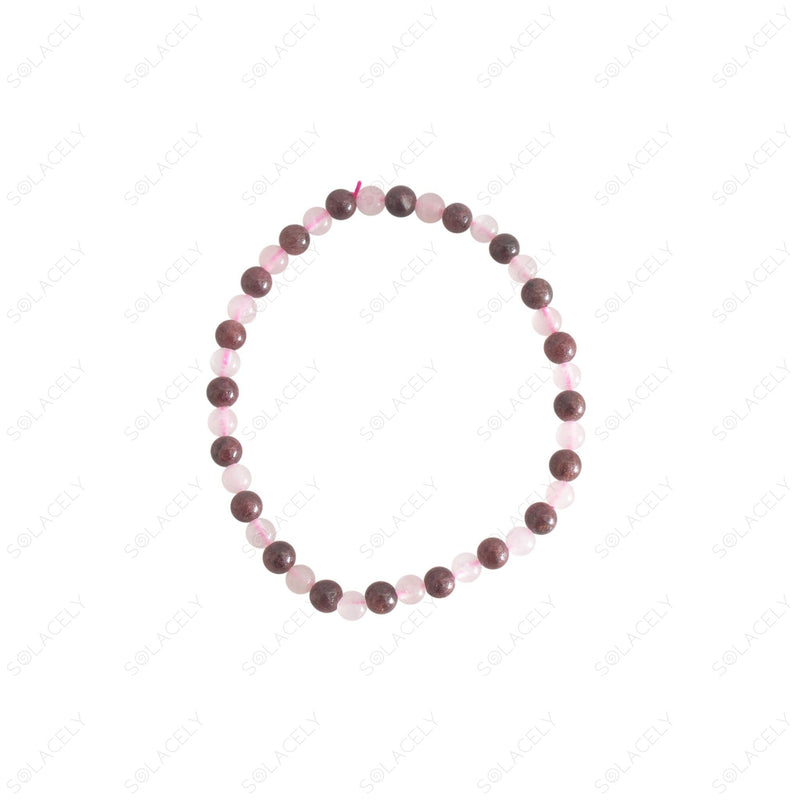
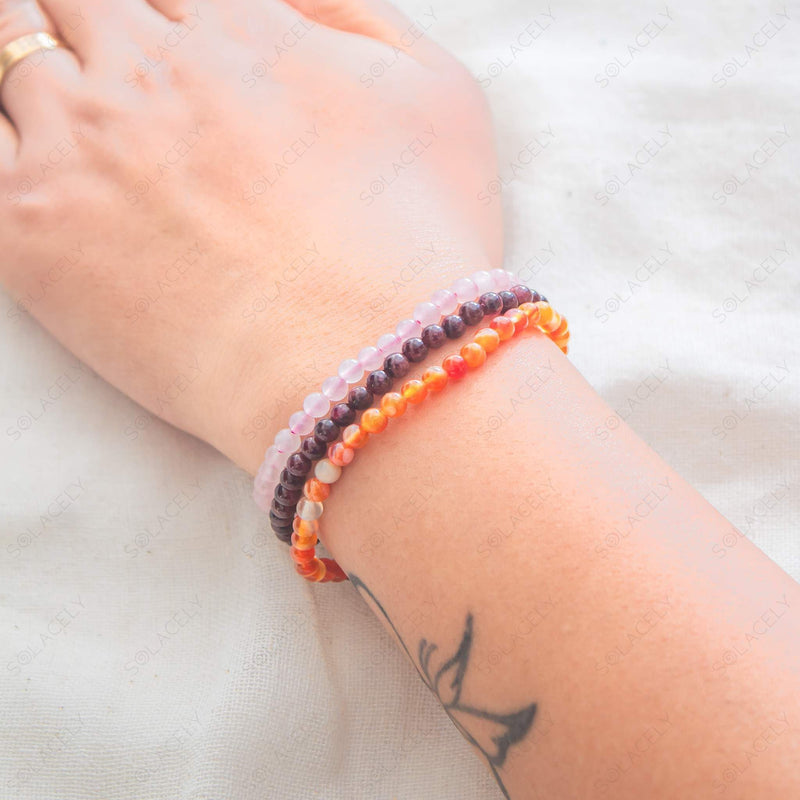
Because garnet is warming rather than soothing, it is often paired with something softer. Clear quartz for clarity, citrine for optimism, rose quartz for tenderness. The fuller breakdown of properties, chakra links and pairings sits in our garnet crystal meaning guide.
How do you choose and wear garnet?
Choose garnet on colour first, clarity second and setting third. Red almandine and pyrope are the most available and the most affordable, orange spessartine costs more, and green demantoid or tsavorite sit at the top of the range. At 6.5 to 7.5 on the Mohs scale, garnet handles daily wear well.
Cut matters more here than people expect. Deep red almandine can read as almost black in a chunky, over-deep cut, so shallower stones and careful faceting keep the colour visible. Ask to see a piece in daylight near a window rather than judging it under shop spotlights.
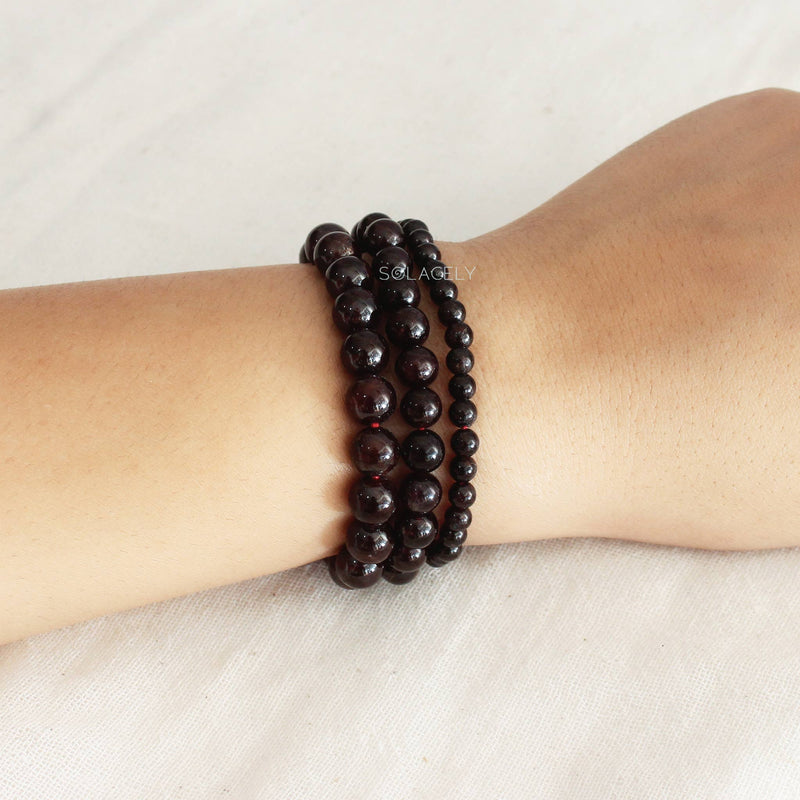
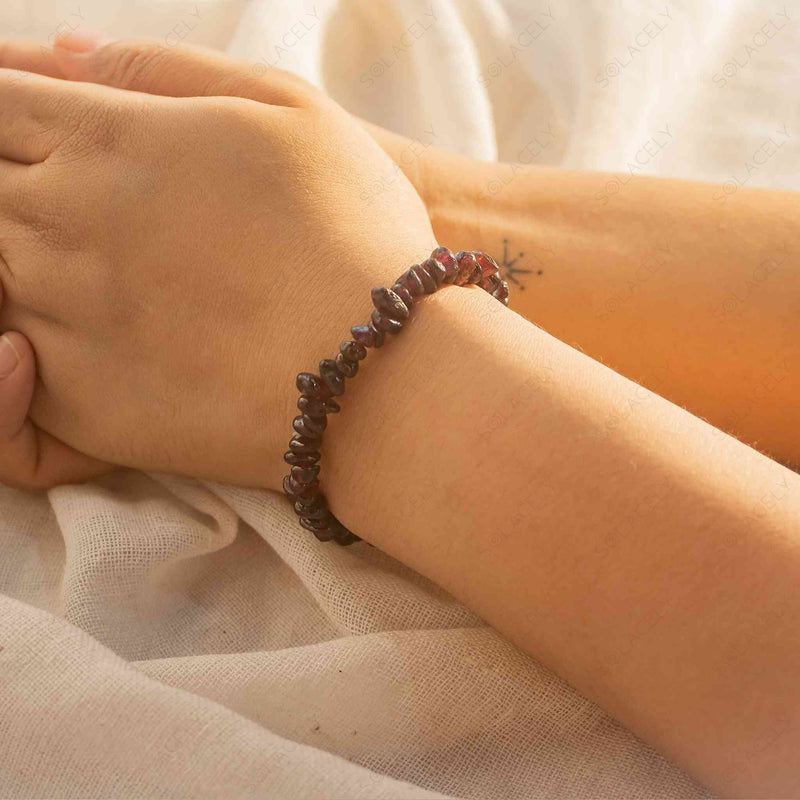
Rings take the most abuse, so a bezel or a slightly recessed setting is sensible for a garnet you plan to wear constantly. Pendants and earrings are far more forgiving. Beaded bracelets are the most common format in crystal shops, and garnet chips make a low-cost entry point.
Species names are worth asking about when you buy. A seller who can tell you whether a red stone is almandine or pyrope, or whether a green one is tsavorite or demantoid, is usually the one who knows their stock well. It also helps you build a collection deliberately rather than by accident. Buying by species name, almandine or pyrope or spessartine rather than just "garnet", is the quickest way to get the exact red you pictured.
How do you clean and care for garnet?
Warm water, mild soap and a soft brush clean garnet safely. Standard gemmological care guidance is consistent on this: warm soapy water is always safe, ultrasonic cleaners are risky for stones containing fractures, and steam cleaning is not recommended. Store garnet apart from harder gems to avoid scratches.
Everyday habits matter more than occasional deep cleans. Put jewellery on after perfume, hairspray and lotion have dried, because residue builds a film that flattens the sparkle of a faceted stone. Take rings off for washing up, gardening and gym sessions.
For energetic cleansing, moonlight, sound or a short rest on selenite all suit garnet. Brief sunlight is fine, though there is no good reason to leave any stone baking for hours. Checking a new stone against the Mohs hardness scale is still the fastest way to judge what it can take.
Is garnet a good January birthday gift?
Garnet works well as a January birthday gift because it is meaningful, durable and available at almost any budget. A tumbled stone or chip bracelet costs very little, while a faceted pyrope pendant scales up neatly. The colour also suits most skin tones and wardrobes, which removes a lot of guesswork.
Two practical tips before you buy. Ask whether the recipient wears silver or gold, since a deep red sits quite differently against each metal. And if they already own red garnet, an orange spessartine or a green tsavorite is still their birthstone, just an unexpected version of it. For more ideas by occasion, browse our crystals for birthday gifts selection.
The properties described here reflect traditional and cultural belief around crystals. They are not medical claims and are not a substitute for professional healthcare. If you are managing a health concern, speak to a qualified practitioner.
Sources
Written by Chetena Sharma. Reviewed by the Solacely editorial team.
Frequently asked questions
About the author


Written by Chetna Sharma, crystal healing practitioner and co-founder of Solacely. Chetna has worked with healing crystals for over a decade and curates Solacely's protective stone collection.