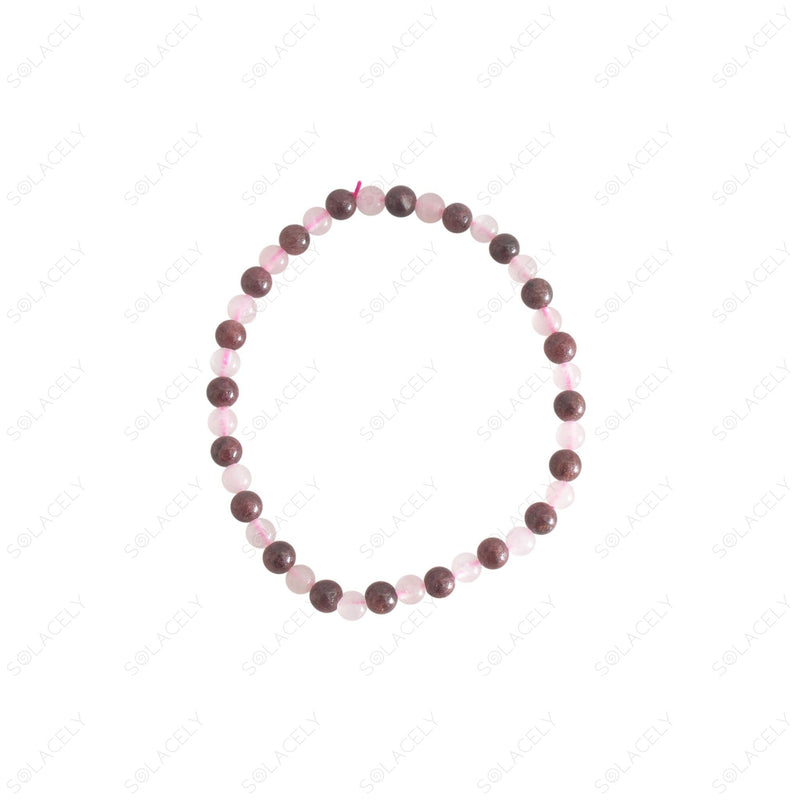
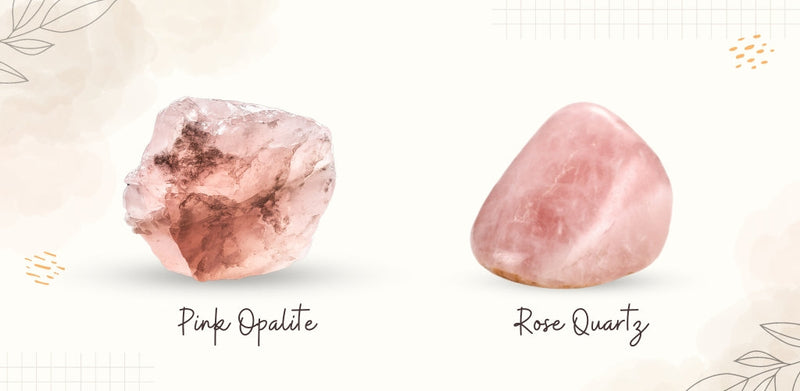
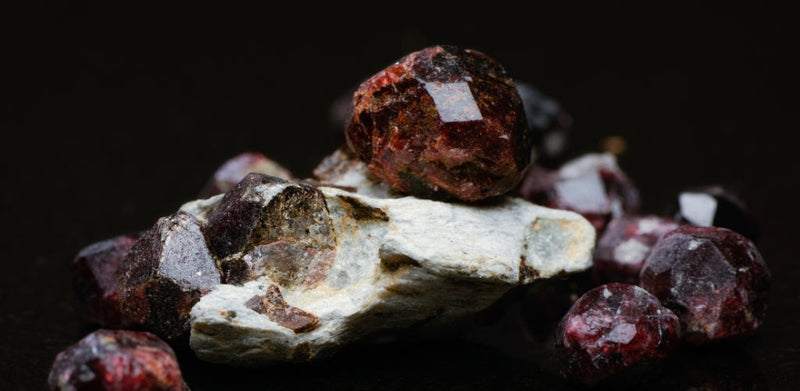
Pink opalite and garnet is a pairing of opposites: a soft opalescent glass with a milky glow, worn for calm, and a deep red silicate mineral worn for drive and warmth. People combine them when they want steadiness and motivation from the same piece, softening garnet's intensity without losing its push.
Key takeaways
- Pink opalite is prized for its soft milky shimmer and light, unheavy feel, and is used much as rose quartz is.
- Garnet is a group of silicate minerals rated 6.5 to 7.5 on the Mohs scale, and is the January birthstone.
- The pairing is traditionally kept for emotional steadiness plus motivation: opalite softens, garnet energises.
- Care differs. Garnet handles brief sunlight; keep opalite out of prolonged sun and away from abrasives.
- A popular choice for couples pieces, given garnet's long association with devotion.
What pink opalite is
Pink opalite is an opalescent glass with a gentle, milky play of light across its surface. It has become one of the most recognisable pieces in modern crystal practice, and its appeal is easy to understand the moment you hold one: a soft pink shimmer that shifts as it turns, and a light feel on the wrist that suits people who find heavier stones too much.
In practice it is kept for the same territory as rose quartz. Tenderness, calm, a softer tone in how you speak to yourself. People reach for it during periods when they want something visually quiet, and it is often the piece someone buys first because it is simply lovely to look at.
That closeness to rose quartz is why the pink opalite and rose quartz pairing appears so often in beginner collections.
What garnet is
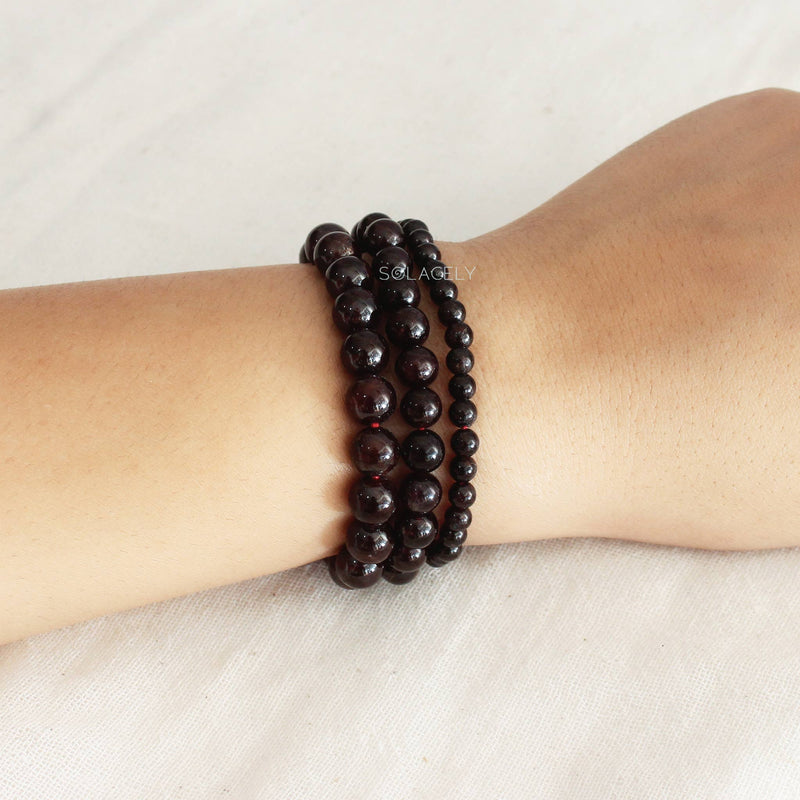
Garnet is not one mineral but a family of them, a group of silicates sharing a common crystal structure while varying widely in composition. That is why garnet spans such a range of colour, from the deep reds most people picture through orange, green and near black. The classic red material is usually almandine or pyrope.
Gemmological grading places a rich, even, well saturated red at the top of the range, and garnet is the recognised birthstone for January. At 6.5 to 7.5 on the Mohs scale it is comfortably durable for everyday jewellery.
Its history is long and well documented. Garnet was set into Egyptian jewellery, used in Roman signet rings, and carried by travellers in medieval Europe as a token of safe return. Those uses are the root of garnet's association with commitment, protection on a journey, and steady warmth. Our fuller breakdown sits in the garnet crystal meaning guide.
Why pink opalite and garnet work together
The combination works because the two are traditionally kept for different jobs. Garnet is the accelerator: warmth, appetite for life, willingness to commit. Opalite is the cushion: softness, a slower pulse, less edge. Worn together, the intention is encouragement that does not tip into agitation.
This is why the pairing turns up so often in pieces made for people coming out of a flat stretch. Garnet on its own can feel like a lot when you are already frayed. Opalite takes the temperature down a few degrees while leaving the motivation intact. If your interest is mainly the emotional-repair side, the wider crystals for emotional healing guide covers more options.
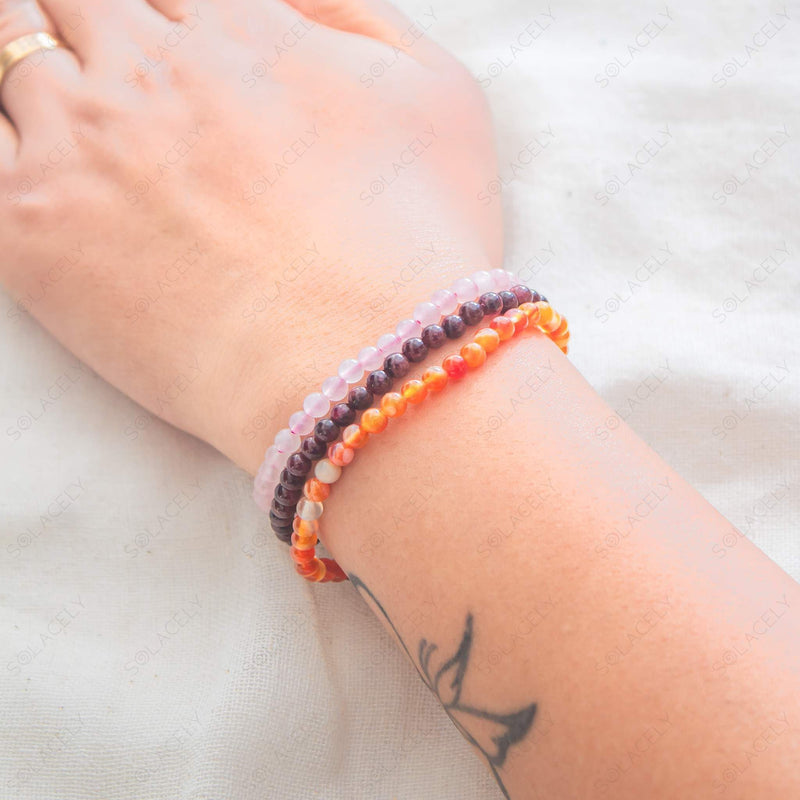
The visual logic is just as real. Milky pink against deep red is a genuinely good colour pairing, and jewellery designers use the contrast on purpose: opalite as the field, garnet as the accent.
How to wear or place the pairing
The simplest approach is a stack: one opalite strand and one garnet strand on the same wrist. Many wearers put garnet closest to the skin and opalite outside it, on the reasoning that the stone you want working hardest sits nearest. Preference matters more than doctrine here.
- Bracelets. The most forgiving format. Stack two strands, or choose a single piece that alternates both.
- Pendants. A garnet drop with opalite beads sits near the heart, which is where both are traditionally directed.
- Rings. Better suited to garnet, which is the harder of the two and takes daily knocks well.
- At home. A garnet piece on a desk for focus, opalite on a bedside table for wind-down.
If your reason for reaching for garnet is nerve rather than warmth, the dedicated crystals for confidence selection covers stones chosen specifically for self-assurance.
Caring for pink opalite and garnet
These two want slightly different handling, and knowing the difference keeps both looking their best for years.
| Pink opalite | Garnet | |
|---|---|---|
| Hardness | Roughly 5.5 to 6.5 | 6.5 to 7.5 Mohs |
| Sunlight | Keep out of prolonged sun | Short exposure is fine |
| Water | Quick wipe, dry fully | Warm soapy water, soft brush |
| Store with | Softer pieces only | Away from harder stones |
| Cleansing | Moonlight, sound, selenite | Moonlight, sound, brief sun |
Keep perfume, hairspray and lotion off both. Chemicals dull opalite's polish and leave a film on faceted garnet that flattens its fire. Put jewellery on last, after cosmetics have dried.
For energetic cleansing, moonlight, sound, or a short rest on selenite all suit the pair. Skip long sun sessions and skip salt water, which is unkind to both.
Who this combination suits
This is a pairing for people in transition. It is chosen most often by those working through a period where energy has dropped but the demand has not, and by couples who want a shared piece carrying garnet's long association with devotion. It is also a lovely entry point for anyone who finds single-stone pieces underwhelming and wants a combination with a clear rationale behind it.
It suits less well someone looking for a hard protective stone. Where grounding and shielding are the goal, black tourmaline or smoky quartz are the more conventional choices, and garnet's warmth is doing a different job.
Crystals are offered here for reflection and wellbeing as part of a long standing tradition. They are not a treatment for any medical condition and are not a substitute for professional healthcare. If you are managing a health concern, please speak to a qualified practitioner.
Sources
Written by Chetena Sharma. Reviewed by the Solacely editorial team.
Frequently asked questions
About the author


Written by Chetna Sharma, crystal healing practitioner and co-founder of Solacely. Chetna has worked with healing crystals for over a decade and curates Solacely's protective stone collection.