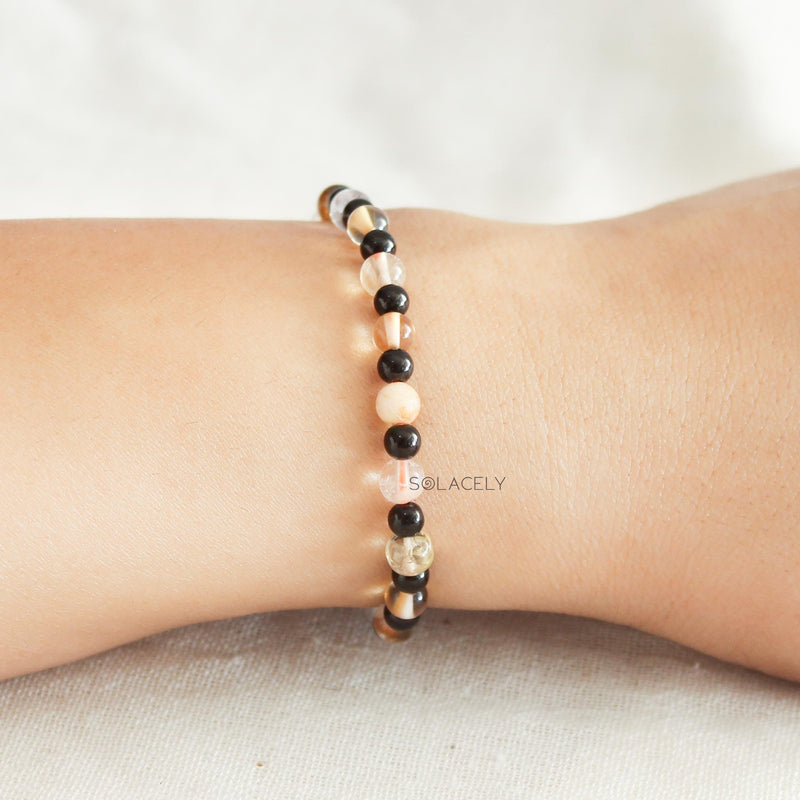
Smoky quartz and citrine are the same mineral in two colours. Both are quartz, both sit at 7 on the Mohs scale, and both take the same care. The pairing is kept as a grounding and drive combination: smoky quartz for a steady base, citrine for the warmth to act on it.
Key takeaways
- Smoky quartz and citrine are both varieties of quartz, so one set of care rules covers the pair.
- The pairing is traditionally read as root chakra steadiness alongside solar plexus warmth and confidence.
- Smoky quartz takes its brown to grey tone from natural radiation in the surrounding rock acting on quartz over geological time.
- Citrine's golden colour is stable and permanent, so choose the shade you genuinely want to look at every day.
- Both stones fade slowly in prolonged sun, so keep the pair off a bright windowsill and cleanse them in moonlight instead.
- Small beads, chips and tumbles are a choking and strangulation risk, so keep them away from babies and young children.
Why pair smoky quartz with citrine?
The pairing puts two traditional roles side by side. Smoky quartz is long associated with the root chakra and a settled, grounded feeling. Citrine sits with the solar plexus, the centre people connect with confidence, drive and personal warmth. Worn together they are reached for as a steady base and a push forward.
That is why this combination turns up so often on a single wrist rather than in a grid or on a shelf. People who like it tend to want both halves at once: something to slow the morning down and something to carry them into a meeting or a difficult conversation. If the grounding half is what draws you, our guide to crystals for the root chakra covers the wider family, and crystals for the solar plexus does the same for the warmer side.
There is a practical reason too. Because the two stones are mineralogically identical, a bracelet that mixes them wears evenly. Nothing scratches its neighbour, nothing needs keeping dry while the rest gets rinsed, and the beads polish to the same finish. Most pairings ask you to look after the softer stone. This one does not.
Two stones, one mineral
Citrine and smoky quartz are both quartz, silicon dioxide, with the same crystal structure, the same 7 on the Mohs scale and the same specific gravity of around 2.65. What separates them is colour cause. Citrine's yellow comes from traces of iron in the crystal, smoky quartz's brown from natural radiation acting on the same material.
Quartz is one of the most abundant minerals on the planet and it comes in a long list of named colour varieties. Amethyst is the purple one, rose quartz the pink, clear quartz the colourless. Our overview of the types of quartz crystals walks through the whole family, and it is worth a read if you have ever wondered why so many popular stones share the same hardness.
| Property | Citrine | Smoky quartz |
|---|---|---|
| Mineral | Quartz, silicon dioxide | Quartz, silicon dioxide |
| Mohs hardness | 7 | 7 |
| Cleavage | None | None |
| Colour range | Pale lemon to deep golden brown | Soft grey to warm brown to near black |
| Traditional chakra | Solar plexus | Root |
| Traditionally kept for | Confidence, warmth, abundance | Grounding, steadiness, calm focus |
| Everyday cleaning | Warm soapy water, soft cloth | Warm soapy water, soft cloth |
How smoky quartz gets its colour
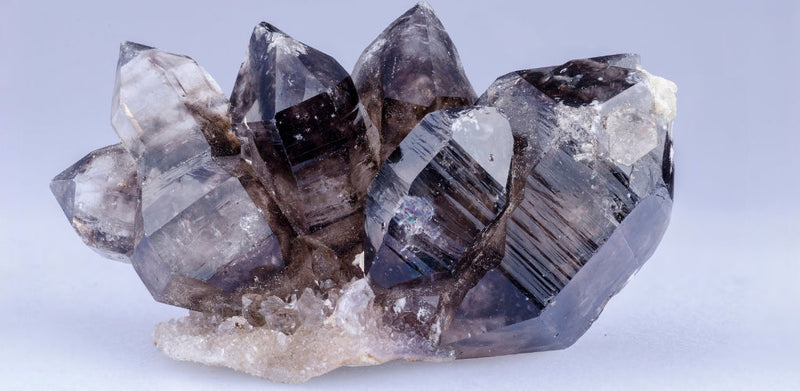
Smoky quartz forms when quartz containing a trace of aluminium sits in rock that gives off low level natural radiation, usually from ordinary granite or pegmatite. Over a very long stretch of time that exposure shifts electrons within the crystal, creating what mineralogists call colour centres, and those centres absorb light to produce the smoky tone.
It is one of the better stories in the quartz family, because the colour is a record of where the crystal grew and how long it stayed there. Deeper browns generally mean a longer or stronger exposure. Paler greys, the sort that read almost like tinted glass, come from gentler conditions. What ends up on your wrist is coloured quartz, the same material as any other quartz bead.
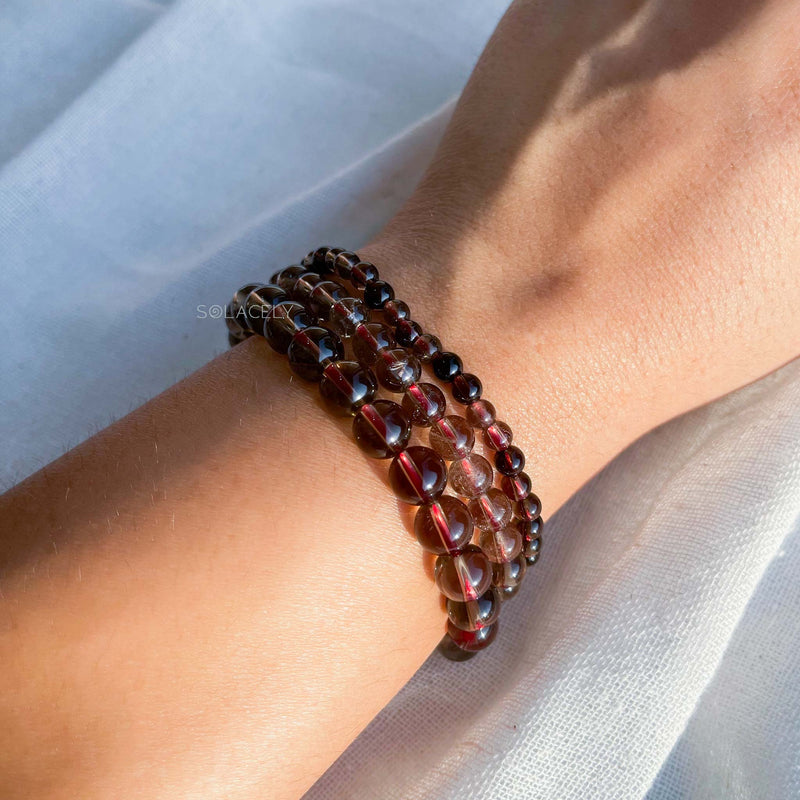
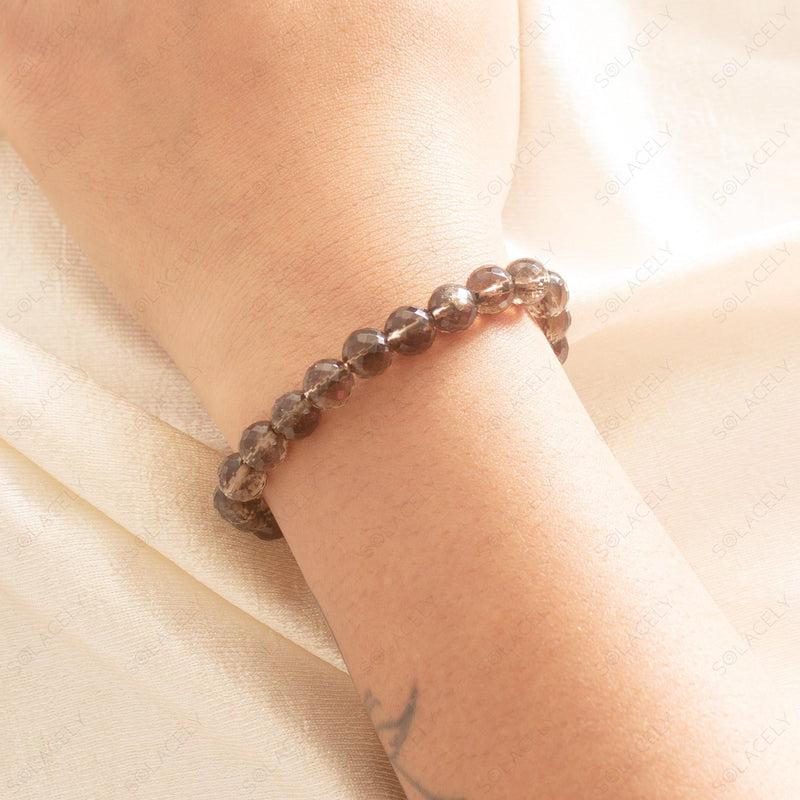
The colour also explains the range you see in shops. Smoky quartz is sold everywhere from a barely there champagne grey through to a rich cola brown, and the darker end can look almost black in low light. Faceted cuts show the tone best because light travels further through the stone. Our fuller smoky quartz guide goes deeper into its traditional uses, including why it became the stone people reach for at the end of a long day.
Choosing the citrine shade you want
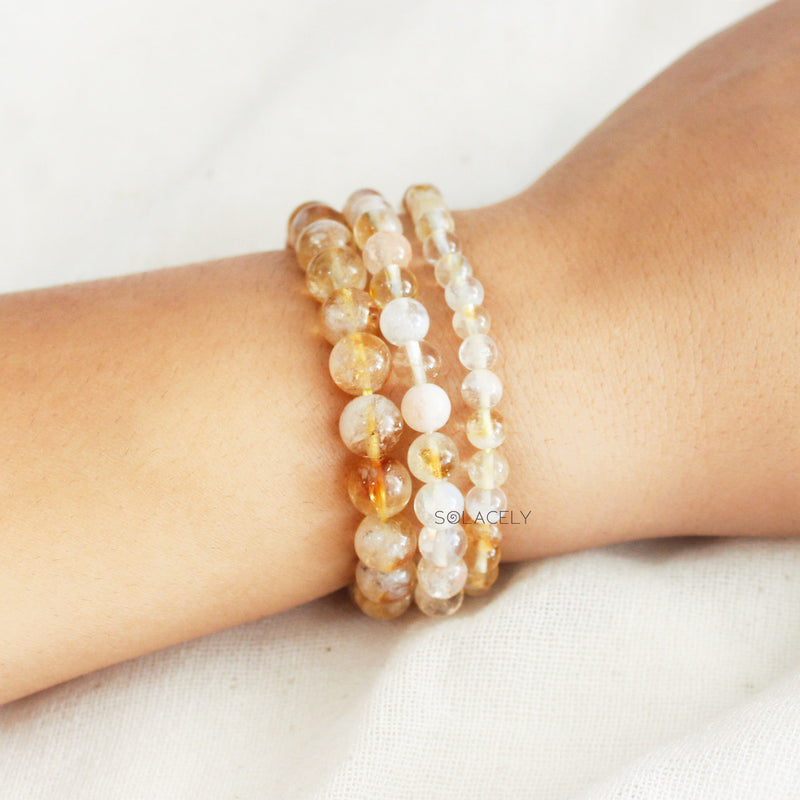
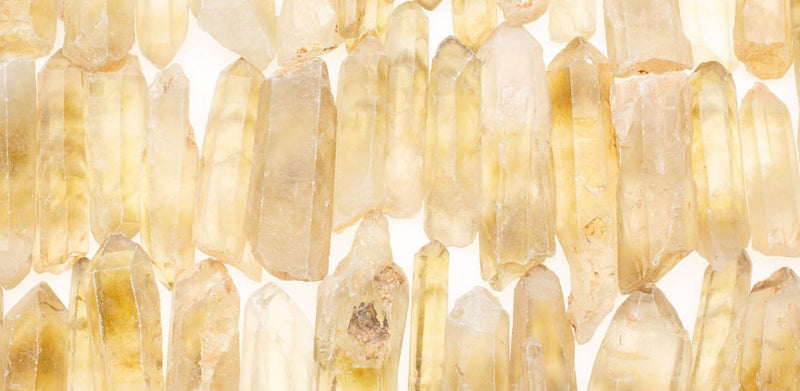
Citrine runs from a pale lemon through honey and amber to a deep golden brown, and every shade is used in the trade. The one to buy is the one you like looking at, because a bracelet you enjoy wearing is a bracelet you will actually keep on. Shade is a styling decision far more than anything else.
Heat is a long established part of how citrine reaches its warm golden colour, permanent and stable once done, and used right across the coloured stone trade, which means the shade you choose in the shop is the shade you keep. Gemmological references treat it as a standard and accepted part of how the stone comes to market.
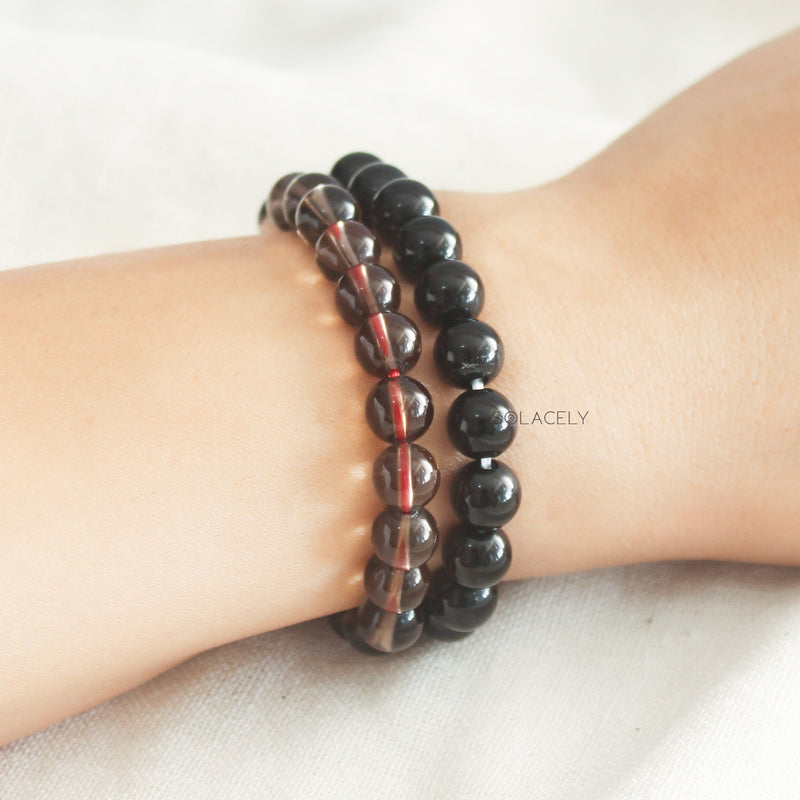
So the useful question is a simple one. Pale lemon citrine sits quietly against most outfits and pairs beautifully with a light smoky grey for a soft, tonal bracelet. Honey and amber tones give you more contrast against a mid brown smoky quartz, which is the combination most people picture when they imagine this pairing. Deep golden citrine against a near black smoky quartz is the boldest of the three and reads well in gold or brass settings. Our notes on citrine colour go through the range in more detail.
How to wear the pairing
A beaded bracelet is the usual format, and alternating the two stones in 6 mm or 8 mm beads is the most common arrangement. A half and half split gives the clearest contrast. Because both stones are the same hardness, the beads wear down at the same rate and the bracelet holds its finish for years.
A few other formats people settle on:
- Two bracelets stacked. One solid smoky quartz, one solid citrine, worn together. This lets you drop one on days when you only want the other.
- A pendant pair. A citrine point beside a smoky quartz tumble on one chain, or two chains at different lengths. Both stones suit silver, gold and brass equally.
- A pocket pair. One tumble of each in a small pouch. Nothing here needs keeping dry or out of the light for short periods, which makes it the easiest crystal pair to travel with.
- A desk set. Smoky quartz nearest you and citrine within eyeline, kept as a cue to steady yourself first and then get on with the work.
Which wrist you use is personal. The common tradition puts receiving stones on the left and outward, active stones on the right, so many people wear smoky quartz left and citrine right. Plenty of others wear both on whichever wrist is comfortable and think nothing more of it.
How to care for smoky quartz and citrine
Warm soapy water and a soft cloth suits both stones, and neither is porous, so a rinse does no harm. Dry them properly before putting them away. Skip ultrasonic and steam cleaners, since either can find an internal fracture in a deeper coloured stone and open it up.
Sunlight is the one real caution. Citrine fades in prolonged sun, and smoky quartz lightens the same way over years on a bright windowsill. Keep the pair somewhere shaded when you are not wearing them. Moonlight overnight is the gentler option and is what most people use for cleansing anyway.
A few habits worth keeping:
- Store the pair in a soft pouch rather than loose in a bowl, since quartz will scratch softer stones like opal and pearl.
- Cleanse with moonlight, sound from a singing bowl, or a pass through incense smoke. Long salt soaks dull the polish.
- Take a stretch bracelet off before the gym or a swim, because it is the cord that gives out first, not the stones.
- Never put stones in drinking water or a water bottle.
- Keep small beads, chips and tumbles well away from babies and young children.
Crystals are kept as part of a personal ritual and are not a treatment for any medical condition. If you have a health concern, please speak to your doctor or another qualified professional, and carry on with any care that has already been arranged for you. Keep stones out of drinking water, and keep small tumbles, chips and beaded jewellery away from babies and young children, for whom they are a choking and strangulation risk.
Sources
Written by Chetena Sharma. Reviewed by the Solacely editorial team.
Frequently asked questions
About the author


Written by Chetna Sharma, crystal healing practitioner and co-founder of Solacely. Chetna has worked with healing crystals for over a decade and curates Solacely's protective stone collection.