Crystals for Vastu Remedies: A Complete Guide to Identifying & Fixing Vastu Dosh


If your home feels off, persistent money worries, sleep that doesn't restore, friction at the dining table that no one quite explains, the tradition of Vastu Shastra calls that pattern a Vastu Dosh, a defect in the directional energy of the building you live in. Vastu Shastra is a centuries-old Indian architectural and spiritual system based on ancient texts that describe the ideal placement of rooms, doors, and elements within a home. Crystal practice has been used as a Vastu remedy for nearly as long.
This guide covers both halves of the practice. The first half is diagnostic: how to identify which Vastu Dosh you may have, by direction. The second half is remedial: which crystals are traditionally placed in each direction, and how to set them up. The aim is practical, not mystical — a guide you can actually use this week.
- Vastu Dosh is a perceived directional imbalance in a home that the tradition associates with specific life issues (financial, relational, health, or creative). It is read by direction.
- The Vastu Purusha Mandala is a 9 by 9 grid of 81 squares used to map a building. The central nine squares form the Brahmasthan, the geometric centre and most sacred area (Wikipedia).
- Eight crystals do most of the work in Vastu remedy: Citrine, Pyrite, Amethyst, Rose Quartz, Clear Quartz, Black Tourmaline, Carnelian, and Jade. Each maps to one or two directions.
- Pyrite safety note: The International Gem Society rates Pyrite "high" toxicity and notes it can react dangerously if accidentally swallowed (IGS Gemstone Toxicity Table). Keep it dry, off the floor, and away from young children and pets.
- This is a complementary tradition. Vastu Shastra and crystal practice are not validated by peer-reviewed research. They sit alongside professional care for finance, relationships, or health, never in place of it.

What Is Vastu Shastra?
Vastu Shastra is a traditional Hindu system of architecture rooted in ancient Indian texts. The word Vastu means "dwelling," and Shastra means "teaching." Together, they describe a body of design principles covering ground preparation, room layout, directional alignment, geometric proportion, and the symbolic mapping of cosmic elements onto a building site (Wikipedia).
The core idea is that buildings exist within a flow of natural energy — sunlight, wind, water, the rotation of the earth — and that the layout of a home either harmonises with that flow or fights it. A house that fights it produces a Vastu Dosh: a defect that traditional teachings link to specific life difficulties depending on which direction is affected.
What Is Vastu Dosh? (And How to Tell If You Have One)
Vastu Dosh is a directional imbalance in a home. The tradition reads it through a simple framework: each of the eight directions plus the centre is associated with a specific life domain (wealth, relationships, health, learning, fame, and so on), and a defect in that direction is said to manifest as a difficulty in the matching life domain. About 26% of U.S. adults already say they believe spirits or spiritual energy can reside in objects like crystals or stones (Pew Research, 2023), so the framework's intuition is widely shared even outside India.
Here is the diagnostic table the tradition uses. None of these signs are unique to Vastu Dosh on their own — they all have ordinary causes too — but Vastu practitioners read clusters of signs together with the home's directional layout to form a working assessment.
| If you're experiencing… | Likely Dosh direction | Traditional remedy crystal |
|---|---|---|
| Persistent financial instability, missed opportunities, debt | North or Southeast | Citrine, Pyrite, Jade |
| Frequent family arguments, romantic friction | Southwest | Rose Quartz, Amethyst |
| Restless sleep, recurring nightmares, insomnia | Southwest (bedroom direction) | Amethyst, Moonstone |
| Digestive issues, kitchen-located problems | Northeast (water in fire zone) | Clear Quartz, Citrine relocation |
| Career stagnation, lack of recognition | South | Clear Quartz pyramid |
| Studying difficulty, focus problems for children | Northeast | Carnelian, Clear Quartz |
| Creative blocks, "stuck" in projects | West | Amethyst, Citrine |
| Persistent low-level unease near entrance | Entry-facing direction | Black Tourmaline at threshold |
The Vastu Purusha Mandala: Why Direction Matters
The Vastu Purusha Mandala is the geometric foundation of the entire system. The classical Paramasayika layout uses a 9 by 9 grid of 81 squares (Wikipedia); other classical mandala sizes include the 64-square Manduka. The grid is overlaid on the building plan, and rooms, doors, and elements (including crystals) are placed in alignment with the directional zones of the squares they occupy. In traditional Vastu teaching, each square is associated with a specific deity (devta) who oversees a particular elemental quality.
The central area of any Vastu mandala is the Brahmasthana (Wikipedia), considered the geometric and spiritual heart of the home and named for Brahma the creator. In traditional Vastu teaching, the body of the Vastu Purusha is mapped onto the grid: the head in the Northeast (associated with spirituality and wisdom), the face in the East (health and vitality), the chest in the North (wealth and prosperity), and the stomach at the centre. The Brahmasthana should be kept open, clean, and uncluttered. In modern Vastu practice, this is one of the highest-leverage corrections you can make.
The 8 Crystals for Vastu Remedies
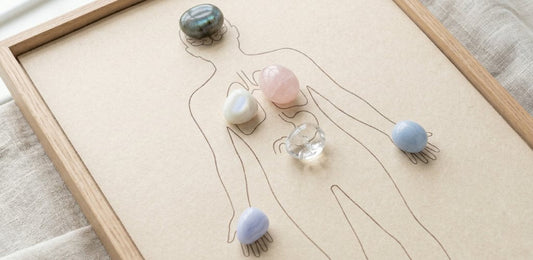
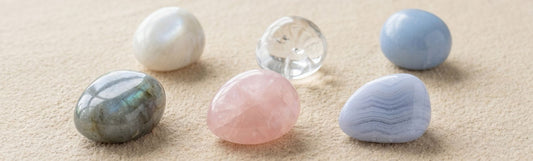
Vastu doesn't ask you to fill every direction with a stone. The traditional approach is to identify the one or two directions where you sense a Dosh, then place the matching crystal there. Below are the eight crystals that do most of the work in Vastu remedy practice, in roughly the order most practitioners introduce them.
1. Citrine — Southeast (Wealth Corner)
Citrine is the wealth-corner crystal in Vastu, traditionally placed in the Southeast direction governed by Agni, the fire element. Its bright, golden colour is associated in the tradition with abundance, financial growth, and the courage to pursue new opportunities. A citrine cluster on a southeast shelf, side table, or windowsill is the classic placement.
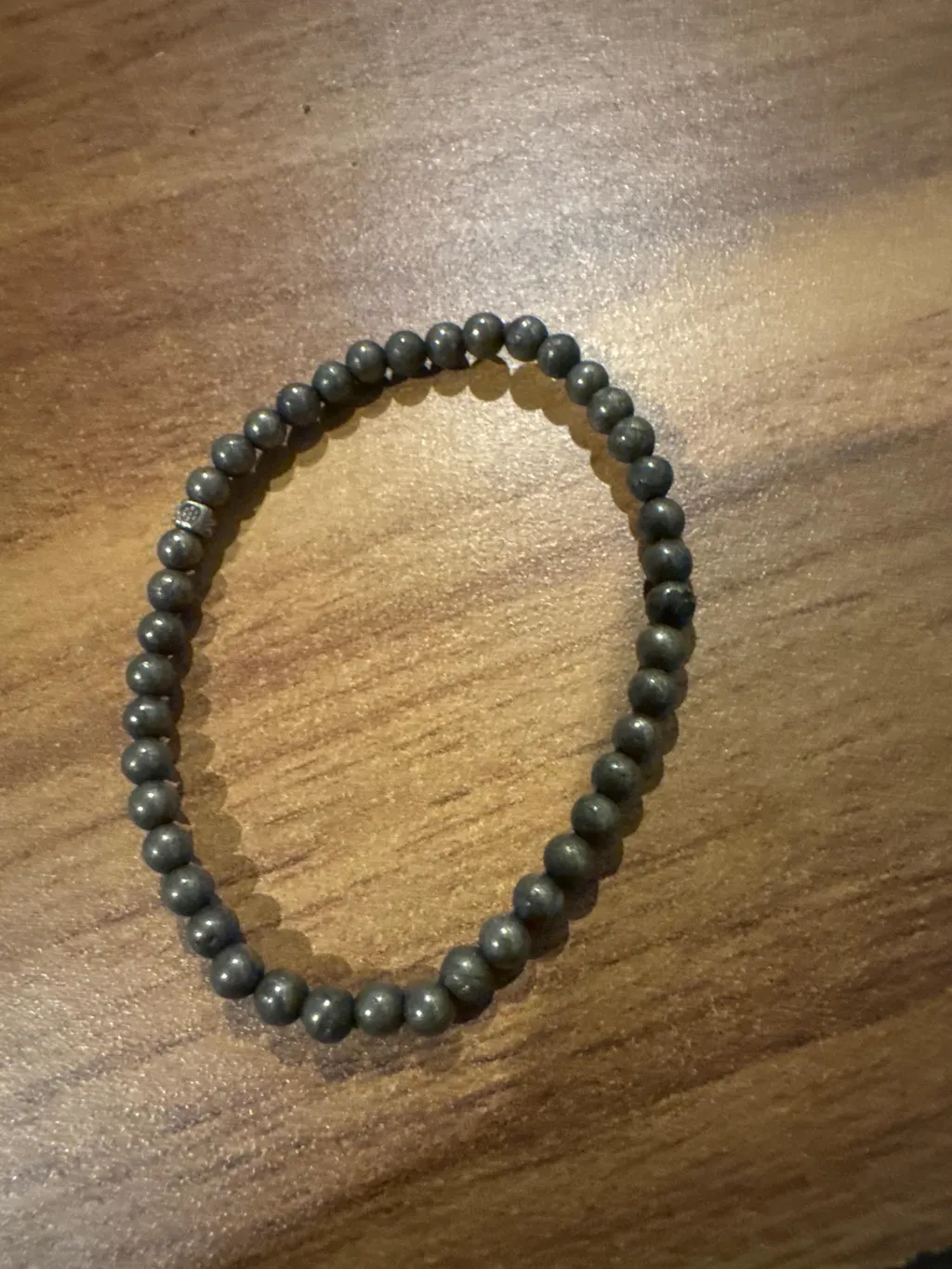
2. Pyrite — Southeast (Wealth Corner, with safety notes)
Pyrite is sometimes paired with Citrine in the Southeast for an amplified wealth association. Its metallic golden lustre is part of why the Vastu tradition calls it a "wealth stone." The mineralogy comes with a caveat, though, that most Vastu articles skip.
3. Amethyst — Southwest (Relationships) or West (Stress Relief)
Amethyst is the most flexible Vastu stone. Placed in the Southwest (the relationship zone, governed by Nairutya), it is traditionally said to nurture family harmony and ease emotional friction. Placed in the West (governed by Varuna, water), it is said to relieve stress and calm an overactive mind. Some practitioners also place a small Amethyst near the bed for sleep.
4. Rose Quartz — Southwest (Family Harmony)
Rose Quartz is the heart-stone of the tradition. Placed in the Southwest, the direction associated with family relationships and emotional bonds, it is traditionally said to soften tension and encourage warmth between family members. The Southwest is also the recommended placement for the master bedroom in classical Vastu, which is why Rose Quartz often appears there as well.
5. Clear Quartz — South (Fame) or Anywhere (Universal)
Clear Quartz is the universal amplifier. Placed in the South (the fame and reputation direction, governed by Yama), it is traditionally said to strengthen recognition and visibility. A pyramid-cut Clear Quartz is the classic form for this placement. It also works in any workspace as a focus aid and in any direction as an amplifier of whatever other stone it sits next to.
6. Black Tourmaline — Entrance (Protection)
Black Tourmaline doesn't sit on the directional grid the way the others do. Its job is protection at the threshold, the boundary between outside and inside. Placed near the main entrance, on either side of the door, or just inside on a console, it is traditionally said to absorb negative energy carried in from the street. The placement works regardless of which direction the door actually faces.
7. Carnelian — Northeast (Study and Learning)
Carnelian's warm orange-red colour is traditionally associated with focus, motivation, and the courage to begin difficult work. The Northeast is the direction of Ishanya, governing learning and spirituality, and Carnelian is the classic placement for a child's study desk, a home library, or any space dedicated to learning.
8. Jade — North or East (Prosperity and Longevity)
Jade is the prosperity-and-longevity stone of the broader Asian tradition (it appears in both Vastu and Chinese feng shui). Placed in the North (Kuber, the wealth direction in the Vastu Purusha body) or in the East (Indra, growth and vitality), it is traditionally said to attract gradual, sustainable prosperity rather than the fast-burning fire wealth of Citrine.
How to Apply Crystal Vastu in a Modern Home
Most modern homes were not designed to Vastu specification. That's expected, and the tradition is forgiving. The practical approach is to do the high-leverage corrections first and skip the rest until later.
The high-leverage moves, in order:
- Identify your true North. Use the compass on your phone, standing at the centre of your home, facing the front door. The cardinal directions are based on actual North, not the orientation of your floor plan on paper.
- Clear the Brahmasthan first. The geometric centre of your home should be uncluttered. No heavy furniture, no boxes, no piles of laundry. This single change is the most-cited Vastu correction in classical teaching.
- Place Citrine in the Southeast of your main shared room (living room or home office). Wealth corner, classic placement, low effort, high traditional weight.
- Place Black Tourmaline at the entrance. Threshold protection, regardless of door direction.
- Add Amethyst or Rose Quartz to the Southwest of your bedroom or living room. The relationship and family-harmony correction.
- Stop there for at least two to four weeks. Notice what shifts and what doesn't. Add the next stone (Carnelian for study, Jade for the North, Clear Quartz pyramid for the South) only after the first three placements have settled.
How to Cleanse Your Vastu Crystals (Without Damaging Them)
Vastu crystals are usually cleansed monthly, more often if the household has been through a stressful period. Three child-safe and stone-safe methods:
- Moonlight overnight. Place stones on a windowsill, ideally on a full-moon night. Safe for every stone in the eight-crystal list above. Best traditional pairing for Vastu work.
- Sound. A small bell, ghanta, or singing bowl played near the stones for 30 to 60 seconds. Contact-free, safe for soft and water-sensitive stones.
- Camphor or sage smoke. Pass each stone through the smoke briefly. The traditional Indian method uses camphor; sage is the Western adaptation.
Skip submerging Pyrite, Selenite, or Malachite in water. Skip salt-water cleansing entirely (it pits and dulls many polished stones). Skip strong direct sunlight for Amethyst and Rose Quartz, both of which fade over time in UV.
Limitations of Vastu and Crystal Practice
Honesty about what this is and is not is part of taking the tradition seriously.
Vastu Shastra and crystal practice are complementary traditions. Neither has been validated in peer-reviewed clinical or architectural research as a treatment for any condition. The placements don't change the wiring in your walls or the balance in your bank account. What the practice can do is create a consistent set of rituals and visual cues that focus attention, structure family conversation, and give a household a shared language for the things that aren't going well.
If you are dealing with serious financial stress, family conflict, or health issues, please see a qualified professional first: a financial advisor, a family therapist, a doctor. The practices above sit alongside that work, never in place of it.
Frequently Asked Questions
What is Vastu Dosh?
Vastu Dosh (or Vastu Dosha) is a perceived imbalance or defect in the Vastu of a home, said in the tradition to disturb the natural flow of energy and create difficulties in finance, health, relationships, or career. It is identified by the direction of the imbalance: a Northeast Dosh affects spirituality and family income; a Southeast Dosh affects wealth; a Southwest Dosh affects relationships; and so on. The framework comes from the ancient Indian architectural-spiritual system of Vastu Shastra.
What are the most common signs of Vastu Dosh in a home?
Traditional indications include persistent financial instability, frequent family arguments, restless sleep or insomnia, recurring health issues (especially digestive problems if the kitchen is in the Northeast), creative stagnation, and a general sense of unease at home. None of these are diagnostic of Vastu Dosh on their own; many have ordinary causes. Vastu practitioners read clusters of these signs together with the home's directional layout.
Which crystal is best for the Southeast (wealth) corner?
Citrine is the traditional wealth-corner crystal in Vastu. It is placed in the Southeast direction, the zone associated with the fire element (Agni) and prosperity. Pyrite is sometimes used alongside Citrine, but Pyrite carries a safety caveat. The International Gem Society rates it "high" toxicity and notes it can react dangerously if accidentally swallowed, so keep it dry, off the floor, and away from young children and pets.
Which direction is each crystal traditionally placed in?
Citrine and Pyrite go in the Southeast for wealth. Amethyst goes in the Southwest for relationships and family harmony, or in the West for stress relief. Rose Quartz goes in the Southwest or living room for emotional warmth. Clear Quartz goes in the South for fame and reputation, or in any workspace for clarity. Carnelian goes in the Northeast for study and learning. Jade goes in the East or North for prosperity. Black Tourmaline goes near the main entrance for protection.
What is the Vastu Purusha Mandala?
The Vastu Purusha Mandala is a geometric grid used in Vastu Shastra to map a building site. The classical Paramasayika layout uses 81 squares arranged as a 9 by 9 grid, with the central area known as the Brahmasthana, considered the most sacred part of the home (Wikipedia). In traditional Vastu teaching, each square is associated with a specific deity, and modern crystal-Vastu practice maps crystal placement to the directional zones of this grid.
Are Vastu Shastra and crystal practice scientifically proven?
No. Vastu Shastra is a traditional architectural and spiritual system rooted in ancient Indian texts, and crystal practice is a complementary, faith-based tradition. Neither has been validated in peer-reviewed clinical or architectural research as a treatment for any condition. The practices have genuine cultural depth and many practitioners report personal benefit, but they should not replace professional care for medical, financial, or relationship concerns.
If I can't change my home's layout, are crystals enough?
The classical Vastu view is that crystals are remedies, not substitutes for layout corrections. They work best when paired with the high-leverage non-crystal corrections: keeping the Brahmasthan clear, ensuring the master bedroom is in the Southwest if possible, and avoiding a Northeast kitchen (which classical Vastu treats as the strongest Dosh). When layout changes aren't possible, crystals are the practical compromise.
About the author