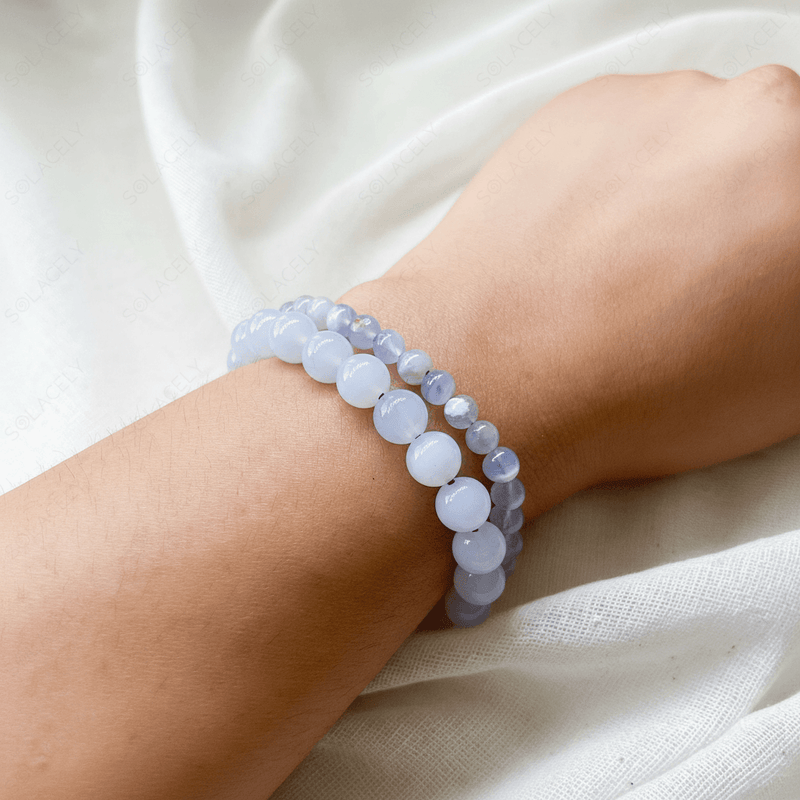
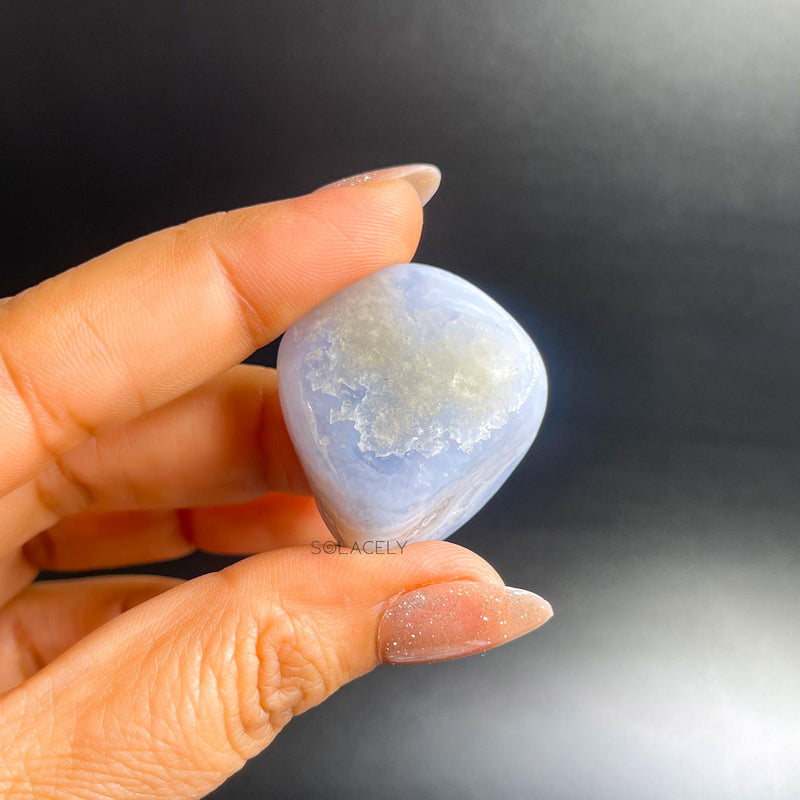
Agate is a banded form of chalcedony, a microcrystalline variety of quartz, formed when silica-rich fluids fill cavities in rock and deposit in layers. In crystal practice it is the stabiliser: the stone carried for steadiness and patience rather than intensity. Each variety then narrows that meaning.
Key takeaways
- Agate is banded chalcedony, part of the quartz family, hardness roughly 6.5 to 7 on the Mohs scale.
- Its curved, concentric banding is a record of how it grew, and no two pieces are alike.
- Traditional use is stabilising: patience, steadiness, evening out emotional swings.
- Blue lace agate is the usual starting point for beginners.
- Durable and easygoing, which makes it one of the best first crystals to own.
What agate is
Agate forms in cavities. Silica-rich groundwater seeps into gas pockets and fractures in volcanic and sedimentary rock and deposits layer on layer over very long periods. The bands you see are a record of changing water chemistry, which is why every piece is unique and why collectors will happily spend an afternoon choosing between two slices.
That formation story explains what people notice first. The banding is curved and concentric because it followed the shape of the cavity. And the pieces are often rounded, because a gas bubble in cooled lava is a rounded space.
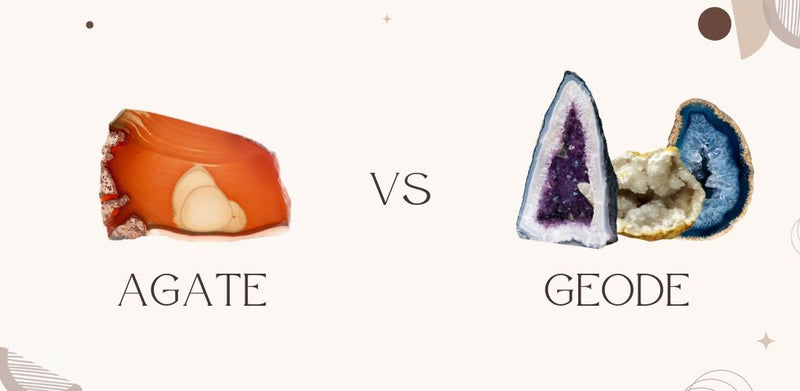
Agate is chemically the same compound as quartz, silicon dioxide, but its crystals are microscopic rather than visible. If you have wondered how agate relates to the hollow crystal-lined rocks sold alongside it, our agate vs geode comparison answers that directly.
The main types of agate and what each is used for
| Variety | Appearance | Traditional use |
|---|---|---|
| Blue lace agate | Pale blue with white banding | Calm, clear and gentle speech |
| Moss agate | Clear to milky with green inclusions | Growth, new starts, gardening and abundance |
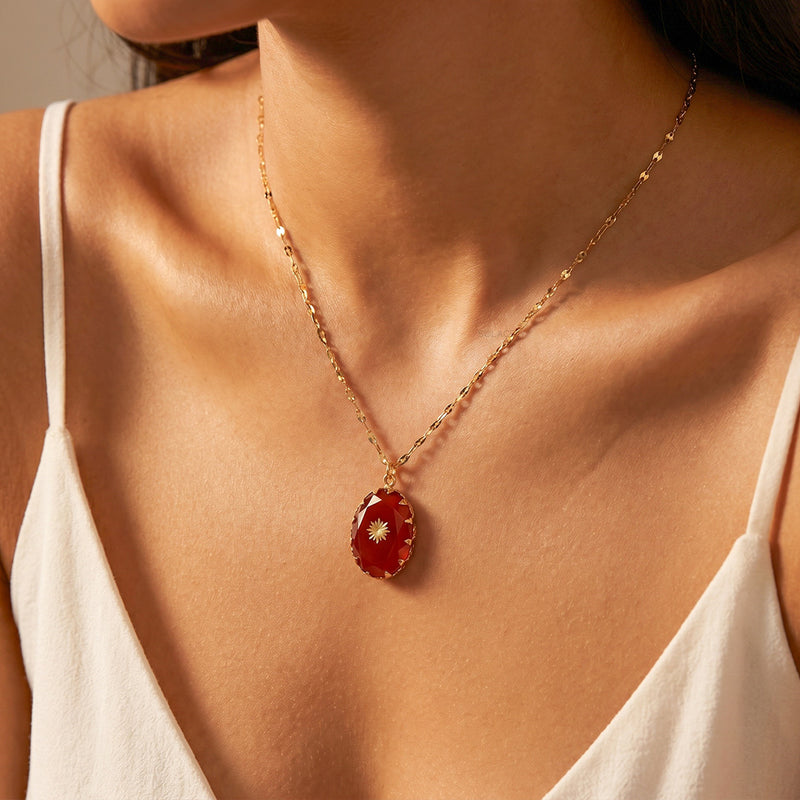
| Red or fire agate | Deep red to orange-brown | Drive, courage, physical energy |
| Botswana agate | Grey, pink and apricot banding | Comfort during change, letting go |
| Dendritic agate | Translucent with fern-like markings | Perspective, patience with slow progress |
| Crazy lace agate | Chaotic swirled banding, warm tones | Lightness, humour, stamina |
The moss and dendritic types are worth a note. Their green and fern-like patterns are mineral inclusions rather than fossilised plants, and they look organic because dendritic mineral growth follows similar branching mathematics. It is a genuinely lovely thing to know about a stone you are holding.
What agate is used for in crystal practice
Across traditions, agate is the moderate one. It is not the stone people reach for when they want a jolt. It is the one they reach for when things are unstable and they want them less so. That framing shows up consistently: patience, endurance, steadiness under pressure, evening out mood.
Historically, agate was carried by travellers and worn as an amulet across Mesopotamia, Egypt and the classical Mediterranean, valued for protection and for the belief that it steadied the wearer. It was also carved into seals and cameos, which is practical as much as symbolic: agate is hard, takes fine detail, and does not chip easily.
People who come to agate for emotional reasons usually arrive from somewhere else first. Our crystals for emotional healing guide covers the wider set, and crystals for protection covers agate's older amulet role.
How to use agate day to day
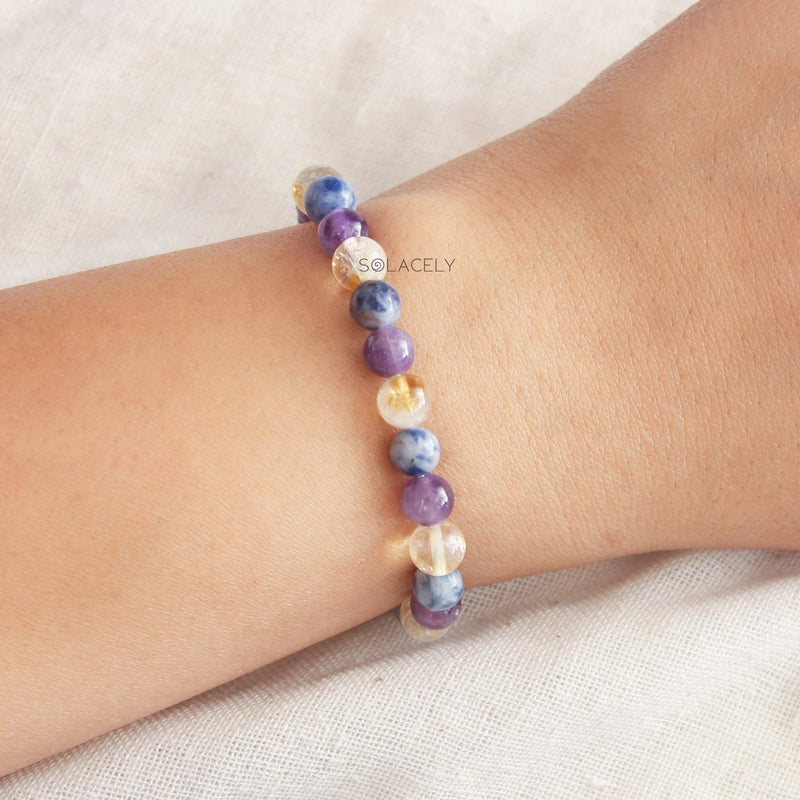
- Worn. Bracelets and pendants are the most common format, and agate is hard enough that daily wear is genuinely fine.
- Carried. A tumbled piece in a pocket, held during a difficult meeting or a long wait.
- At home. Slices and bookends near a doorway or on a desk, in the older protective placement. Our crystals for the home guide covers placement conventions.
- In chakra work. Placement follows colour: blue lace at the throat, moss agate at the heart, red agate at the root. The beginner's chakra stone guide sets out the full mapping.
Colour and choosing a piece
Agate comes in a wonderful spread of colour. Naturally it runs to greys, browns, whites, soft blues, apricots and greens, and those muted tones are what most wearable agate looks like.
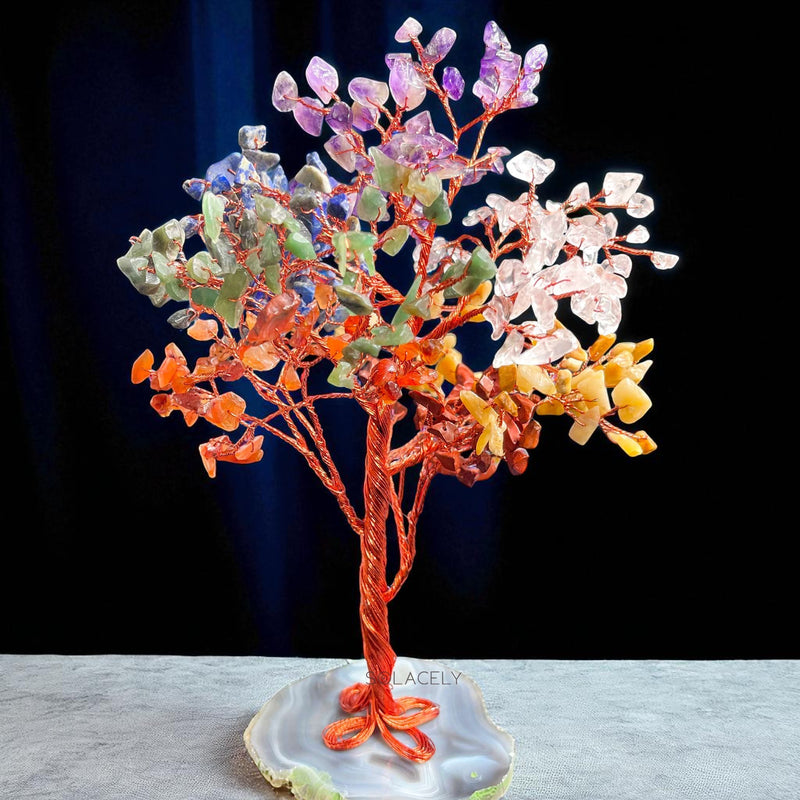
The brilliant magenta, teal and violet slices you see as coasters and display pieces get their colour through a process the trade has used for centuries: agate's fine banded structure takes colour beautifully and holds it permanently. The stone is genuine agate throughout, and those pieces are among the most striking things you can put on a shelf.
So the choice is simply about what you want. A soft banded Botswana agate for a bracelet you wear every day, a vivid slice for a room that needs a focal point. Both are real agate, and both will last.
Caring for agate
Agate sits around 6.5 to 7 on the Mohs scale, so it resists everyday scratching but will mark against harder stones. Store pieces separately or in a soft pouch.
Clean with warm water and a soft cloth, then dry fully. Brief water contact is harmless. Avoid long soaks and harsh chemicals, which are unkind to any polished surface. For energetic cleansing, most people use sound, smoke, moonlight, or a rest on selenite. Agate is not notably light sensitive, so brief sun is fine.
Who agate suits
People who find high-intensity stones uncomfortable and want something quieter. It is a sensible first crystal for exactly that reason: affordable, durable, widely available, and not asking much of you. It also suits anyone going through a slow, grinding stretch rather than an acute crisis, which is the situation agate's traditional associations are really built around.
The uses described here reflect traditional and cultural crystal practice. They are not medical claims and are not a substitute for professional healthcare or advice.
Sources
Written by Chetena Sharma. Reviewed by the Solacely editorial team.
Frequently asked questions
About the author


Written by Chetna Sharma, crystal healing practitioner and co-founder of Solacely. Chetna has worked with healing crystals for over a decade and curates Solacely's protective stone collection.