Amethyst is the purple variety of quartz, coloured by traces of iron and natural irradiation, and it is the February birthstone. In crystal tradition it is the stone of calm, clarity and sober judgement, kept for rest and a quieter mind. At 7 on the Mohs scale it is durable enough for daily wear.
Key takeaways
- Amethyst is quartz, silicon dioxide, coloured purple by traces of iron and natural irradiation.
- It sits at 7 on the Mohs hardness scale, which is why it wears well in rings, pendants and bracelets.
- The name comes from the Greek amethystos, meaning not intoxicated, and it is the February birthstone.
- Traditionally kept for calm, clarity, restful sleep and steady judgement, and linked to the third eye and crown chakras.
- Keep it out of prolonged strong sunlight. Long hours of hard light fade the purple permanently.
What is amethyst?
Amethyst is gem-quality purple quartz. Chemically it is silicon dioxide, exactly the same as clear quartz, citrine and smoky quartz, and what sets it apart is colour: traces of iron in the crystal structure, altered by natural irradiation deep in the earth, produce everything from the palest lilac to a deep royal violet.
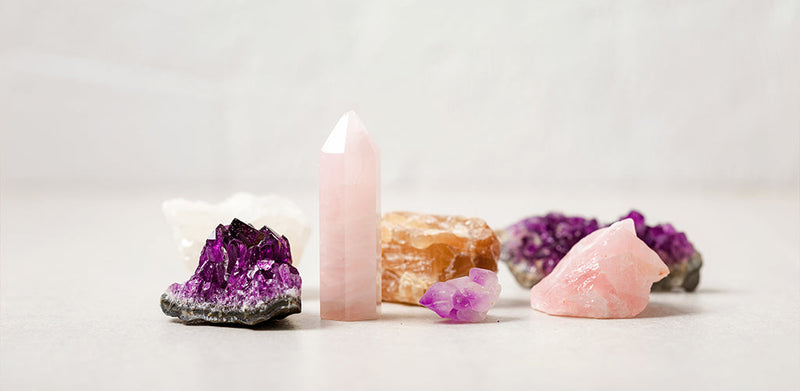
It grows in cavities in volcanic rock, which is why so much of it arrives as geodes and clusters of well-formed points. Brazil and Uruguay are the best known sources, though it is found on every continent. Large, clean crystals are entirely normal, which is part of why amethyst has stayed both beautiful and accessible.
As a quartz it is hard, taking a high polish and resisting the everyday scratches that soften less durable stones. That practicality matters: an amethyst bracelet worn every day for years still looks like itself. Our overview of the types of quartz crystals shows where it sits in the wider family.
What does amethyst mean?
Amethyst has meant sobriety and clear judgement for a very long time. The name comes from the ancient Greek amethystos, meaning not intoxicated, and Greek and Roman drinking vessels were carved from it in the belief that the stone would keep the drinker's head clear through a long evening.
That thread runs through everything the stone has come to stand for. Sobriety widened into steadiness, and steadiness into calm, so amethyst today is the stone people reach for when the mind will not settle. It is kept on bedside tables for rest, carried into difficult days for composure and used in meditation for stillness.
It carries a second, older association with spiritual authority. Amethyst has been worn in ecclesiastical rings for centuries and appears throughout royal regalia, which is where its reputation for dignity and considered decisions comes from. Purple has long been the colour of both, and amethyst is the stone that wears it best.
Amethyst properties at a glance
Amethyst has clear, reliable gemological properties, which is one reason it is such a practical stone to own. The table below gathers the details worth knowing before you buy, alongside the traditional associations it carries in crystal practice.
| Property | Detail |
|---|---|
| Mineral | Quartz, silicon dioxide |
| Colour | Pale lilac through violet to deep royal purple |
| Cause of colour | Traces of iron with natural irradiation |
| Hardness | 7 on the Mohs scale |
| Birthstone | February |
| Chakras | Third eye and crown |
| Traditionally kept for | Calm, clarity, rest, steady judgement |
What is amethyst traditionally kept for?
Calm, first and above everything. Amethyst is the stone people keep beside the bed when sleep is broken, on the desk when the mind races, and in the pocket on a day that is going to ask a lot. The tradition is about settling rather than lifting, which is what separates it from citrine.
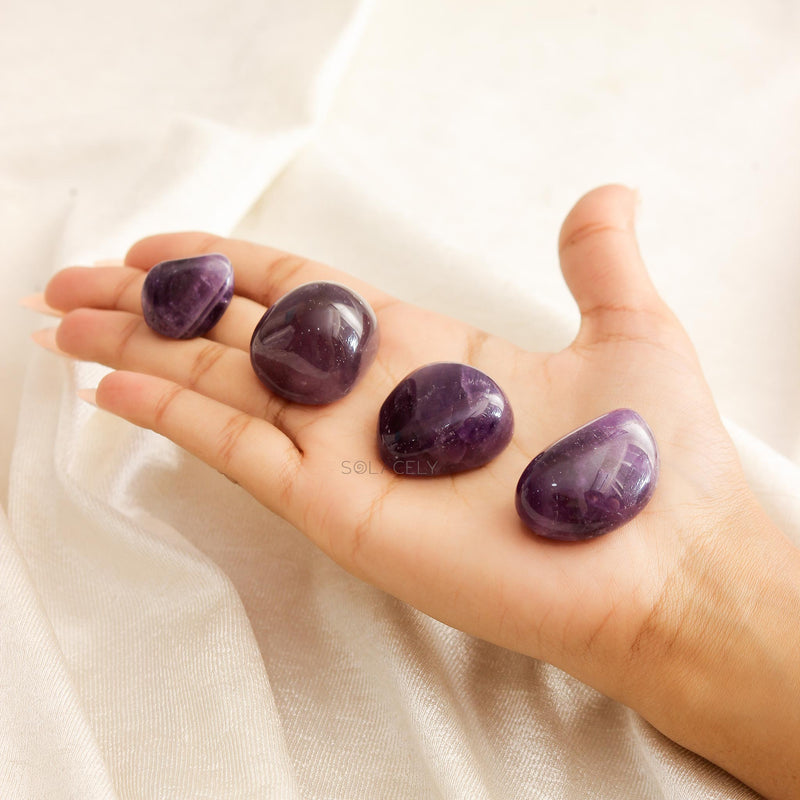
It is also the classic meditation stone. In crystal practice amethyst is linked to the third eye, the centre of intuition and inner sight, and to the crown, the centre of connection and perspective. Holding a tumble or wearing a strand through a sitting is the simplest way people work with that association.
Alongside calm sits clear-headedness, straight from the Greek meaning of the name. Amethyst is traditionally kept by people working on a habit they want to change, not as a treatment but as a visible daily reminder of an intention already made. Many people find that having something to look at helps the resolve hold.
It pairs generously. With rose quartz it becomes the gentle, self-kind combination, and our note on amethyst and rose quartz covers that pairing. For the wider set of partners, see our guide to crystal pairings for amethyst.
Types of amethyst
Amethyst comes in several named varieties, distinguished by colour, zoning and crystal habit. They are all the same mineral, and the differences are in how the colour is distributed and how the crystals grew, which makes choosing largely a matter of what you like looking at.
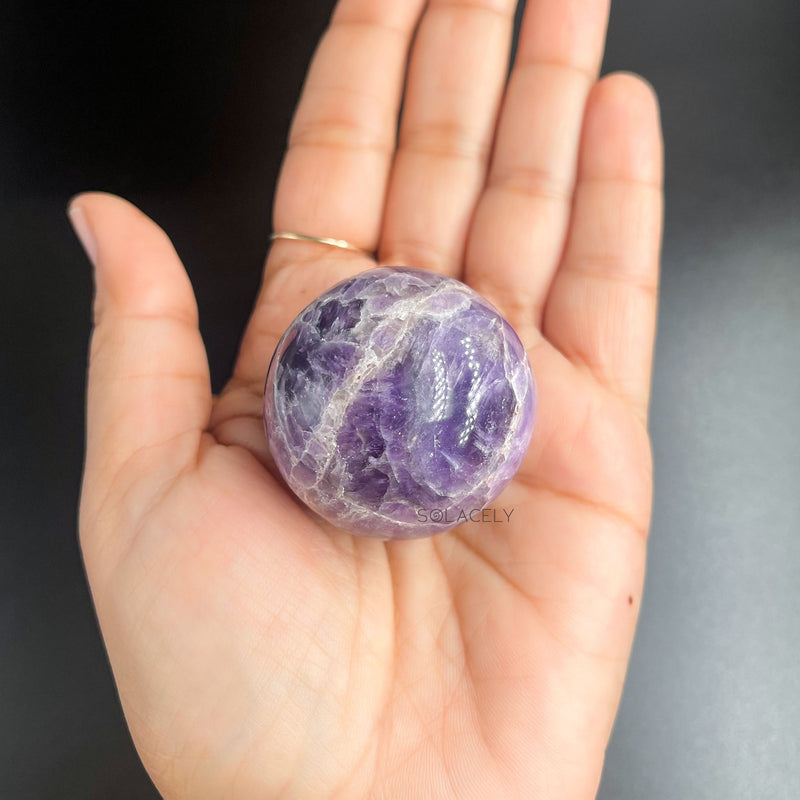
Chevron amethyst layers purple with bands of white quartz in a striking V pattern, and it is popular for tumbles and carvings. Lavender or rose de France amethyst is the palest form, soft and delicate, and it suits fine jewellery. Deep royal purple stones with a hint of red are the ones traditionally most sought after.
Vera Cruz amethyst from Mexico forms slender, pale, doubly terminated points and is prized by collectors for its clarity. Brandberg amethyst from Namibia mixes amethyst, smoky quartz and clear quartz in one crystal, often with visible enhydro bubbles. Pineapple or cactus amethyst grows a coat of small crystals over a central point.
How to use, cleanse and care for amethyst
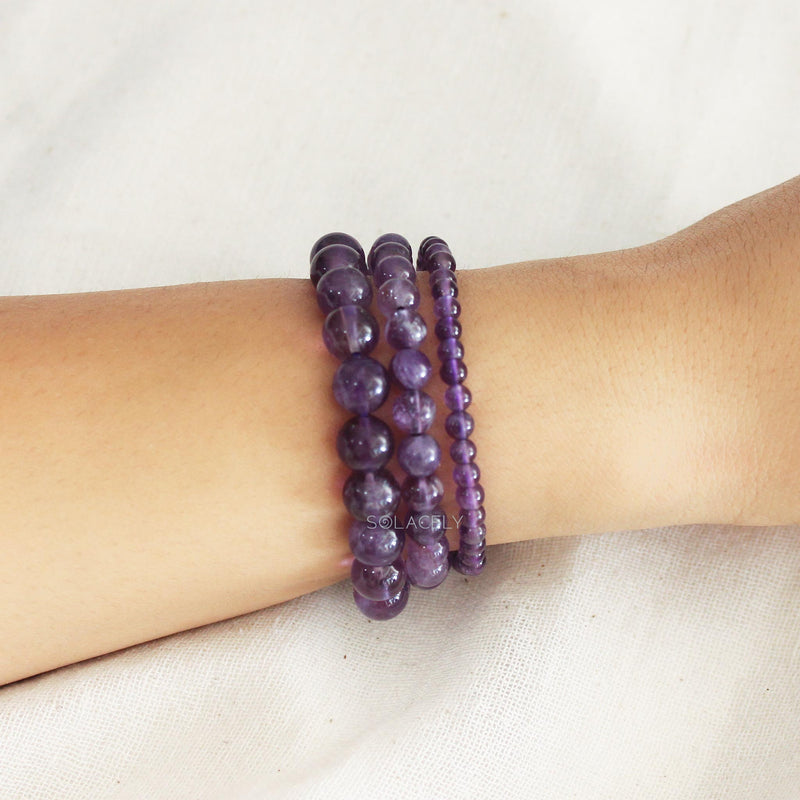
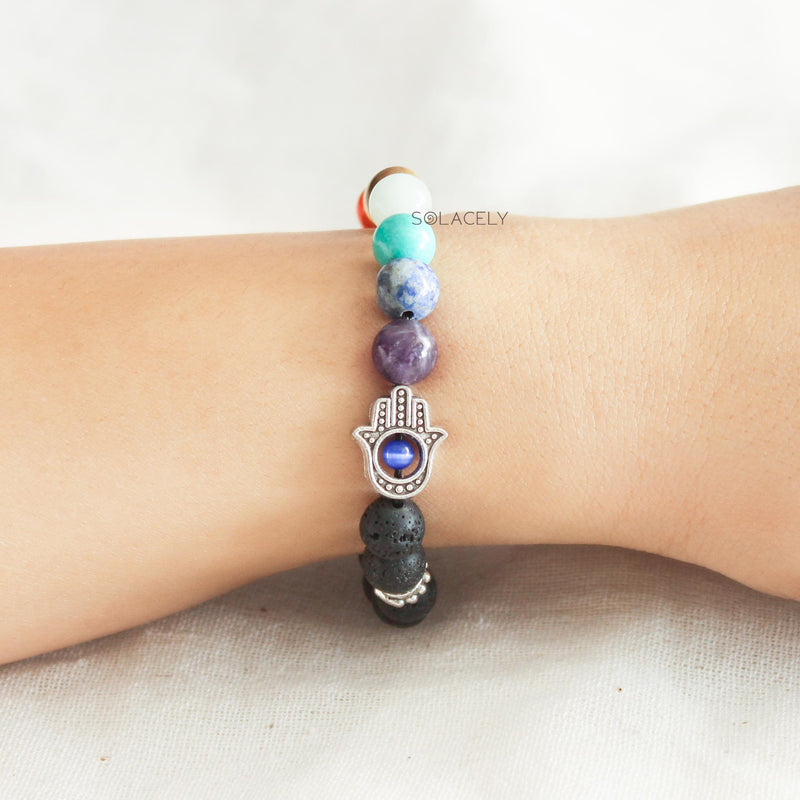
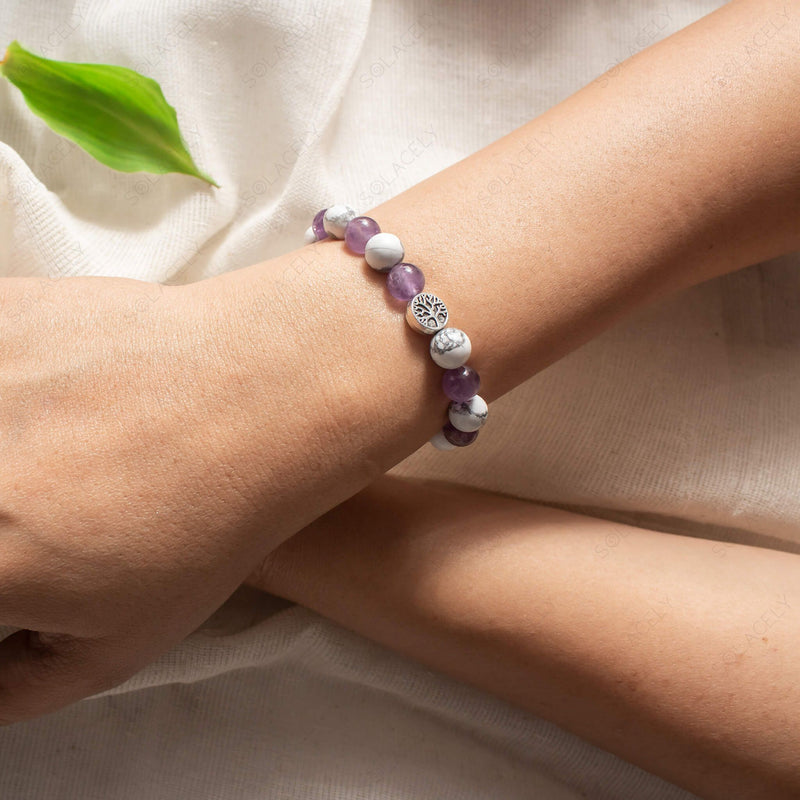
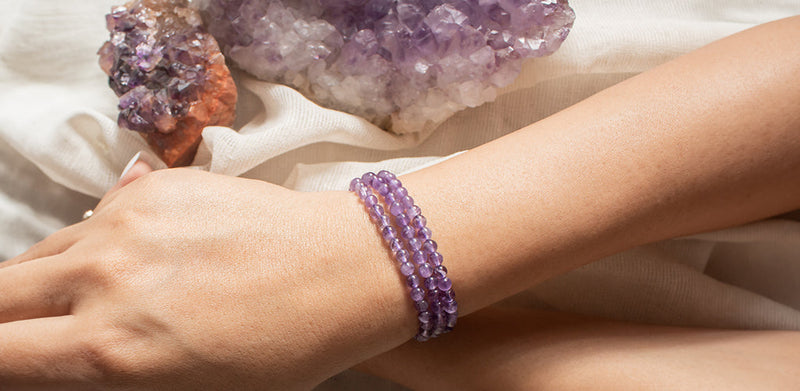
Wear it, hold it or place it. A bracelet keeps the intention on your wrist through the day, a tumble in the pocket gives you something to reach for, and a cluster or geode holds a corner of a room. Bedrooms, reading chairs and meditation corners are the traditional places for amethyst at home.
In crystal tradition the left wrist is the receiving side, so an amethyst bracelet is usually worn on the left when calm is what you want to take in. Our note on which hand to wear an amethyst bracelet goes into the detail.
Care is simple with one firm rule. Warm soapy water and a soft cloth clean it well, and it is hard enough to shrug off ordinary handling. The rule is sunlight: long hours of hard direct sun fade amethyst permanently, so charge it in moonlight rather than on a sunny windowsill, and keep clusters off south-facing sills.
For cleansing in the spiritual sense, sound, incense smoke, moonlight and dry salt all suit amethyst. Full moon nights are the traditional choice. Our step-by-step on how to cleanse and charge crystals sets out each method in order.
Amethyst is worn and kept as part of a long-standing spiritual and cultural tradition. It is not a medical device or treatment, and it does not diagnose, treat, cure or prevent any condition, including any difficulty with sleep, mood or dependency. Nothing here replaces advice from a doctor or other qualified professional, and you should never delay or stop medical care because of a crystal. Small beads and tumbles are a choking risk for babies and young children.
Sources
- Gemological Institute of America, Amethyst description, colour and history
- Geology.com, Quartz: composition, varieties and hardness
Written by Chetena Sharma. Reviewed by the Solacely editorial team.
Frequently asked questions
About the author


Written by Chetna Sharma, crystal healing practitioner and co-founder of Solacely. Chetna has worked with healing crystals for over a decade and curates Solacely's protective stone collection.