Birthstones are the twelve gems assigned to the months of the year: garnet, amethyst, aquamarine, diamond, emerald, pearl, ruby, peridot, sapphire, opal, topaz and turquoise. Several months carry more than one, because the modern trade list, the traditional list and the zodiac lists do not always agree.
Key takeaways
- Each month has at least one birthstone, and six months carry two or three.
- The custom traces back through Georgian and medieval Europe to the twelve stones of the breastplate of Aaron.
- Hardness varies enormously, from diamond at 10 to pearl at 2.5 to 4.5, so care differs by month.
- Alternative and zodiac birthstones sit alongside the trade list and are equally traditional.
- Amethyst, opal, pearl and turquoise all need particular care. Diamond, ruby and sapphire need almost none.
What are birthstones?
A birthstone is a gem associated with the month of your birth, worn as a personal talisman and given as a gift for birthdays and milestones. The custom is old and layered, which is why more than one list exists and why several months carry two or three stones.
The usual origin story traces back to the twelve stones set into the breastplate of Aaron described in the Book of Exodus, later connected to the twelve months and the twelve signs of the zodiac. Wearing one stone for your own month, rather than all twelve, is a comparatively modern habit that took hold in eighteenth-century Poland and Germany.
The list most jewellers use today was standardised in 1912 by the American National Association of Jewelers and revised since, most recently to add stones such as tanzanite and spinel. Alongside it sit older traditional lists and the zodiac stone lists, all of which are still in use and all of which are legitimate.
The birthstones month by month
The table gives the modern trade list with the additional stones each month carries, plus hardness, because that is the practical fact that determines how a piece should be worn and cleaned.
| Month | Birthstones | Mohs hardness | Traditionally kept for |
|---|---|---|---|
| January | Garnet | 6.5 to 7.5 | Steadiness, devotion, vitality |
| February | Amethyst | 7 | Calm and clear judgement |
| March | Aquamarine, bloodstone | 7 to 8 | Composure and safe travel |
| April | Diamond | 10 | Endurance and clarity |
| May | Emerald | 7.5 to 8 | Renewal and growth |
| June | Pearl, moonstone, alexandrite | 2.5 to 8.5 | Cycles and intuition |
| July | Ruby | 9 | Passion and courage |
| August | Peridot, spinel, sardonyx | 6.5 to 8 | Warmth and good cheer |
| September | Sapphire | 9 | Wisdom and loyalty |
| October | Opal, tourmaline | 5.5 to 7.5 | Imagination and protection |
| November | Topaz, citrine | 7 to 8 | Abundance and confidence |
| December | Turquoise, tanzanite, zircon | 5 to 7.5 | Protection and friendship |
January to June
January is garnet, and the name covers a whole mineral group rather than one stone, running from the familiar deep red almandine and pyrope through green tsavorite and orange spessartine. In tradition garnet is the stone of steadiness and devotion, given as a token of return and safe homecoming.
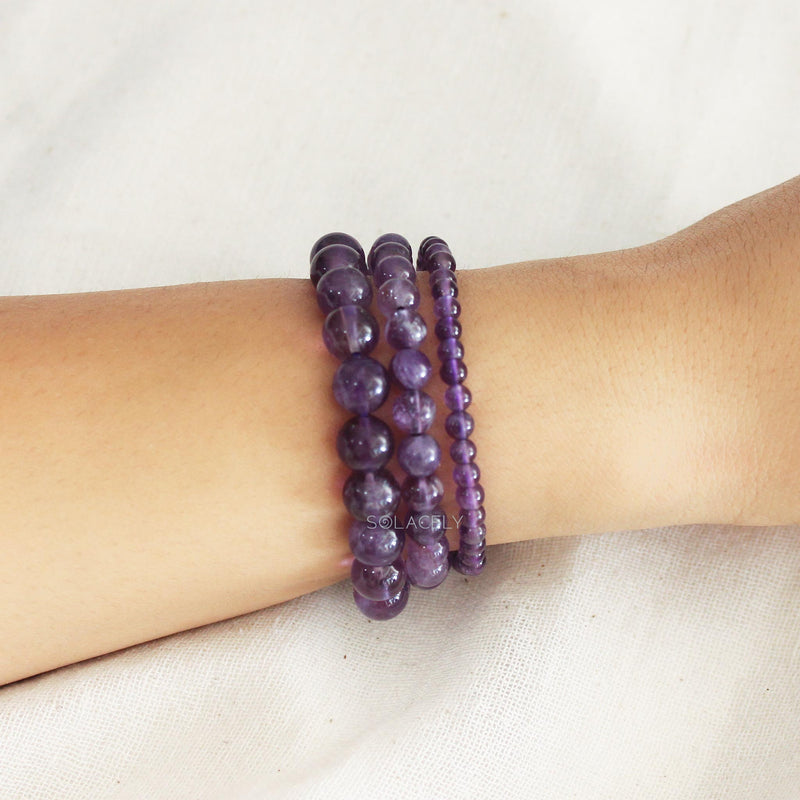
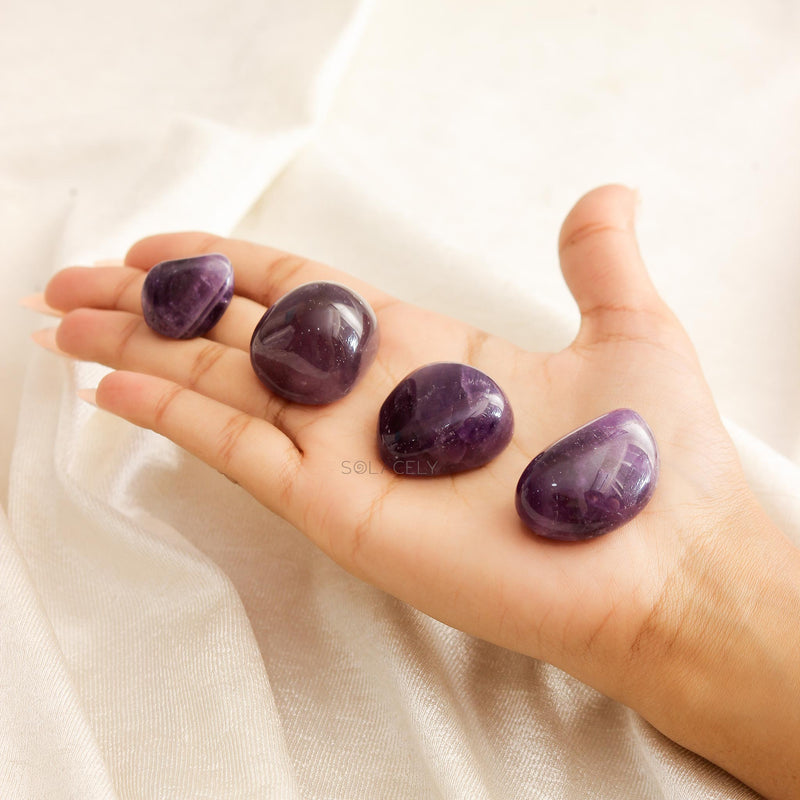
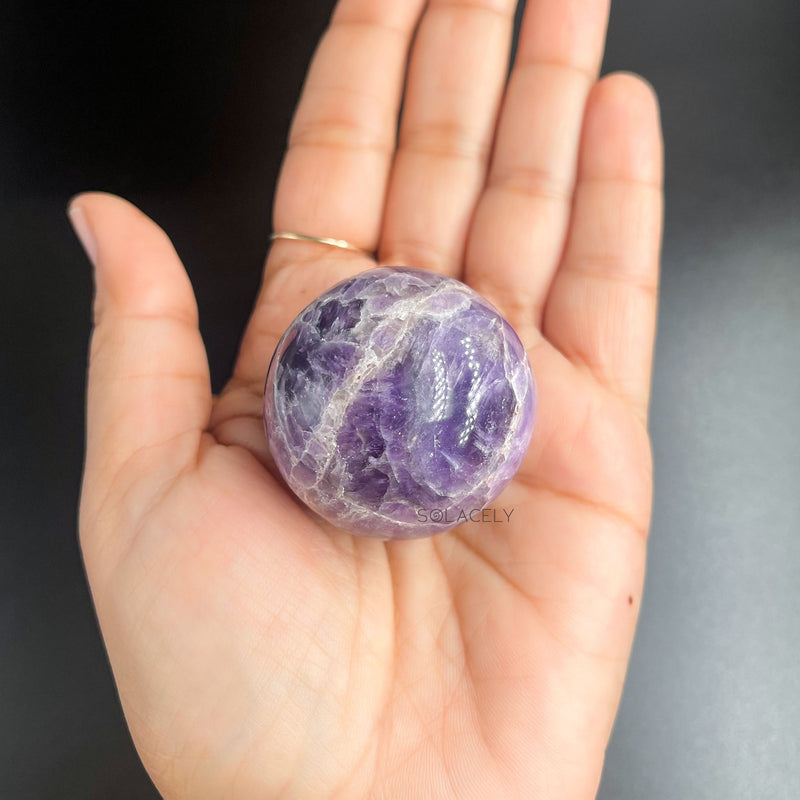
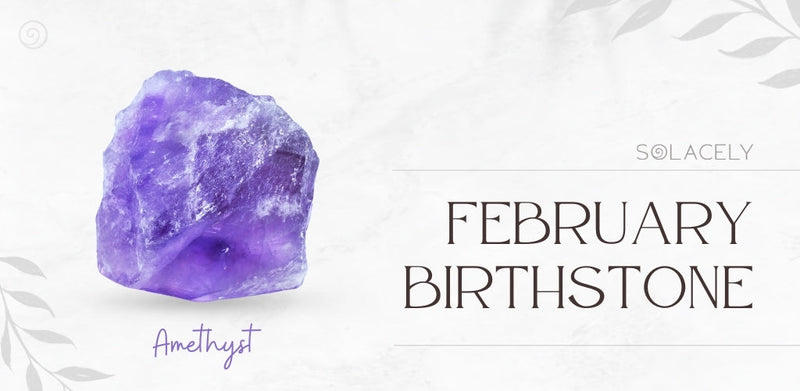
February is amethyst, purple quartz and the calm stone, treated in full in our guide to the February birthstone. March carries aquamarine and bloodstone, the first for composure and safe passage, the second a dark green jasper flecked with red that has been kept for courage since antiquity.
April is diamond, at 10 the hardest natural material there is, and in tradition the stone of endurance and unbreakable commitment. May is emerald, the green beryl, long associated with renewal, spring and growth, and traditionally the stone of foresight.
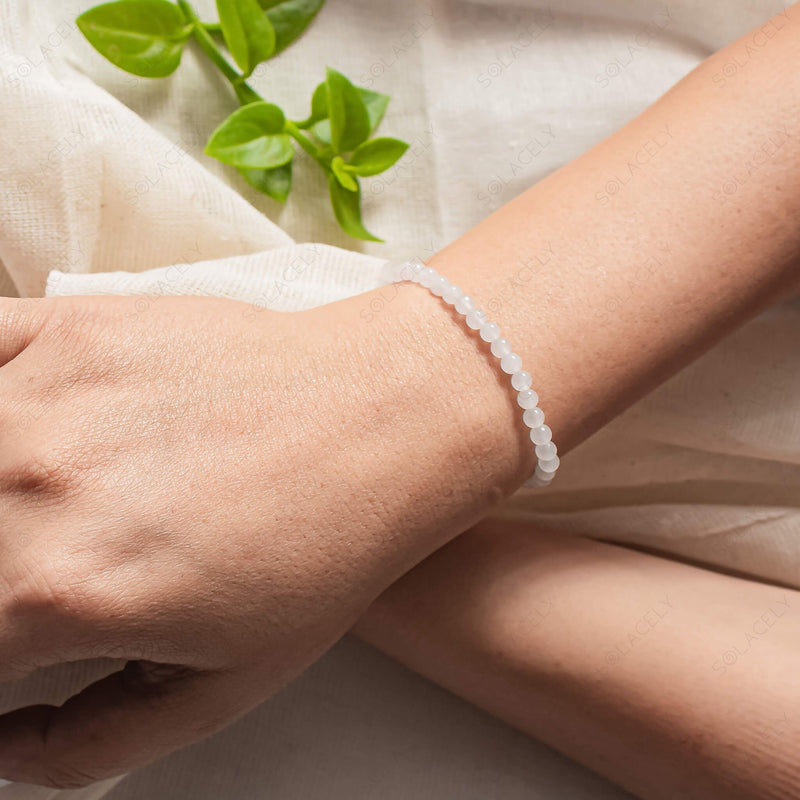
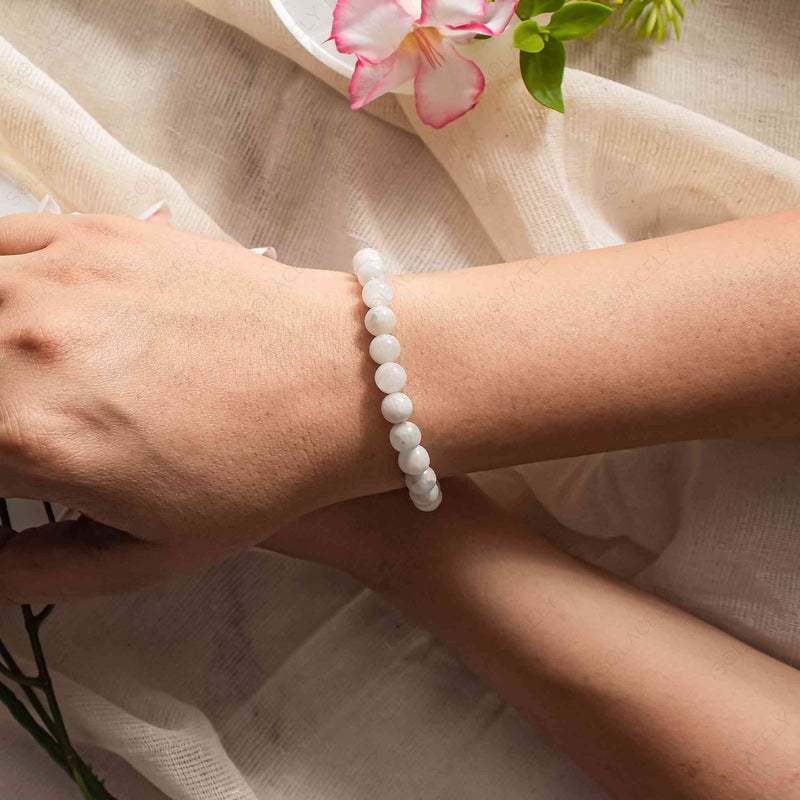
June is the most generous month, carrying pearl, moonstone and alexandrite. Pearl is the only organic one on the whole list, grown rather than mined. Moonstone is the feldspar with the blue shimmer, kept for cycles and intuition. Alexandrite is the rarity, a chrysoberyl that shifts from green to red under different light.
July to December
July is ruby, red corundum at 9 on the Mohs scale, and the traditional stone of passion, courage and vitality. It has been the most prized coloured stone in many cultures for a very long time, and its hardness makes it entirely practical for daily wear.
August carries peridot, spinel and sardonyx. Peridot is the olive-green one, formed deep in the mantle and even found in some meteorites, and our guide to the July birthstone covers ruby in detail. September is sapphire, corundum again but blue, kept for wisdom and loyalty.
October carries opal and tourmaline, both of which show more than one colour at once, which suits a month traditionally associated with imagination. November carries topaz and citrine, the two golden stones, kept for abundance and confidence. Citrine is the merchant's stone and has been kept in tills for generations.
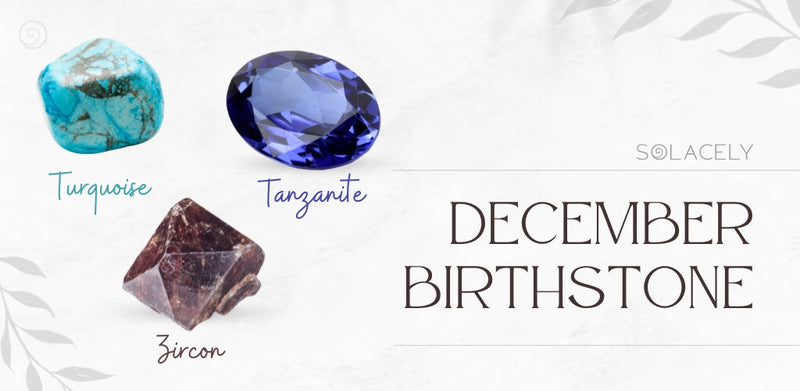
December is the busiest month at the other end, with turquoise, tanzanite and zircon. Turquoise is the ancient one, worn for protection across Persia, Egypt and the American Southwest. Tanzanite is the modern addition, found only in one place in Tanzania. Our guide to the December birthstone covers all three.
Choosing and wearing your birthstone
Where a month offers a choice, take the one you like looking at. All the stones on a month's list are equally traditional, and the reason a month has several is usually practical: a rarer stone needed an accessible companion, or an older list and a newer one both survived.
Zodiac stones are the other route, and they cut across the months rather than following them. Someone born in late August might take peridot for the month or sunstone for Leo, and both are proper answers. Many people wear one of each.
A pendant or a ring is the usual form for a birthstone, since the point is that it is personal and visible. It is also the classic gift: a birthstone piece says something a generic present cannot, which is why the custom has lasted through several centuries of changing fashion. Our guide to the April birthstone covers diamond as a gift stone.
Caring for birthstones
Care follows hardness, and the list spans almost the whole range. Diamond, ruby and sapphire at 9 and 10 are effectively indestructible in normal wear and need nothing beyond warm soapy water. Garnet, amethyst, citrine, topaz, aquamarine and emerald all handle everyday life well.
Four need real attention. Pearl at 2.5 to 4.5 is soft and reacts to acids, perfume and hairspray, so it goes on last and is wiped after wearing. Opal at 5.5 to 6.5 contains water and can craze if it dries out or takes a sudden temperature change. Turquoise is porous and absorbs oils. Emerald is usually fracture-filled, so it must never go in an ultrasonic cleaner.
Keep amethyst, citrine and opal out of long hours of hard direct sun, which fades or damages all three. Store pieces separately so harder stones cannot scratch softer ones. For cleansing in the spiritual sense, moonlight and sound suit every stone on the list, and our step-by-step on how to cleanse and charge crystals covers the methods.
Birthstones are worn as part of a long-standing cultural and spiritual tradition. They are not a medical device or treatment, and they do not diagnose, treat, cure or prevent any condition. Nothing here replaces advice from a doctor or other qualified professional. Gemological details are given as general information; for a valuable purchase, please consult a reputable jeweller or ask for a gemological report. Small stones are a choking risk for babies and young children.
Sources
Written by Chetena Sharma. Reviewed by the Solacely editorial team.
Frequently asked questions
About the author


Written by Chetna Sharma, crystal healing practitioner and co-founder of Solacely. Chetna has worked with healing crystals for over a decade and curates Solacely's protective stone collection.