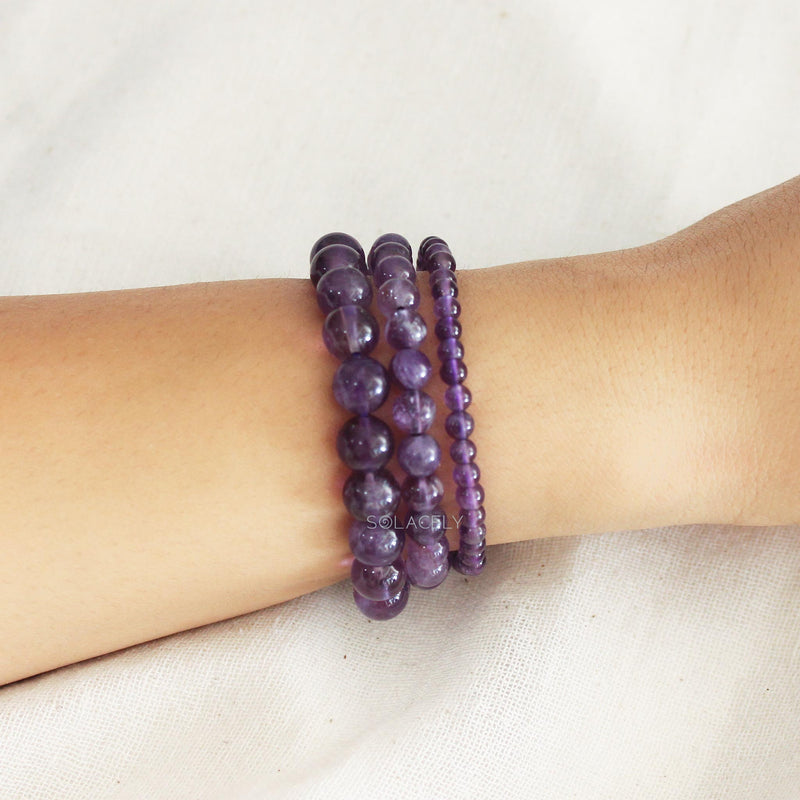
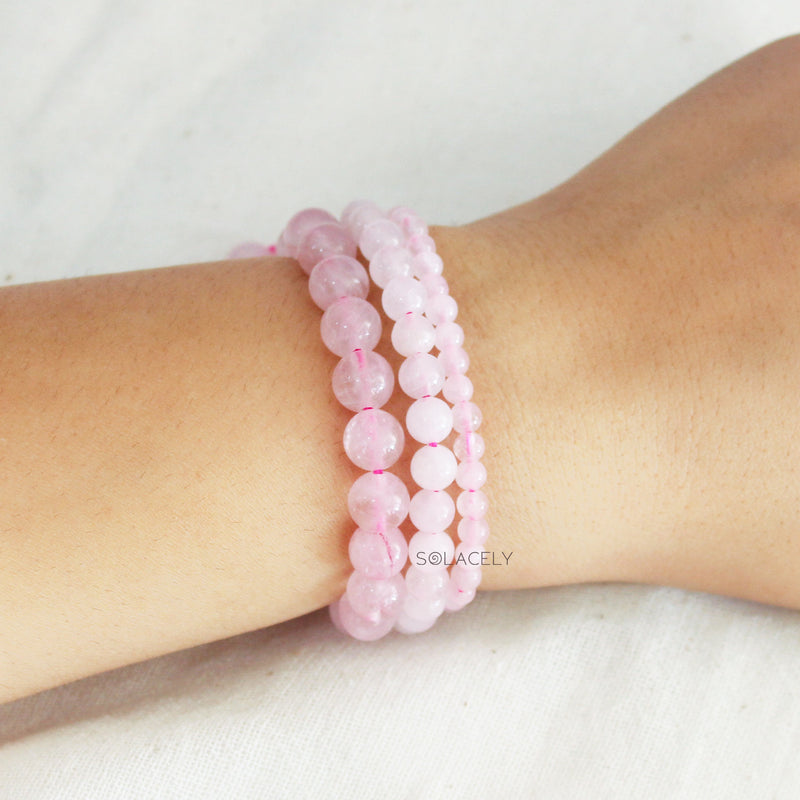
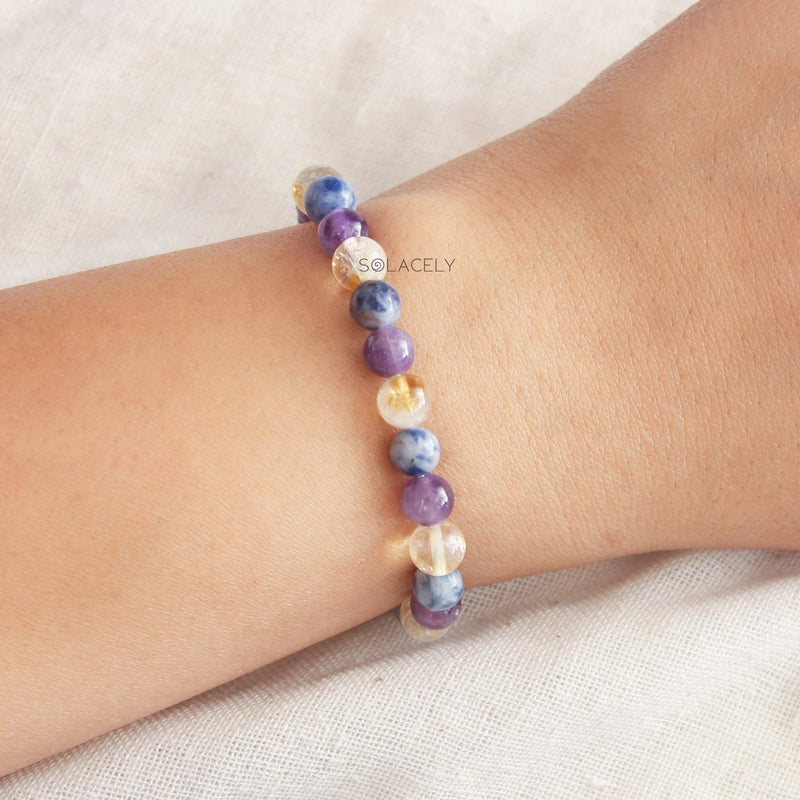
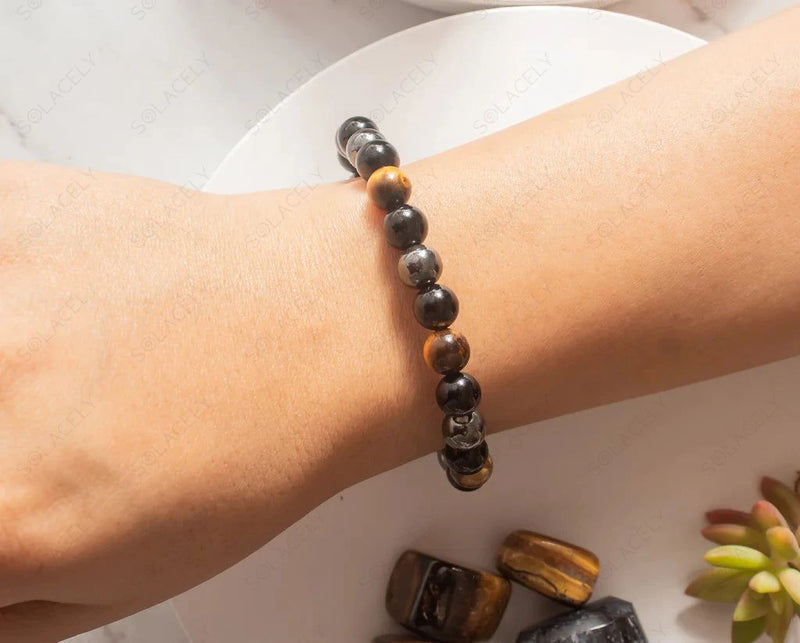
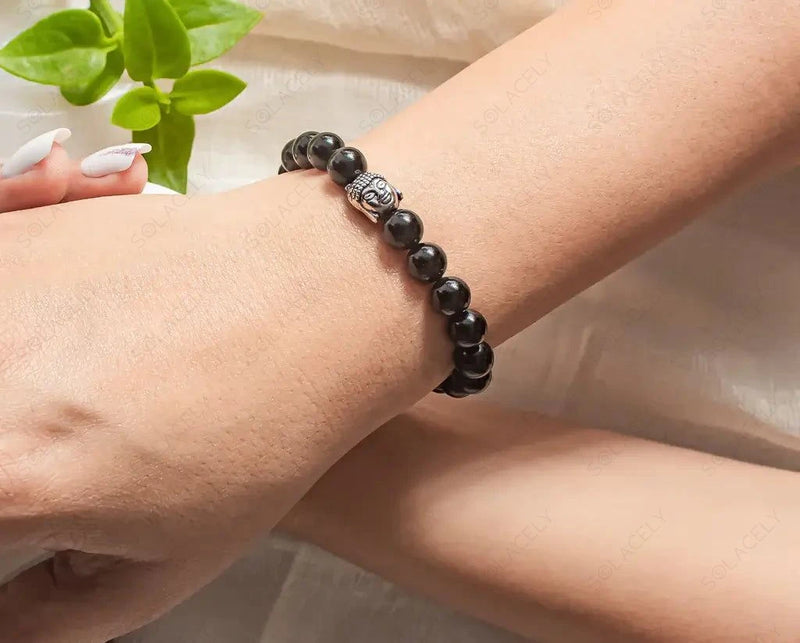
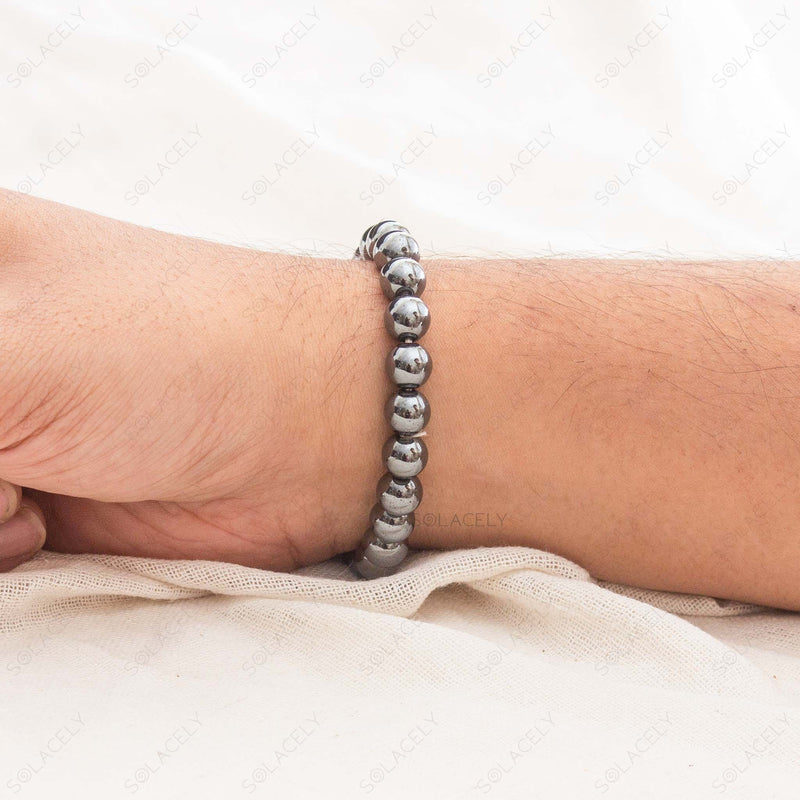
The best crystals for bracelets are the quartz family and black tourmaline, because hardness 7 with no cleavage survives the knocks a wrist takes daily. Amethyst, rose quartz, clear quartz, citrine, smoky quartz, tiger's eye, black tourmaline and hematite cover almost every intention people wear a bracelet for.
Key takeaways
- Best everyday stones: quartz family plus black tourmaline and hematite, all hard wearing.
- Mixing works. Keep stones within a point of each other on the Mohs scale so they wear evenly.
- 6 to 8mm suits most wrists. 10mm and above reads as a statement piece.
- The cord fails before the stones do. Expect to restring after one to two years.
- Softer stones such as selenite and lepidolite belong in a pocket, not on a wrist.
- Two or three stones with one shared intention read more clearly than six doing different jobs.
Which crystals suit a bracelet
A bracelet is the most demanding place to put a stone. It meets desks, doorframes, keyboards and car doors all day, so durability decides more than beauty does. That is why the quartz family dominates: hardness 7, no cleavage planes, and a polish that holds for years.
| Stone | Mohs | Traditionally kept for |
|---|---|---|
| Amethyst | 7 | Settling a busy mind |
| Rose quartz | 7 | Compassion, self kindness |
| Clear quartz | 7 | Clarity, the all rounder |
| Citrine | 7 | Warmth, confidence, prosperity |
| Smoky quartz | 7 | Grounding, settling |
| Tiger's eye | 7 | Courage, holding your nerve |
| Black tourmaline | 7 to 7.5 | Boundaries, protection |
| Hematite | 5 to 6.5 | Grounding, focus |
Hematite is the one softer entry worth keeping on the list, because it is so widely worn and its metallic finish is part of the appeal. It will show wear before the quartzes do, which is worth knowing rather than avoiding.
Stones better kept off the wrist
Some much loved stones are simply happier elsewhere. Selenite is gypsum at Mohs 2 and dissolves slowly in water, so a bracelet worn while washing up will not last. Lepidolite is a soft layered mica that flakes when water works into it. Fluorite is beautiful and soft at 4 with perfect cleavage, so it chips.
None of that makes them lesser stones. It makes them pocket tumbles, bedside pieces and desk companions instead. Our guide to crystal bracelets for beginners covers the first purchase in more detail.
Combining stones sensibly
Two rules, and they are both easy.
Match the hardness. Beads rub against each other constantly. Put obsidian at 5 next to tourmaline at 7.5 and the obsidian dulls within a year. Keep everything on a strand within roughly a point of each other and the whole bracelet ages together.
Keep the intention coherent. A bracelet that pairs citrine with pyrite reads clearly, because both point the same way. One that carries six stones for six different purposes stops meaning anything in particular. Two or three is the sweet spot, and it looks better too.
Sizing and bead size
Measure your wrist with a tape or a strip of paper, then add about a centimetre for a comfortable fit. Too tight and the elastic strains at the knot; too loose and the beads slide over your hand.
For bead diameter, 6 to 8mm suits most wrists and sits neatly under a shirt cuff. 10mm and above makes a visible statement and is more common in men's designs, where a heavier bead balances a broader wrist. Stacking two or three thinner bracelets is the usual alternative to one chunky strand.
Caring for a beaded bracelet
The stones will outlive you. The cord will not, and almost every bracelet that fails does so at the elastic.
- Take it off for water. Showering, swimming and washing up all shorten elastic life considerably.
- Take it off for the gym. Sweat and sudden loads are the two things elastic likes least.
- Wipe rather than soak. A soft dry cloth after wear is enough for most stones.
- Mind the sun. Amethyst, rose quartz and citrine soften in colour with sustained direct sunlight.
- Keep pyrite dry. It oxidises, so never rinse it and never salt cleanse it.
Expect to restring a daily wear bracelet after one to two years. It is inexpensive, the beads are almost always fine to reuse, and it is a good moment to change the arrangement if your intention has moved on.
Which wrist, and does it matter
Traditional practice puts receiving stones on the left wrist and grounding or releasing stones on the right. It is a convention rather than a rule, and it works mainly as a memory aid for what you are wearing and why. Our full guide to which hand to wear your crystal bracelet on goes through it stone by stone.
If you only wear one bracelet, the practical answer is the wrist where you will actually notice it during the day.
Choosing your first one
Pick by intention rather than by colour, and start with one. Amethyst if you want settling, citrine if you want lifting, black tourmaline if you want boundaries, rose quartz if the work is emotional. All four are durable, affordable and easy to look after.
When choosing crystals for a bracelet, start by thinking about the intention you want to carry with you. You can create your own crystal bracelet by selecting stones based on their meanings, energy, and the qualities you feel drawn to.
For the wider starting point, see crystals for beginners, and for the calming end of the range, crystals for calming.
The uses described here reflect traditional and cultural crystal practice. They are not medical claims and are not a substitute for professional healthcare or advice. Keep small beads away from young children, as loose beads are a choking risk.
Sources
Written by Chetena Sharma. Reviewed by the Solacely editorial team.
Frequently asked questions
About the author


Written by Chetna Sharma, crystal healing practitioner and co-founder of Solacely. Chetna has worked with healing crystals for over a decade and curates Solacely's protective stone collection.