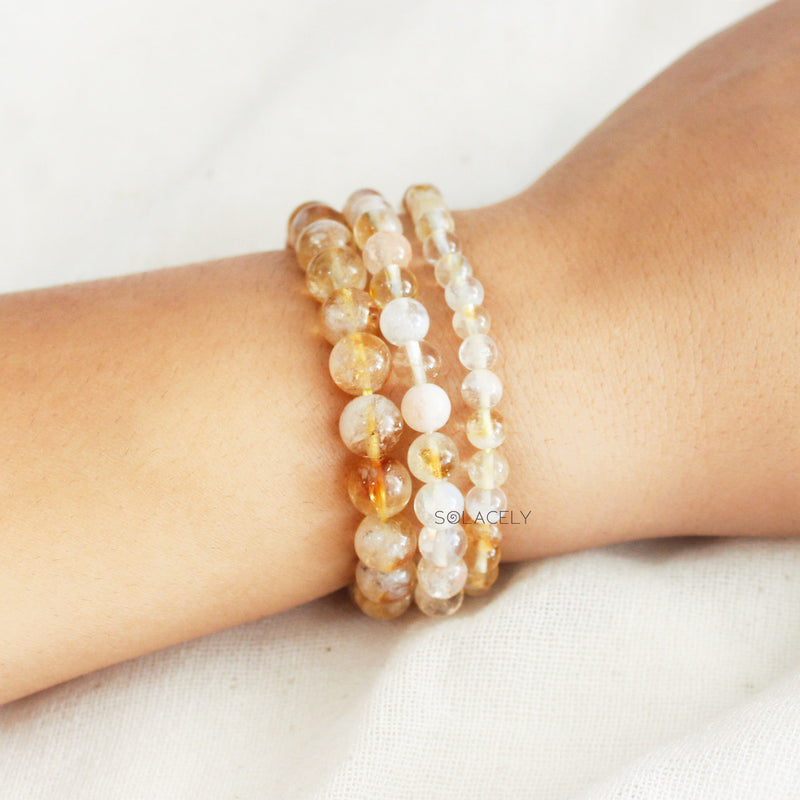
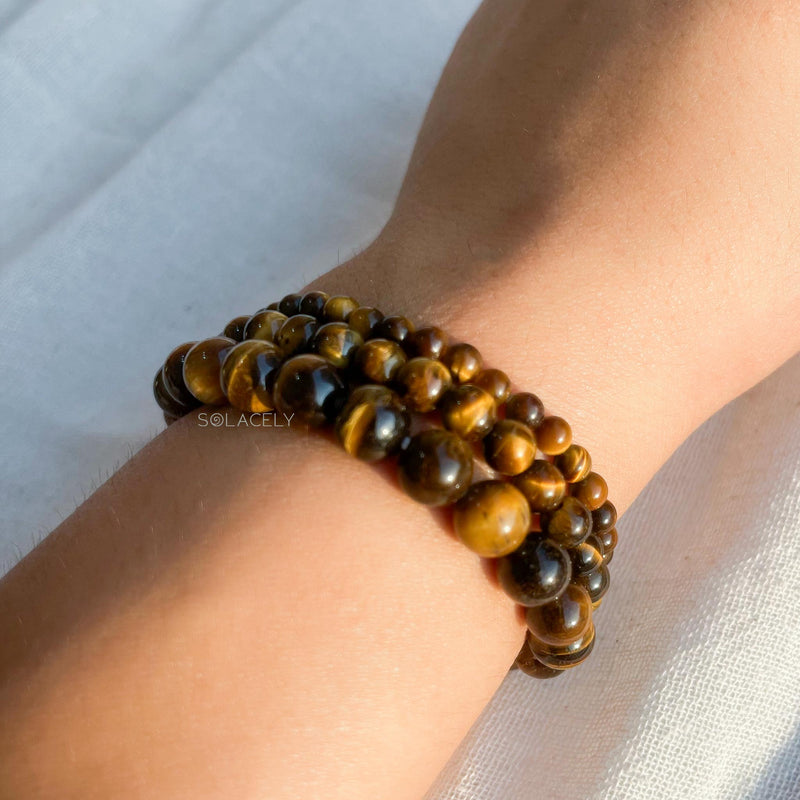
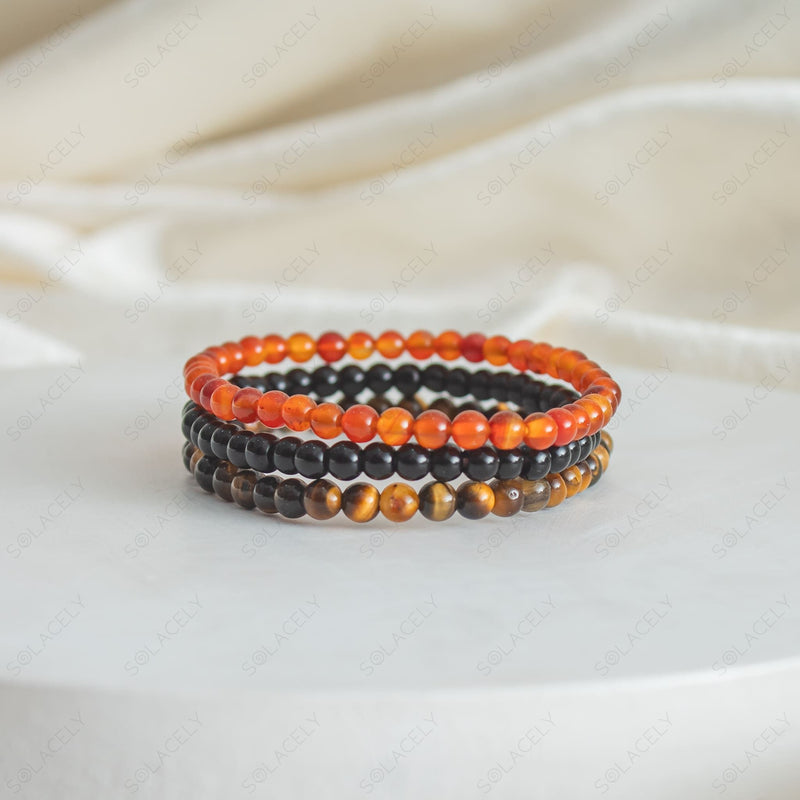
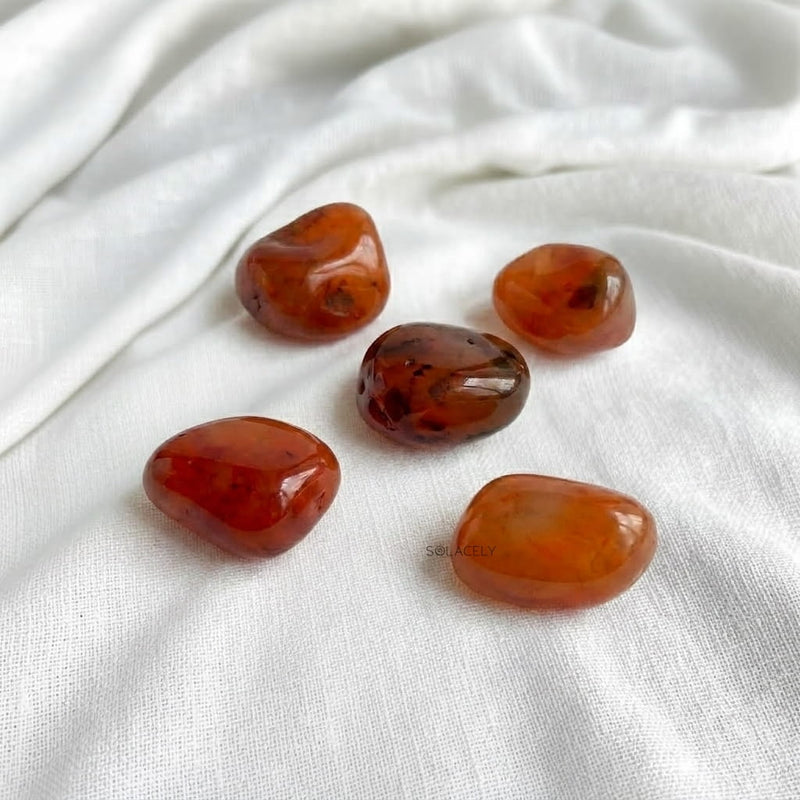
Citrine, tiger's eye, sodalite, carnelian and amethyst are the stones traditionally carried into a job interview. Citrine for confidence, tiger's eye for holding steady under questioning, sodalite for saying what you actually mean, carnelian for drive, and amethyst for the wait in reception.
Key takeaways
- Five stones: citrine, tiger's eye, sodalite, carnelian, amethyst.
- Take one, not five. Choose the one that matches the part you find hardest.
- Pocket or bracelet. Not on the table, where handling it reads as fidgeting.
- Citrine is the confidence stone. Tiger's eye is the nerves stone. Different jobs.
- Choose it the night before, so the morning holds one less decision.
- The stone helps you walk in settled. Your preparation carries the answers.
The five stones
| Stone | Traditionally carried for | Mohs |
|---|---|---|
| Citrine | Confidence, a bright and open manner | 7 |
| Tiger's eye | Holding steady under questioning | 7 |
| Sodalite | Clear, ordered speech | 5.5 to 6 |
| Carnelian | Drive, wanting the role out loud | 6.5 to 7 |
| Amethyst | The wait beforehand, restless sleep the night before | 7 |
All five are hard enough to live in a pocket without coming to harm, which is part of why this particular set became the interview list rather than a softer, prettier one.
Take one, and choose it for the right problem
The most useful thing you can do with this list is narrow it to a single stone, chosen for the specific part of an interview you find hardest. Five stones in a pocket is five things to think about at the moment you can least afford it.
If you tend to undersell yourself, and you leave interviews thinking of the better answer you could have given, citrine is the one. It is kept for confidence and for the kind of open, unguarded manner that makes a room warm to you.
If the difficulty is nerves rather than confidence, tiger's eye. Its whole tradition is steadiness, holding your ground when a question lands awkwardly. That is a different problem from confidence and it wants a different stone.
If you know your material but lose the thread halfway through an answer, sodalite is the pick, kept for ordered thinking and clear speech. Carnelian suits the interview you want badly and are afraid to seem to want. Amethyst is not really for the room at all, it is for the night before and the twenty minutes in reception.
Our guide to crystals for confidence goes further into the first of those, and crystals for good luck in a job covers the wider search rather than the single meeting.
Where to keep it on the day
Placement matters more than most people expect, and the rule is simple. The stone should be reachable and invisible.
- A jacket or trouser pocket. The default, and the best one. You can close a hand around it without anyone noticing.
- A bracelet under a cuff. Good if you already wear one daily, since it will not feel like a new thing on a day that already has enough of those.
- Not on the table. A stone turned over repeatedly in front of an interviewer reads as fidgeting, whatever it means to you.
On the bracelet question, tradition puts a stone you want to draw something in from on the left wrist and a stone you want to project outward on the right. For an interview that usually means the left. Our guide to which hand to wear a crystal bracelet on sets out the reasoning stone by stone.
The half hour before
This is where the stone earns its place, and it is worth being specific about what to do with it rather than leaving it as a vague good intention.
Find somewhere to sit, ten minutes out. Hold the stone in a closed hand. Breathe out for longer than you breathe in, four counts in and six or eight out, for about two minutes. Relaxation techniques of this kind are well supported for stress and take almost no practice to use.
Then put the stone away and stop. The point of the object is that it gives the two minutes a beginning and an end, which is the part most people skip when they try to calm down by deciding to be calm.
If the wait is longer, the same guidance in crystals for clarity and peace applies to any high pressure hour, not only this one.
Video and panel interviews
For a video call, put the stone beside your keyboard rather than in a pocket. Just inside your own eyeline, outside the camera frame. It does the same job of marking the next forty minutes as different from the rest of the day, and you can glance at it without leaving the conversation.
For a panel, the pocket rule matters more, not less. There are more people watching your hands. Choose the stone that suits the room you find hardest, which for most people facing four interviewers is tiger's eye rather than citrine.
Caring for the stone
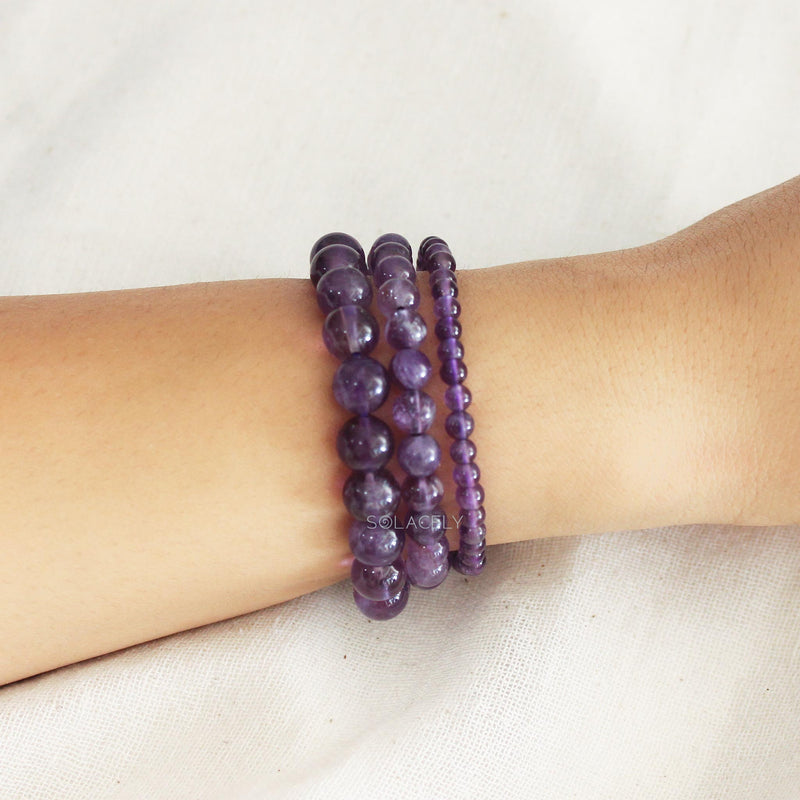
Citrine and amethyst are both quartz, and both will gradually pale if left in strong direct sunlight for long stretches. A windowsill is the one place not to keep them. Anywhere else is fine.
Sodalite is softer at 5.5 to 6, so keep it away from keys in the same pocket. Tiger's eye and carnelian are robust and need nothing beyond a wipe with a soft cloth. None of these five need anything more elaborate than warm water and drying properly afterwards.
The uses described here reflect traditional and cultural crystal practice. They are not medical claims, and they are not a substitute for professional advice. A stone is a support alongside preparation, not a replacement for it.
Sources
Written by Chetena Sharma. Reviewed by the Solacely editorial team.
Frequently asked questions
About the author


Written by Chetna Sharma, crystal healing practitioner and co-founder of Solacely. Chetna has worked with healing crystals for over a decade and curates Solacely's protective stone collection.