For mental clarity, tradition points to clear quartz, fluorite, sodalite, lapis lazuli and amethyst. For peace, it points to blue lace agate, howlite, selenite, amazonite, rose quartz and lepidolite. Clarity stones are kept where you work. Calming stones are kept where you rest. Most people end up wanting one of each.
Key takeaways
- Clarity and peace are two different goals. One is about seeing a problem cleanly, the other about lowering the volume, and tradition assigns different stones to each.
- The usual clarity set is clear quartz, fluorite, sodalite, lapis lazuli and amethyst. The usual calming set is blue lace agate, howlite, selenite, amazonite, rose quartz and lepidolite.
- Selenite is a variety of gypsum at only 2 on the Mohs scale and is water soluble. Never soak it, rinse it under a tap, or leave it somewhere damp.
- Pairing works best as one clarity stone plus one calm stone, split between your working hours and your winding down hours.
- A small daily routine beats a large collection. Two stones with two fixed places and two fixed moments get used; a tray of eleven gets dusted.
Are clarity and peace really the same goal?
No, and treating them as one is why a lot of crystal sets feel vague. Clarity is about seeing something cleanly: attention, order, a decision you keep circling. Peace is about lowering the volume: a settled body, slower thoughts, an easier evening. Different problems, different stones, different places in the house.
The stones follow that split. Clarity stones tend to be transparent, sharply banded, or a strong flat blue. Calming stones tend to be pale, milky, or muted. Tradition has always read a stone by its appearance, so a stone you can see through came to stand for thinking you can see through.
Amethyst sits in both camps, which is worth flagging early. Older listings name it for a sharp head, modern ones name it for calm. If your actual problem is a thought loop rather than either one, our guide to crystals for overthinking covers that middle ground.
Which crystals are used for mental clarity?
Clear quartz, fluorite, sodalite, lapis lazuli and amethyst are the five stones named most often for clarity. Clear quartz leads the list because of its transparency. Quartz is one of the most abundant minerals in Earth's crust, a hard silicon dioxide that can be almost perfectly water clear.
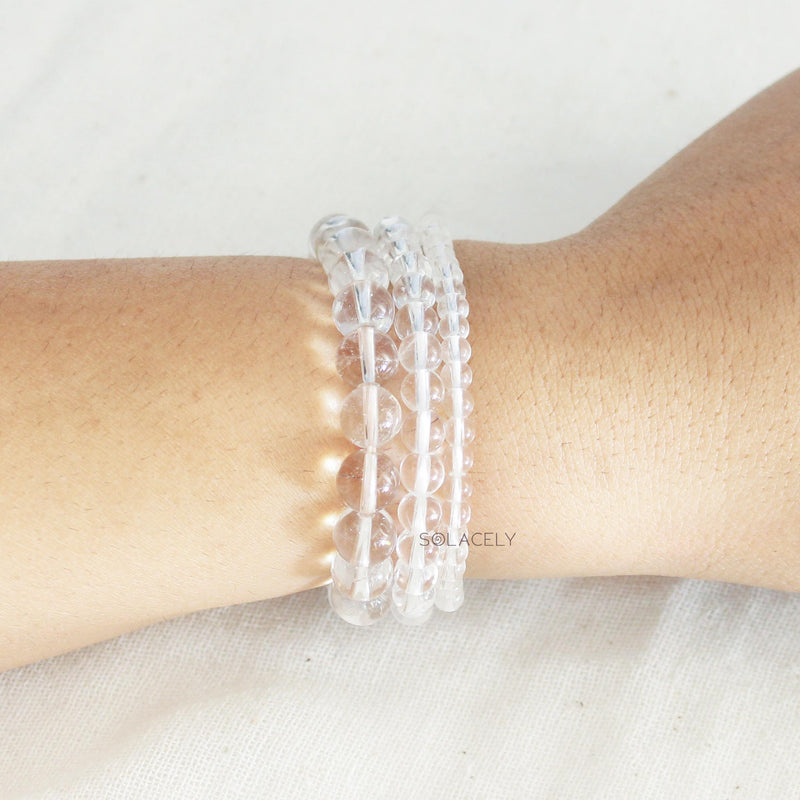
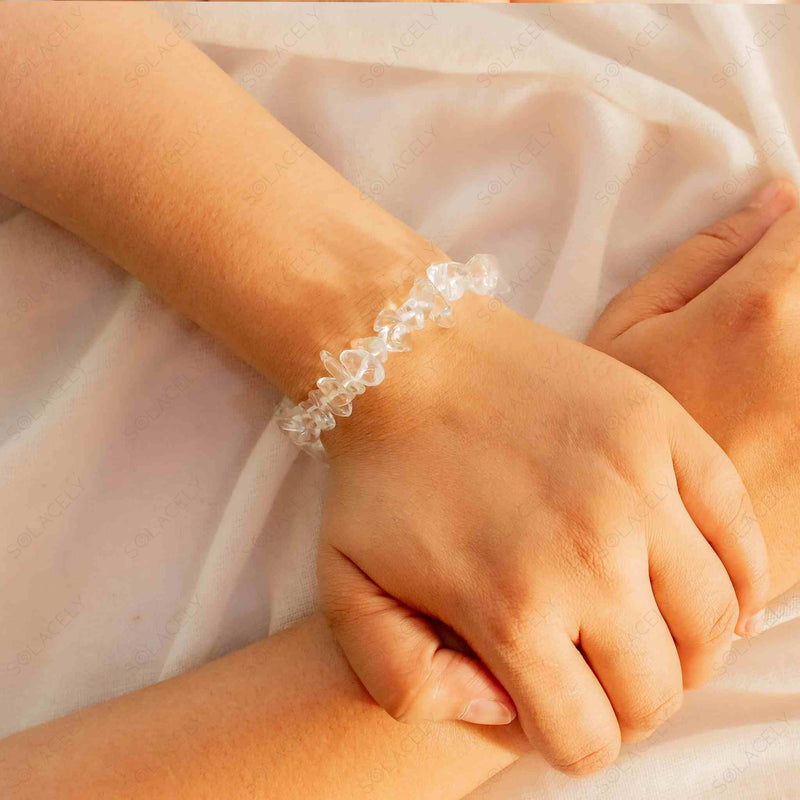
- Clear quartz. The default, and traditionally used to amplify whatever intention it is given. Hard at 7 on the Mohs scale, so it survives daily handling. More sits in our clear quartz meaning guide.
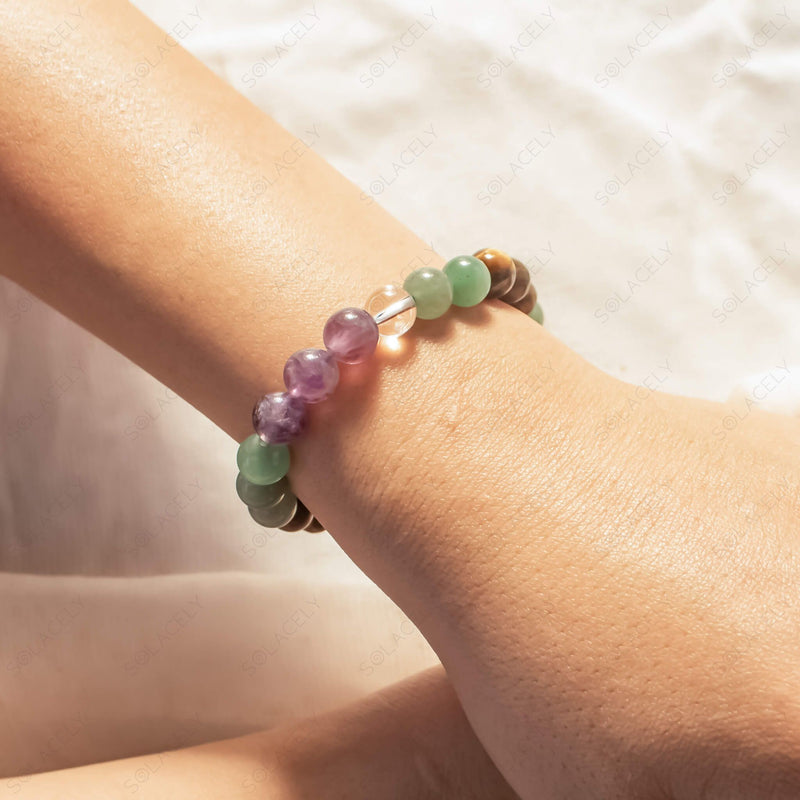
- Fluorite. The study stone. Fluorite is calcium fluoride, and it is the mineral that defines 4 on the Mohs hardness scale, so it is noticeably soft. Its banded green and purple layers gave it an association with mental tidying.
- Sodalite. Deep blue with white veining. Long linked to logic and to saying what you actually mean.
- Lapis lazuli. A rock rather than a single mineral, mostly lazurite with pyrite flecks and calcite. Tied to wisdom and plain truth since antiquity.
- Amethyst. The purple variety of quartz, and the birthstone for February. It is chosen for an uncluttered head rather than raw drive, which is why it turns up on clarity lists and calm lists alike.
If pure attention is what you are after rather than general clear headedness, the narrower crystals for concentration guide is the closer fit.
Which crystals are used for calm and peace?
Blue lace agate, howlite, selenite, amazonite, rose quartz and lepidolite make up the traditional calming set. They are chosen for softness rather than force: pale blues, chalky whites, muted greens and pinks. Selenite is the one with a real handling catch, and we will come to that.
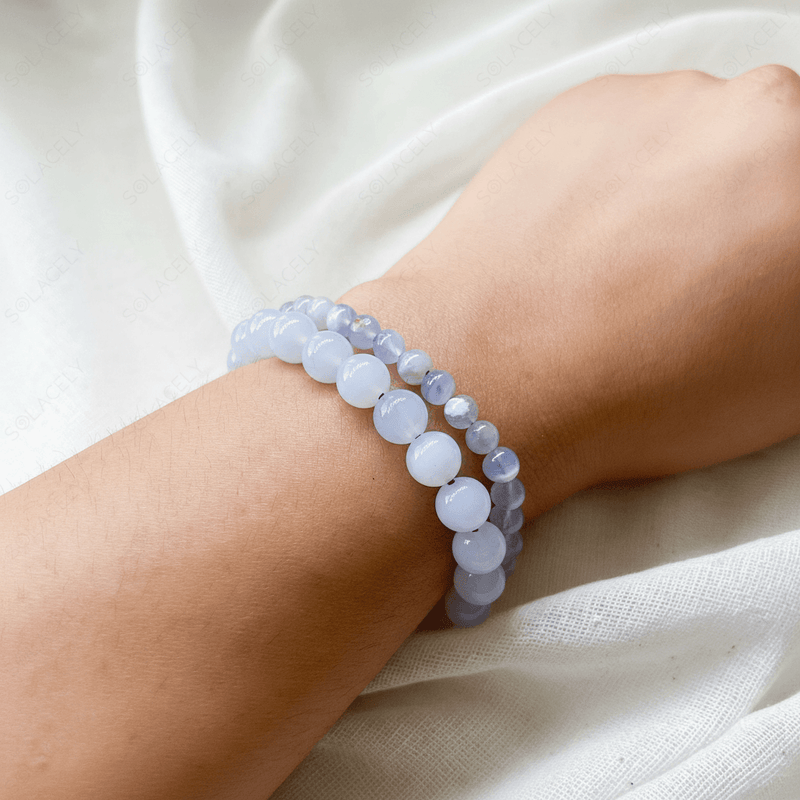
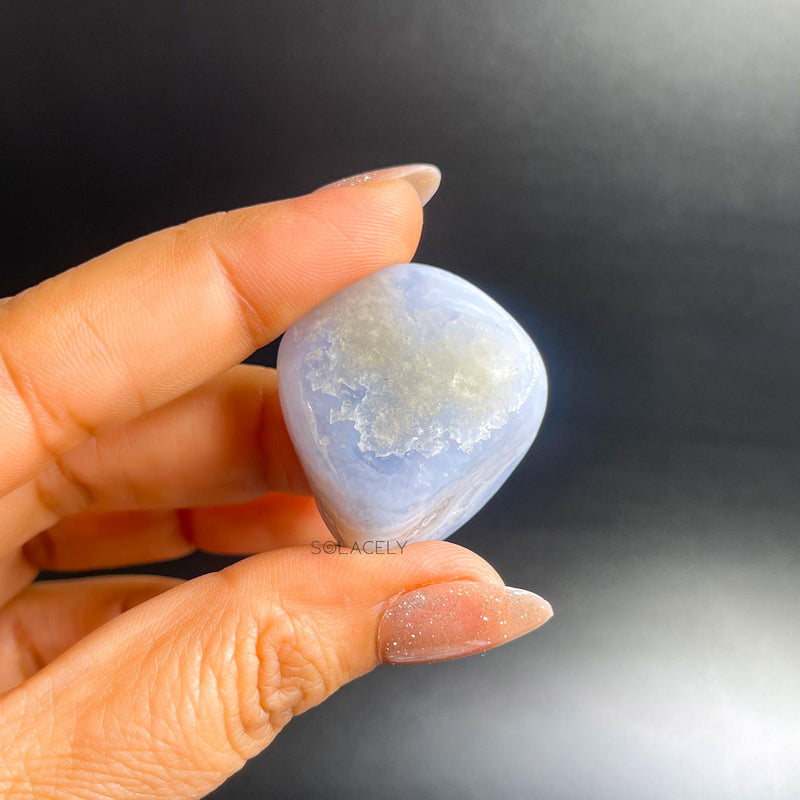
- Blue lace agate. Banded pale blue chalcedony. The most commonly named stone for a settled nervous feeling and for speaking calmly under pressure.
- Howlite. White with grey veining, soft, and traditionally kept near the bed. It also takes colour beautifully, a long established practice in the bead trade, so you will find it in soft blues and greens as well as white. Pick the shade you want to wake up to.
- Selenite. Translucent, satiny, and used as a cleansing stone as much as a calming one. Also the most fragile item on this page.
- Amazonite. Blue green feldspar, associated with lowering household friction. People put it in kitchens and hallways rather than bedrooms.
- Rose quartz. Pink quartz, associated with self directed gentleness. Useful when the thing keeping you awake is something you said to yourself.
- Lepidolite. A lithium bearing mica, soft and flaky, often lilac. Widely used in calming pieces, and widely mishandled because it is far more delicate than it looks.
Notice how few of these are dramatic. That is deliberate, and our broader crystals for calming guide follows the same logic.
Where should you keep them: desk, bedside, or carried?
Placement matters more than quantity. Clarity stones belong where you work: a desk, a study corner, a bag pocket you reach into before a meeting. Calming stones belong where you wind down: a bedside table, a reading chair, a shelf you pass on the way to bed. Carrying one of each covers both.
- Desk. One clarity stone in your line of sight. Clear quartz or fluorite.
- Bedside. One calming stone within reach. Howlite, blue lace agate, or amethyst.
- Carried. A single tumbled stone in a pocket. Sodalite before hard conversations, rose quartz on hard days.
- Shared rooms. Amazonite in the kitchen or hallway, where household irritation builds.
Here is a three minute focus ritual. Sit down before you open anything. Hold the clarity stone in your non writing hand. Say the single task out loud, just the one. Breathe slowly to a count of ten, set the stone at the top edge of the desk, and begin. The stone keeps the intention in view. It marks the line between not working and working.
The wind-down version takes five minutes. An hour before bed, move the clarity stone out of the bedroom. Put the calming stone in your palm, drop the lights, and let your shoulders come down over a few slow breaths. Keeping work stones out of the sleeping space is the step people skip, and the one that seems to matter.
How do you pair a clarity stone with a calm stone?
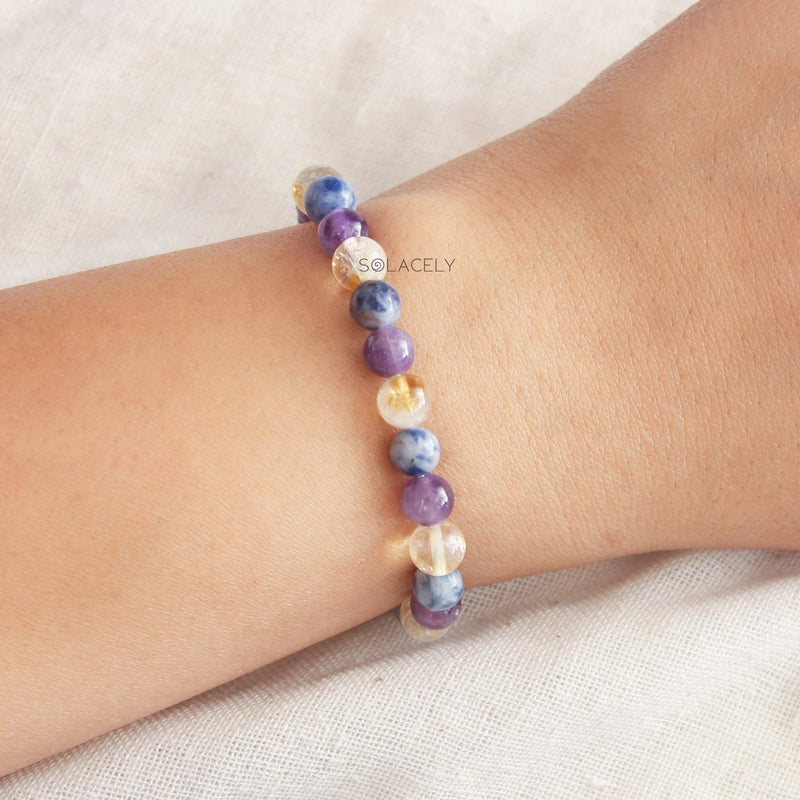
Pair one from each list, not four from both. The three standard combinations are clear quartz with amethyst, fluorite with blue lace agate, and sodalite with howlite. Each puts one stone in the working half of your day and one in the resting half, which is the entire point of pairing.
The reasoning is simple. Someone who cannot concentrate at 11am and cannot switch off at 11pm has two problems, not one. Splitting them gives each object a job and a location, and that is what makes the habit stick.
| Goal | Stone | How it is used |
|---|---|---|
| Clarity | Clear quartz | Desk, or held while naming the day's task |
| Clarity | Fluorite | Study desk, away from hard edges and strong sun |
| Clarity | Sodalite | Carried in a pocket before meetings |
| Clarity | Lapis lazuli | Worn as a pendant when you want to speak plainly |
| Clarity | Amethyst | Reading corner, or anywhere thinking turns circular |
| Peace | Blue lace agate | Bedside, or held through a slow breathing minute |
| Peace | Howlite | Bedside table overnight, or on a bathroom shelf |
| Peace | Selenite | Dry bedroom shelf, never rinsed and never soaked |
| Peace | Amazonite | Kitchen or hallway, where friction builds up |
| Peace | Rose quartz | Bedside or worn, for self directed calm |
| Peace | Lepidolite | Bag or pocket, kept dry and handled gently |
Resist the urge to add a third and a fourth. Two objects with two clear jobs get used. A tray of eleven gets dusted.
How do you care for these stones, and why is selenite different?
Most of this set is easy. Selenite is not, and this is the one care rule genuinely worth knowing. Selenite is a crystalline variety of gypsum, a soft mineral rated 2 on the Mohs scale and soluble in water. You can scratch it with a fingernail.
So selenite never goes under a tap, never sits in a bowl of water overnight, and never goes in salt water. Water will dull the satin surface and, given time, dissolve the stone. Keep it dry, keep it out of the bathroom, and dust it with a soft dry cloth. If you want to cleanse it, use sound, moonlight, or incense smoke. Our fuller selenite guide goes further into that.
Fluorite has a related problem. At 4 on the Mohs scale it scratches readily and cleaves cleanly, so a knock against a desk edge can split it. Lepidolite is a mica, so it flakes and should stay dry. Amethyst's purple can fade with prolonged exposure to strong light, which makes a sunny windowsill a poor home for it.
Clear quartz, sodalite, rose quartz and blue lace agate are all durable, and a quick rinse followed by a dry off is fine. Lapis lazuli is porous and often waxed, so keep it away from soaps and solvents.
How do you build a small daily routine around two stones?
Give each stone one place and one moment, then leave the rest alone. The clarity stone sits on the desk and marks the start of focused work. The calm stone sits by the bed and marks the end of the day. Two objects, two cues, nothing to decide each morning.
Week one is placement only. Put the clarity stone where your eyes land when you sit down, put the calm stone within arm's reach of your pillow, and let them stay put. People who move their stones around every few days rarely build the habit. People who leave them alone almost always do.
Week two adds the pause. Thirty seconds with the clarity stone before you open anything, and a slow minute with the calm stone before the lights go off. That is the whole practice. Many people find the wind-down half lands first, because the end of the day has more space in it than the middle.
After a month, most people know which of the two they actually reach for, and that is the one worth building around. Add a second clarity stone for the bag if you travel, or a calming piece you can wear, but keep the core pair intact. A routine you keep is worth more than a shelf you admire. And if focus or worry is affecting your work, your sleep, or your relationships, a GP or qualified practitioner is the right person to talk to, with your stones keeping you company alongside.
The properties described here reflect traditional and cultural belief around crystals. They are not medical claims and are not a substitute for professional healthcare. If you are managing a health concern, speak to a qualified practitioner.
Sources
Written by Chetena Sharma. Reviewed by the Solacely editorial team.
Frequently asked questions
About the author


Written by Chetna Sharma, crystal healing practitioner and co-founder of Solacely. Chetna has worked with healing crystals for over a decade and curates Solacely's protective stone collection.