Moonstone, carnelian, rose quartz, amethyst and lepidolite are the stones traditionally kept through hormonal change. Hormonal conditions are diagnosed and treated by a clinician, and that is the route that addresses them. What a crystal practice offers alongside is a short daily ritual through a long process.
Key takeaways
- Traditionally associated stones: moonstone, carnelian, rose quartz, amethyst, lepidolite.
- Moonstone's link to cycles comes through moon symbolism, an association many cultures have kept.
- Carnelian sits with the sacral chakra, placed low on the abdomen.
- Irregular periods, unexplained weight change, persistent fatigue or hair loss need a doctor.
- What the ritual offers is a short daily pause, and relaxation practice is well supported for stress.
- Use a stone alongside proper care, never as a reason to postpone it.
Start with the appointment
Hormonal symptoms send a lot of people looking for gentler company, often because they have been dismissed once already. Thyroid conditions, PCOS, perimenopause and diabetes are endocrine conditions, most are diagnosable, and many respond well to treatment. That is the route that addresses them, and it is worth pushing for.
What follows is what the crystal tradition holds, and how people use these stones alongside that care.
The stones traditionally kept through cycles
| Stone | Traditional association | Where the link comes from |
|---|---|---|
| Moonstone | Cycles, feminine energy | Moon symbolism, via monthly cycles |
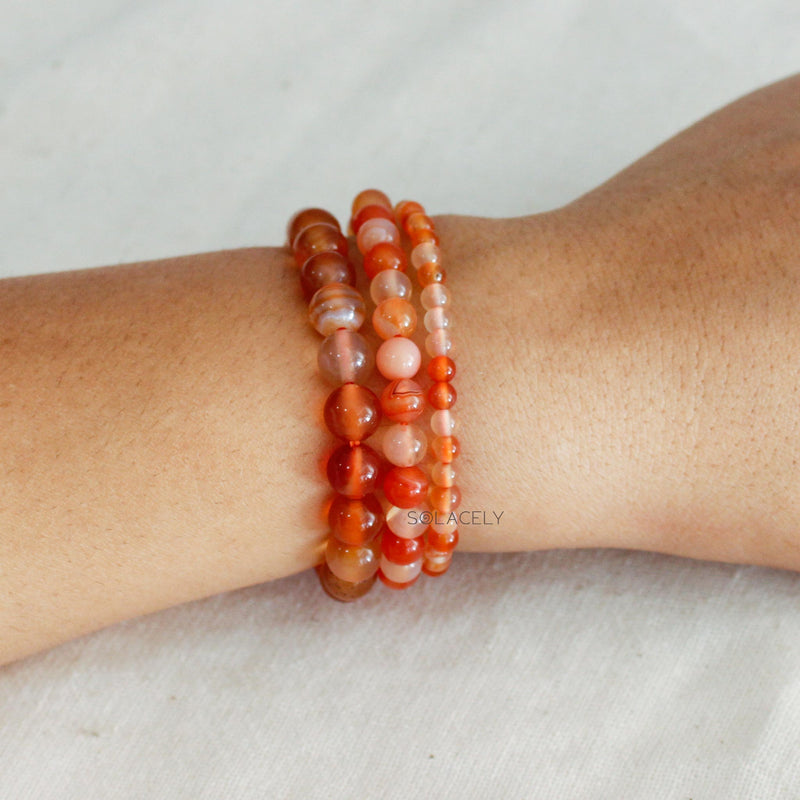
| Carnelian | Sacral chakra, vitality | Chakra placement at the lower abdomen |
| Rose quartz | Self kindness during difficulty | Heart association, general comfort |
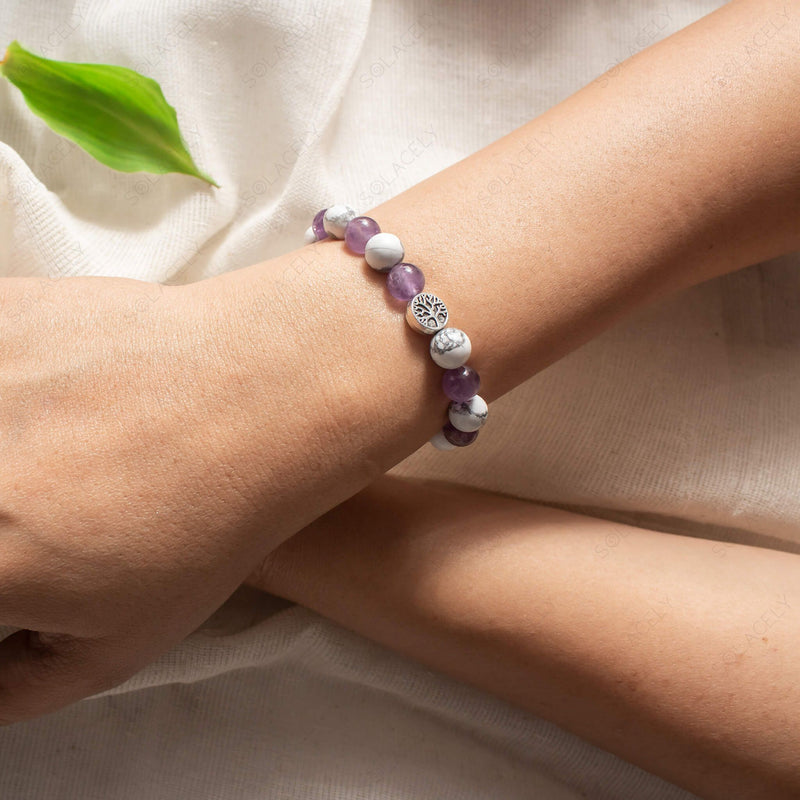
| Amethyst | Rest and settling | The standard calming stone |
| Lepidolite | Emotional steadiness | Traditional mood steadying stone |
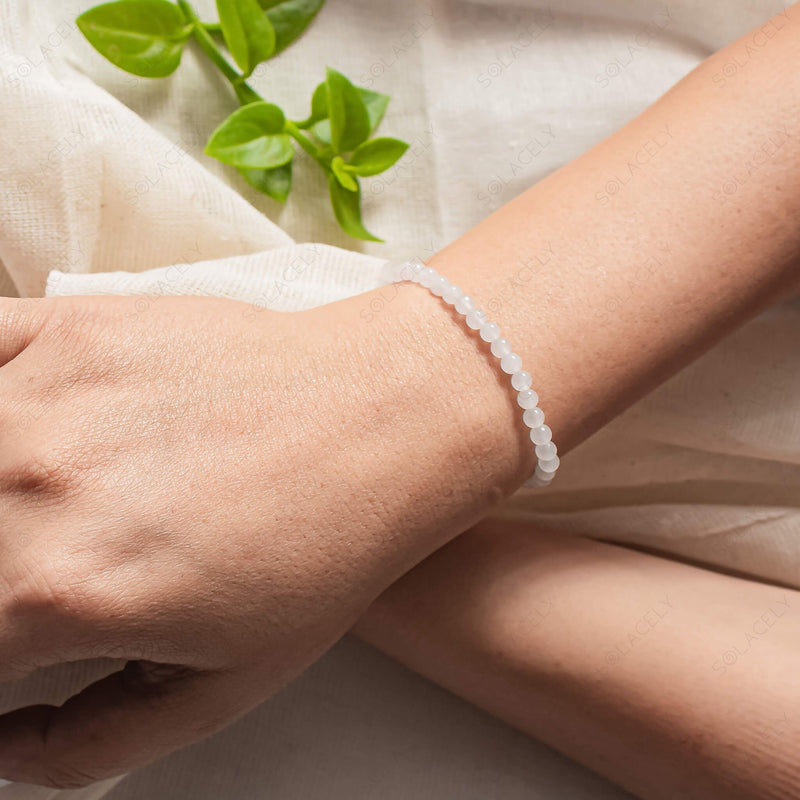
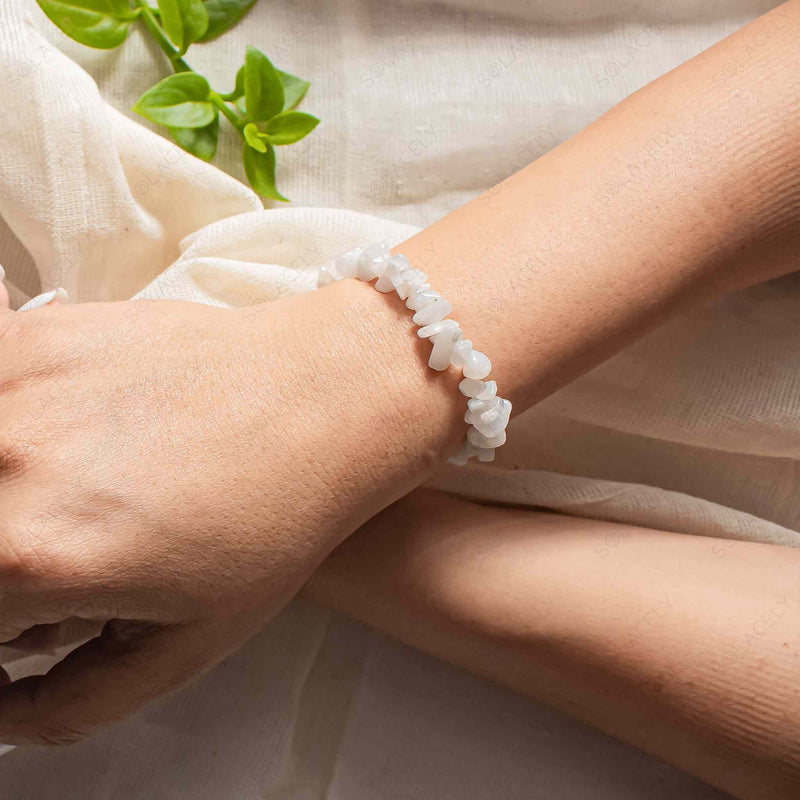
Moonstone is the one people find most evocative, and the association is genuinely old. Moonstone shows a floating internal sheen called adularescence, that sheen was read as captured moonlight, and the moon has been linked with monthly cycles across a great many cultures. The stone carries all of that history with it, which is why it remains the first choice in this group.
The daily pause
Hormonal change often comes with disrupted sleep, higher stress and a sense of having lost the thread of your own body. Relaxation techniques such as slow breathing are well supported for stress and sleep, and a physical object is a dependable prompt to start one.
A version that takes ninety seconds:
- Hold the stone in one hand, thumb on the flattest face.
- Breathe in for a count of four, out for a count of six.
- Move your thumb once across the surface on each exhale.
- Ten breaths, then stop.
Many people find that a small fixed ritual makes a hard evening more manageable, and through a long treatment process that steadiness counts for something.
When to see a doctor
Promptly, if any of the following apply. Periods that are irregular, very heavy, or have stopped without an obvious reason. Unexplained weight gain or loss. Fatigue that does not improve with rest. Hair thinning or unusual hair growth. Symptoms that are disrupting work, sleep or relationships.
These patterns have identifiable causes and, in many cases, straightforward treatments. Book the appointment first and let the ritual be company for the waiting. For related topics we cover, see crystals for PCOS and crystals for menopause, both written the same way.
Care notes for these stones
Moonstone is a feldspar at 6 to 6.5 on the Mohs scale with cleavage, so it chips if knocked and wants a protective setting in a ring. Lepidolite is a mica, soft and layered, and should never go in water because it flakes along those layers. Amethyst and rose quartz both fade in prolonged sunlight. Carnelian is quartz family and needs nothing special.
Who this suits
It suits someone already under medical care who wants a small daily ritual to hold onto through a long or frustrating process. Many people find that helpful, and it asks very little.
If the symptoms are new, the appointment comes first and everything else after it. For general emotional support during a difficult period, see crystals for emotional healing and crystals for calming.
The uses described here reflect traditional and cultural crystal practice, shared for reflection. Crystals are not a medical treatment and do not diagnose, treat, cure or prevent any condition, and they do not affect hormone levels. If you have symptoms that may be hormonal, speak to a qualified healthcare professional, and never delay or replace medical care.
Sources
Written by Chetena Sharma. Reviewed by the Solacely editorial team.
Frequently asked questions
About the author


Written by Chetna Sharma, crystal healing practitioner and co-founder of Solacely. Chetna has worked with healing crystals for over a decade and curates Solacely's protective stone collection.