The crystals most used around a marriage proposal are rose quartz for warmth, garnet for commitment, moonstone for new beginnings, and clear quartz for clarity in deciding. They are carried as a keepsake or worked into the ring, and their role is meaning rather than outcome.
Key takeaways
- Rose quartz, garnet, moonstone and clear quartz are the four stones most often chosen around a proposal.
- Garnet carries the longest documented association with commitment and devotion, appearing in Roman and medieval jewellery.
- If a crystal is going into the ring itself, hardness decides. Below 7 on the Mohs scale is a poor choice for daily wear.
- Moonstone and opal look beautiful and are too soft and too brittle for most engagement rings.
- The answer itself rests on the relationship. A stone marks the moment rather than deciding it.
What crystals are actually for here
Two different uses get conflated in most articles on this topic, and separating them makes the whole thing more useful. The first is a stone carried by the person proposing, as a keepsake and a way of steadying nerves. The second is a stone set into the ring, which is a jewellery decision with real durability consequences.
For the first use, the choice is entirely symbolic and the only test is whether it means something to you. For the second, meaning matters less than hardness, because the ring will be worn every day for decades and a poor material choice becomes obvious within a year.
It is worth saying plainly what the stones are doing here. The outcome of a proposal rests on the relationship and, ideally, on conversations that happened well before the ring was bought. A stone marks the moment and carries the intention into it, which is a real and rather lovely job.
Garnet: the commitment stone
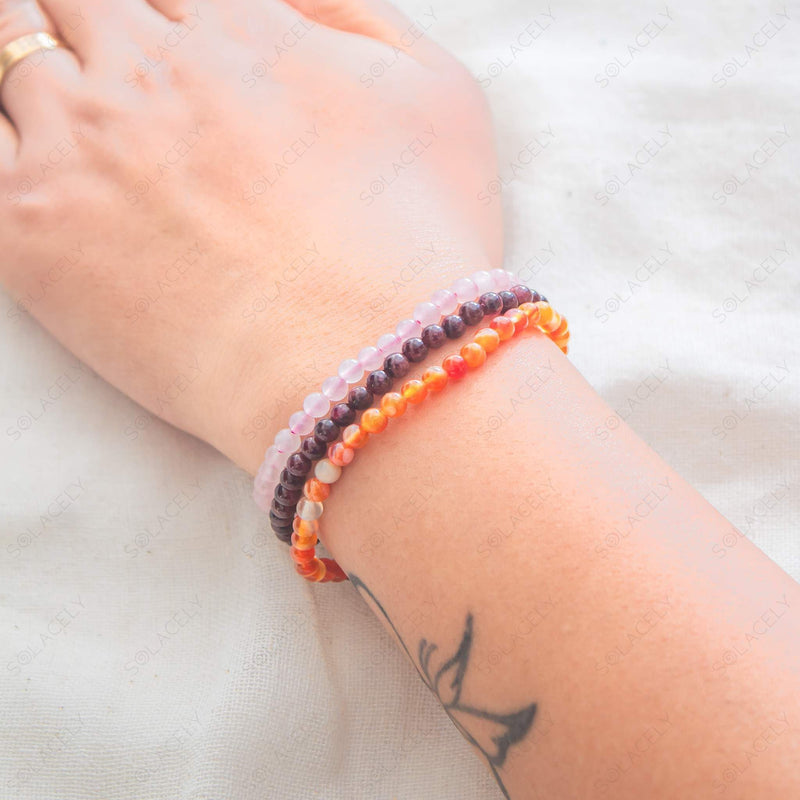
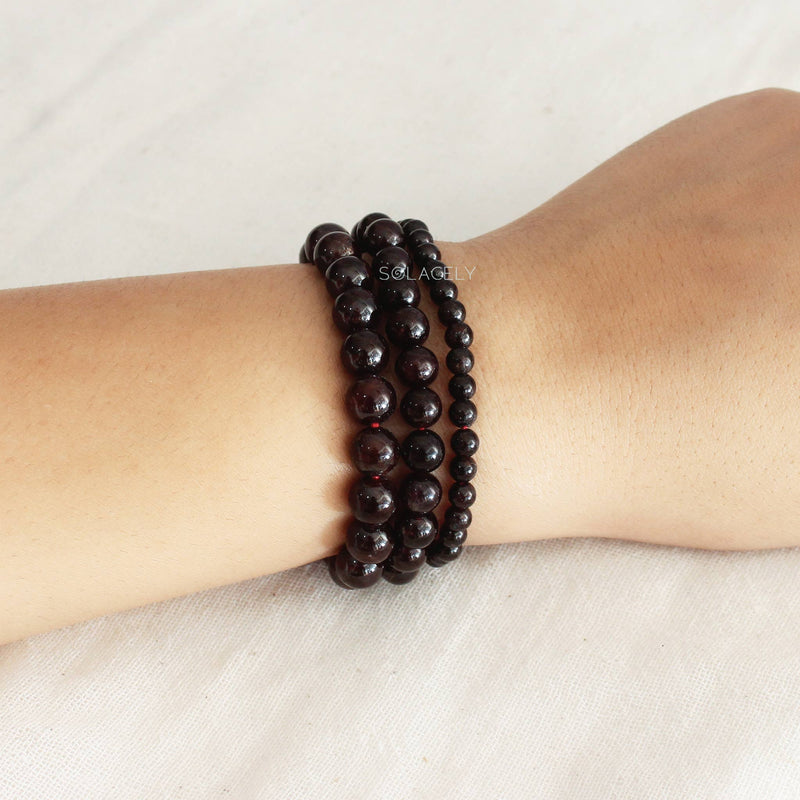
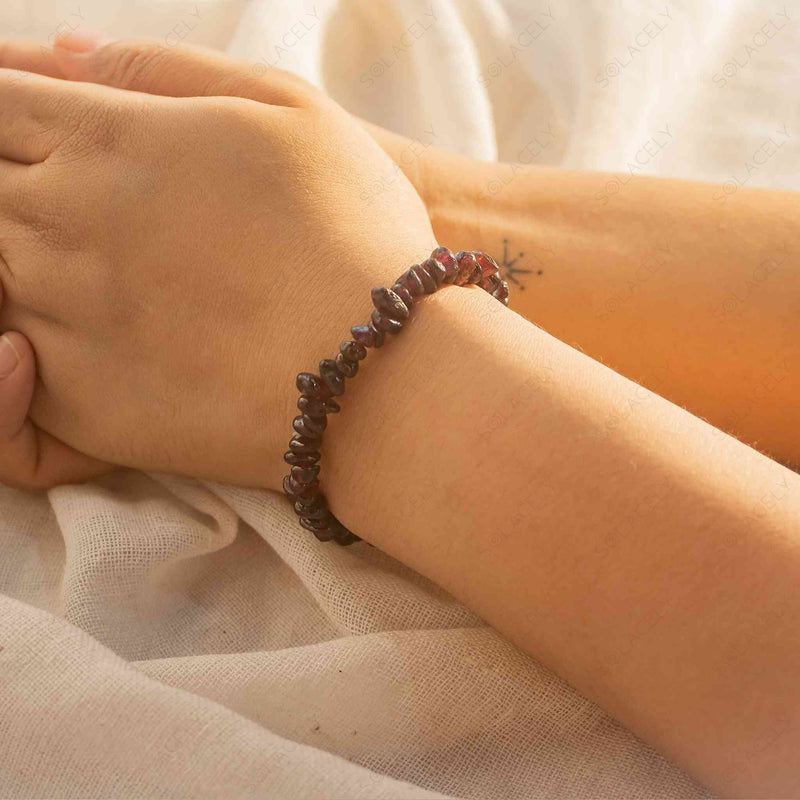
Garnet has the strongest documented claim in this group. It was set into Egyptian jewellery, used in Roman signet rings, and carried by travellers in medieval Europe, and those uses are the root of its long association with devotion, safe return, and steady warmth.
According to the Gemological Institute of America, garnet is not one mineral but a group of silicates spanning many species and colours, with hardness generally between 6.5 and 7.5 on the Mohs scale. That puts the harder varieties within range for a ring, though it sits below sapphire and diamond.
Deep red almandine and pyrope are the varieties people picture and the ones tied to the commitment symbolism. Our garnet meaning and properties guide covers the species differences.
Rose quartz and moonstone
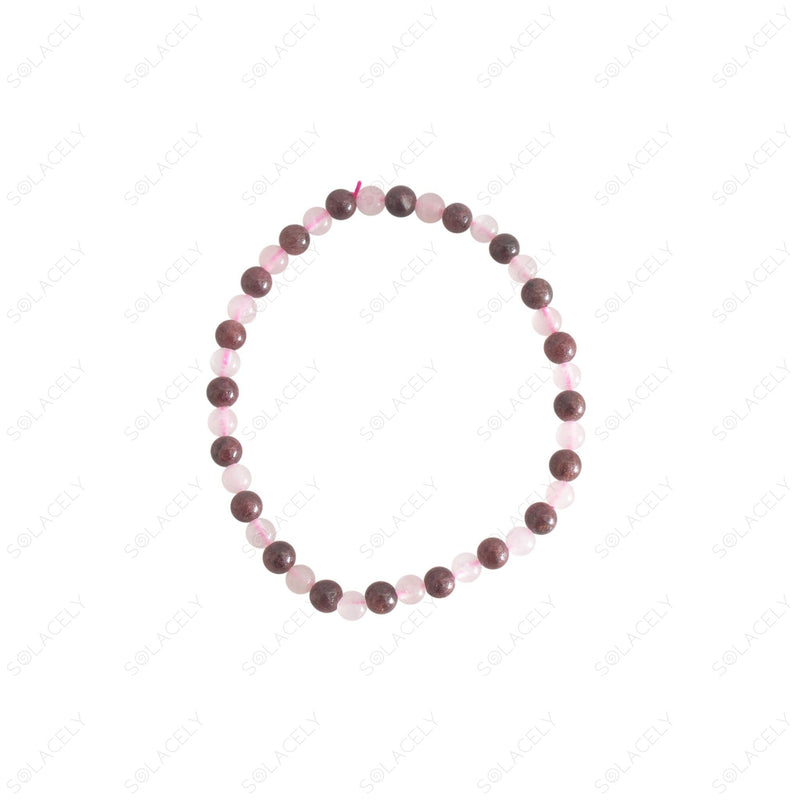
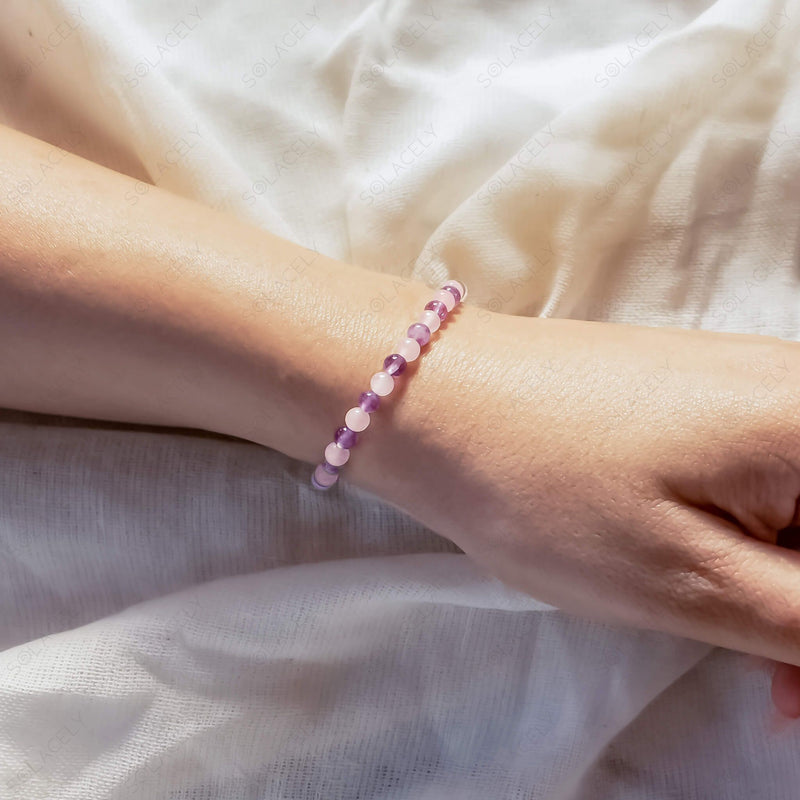
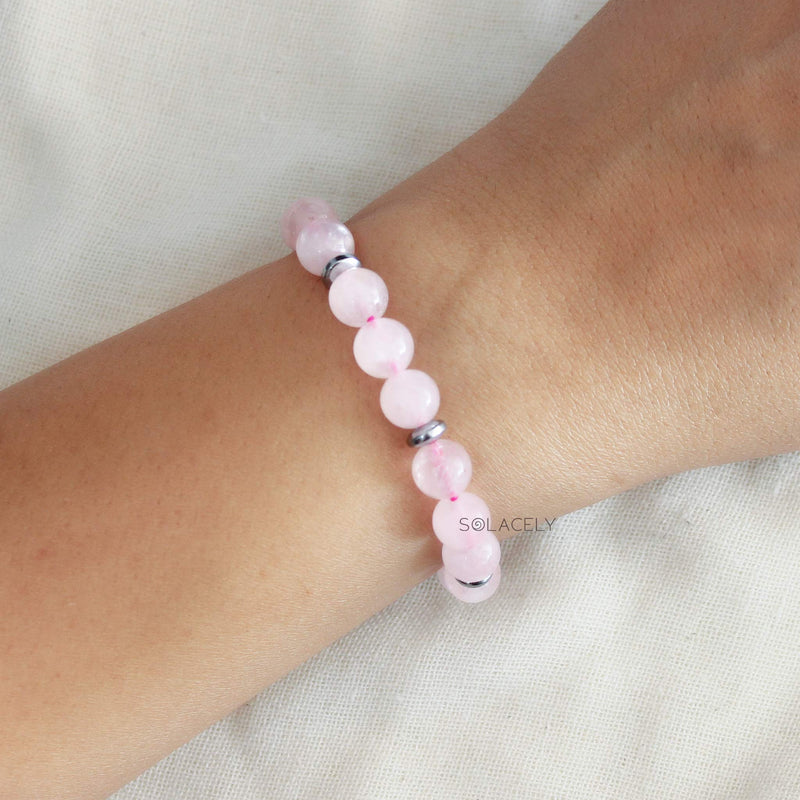
Rose quartz is the obvious emotional choice, associated with warmth, tenderness and self-compassion rather than passion. It is the stone most often carried rather than set, which suits it, since its cloudy pink reads better as a palm stone than as a faceted centre.
The GIA notes that rose quartz owes its colour to microscopic inclusions distributed through the quartz, which is why it is milky rather than transparent. At 7 on the Mohs scale it is durable, though the translucency limits how well it works in a ring.
Moonstone is the new beginnings stone and it is where people most often go wrong. The GIA attributes its floating blue sheen to light scattering between microscopic layers within the feldspar. It is genuinely lovely and, at 6 to 6.5 with distinct cleavage, genuinely unsuited to an everyday ring. As a pendant given alongside the proposal, it works perfectly.
If the stone is going in the ring
| Stone | Hardness | Suits an everyday ring | Note |
|---|---|---|---|
| Sapphire | 9 | Yes | The most durable coloured option by far |
| Garnet | 6.5 to 7.5 | With care | Choose a protective setting |
| Rose quartz | 7 | With care | Durable, but cloudy in a faceted cut |
| Moonstone | 6 to 6.5 | No | Cleavage planes split under knocks |
| Opal | 5.5 to 6.5 | No | Also sensitive to drying and heat |
| Emerald | 7.5 to 8 | With care | Usually fracture filled; avoid ultrasonics |
The Mohs hardness scale is the single most useful thing to consult before committing. If you want a coloured stone that will survive forty years of washing up, the GIA confirms sapphire's position at 9 on that scale, which is why it has become the default alternative to diamond.
How the stones are traditionally used
Keep it simple. The versions that people actually follow through on are small.
- Carried on the day. One tumbled stone in a pocket, held before asking. A steadying object, nothing more.
- Given alongside the ring. A moonstone or rose quartz pendant as a second, softer gift.
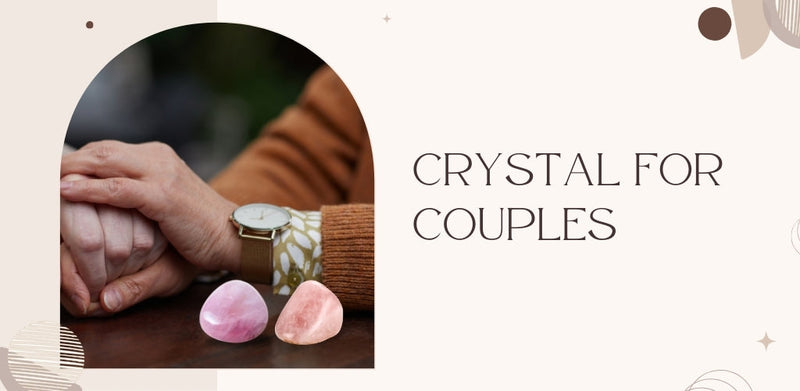
- Kept as a pair. Two matching stones, one each, which is the version couples tend to keep long term.
- Set into the band. Small accent stones flanking the main gem, where durability is less critical.
If the relationship rather than the moment is the focus, crystals for couples covers pieces meant to be shared, and rose quartz for attracting a soulmate covers the stage before this one.
Nerves, and what actually helps
Most people looking up crystals before a proposal are managing nerves rather than shopping. That is worth naming, because the useful interventions are practical rather than mineral.
Rehearse the first sentence only, not the whole speech, since the first sentence is the part that vanishes under pressure. Decide the location in advance and visit it once. Eat something. And accept that the delivery will be imperfect, because nobody has ever reported a yes being withdrawn over phrasing.
A stone in the pocket fits into that as a small anchor, the same way a rehearsed opening line does. It gives your hands something to do and marks the moment as deliberate. That is a fair and modest claim, and it is the one that holds up.
Care for the pieces afterwards
Whatever is chosen will probably be kept for a long time, so the care matters. Hard stones like sapphire and garnet take warm soapy water and a soft brush without complaint. Dry them fully; soap film is the usual reason a stone looks dull.
Softer pieces need more thought. Moonstone and opal should never go near an ultrasonic cleaner or a sudden temperature change, and both should be stored separately from harder stones. Rose quartz is durable but will fade slightly with years of strong sunlight.
Store keepsake stones somewhere you will actually find them again. A great many proposal crystals end up in a drawer within a year, which rather defeats the purpose of choosing one with meaning. If the stone is going to matter, give it a place. For the broader love-focused selection, see crystals to attract love.
The properties described here reflect traditional and cultural belief around crystals. They are offered for reflection and wellbeing and are not medical advice or a substitute for professional support, including relationship counselling. Gemstone durability guidance here is general, so please consult a jeweller before commissioning a ring.
Sources
- Gemological Institute of America, Garnet Description
- Gemological Institute of America, Rose Quartz Description
Written by Chetena Sharma. Reviewed by the Solacely editorial team.
Frequently asked questions
About the author


Written by Chetna Sharma, crystal healing practitioner and co-founder of Solacely. Chetna has worked with healing crystals for over a decade and curates Solacely's protective stone collection.