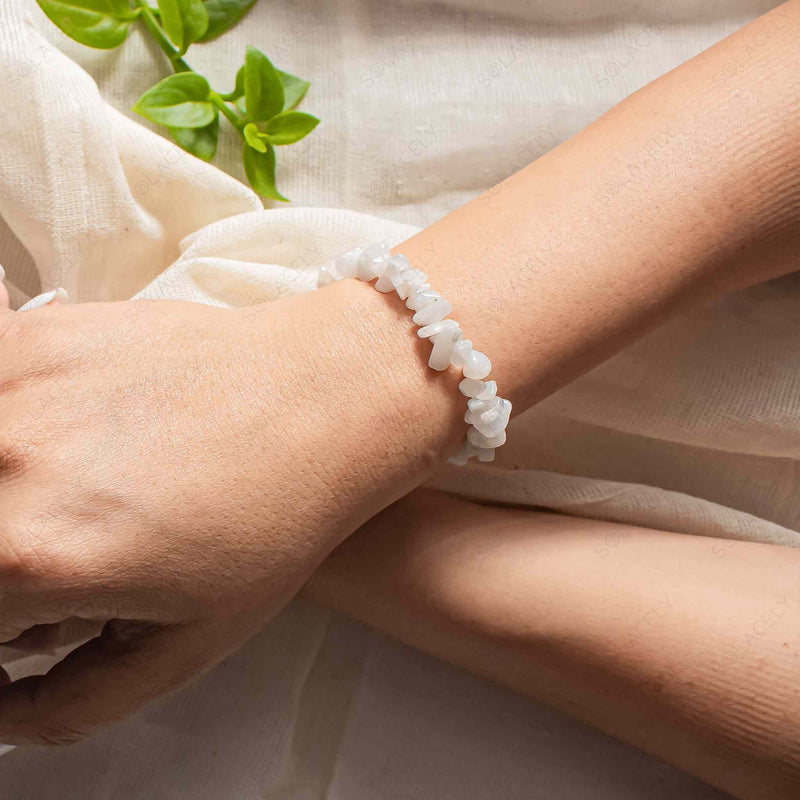
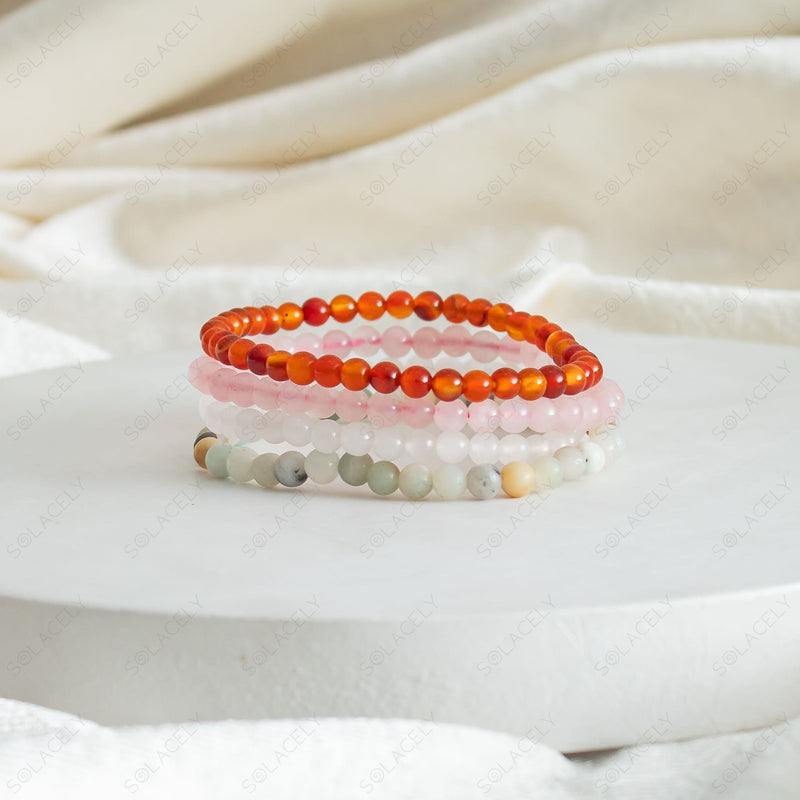
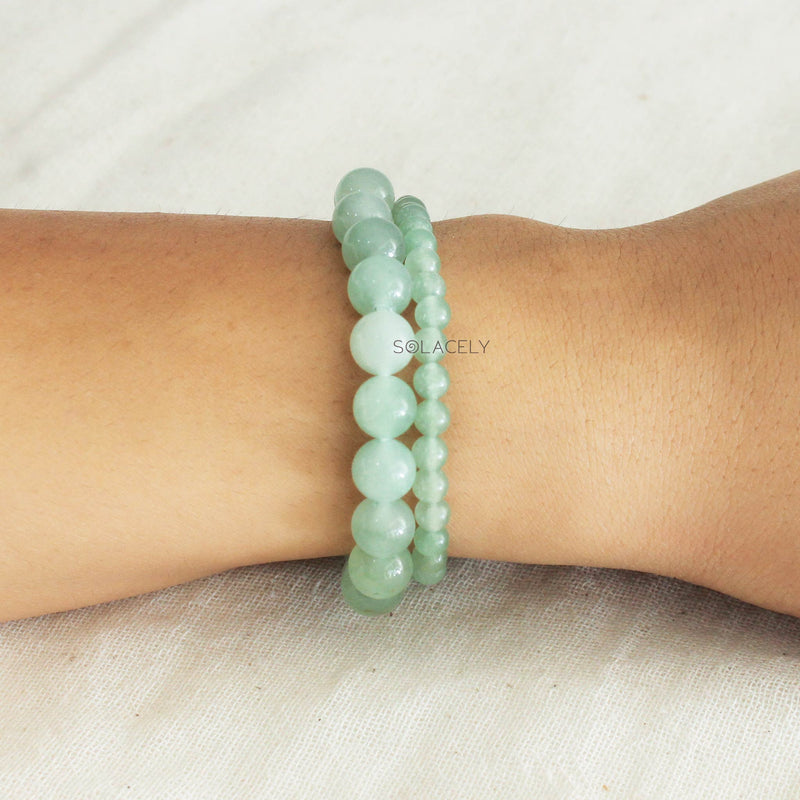
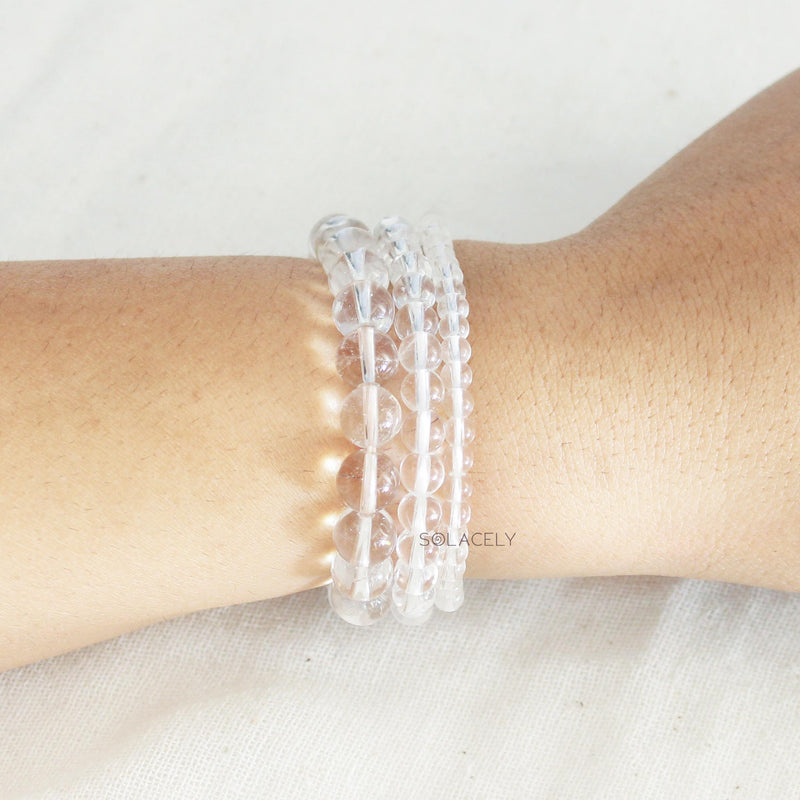
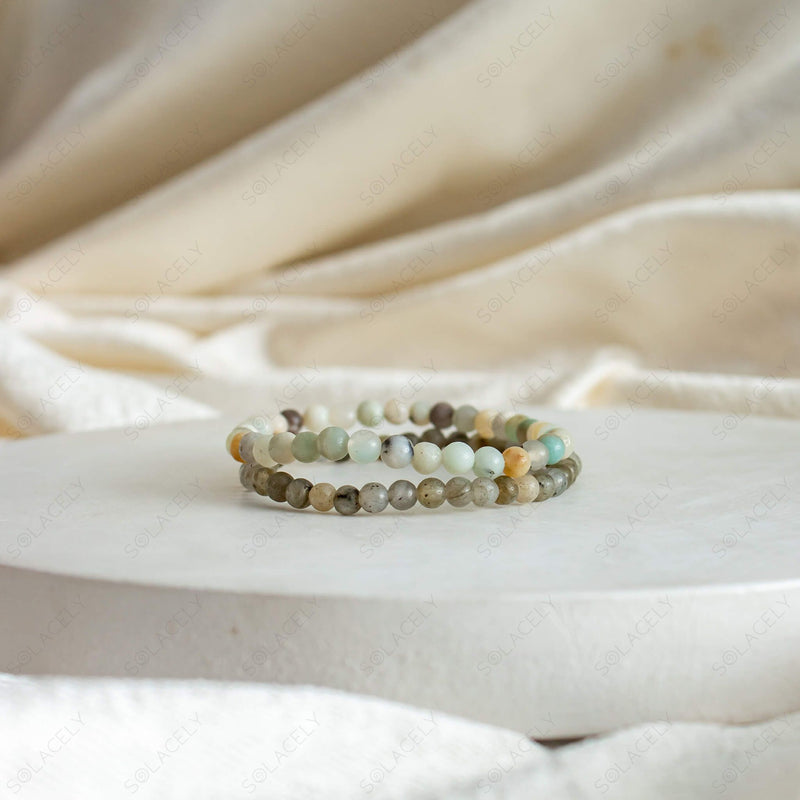
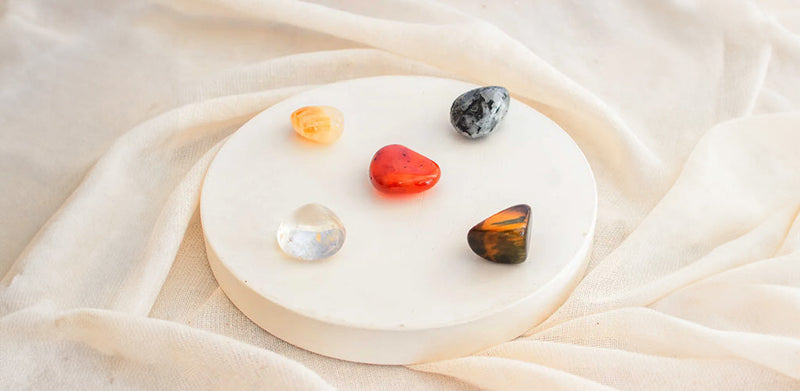
The five crystals traditionally kept for new beginnings are moonstone, clear quartz, green aventurine, carnelian and labradorite. Moonstone leads the list because of the moon's own cycle of return. Each of the others covers a different part of starting: clarity, opportunity, momentum and the messy stretch in between.
Key takeaways
- Moonstone is the classic new beginnings stone, from the moon's cycle of return.
- Clear quartz for deciding what you actually want.
- Green aventurine for opportunity, carnelian for momentum.
- Labradorite for the transitional stretch, when the old thing has ended and the new one has not started.
- Traditionally begun at a new moon, but the day you decide works just as well.
- Name one specific first step, not a general wish for change.
The five stones and what each covers
| Stone | The part of starting it covers | Mohs |
|---|---|---|
| Moonstone | The turn itself, marking the new cycle | 6 to 6.5 |
| Clear quartz | Clarity about what you actually want | 7 |
| Green aventurine | Opportunity and openings | 6.5 to 7 |
| Carnelian | Momentum, taking the first step | 6.5 to 7 |
| Labradorite | The in between stretch | 6 to 6.5 |
Most people need one of these rather than all five, and which one depends on where you are stuck. If you know what you want but cannot begin, that is carnelian. If you have begun but cannot see the shape of it, that is clear quartz. If the old thing has ended and nothing has replaced it yet, that is labradorite.
Why moonstone leads
Moonstone shows a floating internal sheen called adularescence, a soft blue white light that seems to move under the surface as the stone tilts. That sheen has been read as captured moonlight for as long as the stone has been worn.
The moon's cycle does the rest. A new moon is dark and then returns, month after month, and that return has been a symbol of fresh starts across a great many cultures. Moonstone inherited the association directly, which is why it appears first in nearly every list on this subject.
When to start
Traditional practice points at the new moon, the symbolic beginning of a cycle, and plenty of people time it that way deliberately. It gives the decision a marker, which is genuinely useful.
The practical answer is the day you decide. Birthdays, first days in a job, moving into a new home and the turn of a year all work, and waiting three weeks for a calendar event tends to cost more momentum than the timing gains. Mark the moment you are actually in.
Setting the intention
This is where most fresh start rituals fall over, and the fix is specificity.
A general wish for change gives you nothing to do on a Tuesday morning. Name one concrete thing instead: a first step you will take this week, a habit you will start, a conversation you will have. Hold the stone, say it once, and use the sight of it during the day as the prompt to act on that one thing.
- Name the one thing. Specific, small enough to do inside a week.
- Hold the stone and say it once. Out loud if you can.
- Put it somewhere you pass daily. A hall table, a kitchen shelf, a desk.
- Review after a month. If nothing has moved, make the step smaller.
Care notes
Moonstone and labradorite are both feldspars at 6 to 6.5 with cleavage, so they chip if knocked hard and want a protective setting in a ring. They are well suited to bracelets and pendants.
Clear quartz, green aventurine and carnelian are all quartz family, hard wearing and undemanding. Warm soapy water and a soft cloth handle all five. Keep the whole group out of sustained direct sunlight, which is good practice for coloured stones generally.
Who this suits
It suits someone at an actual turning point who wants to mark it: a move, a job, the end of something, the start of a plan they have been circling for months. The ritual gives shape to a moment that otherwise passes without one.
For related starts, see our guides to crystals for a new home, crystals for new opportunities and crystals for joy.
The uses described here reflect traditional and cultural crystal practice. They are not medical claims and are not a substitute for professional healthcare or advice.
Sources
Written by Chetena Sharma. Reviewed by the Solacely editorial team.
Frequently asked questions
About the author


Written by Chetna Sharma, crystal healing practitioner and co-founder of Solacely. Chetna has worked with healing crystals for over a decade and curates Solacely's protective stone collection.