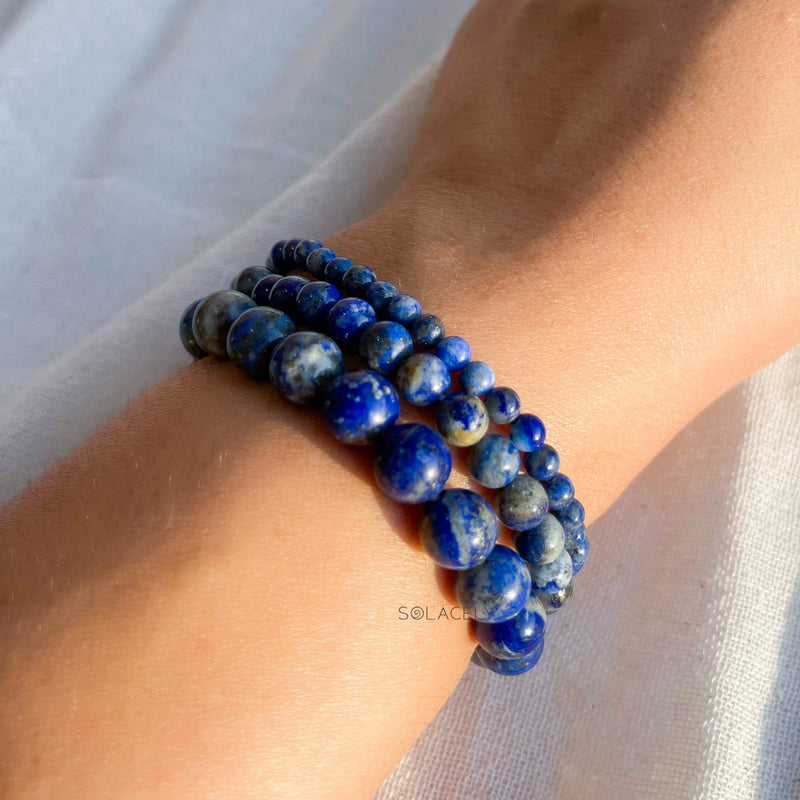
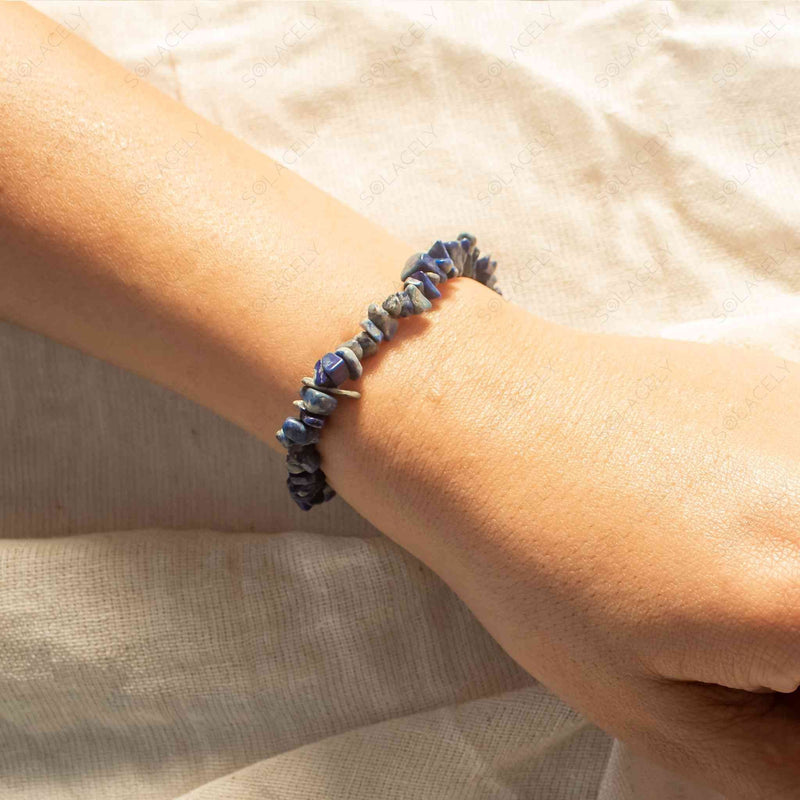
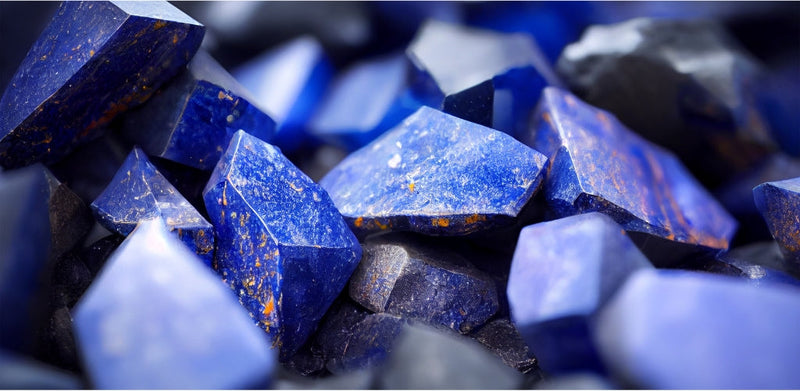
Wear a lapis lazuli bracelet on your left wrist. Lapis is a receiving stone, kept for insight and clear thinking, and the left is the side that draws things in. The right is the exception, chosen when the intention is speaking rather than understanding.
Key takeaways
- Left wrist for the usual intention: understanding something clearly.
- Right wrist for teaching, presenting or a conversation you have to lead.
- The gold flecks are pyrite, and a mark of the genuine stone.
- Keep it out of water and salt. It contains calcite and pyrite, and both object.
- Pairs closely with hematite on hardness, and with sodalite on intention.
Why the left wrist
Crystal practice reads the left as the receiving side and the right as the projecting side. Anything you want to draw in goes left. Anything you want to send out goes right.
Lapis lazuli belongs on the left in the usual reading. It is the stone of insight, of seeing what is actually going on in a situation rather than what you assumed, and understanding is something taken in rather than pushed out. That puts it firmly on the receiving side.
Lapis has been valued for this for an extraordinarily long time. It was mined in Afghanistan and traded across the ancient world, set into the burial goods of Egyptian pharaohs, and ground into ultramarine, the most expensive pigment in medieval Europe. A stone that costly is rarely worn casually, and its associations with knowledge and truth run through all of that history.
When to wear it on the right
There is a real second placement here, and it comes from lapis sitting across two chakras rather than one.
Lapis is read as both a third eye stone and a throat stone. The third eye side is understanding, which is inward and belongs on the left. The throat side is saying it, which is outward and belongs on the right.
So the question is what you actually want from it. If you are trying to work something out, wear it left. If you are teaching, presenting, giving evidence or leading a conversation you would rather not be having, wear it right. People who use lapis for public speaking almost always end up on the right without being told to.
The gold flecks, and what lapis actually is
Lapis lazuli is a rock rather than a single mineral, which is unusual among the stones on a bracelet.
Its blue comes from lazurite. Mixed through that are calcite, which shows as white veining, and pyrite, which shows as the gold flecks. The flecks are a mark of the real stone rather than a flaw, and a piece with fine even pyrite scattered through deep blue is the traditional ideal.
Knowing the recipe also explains the care rules below, since two of the three ingredients are considerably less robust than the blue one.
What to wear with it on the same wrist
| Partner stone | Mohs | What it adds |
|---|---|---|
| Hematite | 5 to 6.5 | Steadiness alongside the clear thinking |
| Sodalite | 5.5 to 6 | Structured, logical thought. A close match |
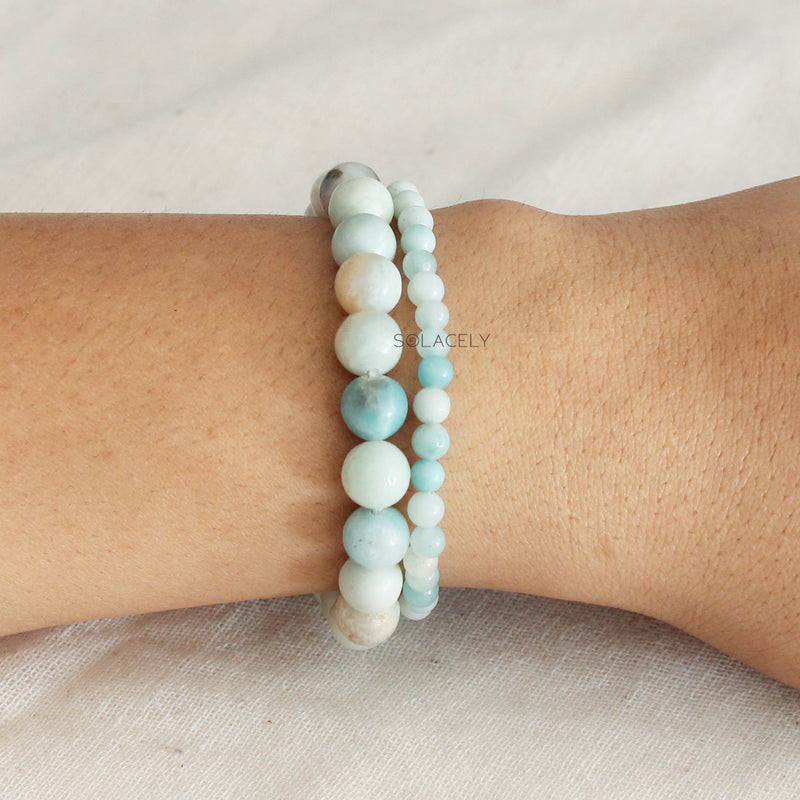
| Amazonite | 6 to 6.5 | Saying the difficult thing kindly |
| Clear quartz | 7 | General clarity, though harder and will mark it |
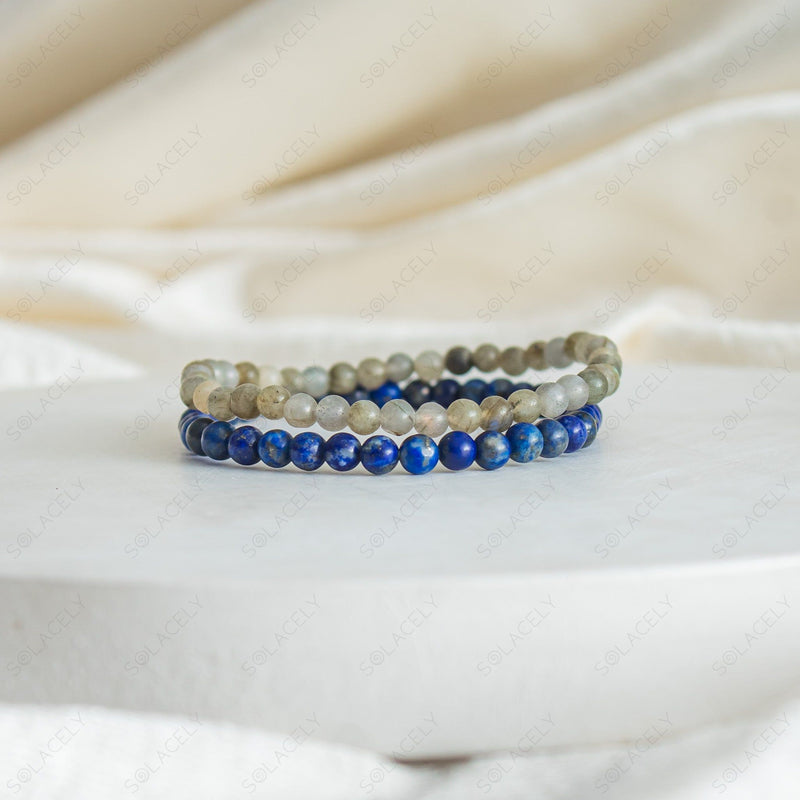
Lapis sits at 5 to 6, which makes it one of the softer stones commonly strung on a bracelet. Hematite and sodalite are the closest matches and wear evenly with it. Quartz at 7 is noticeably harder and will scuff the lapis where beads meet, so it is a pairing to make deliberately rather than by accident. We cover the hematite combination in hematite and lapis lazuli.
Looking after it
Lapis needs more care than most bracelet stones, and the reasons follow directly from what it is made of.
Keep it out of water. The calcite in it reacts to acids, including the mild acidity of sweat and household cleaners, and the pyrite in it rusts with repeated damp. Salt water is the worst case and should be avoided entirely. Ultrasonic and steam cleaners are both out.
Wipe it with a dry soft cloth, and cleanse it with smoke, sound or a night of moonlight rather than water. Take it off before the shower, the pool and the gym. Treated that way a lapis bracelet holds its colour indefinitely.
Where to go next
For the rule applied across every stone, see our pillar guide to which hand to wear your crystal bracelet. For what the stone is and what it is kept for, see lapis lazuli meaning, properties and benefits.
The uses described here reflect traditional and cultural crystal practice. They are not medical claims and are not a substitute for professional healthcare or advice.
Sources
Written by Chetena Sharma. Reviewed by the Solacely editorial team.
Frequently asked questions
About the author


Written by Chetna Sharma, crystal healing practitioner and co-founder of Solacely. Chetna has worked with healing crystals for over a decade and curates Solacely's protective stone collection.