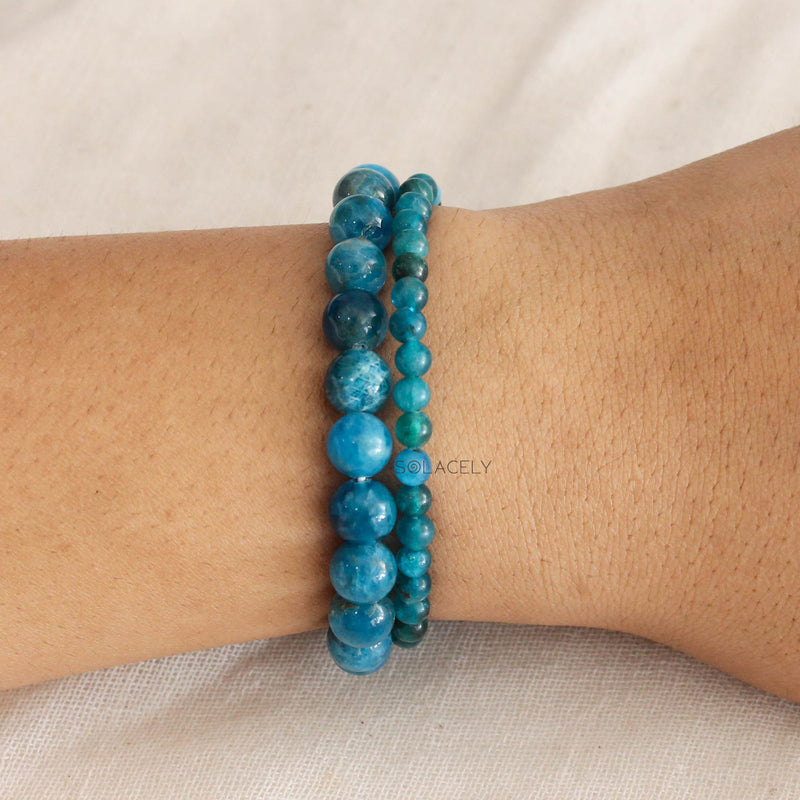
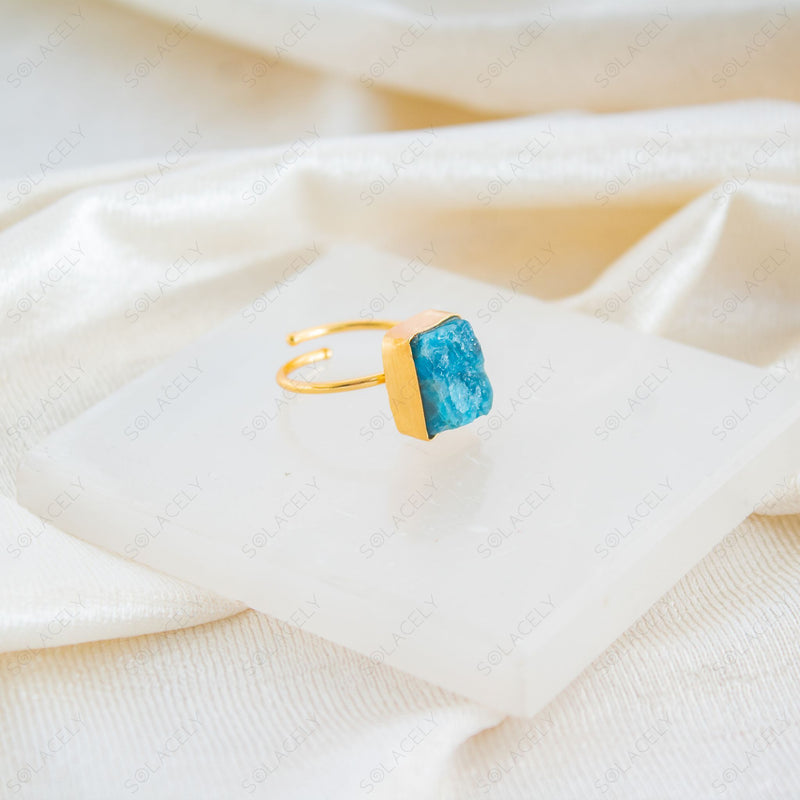
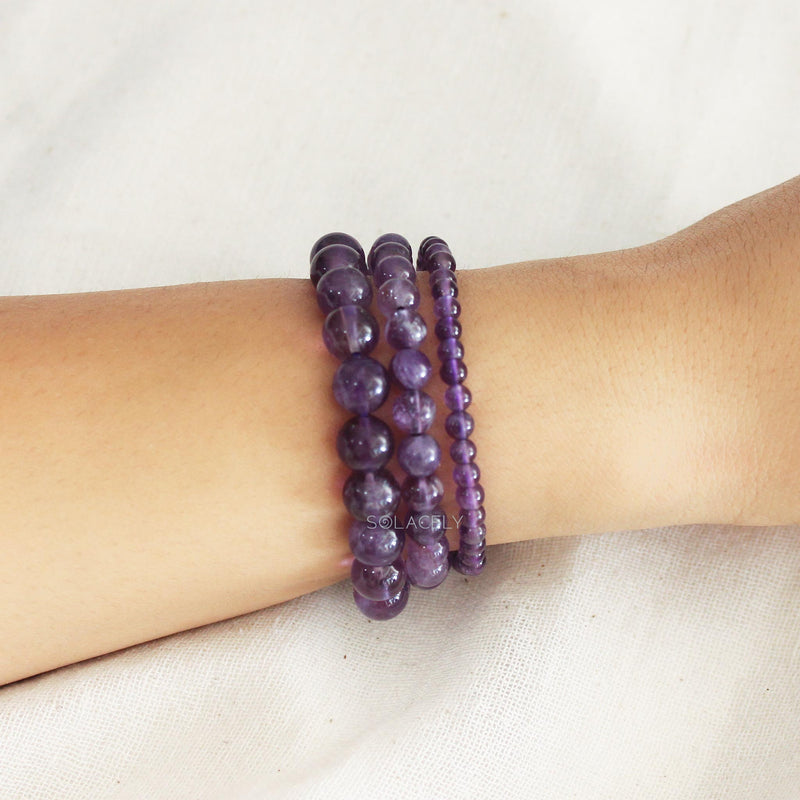
Blue apatite and amethyst are paired for drive plus steadiness. Apatite is a calcium phosphate traditionally kept for ambition, mental clarity and cutting through indecision. Amethyst is the purple variety of quartz, long kept for calm and a settled head. One stone pushes, the other keeps you level.
Key takeaways
- Blue apatite is a calcium phosphate rated 5 on the Mohs scale, and it is the mineral that defines that point on the scale itself.
- Amethyst is the purple variety of quartz, silicon dioxide, rated 7 on the Mohs scale. It is also the birthstone for February.
- Two full Mohs points separate them, so amethyst will scratch apatite. Wear them on separate strands and store them apart.
- Traditional use pairs apatite for ambition and focus with amethyst for calm, patience and clear thinking under pressure.
- Apatite is heat sensitive: no steam, no ultrasonic cleaners, no long hot soaks. Amethyst can pale in prolonged direct sun.
What is blue apatite?
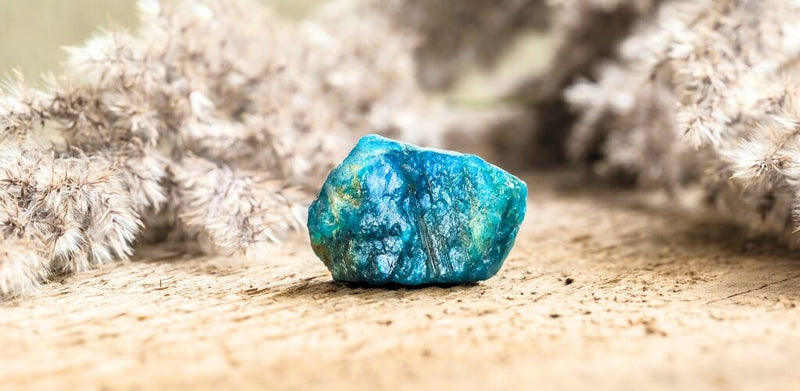
Blue apatite is a calcium phosphate mineral rated 5 on the Mohs hardness scale. Mineral references use apatite itself to define that point on the scale, so it is the reference stone for medium hardness. For jewellery, that counts as soft, and apatite is brittle as well.
Apatite is a small family rather than a single mineral. The group covers closely related calcium phosphates that differ mainly in whether fluorine, chlorine or hydroxyl occupies one position in the structure. Most blue material sold on bead strands is fluorapatite, with trace elements giving that saturated teal to denim colour.
Why is apatite more interesting than its jewellery reputation suggests?
Because you are already carrying some. Apatite is the main mineral in tooth enamel and bone, and it is the world's primary source of phosphate for fertiliser. Few stones on a bracelet lead that kind of double life, biological on one side and industrial on the other.
Gentle warming to bring a blue forward is a long established and entirely stable practice across the coloured stone trade, so choose the shade you actually want to look at. Apatite stays heat sensitive either way, and that is the one thing to remember at the sink. Our blue apatite meaning and properties guide covers colours, chakra links and buying notes in more depth.
What is amethyst?
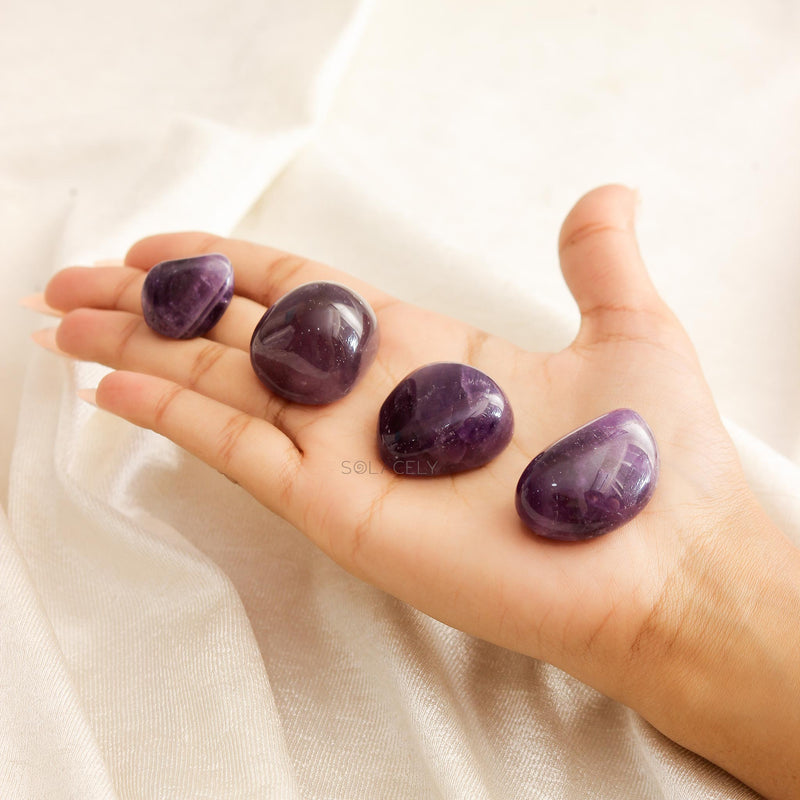
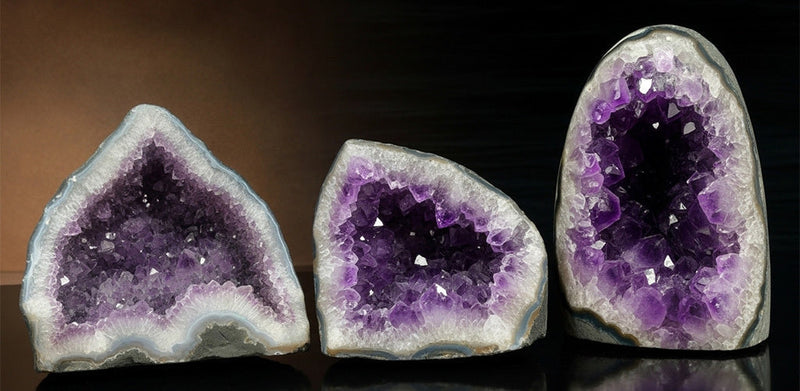
Amethyst is the purple variety of quartz, silicon dioxide, rated 7 on the Mohs scale. Gemmological references trace its colour to traces of iron in the crystal structure combined with natural irradiation in the ground. It is the birthstone for February and one of the most recognisable stones in the trade.
Colour runs from pale lilac through to deep purple with red or blue flashes, and it is rarely even across a single crystal. Growth zoning is normal. Cutters often orient a stone so the deepest colour spreads across the face, which is why two beads cut from the same piece of rough can look quite different on the strand.
Where does the name amethyst come from?
From the Greek amethystos, meaning not intoxicated. Ancient Greek and Roman drinkers linked the stone with a clear head, and cups were carved from it for exactly that reason. The association with sobriety and level thinking has followed amethyst for well over two thousand years.
Amethyst is also durable enough for daily wear in almost any format: rings, pendants, bracelets, carved pieces. At Mohs 7 it stands up to the quartz dust in ordinary household grit, which is the practical dividing line for a stone you never take off. The amethyst meaning and properties guide goes further into shades, chakra links and traditional uses.
Why do people pair blue apatite with amethyst?
The pairing splits the work between push and steadiness. Blue apatite carries a long association with ambition, mental clarity and cutting through indecision. Amethyst is traditionally kept for calm, patience and a settled head. One stone is about wanting the thing, the other about not burning out chasing it.
Crystal tradition reads apatite as appetite, the hunger to begin something you have been circling for months. Amethyst is read as the quieting stone, the one people reach for when the mind will not stop turning over the same three options. Together they cover both halves of a decision, the nerve to make it and the calm to sit with it afterwards.
In our experience, people reach for this combination when the problem is not motivation but noise. Apatite on its own can feel busy: plenty of ideas, not much settling. Amethyst takes the edge off that scatter without dulling the drive. If the racing part is what you recognise, the crystals for overthinking guide covers stones chosen for that specifically.
It is worth naming the difference from apatite's other common partner. Pairing apatite with green aventurine is drive plus opportunity, aimed at luck and openings. Apatite with amethyst is drive plus calm, aimed at the head rather than the circumstances.
How do blue apatite and amethyst compare?
They differ on composition, hardness and how much handling each tolerates. Apatite is a phosphate mineral at Mohs 5 and heat sensitive throughout. Amethyst is a silicate at Mohs 7 that shrugs off warm soapy water. Their traditional uses sit apart too, which is exactly why the pairing gets made.
| Blue apatite | Amethyst | |
|---|---|---|
| Type | Calcium phosphate mineral | Purple variety of quartz |
| Composition | Calcium phosphate | Silicon dioxide |
| Hardness | 5 Mohs, brittle | 7 Mohs, durable |
| Colour from | Trace elements | Iron plus natural irradiation |
| Traditional use | Ambition, clarity, decisions | Calm, patience, clear thinking |
| Chakra links | Throat and third eye | Third eye and crown |
| Water | Quick rinse, dry at once | Warm soapy water is fine |
| Heat | Avoid entirely | Keep out of steam cleaners |
| Sunlight | Short exposure only | Can pale in prolonged sun |
| Storage | Alone, in a soft pouch | Away from softer stones |
Read the hardness row twice. Those two points are the fact that changes how you own the pair.
How should you wear blue apatite and amethyst together?
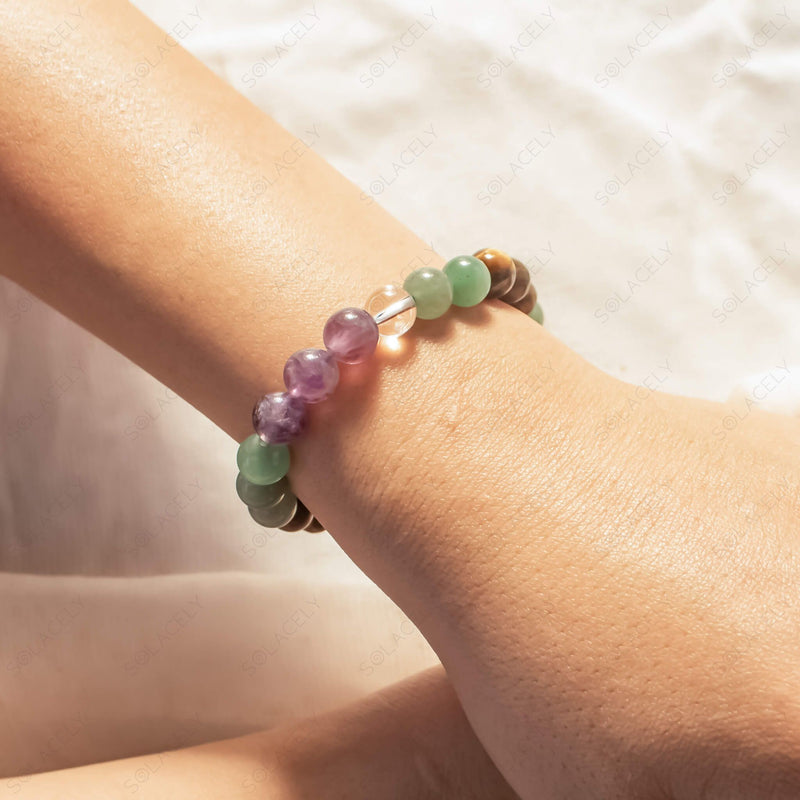
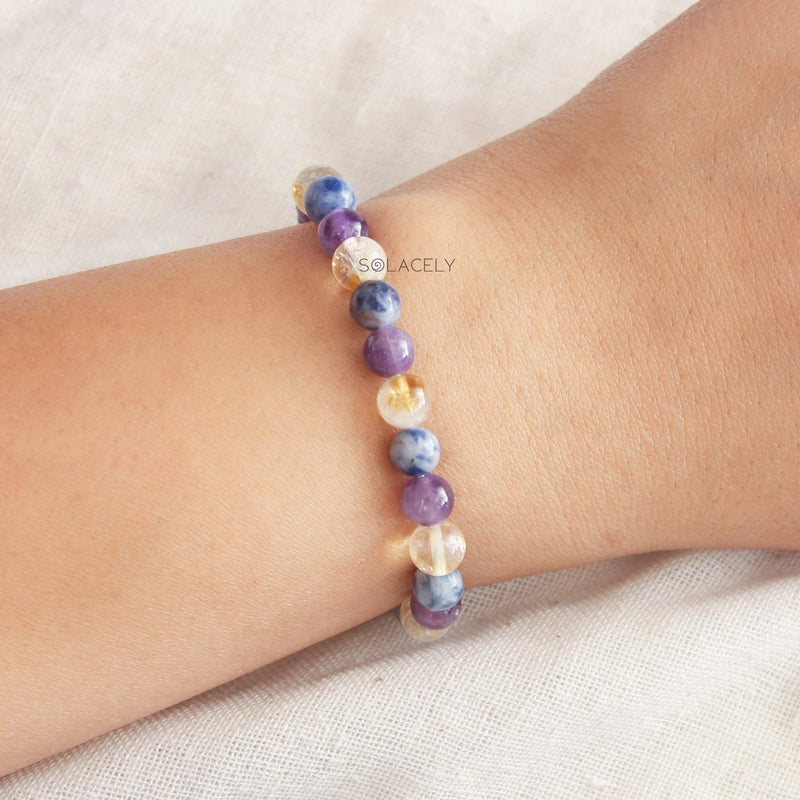
Two separate strands, one on each wrist, is the simplest arrangement and the kindest to the apatite. A mixed strand puts Mohs 7 beads in constant contact with Mohs 5 beads, and the softer stone always loses. Keep the apatite on the wrist you use less.
- One strand each. Apatite on the quieter wrist, amethyst on the other. Nothing rubs.
- Amethyst pendant, apatite bracelet. This separates them entirely and keeps the softer stone off hard surfaces.
- Desk pairing. An apatite piece by the screen for planning, an amethyst tumble in a pocket or beside the bed for winding down.
- Best avoided. Apatite rings for daily wear, and any strand that alternates the two stones bead by bead.
Timing helps as well. Many people wear the apatite through the working day and switch to amethyst in the evening, which suits both the traditional associations and the care requirements. For other stones that sit comfortably alongside purple quartz, crystal pairings for amethyst is a useful next read.
How do you care for a Mohs 5 stone next to a Mohs 7 one?
Store them apart, always. Amethyst at 7 is hard enough to scratch apatite at 5, so a shared pouch or a jewellery bowl will slowly dull the softer stone. The Mohs scale ranks minerals rather than measuring equal steps, so the real durability gap is wider than two numbers suggest.
Apatite needs the stricter routine. Keep it away from steam, ultrasonic cleaners and long hot soaks, because heat is the thing it likes least. A quick rinse in cool water and an immediate dry with a soft cloth is plenty. Take it off before washing up, exercise and gardening.
Amethyst asks for less, with one exception. Warm soapy water and a soft brush suit it well, and it handles daily knocks without complaint. Prolonged direct sun is the thing to avoid, since amethyst can pale after long spells on a bright windowsill. Charge it in moonlight or indirect light instead.
Chemicals are the quieter threat to both. Perfume, hairspray and hand sanitiser leave a film that dulls a soft phosphate over time. Put jewellery on last, once everything else has dried. For energetic cleansing, moonlight, sound or a short rest on selenite suit both stones. Skip salt water for the apatite.
Who does this combination suit?
It suits people with a decision to make and too much noise around it: students in an exam term, anyone weighing a career move, people who plan well and then lie awake rehearsing. The apatite side speaks to appetite and clarity. The amethyst side speaks to calm and patience.
It is a better fit for the head than for grounding. If a weighted, settled feeling in the body is what you are after, black tourmaline, hematite or smoky quartz are the conventional choices. And if you want one piece you genuinely never take off, make it the amethyst. Apatite is happiest when it gets set down now and then.
One practical note from handling a lot of bead strands. Apatite wears best on a well made piece, so look for neat, evenly drilled beads and a little give at the knot or elastic. Slip it off before anything physical, keep it in its own pouch, and a strand stays bright for years.
The properties described here reflect traditional and cultural belief around crystals. They are not medical claims and are not a substitute for professional healthcare. If you are managing a health concern, speak to a qualified practitioner.
Sources
Written by Chetena Sharma. Reviewed by the Solacely editorial team.
Frequently asked questions
About the author


Written by Chetna Sharma, crystal healing practitioner and co-founder of Solacely. Chetna has worked with healing crystals for over a decade and curates Solacely's protective stone collection.