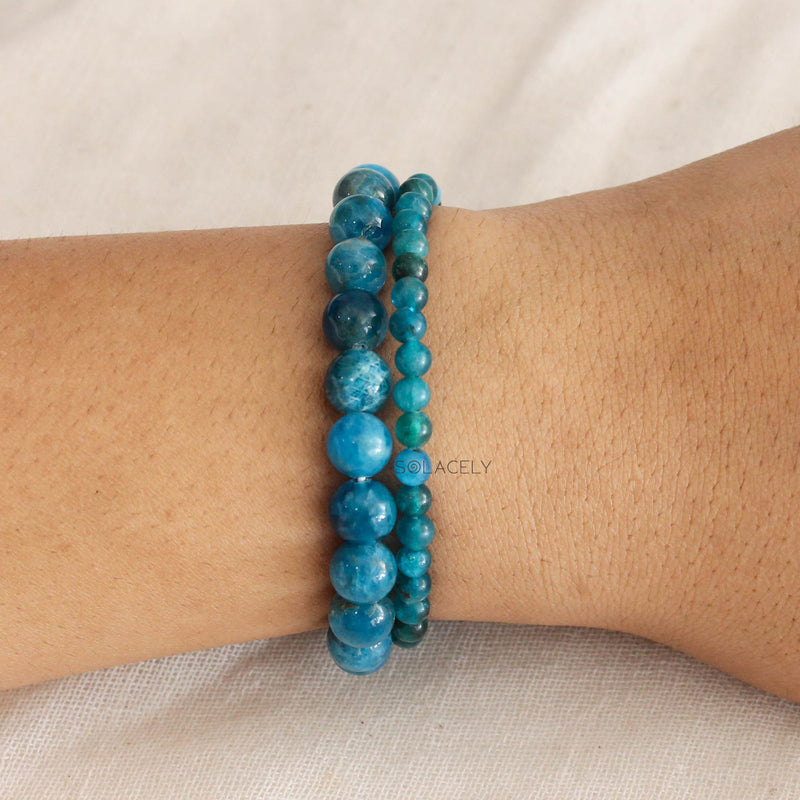
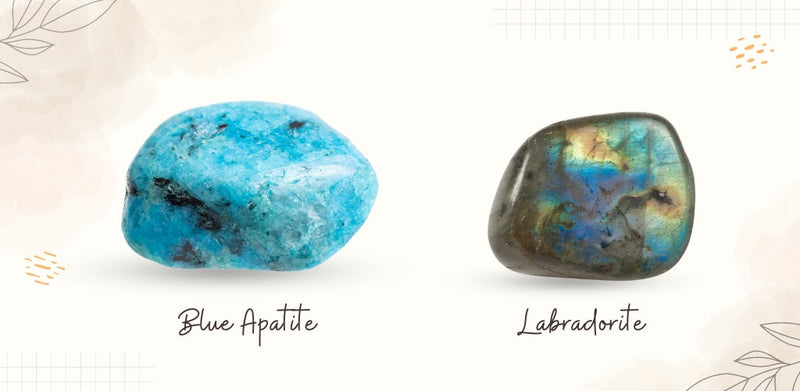
Blue apatite is the clarity stone. Traditionally kept for working out what you actually want and then saying it, it sits at both the throat and the third eye, covering the two halves of the same act. People reach for it when a decision has been circling for months without landing.
Key takeaways
- Blue apatite is a phosphate mineral, the same family that forms tooth enamel and bone.
- Its name comes from the Greek for deceit, because it was so often mistaken for other gems.
- Assigned to the throat and third eye, so it covers thinking and speaking.
- Traditionally kept for clarity, motivation and honest self-assessment.
- Soft at around 5, so it belongs in a pendant rather than a daily ring.
What blue apatite is
Apatite is a calcium phosphate, and it occurs in an unusually wide range of colours: blue, green, yellow, violet and near colourless. That variety is exactly how it got its name, from the Greek apatáo, to deceive, because it was so regularly taken for beryl, tourmaline or peridot before modern gemmological testing.
Its most striking geological detail sits closer to home than most minerals. Apatite is the same mineral family that makes up tooth enamel and bone, which means everyone reading this is carrying a version of it. For a stone kept for clear self-knowledge, that is a fittingly literal piece of trivia.
The blue material ranges from a soft sky through to a vivid neon that is sometimes called Paraiba blue after the tourmaline it resembles. Gemmological grading favours a strong, even, saturated blue with good transparency, and the more intense stones command the most attention.
What it is traditionally kept for
Blue apatite occupies a fairly specific position in crystal practice. It is not a calming stone and it is not a protective one. It is kept for the moment where you need to be honest with yourself and then act on it.
People reach for it in recognisable situations. A decision that has been going round for months. A conversation you know needs having. A goal that has stayed vague for so long it has stopped meaning anything. The traditional framing is that it cuts through the fog rather than soothing it, which is why it suits some people enormously and feels a little brisk to others.
It is also traditionally associated with motivation, particularly the kind that follows clarity. In the logic of the tradition, people do not act because they are not actually clear about what they want, and once that resolves the action follows. Our crystals for focus guide covers the neighbouring stones.
Throat and third eye
Chakra practice assigns blue apatite to two centres rather than one, and the pairing is the point. The third eye is where you work out what you think; the throat is where you say it. Apatite spans both, which is why it is kept for the whole sequence rather than half of it.
That dual placement also suggests how to use it. A pendant sitting at the collarbone covers the throat; a piece held to the forehead during a session covers the third eye. Many people do both across a week rather than choosing.
Our throat chakra guide covers where apatite sits against the other blue stones, and the beginner's chakra guide covers the system as a whole.
How people use it
- Write the question down before you sit. Apatite work suits a specific question rather than a general mood.
- Lie down with it at the throat or forehead for ten to fifteen minutes.
- Breathe out longer than in, and let the question sit rather than chasing an answer.
- Write again afterwards. Whatever comes, even if it is only that the question was wrong.
- Wear it on the day you act. The pendant version, so it is with you for the conversation.
The writing before and after is what most practitioners consider the useful part, and the stone gives the practice a shape and a place. A grounding stone at the feet is a common addition for anyone who finds upper chakra work leaves them floaty.
Pairing blue apatite
| Pair with | Traditionally kept for |
|---|---|
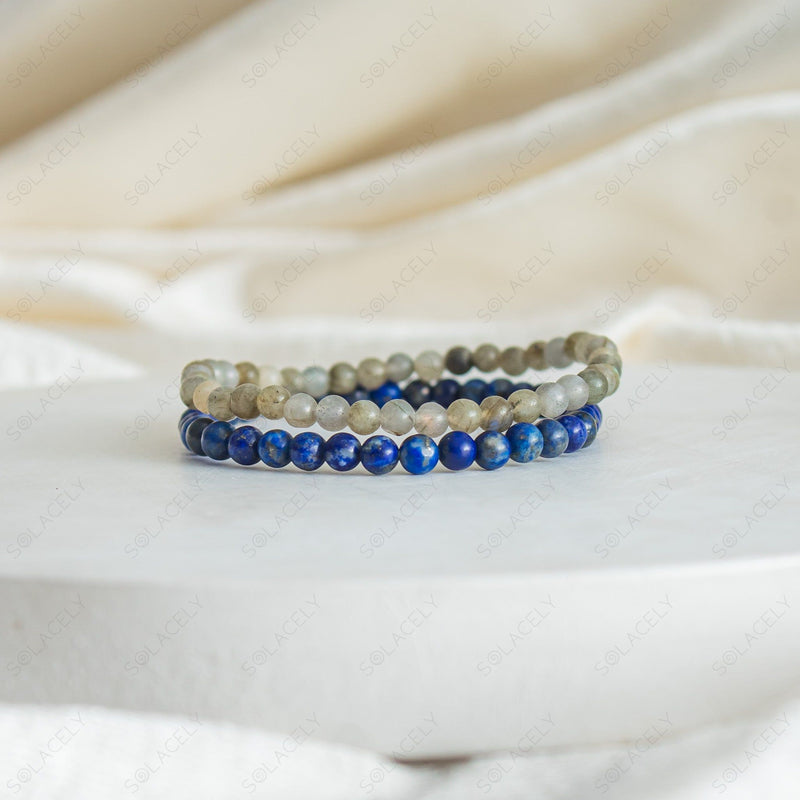
| Labradorite | Clarity through a period of change |
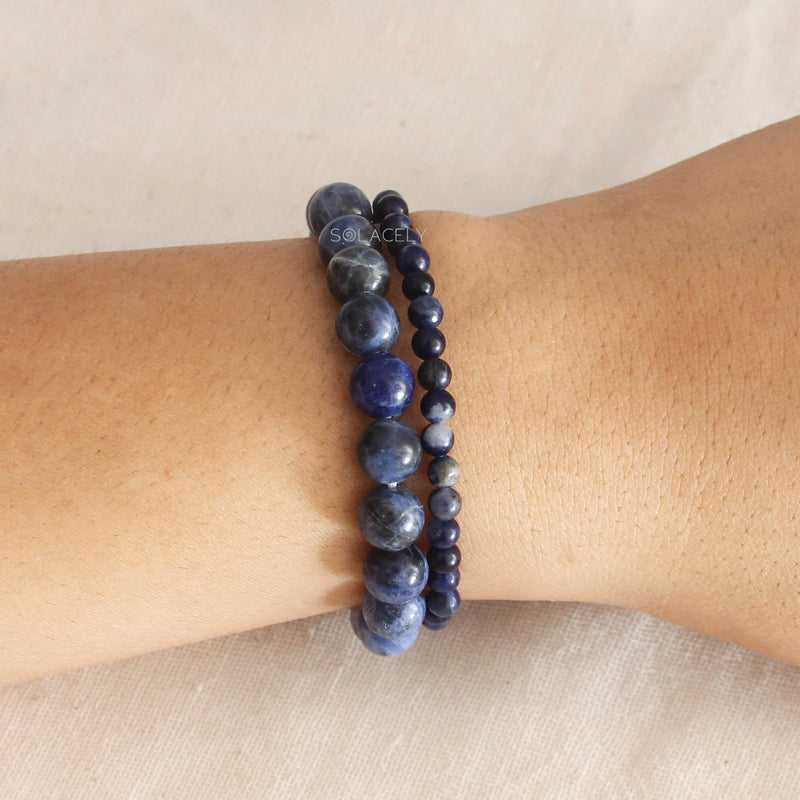
| Sodalite | Logical, precise work |
| Lapis lazuli | Saying the true thing plainly |
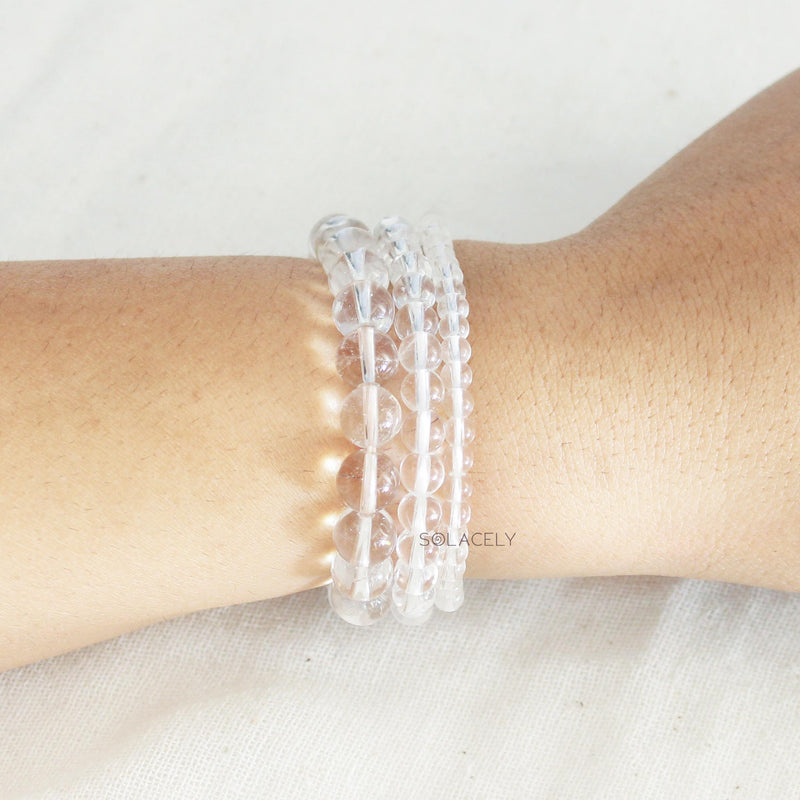
| Clear quartz | A general companion |
| Hematite or black tourmaline | Grounding underneath the head work |
Labradorite is the most common partner, and our blue apatite and labradorite guide covers that pairing in detail. Where the intention is nerve rather than clarity, the crystals for confidence selection is the more direct route.
Caring for blue apatite
This is the practical thing to know before buying: apatite is soft, around 5 on the Mohs scale, which puts it below almost everything else in a typical collection. Quartz will scratch it, and so will most other beads sharing a pouch with it.
That softness shapes the sensible formats. A pendant, earrings or a piece kept on a desk will last beautifully. A ring worn every day will pick up marks, and a bracelet stacked against quartz will dull faster than you would like.
Wipe it with a barely damp soft cloth and dry it fully. Avoid soaking, ultrasonic cleaners, steam and household cleaning products. Store it on its own, ideally in a soft pouch. For energetic cleansing, sound, smoke, moonlight or a rest on selenite all suit it and keep water out of the picture entirely.
Who blue apatite suits
People who are stuck rather than distressed. Anyone with a decision they keep not making, a goal that has gone vague, or a conversation they have been rehearsing for months without having. It suits people who respond well to being asked a direct question.
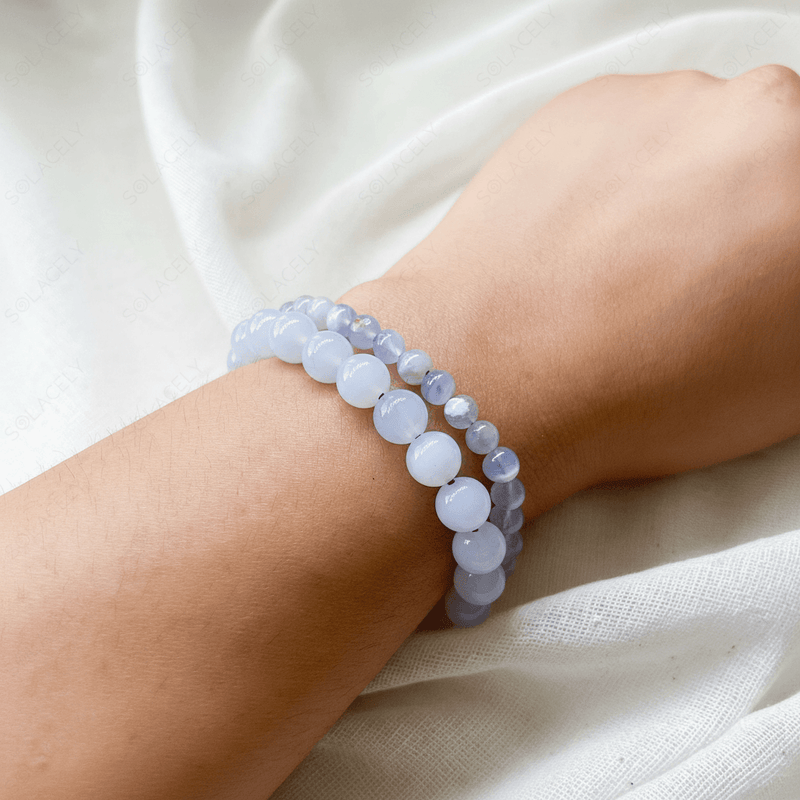
It suits less well anyone looking for comfort. Blue apatite is brisk by character, and where the need is calm or reassurance, amethyst, rose quartz or blue lace agate are the traditional answers instead.
Crystals are offered here for reflection and wellbeing as part of a long standing tradition. They are not a treatment for any medical condition, they have no effect on appetite or metabolism, and they are not a substitute for professional healthcare or advice.
Sources
Written by Chetena Sharma. Reviewed by the Solacely editorial team.
Frequently asked questions
About the author


Written by Chetna Sharma, crystal healing practitioner and co-founder of Solacely. Chetna has worked with healing crystals for over a decade and curates Solacely's protective stone collection.