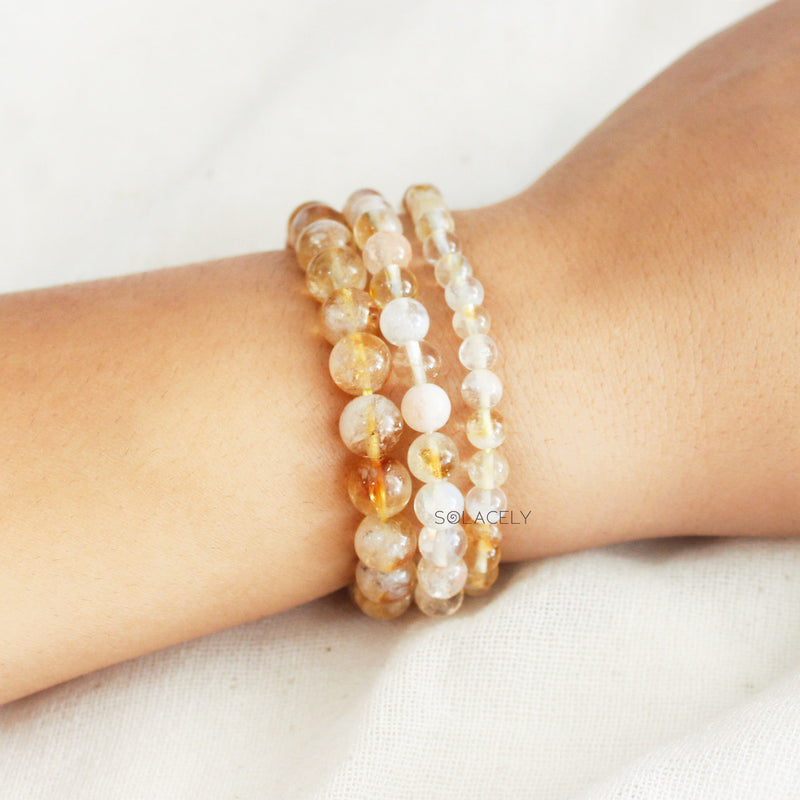
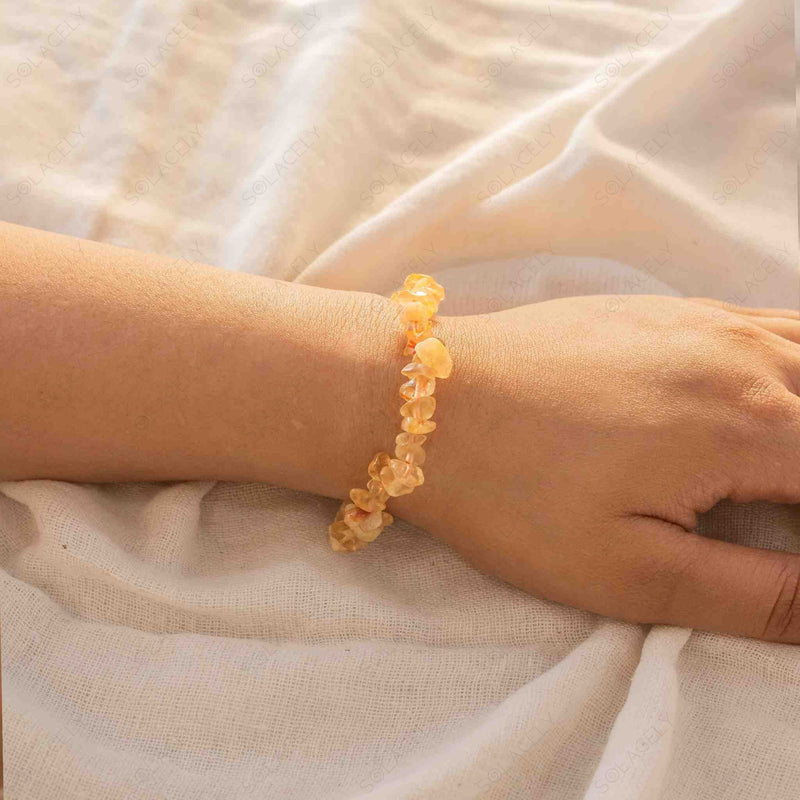
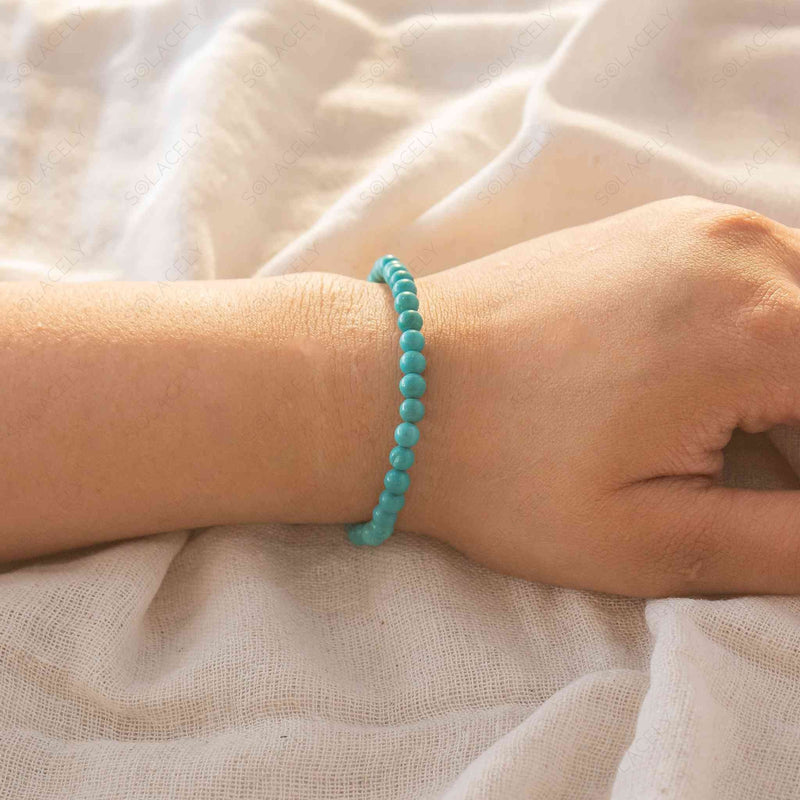
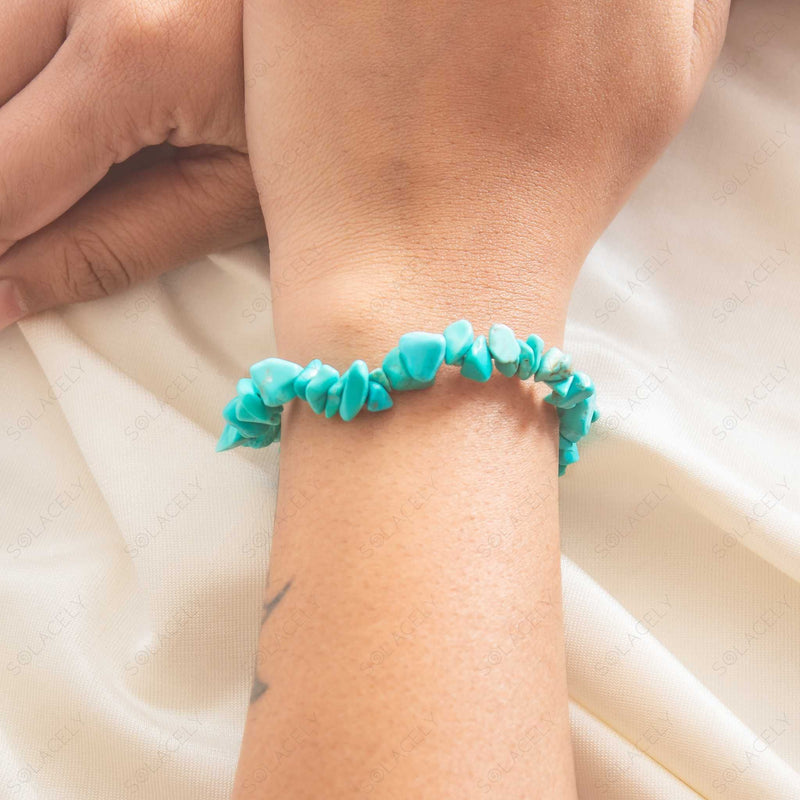
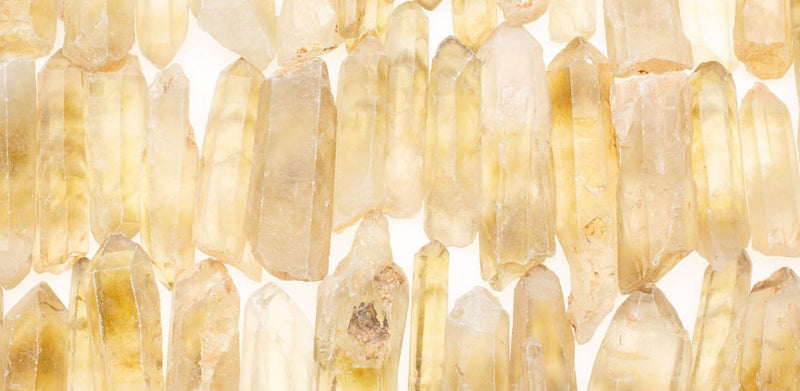
Citrine and turquoise sit either side of the same difficulty. Citrine is kept for the nerve to put yourself forward; turquoise for saying the thing clearly once you have. The pairing suits people who know what they want and struggle to say it out loud.
Key takeaways
- Citrine supplies the nerve, turquoise the words. Two halves of one problem.
- Citrine is quartz at 7 on the Mohs scale; turquoise is much softer at 5 to 6 and porous.
- Most turquoise is stabilised with resin, which is standard, disclosed and makes it wearable.
- Turquoise absorbs oils and perfume, so put jewellery on last and keep it off washed hands.
- Turquoise traditionally sits at the throat, citrine on the wrist or in a pocket.
Why the pairing works
A great many difficult conversations fail at one of two points, and they are not the same point. Some people never start the conversation. Others start it and then soften what they meant until nothing has actually been said.
Citrine addresses the first. It is traditionally kept for confidence and for the willingness to state your worth, which is the quality required to open the conversation at all rather than deferring it another week.
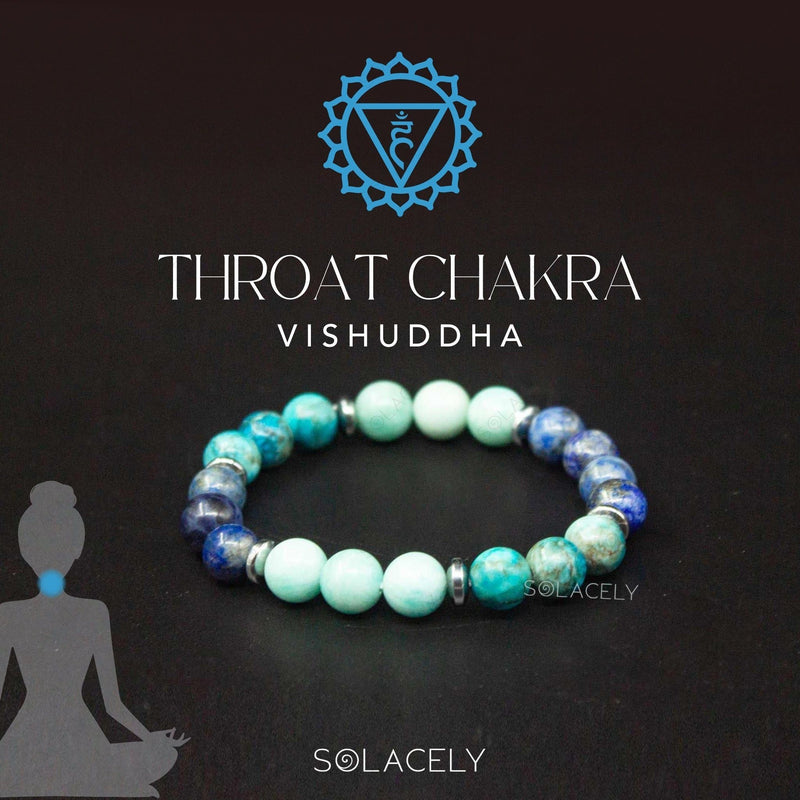
Turquoise addresses the second. Its association is with clear speech, and it is the stone reached for when the difficulty is landing the point rather than raising it. For the wider group at that centre, crystals for the throat chakra covers what else belongs.
What turquoise actually is
Turquoise is a hydrated copper aluminium phosphate, and its blue to green range comes from the balance of copper and iron in the material. The dark veining that runs through most pieces is the host rock it formed in, called matrix.
Geology.com notes that turquoise has been used ornamentally for thousands of years, appearing in Egyptian, Persian and Native American work. That long history is part of why it carries such consistent associations across otherwise unrelated traditions.
Its practical weakness is porosity. Turquoise absorbs whatever it meets, which means oils, perfume, cosmetics and even skin oil can change its colour over years of wear. That is the single most important thing to know before buying a piece.
Stabilised turquoise, and why it is normal
Because natural turquoise is soft and porous, a large share of what reaches the market is stabilised: impregnated with a clear resin that hardens the stone and locks the colour in place.
This is long established practice, widely disclosed, and it is what makes affordable turquoise wearable at all. Untreated material of good colour is genuinely scarce and priced accordingly, so stabilised stone is the sensible choice for anything worn daily.
What matters is that the description matches the price. Ask whether a piece is natural or stabilised, and a reputable seller will tell you plainly. Both are real turquoise, and stabilisation is a kindness to a soft stone rather than a compromise.
Comparing the two
| Citrine | Turquoise | |
|---|---|---|
| Mineral | Quartz, coloured by iron | Hydrated copper aluminium phosphate |
| Hardness | 7 Mohs, no cleavage | 5 to 6 Mohs, porous |
| Traditionally kept for | Confidence, stating your worth | Clear speech, saying it plainly |
| Chakra placement | Solar plexus | Throat |
| Best format | Anything, including daily rings | Pendant or earrings, off the hands |
| Main risk | Prolonged direct sunlight | Oils, perfume, water, cosmetics |
The porosity gap is what dictates format here. Citrine can go anywhere; turquoise wants to be kept away from anything it might absorb.
How the pair is used
The placements follow the chakra logic and happen to be practical as well.
- Turquoise at the throat. A pendant, which is both the traditional placement and the safest format.
- Citrine on the wrist or in a pocket. Reached for before the conversation starts.
- Both worn on the day. For an appraisal, a negotiation, or raising something that has been building.
- Rehearse with them. Holding one while saying the first sentence out loud is the practice people report keeping.
That last one sounds small and is the most useful. The first sentence is the part that vanishes under pressure, and attaching a physical object to rehearsing it gives the habit somewhere to live.
Caring for turquoise
Turquoise asks for more care than almost anything else in a collection, and every rule follows from its porosity.
Clean it with a barely damp cloth and dry it at once. Never soak it, never use an ultrasonic or steam cleaner, and keep perfume, hairspray, cosmetics and household cleaners well away. Put jewellery on after everything else has dried.
Store it separately, since at 5 to 6 on the Mohs scale citrine and most of a collection will scratch it. Some colour change over many years of wear is normal for natural material and is considered part of the stone's character rather than damage.
Who this pairing suits
It suits people whose difficulty is specifically verbal. Anyone who has left a meeting knowing exactly what they should have said will recognise the gap this set is pointed at, and it is a narrower and more honest brief than general confidence.
It suits less well anyone wanting calm. Neither stone is soothing, and somebody who is anxious rather than unheard will find the combination beside the point. A gentler stone belongs in that case.
One practical note in its favour: the two look genuinely good together. Warm gold against sky blue is a strong combination, and a set that somebody actually wants to wear is a set that gets worn. For the confidence half on its own, crystals for confidence covers the wider group.
Choosing turquoise well
Colour and matrix are the two things to look at. The blue ranges from a pale sky through to a deep robin's egg, and greener material is generally less expensive without being any less genuine.
Matrix is the dark veining from the host rock, and it is entirely a matter of taste. Some people want a clean unbroken blue; others want a dramatic spiderweb of veining. The heavily veined material is usually cheaper, so preference and budget happen to align.
Beyond that, ask whether the piece is natural or stabilised, and be a little cautious of anything with unnaturally uniform colour at a very low price, since dyed howlite and magnesite are common stand-ins. A reputable seller will describe the material plainly. For the citrine half, the citrine guide covers what to look for.
The properties described here reflect traditional and cultural belief around crystals. They are offered for reflection and wellbeing and are not medical advice or a substitute for professional support. If difficulty speaking up is affecting your work or relationships in a sustained way, a qualified practitioner will do more than any stone. Keep small stones away from young children, and never place crystals in drinking water.
Sources
Written by Chetena Sharma. Reviewed by the Solacely editorial team.
Frequently asked questions
About the author


Written by Chetna Sharma, crystal healing practitioner and co-founder of Solacely. Chetna has worked with healing crystals for over a decade and curates Solacely's protective stone collection.