December has three birthstones: turquoise, tanzanite and blue zircon. Turquoise is the oldest and most widely recognised, carried for protection on a journey for thousands of years. Tanzanite is the newest, found in one place on earth. Blue zircon has the most fire of the three. All three are blue, and that is what unites them.
Key takeaways
- Turquoise: the traveller's stone, in use for millennia. Porous and soft, needs care.
- Tanzanite: a blue violet zoisite found only in northern Tanzania, discovered in the 1960s.
- Blue zircon: a natural mineral with exceptional brilliance, unrelated to cubic zirconia.
- Choose by character: history, drama, or fire.
- All three want gentle handling and none should meet an ultrasonic cleaner.
Turquoise, the oldest of the three
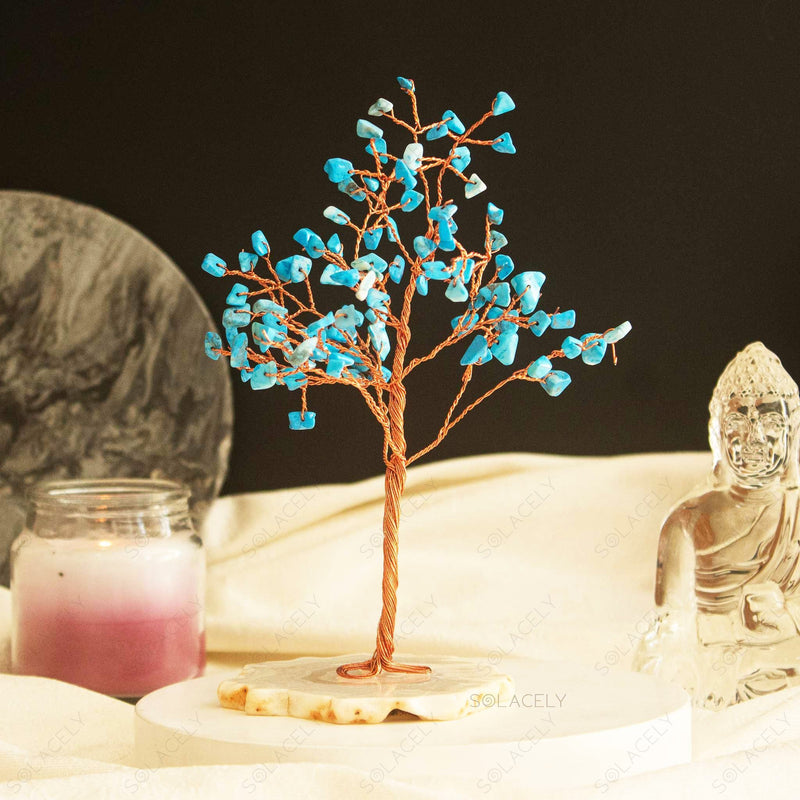
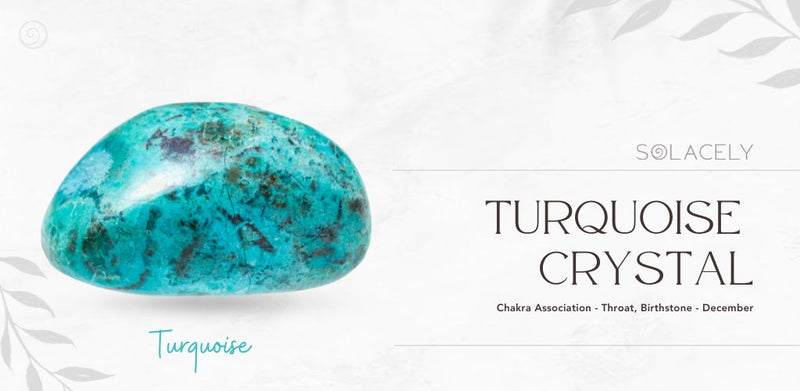
Turquoise is a hydrated phosphate of copper and aluminium, and copper is what gives it that particular blue. Where iron replaces some of the aluminium the colour shifts toward green, which is why turquoise spans such a range from sky blue to deep olive.
Its history is the longest of any December stone by a wide margin. It was set into Egyptian burial jewellery, mined in the Sinai for the pharaohs, and named in Persian tradition as a protective stone. Traders carried it west along the routes that eventually gave it its European name, from the French for Turkish. Across the American Southwest, Navajo, Zuni and Pueblo silverwork has centred on it for centuries.
The dark veining most turquoise carries is matrix, the host rock it formed inside, and collectors often choose a piece for its pattern alone. Our turquoise guide covers the stone in full.
Tanzanite, the youngest
Tanzanite is a blue to violet variety of the mineral zoisite, and it has one of the smallest known sources of any gemstone: a single area of a few square kilometres in northern Tanzania, near Mount Kilimanjaro. It was discovered in the 1960s, which makes it extraordinarily young compared to the other two.
Its most striking property is pleochroism: it shows different colours from different crystallographic directions, typically blue, violet and a burgundy red. Cutters choose which face to bring forward, which is why two tanzanites can look quite different in the same light.
It is softer than it looks, around 6 to 7 on the Mohs scale, and it parts fairly readily along its internal planes. That makes it better suited to pendants and earrings than to a ring worn every day.
Blue zircon, the one people misunderstand
Zircon deserves clearing up first: it is a natural mineral, zirconium silicate, and it has nothing whatsoever to do with cubic zirconia, which is a laboratory made material with an unfortunately similar name.
Zircon is in fact one of the most geologically significant minerals there is. Some of the oldest material ever dated on earth is zircon crystal, because it survives processes that destroy almost everything else and locks in a record of when it formed.
As a gemstone its distinguishing quality is fire: it has high dispersion, splitting light into flashes of colour in a way few stones match. The blue material is the December birthstone, and it typically offers considerably more brilliance per pound than tanzanite. It is around 6 to 7.5 on the Mohs scale and can abrade at facet edges, so settings that protect the edges are worth choosing.
Choosing between the three
| Turquoise | Tanzanite | Blue zircon | |
|---|---|---|---|
| Appearance | Opaque blue to green, often veined | Transparent blue violet | Transparent blue, high fire |
| Age of use | Thousands of years | Since the 1960s | Centuries |
| Hardness | 5 to 6 | 6 to 7 | 6 to 7.5 |
| Traditionally kept for | Protection in travel, honest speech | Transformation, insight | Clarity, restful sleep |
| Best format | Cuffs, rings, pendants | Pendants and earrings | Pendants and earrings |
| Suits someone who wants | History and meaning | A striking modern piece | Brilliance without the price |
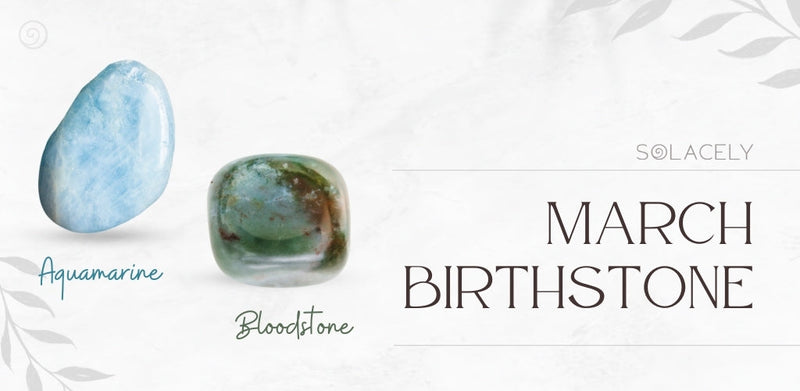
For a December birthday, turquoise is the choice when the gift is meant to carry meaning, tanzanite when it is meant to impress, and zircon when someone wants sparkle without tanzanite's price. Our March birthstone guide covers another month with more than one stone.
What they are traditionally kept for
All three sit at the throat centre on their colour, so all three carry associations with honest speech and being heard, covered in our throat chakra guide.
Beyond that they diverge. Turquoise is above all the traveller's stone, carried for safe passage and set into bridles, rings and weapons by people about to journey, which our crystals for protection guide covers further. Tanzanite, being modern, has acquired associations with transformation and with seeing a situation differently, fitting for a stone that literally shows different colours from different angles. Zircon has an older European tradition attached to restful sleep and to clear thinking.
Caring for December stones
None of these three is as forgiving as quartz, so a little care goes a long way.
Turquoise: keep it dry. It is porous and takes in whatever it meets, so never soak it, and put jewellery on after perfume and lotion rather than before. Wipe with a dry or barely damp cloth.
Tanzanite: keep it clear of knocks, since it parts readily along internal planes. Warm soapy water and a soft cloth only. Never an ultrasonic cleaner or steam.
Zircon: protect the facet edges, which can abrade over time. Store it separately and clean it gently.
For energetic cleansing, sound, smoke or moonlight suit all three and keep water out of the picture entirely. Store each apart from harder gems.
Crystals are offered here for reflection and wellbeing as part of a long standing tradition. They are not a treatment for any medical condition and are not a substitute for professional healthcare.
Sources
- Gemological Institute of America, Birthstones by Month
- Gemological Institute of America, Tanzanite Description
Written by Chetena Sharma. Reviewed by the Solacely editorial team.
Frequently asked questions
About the author


Written by Chetna Sharma, crystal healing practitioner and co-founder of Solacely. Chetna has worked with healing crystals for over a decade and curates Solacely's protective stone collection.