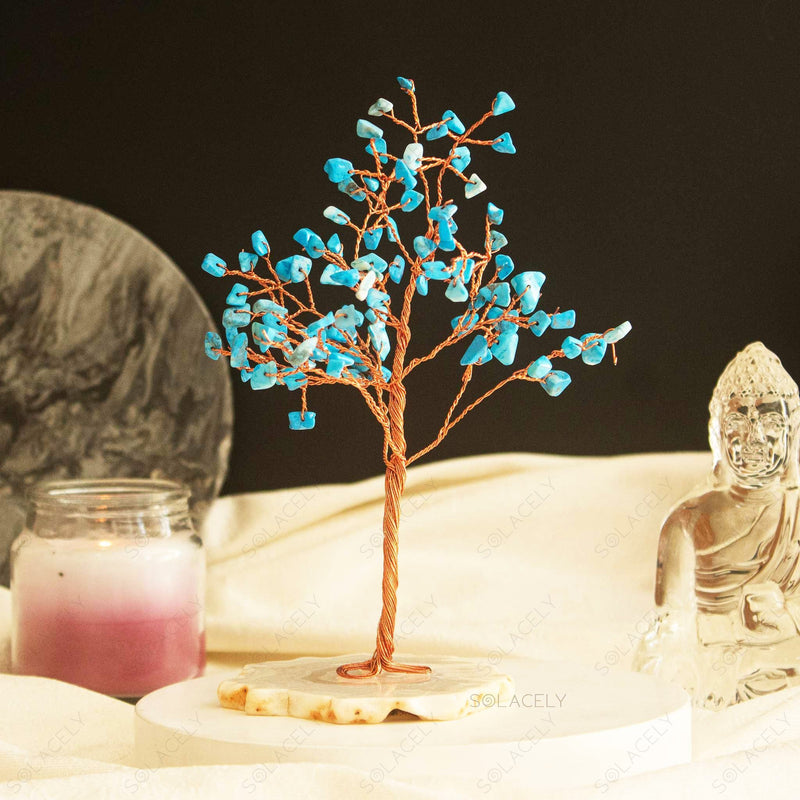
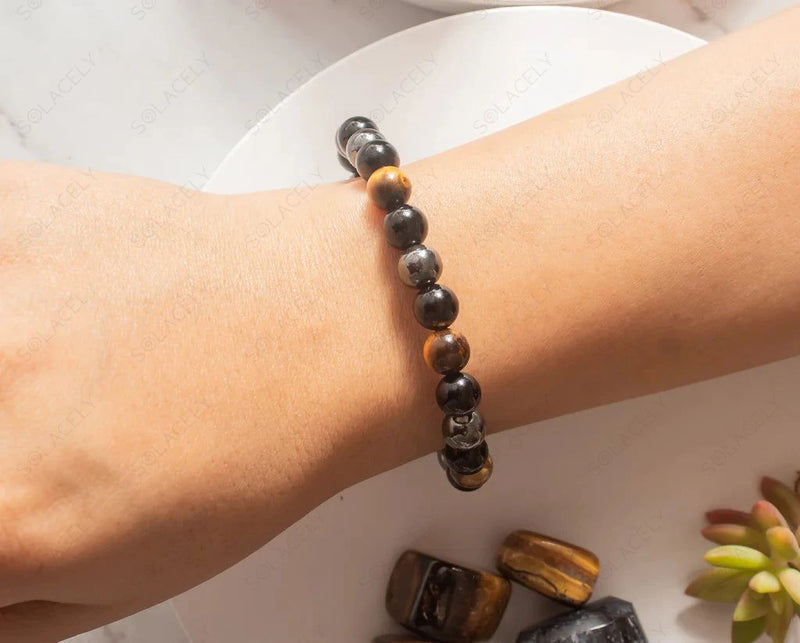
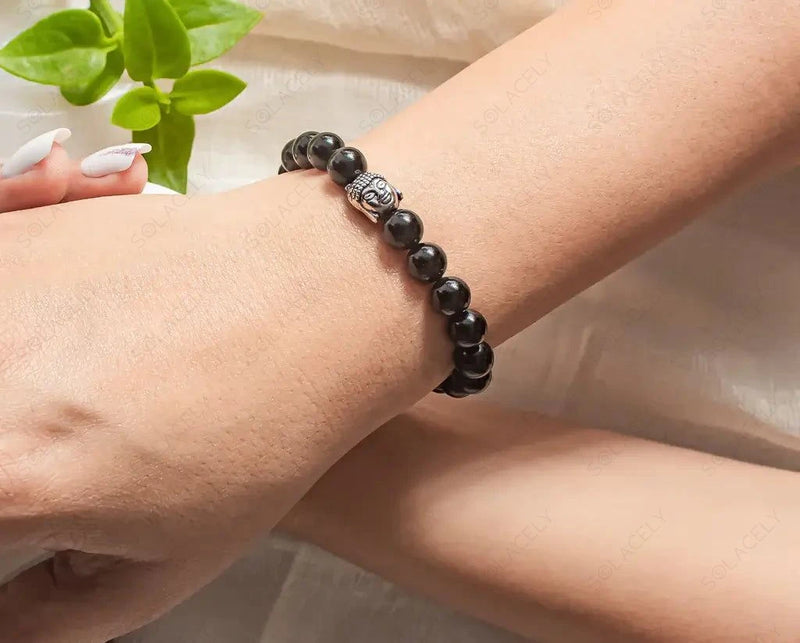
Turquoise is the traveller's stone, carried for protection on a journey for thousands of years across Persia, Egypt and the American Southwest. A copper aluminium phosphate in blue to blue green, it is kept today for safe passage and for clear, honest speech, which is why chakra practice places it at the throat.
Key takeaways
- One of the oldest gemstones in human use, found in Egyptian and Persian jewellery thousands of years old.
- Traditionally kept for protection in travel and for speaking plainly.
- Sits at the throat chakra, following its blue to blue green colour.
- The dark webbing is matrix, the host rock it grew in, and it is part of the character of the piece.
- Porous and soft. Keep it dry, and put it on after perfume and lotion.
What turquoise is
Turquoise is a hydrated phosphate of copper and aluminium, and the copper is what gives it that particular blue. Where iron takes the place of some of the aluminium, the colour shifts toward green, which is why turquoise runs across such a wide range from sky blue to deep olive.
It forms in dry places. Groundwater carrying copper works down through aluminium rich rock in arid regions, and the turquoise deposits in seams and nodules. That is why the historic sources are the deserts: Iran, the Sinai, and the American Southwest. Gemmological grading puts an even, saturated blue at the top, with the pattern of the matrix as a matter of taste rather than quality.
On the Mohs scale it sits around 5 to 6, softer than quartz, and it is porous. Those two facts drive every piece of care advice further down this page.
The traveller's stone
Turquoise has one of the longest continuous histories of any gemstone. It was set into Egyptian burial jewellery, mined in the Sinai for the pharaohs, and named in Persian tradition as a stone of protection whose colour was watched for warning. Traders carried it along the routes that eventually gave it its European name, from the French for Turkish, after the Turkish merchants who brought it west.
Across the American Southwest, Navajo, Zuni and Pueblo traditions have worked turquoise for centuries, and it remains central to their silverwork. In those traditions it carries associations with sky, water and life in dry country, which is a different emphasis from the Persian one and just as old.
The common thread is safe passage. Turquoise was the stone you took with you, set into bridles, weapons and rings by people about to travel. That is still the reason most people are given a piece today, and our crystals for protection guide covers the wider set kept for the same purpose.
Turquoise and the throat chakra
Chakra practice places turquoise at vishuddha, the throat centre, on its colour. In yogic tradition that centre governs honest expression and the willingness to be heard, so turquoise is kept close before a difficult conversation, a presentation, or any moment that calls for saying the real thing plainly.
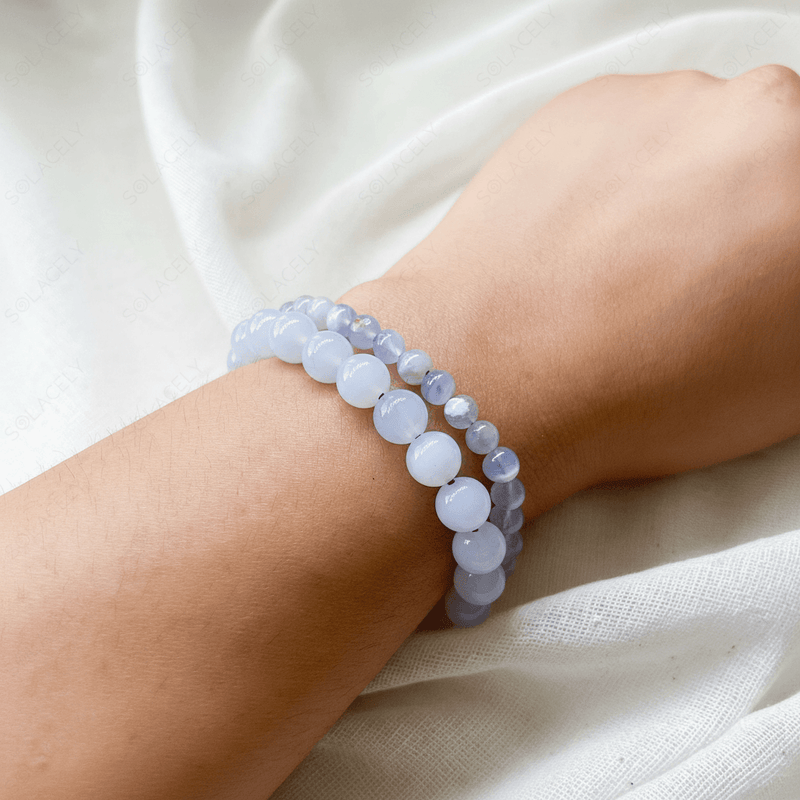
It has a slightly different character from the other throat stones. Blue lace agate is the gentle one, kept for calm speech. Lapis lazuli is the truthful one, kept for saying what is actually meant. Turquoise sits between them and adds the protective note, which is why it suits situations where speaking up carries some risk.
A short pendant that rests near the collarbone is the traditional format for throat work. Our throat chakra crystals guide covers the full set and how they differ.
Reading the matrix
The dark veining running through most turquoise is matrix: the host rock the turquoise formed inside. Different deposits leave different signatures, and collectors often choose a piece for its matrix alone rather than despite it.
| Matrix pattern | What it looks like |
|---|---|
| Spiderweb | Fine, even webbing across the whole stone; highly prized |
| Golden or brown | Warm veining from iron rich host rock |
| Black | Bold dark lines, strong contrast against blue |
| Clear or near clear | Little to no veining; the classic even blue |
There is no single right answer here. Even, unbroken blue has always commanded the highest prices, but a fine spiderweb piece is its own category of desirable, and much Southwest silverwork is built around bold matrix on purpose.
Turquoise as a December birthstone
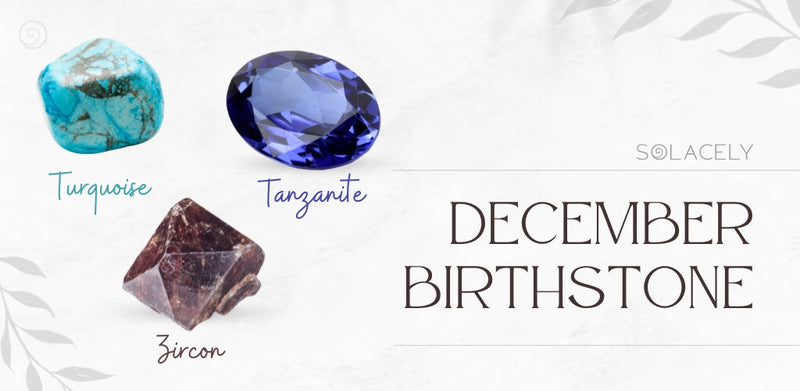
Turquoise is one of December's birthstones, alongside tanzanite and zircon, and it is the oldest of the three by a long way. It also appears in some listings as the traditional gift for an eleventh wedding anniversary.
Of the December stones it is the one with the deepest cultural history, which is part of why it stays the popular choice even against tanzanite's more dramatic colour. Our December birthstone guide covers all three side by side.
How people wear and keep it
- Travel. The classic use. A ring or a small piece in a bag before a journey.
- Pendants at the collarbone. The throat placement, for speaking work.
- Rings and cuffs. The Southwest tradition, worn daily and expected to age.
- At home. Near a doorway, in the same protective placement as other threshold stones, covered in our home protection guide.
- Before speaking up. Held briefly rather than worn, when nerve is what is needed. The crystals for confidence selection covers that side.
Caring for turquoise
This is the section that matters most, because turquoise asks for more care than most stones people own.
Keep it dry. Turquoise is porous, so it takes in whatever it meets. Never soak it, never use a cleaning solution or ultrasonic cleaner, and take rings off before washing up.
Cosmetics last, jewellery after. Perfume, hairspray, lotion and sunscreen all settle into a porous stone. Let everything dry, then put the piece on.
Wipe, do not wash. A dry or barely damp soft cloth is all it needs.
Store it apart. At 5 to 6 on the Mohs scale it is softer than quartz and will pick up scratches from harder stones in the same box.
Expect it to change. Worn turquoise warms and deepens over years as skin oils settle in, and many owners treasure that record of wear. Pieces that have been stabilised, a well established and permanent treatment used throughout the trade, hold their original shade for longer, which is why stabilised turquoise is the usual choice for a ring worn every day.
For energetic cleansing, use sound, smoke or moonlight. Skip water and skip salt entirely.
Who turquoise suits
People who travel, people about to move, and anyone who wants a stone with genuine depth of history behind it. It is also the natural choice for someone whose intention sits at the throat: speaking clearly, being heard, saying the difficult thing without heat.
It suits less well anyone who wants a piece they can be careless with. Turquoise rewards attention. If you want something to wear through the gym and the washing up, quartz family stones are the more forgiving choice, and turquoise can be the piece you put on deliberately.
Crystals are offered here for reflection and wellbeing as part of a long standing tradition. They are not a treatment for any medical condition and are not a substitute for professional healthcare.
Sources
Written by Chetena Sharma. Reviewed by the Solacely editorial team.
Frequently asked questions
About the author


Written by Chetna Sharma, crystal healing practitioner and co-founder of Solacely. Chetna has worked with healing crystals for over a decade and curates Solacely's protective stone collection.