Rhodonite is a rose pink manganese silicate, usually veined with black, and it is traditionally known as the stone of compassion. It is kept for emotional repair, forgiveness and steadiness after a difficult period, which gives it a gentler role than most pink stones.
Key takeaways
- Rhodonite is a manganese silicate, rose pink with the characteristic black veining that makes it recognisable.
- Traditionally kept for compassion, forgiveness and emotional repair rather than romance.
- It sits around 5.5 to 6.5 on the Mohs scale, so pendants and tumbled pieces suit it better than rings.
- The black veining is manganese oxide, and it is a feature of the stone rather than an inclusion to avoid.
- Often paired with rose quartz, where rhodonite carries the repair and rose quartz the softness.
What rhodonite is
Rhodonite is a manganese silicate, and the manganese is what gives it that distinctive rose to raspberry pink. The name comes from the Greek word for rose, which tells you how immediately the colour struck the people who first described it.
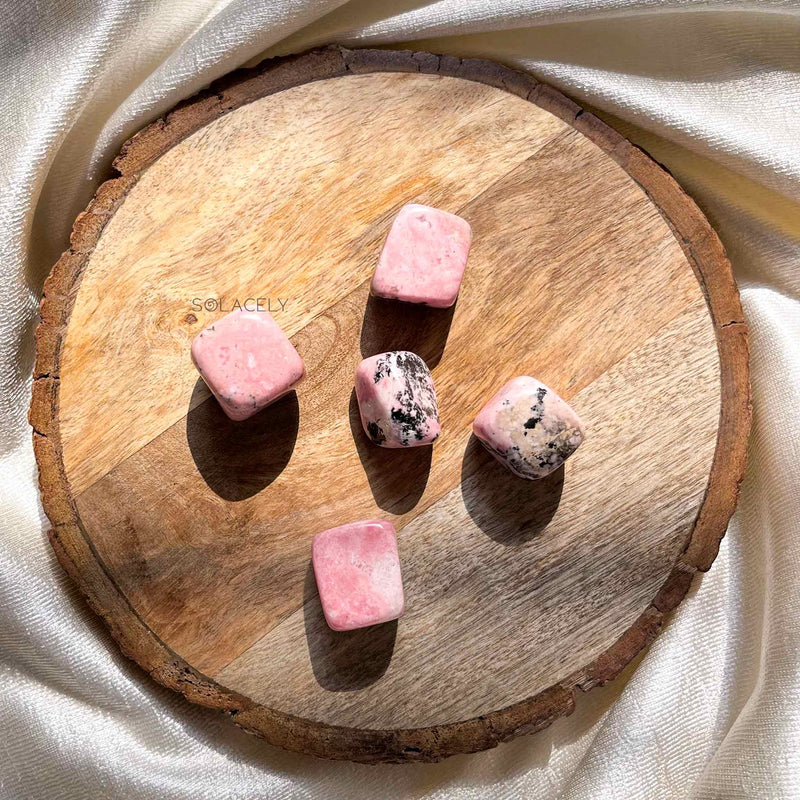
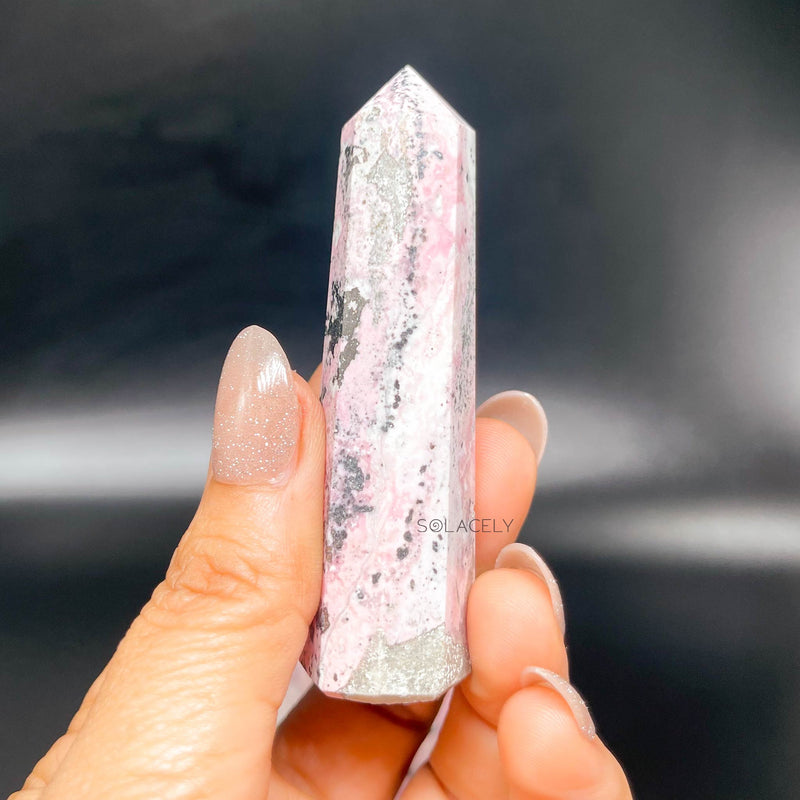
Its signature is the black veining that runs through most material. Those dark webs and patches are manganese oxide, formed as the stone weathered, and they are part of what makes rhodonite instantly recognisable. A piece with bold, well distributed veining is generally more prized than a plain one, which is unusual among pink stones.
It has been used ornamentally for a long time, most famously in Russia, where large deposits supplied carved bowls, boxes and decorative panels. That tradition of using it for objects meant to be handled suits a stone kept for comfort.
Rhodonite meaning in crystal tradition
Rhodonite is the stone of compassion, and the compassion in question is the practical, repairing kind. It is not the stone of falling in love. It is the stone people keep after something has gone wrong between them and someone else, or between them and themselves.
The associations that recur are forgiveness, reconciliation and the settling of an old resentment. It is described as a stone that helps a person look at a difficult situation without flinching from it, which is why it is often recommended alongside a period of genuine reflection rather than as a quick comfort.
The black veining feeds that reputation directly. Practitioners often read the pink and black together as the stone's whole meaning: tenderness that has been through something and carries the mark of it. Whether or not you read stones that way, it is a fitting image for what rhodonite is kept for.
Traditional properties and benefits
The uses gathered around rhodonite cluster around the heart, but with a more particular character than rose quartz.
- Compassion. Both toward others and, more often, toward yourself.
- Forgiveness. The core association, kept during reconciliation or after one.
- Emotional repair. Reached for in the settling period after conflict or loss.
- Steadiness under emotional pressure. Traditionally kept for keeping composure in difficult conversations.
- Heart centre work. Placed with the heart chakra in chakra practice, alongside rose quartz and green aventurine.
These are traditional associations, kept as a focus for something you are already working on. For the wider set used the same way, crystals for emotional healing covers the group.
How rhodonite is worn and used
Its hardness sits in the middle of the range, which shapes the sensible formats. Rhodonite is durable enough for regular wear but not quite hard enough to shrug off the knocks a ring takes.
| Format | Suits | Note |
|---|---|---|
| Pendant | Everyday wear | The best format, and shows the veining well |
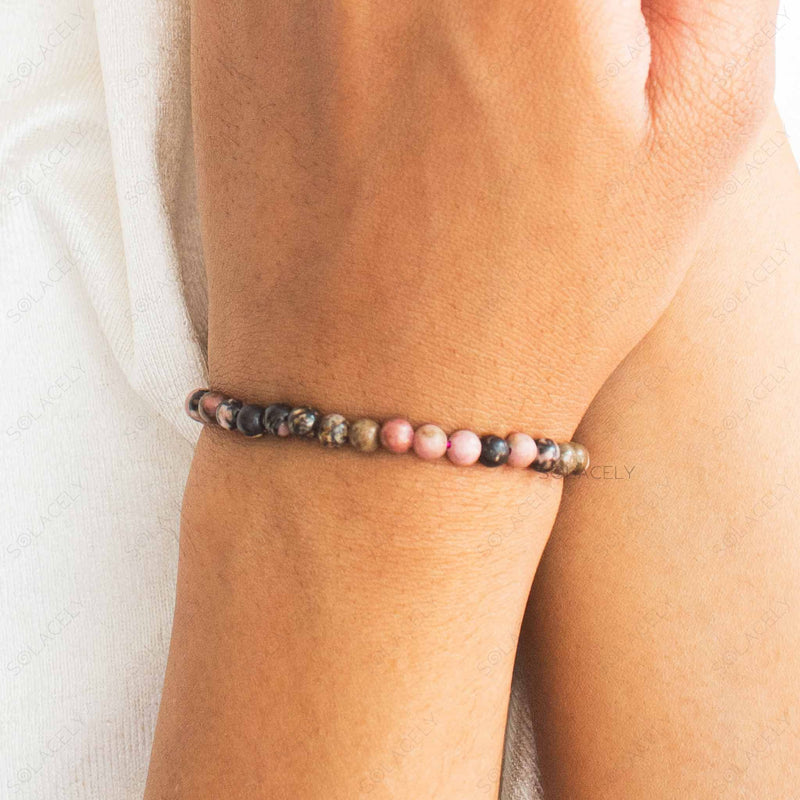
| Beaded bracelet | Regular wear | Fine with sensible care, avoid knocks |
| Tumbled palm stone | Reflection and quiet moments | Its smoothness suits holding |
| Ring | Occasional wear | Choose a protective setting if you want one |
| Carved piece | Display | The traditional Russian use of the material |
The most common practice is a palm stone kept somewhere private, picked up during the kind of thinking the stone is associated with. Worn pieces suit anyone who wants the reminder carried through a working day instead.
Choosing a rhodonite piece
Colour comes first. Look for a warm rose pink with good saturation rather than a pale washed tone, since the depth of colour is what gives rhodonite its presence.
Then look at the veining, which is where personal taste comes in. Some people want bold black webbing across the whole face of the stone; others prefer a mostly pink piece with just a few dark threads. Both are correct, and because the patterning is unique to each piece this is genuinely a stone to choose by eye.
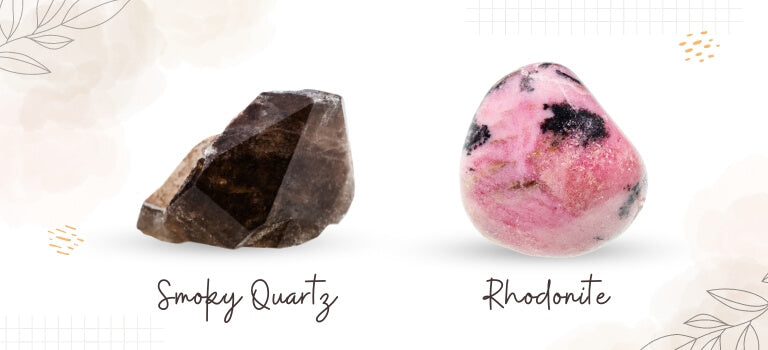
Check the polish for evenness. Rhodonite's mixed composition means the pink and the black polish at slightly different rates, so a good finish is smooth across both. If you like the idea of pairing it, smoky quartz and rhodonite is a natural grounding combination, and sunstone and rhodonite adds warmth.
Caring for rhodonite
Rhodonite is straightforward with a little care. Warm water, mild soap, a soft cloth and a full dry suits it well, and it does not need anything more elaborate than that.
Avoid harsh household chemicals and prolonged soaking, and put jewellery on after perfume and cosmetics have dried, which is good practice for any polished stone. It is not especially light sensitive, so a shelf near a window will not harm the colour.
Store it away from the quartz family, since anything at 7 or above will mark it over time in a shared box. For energetic cleansing, moonlight, sound or a rest on selenite all suit it, and none of those risk the polish. If you want the softer, more purely comforting relative, rose quartz for forgiveness covers a gentler approach to the same intention.
Who rhodonite suits
It suits people doing repair work. Anyone rebuilding a friendship, sitting with an old resentment they would rather put down, or being unkind to themselves about something that has already happened will find rhodonite fits the mood better than a purely soothing stone.
It suits less well anyone who wants lift or drive, since nothing about rhodonite pushes. For that, a warmer stone belongs in the set. But for the particular work of forgiving, whether somebody else or yourself, it is the stone the tradition points to first.
Rhodonite and rhodochrosite
The two names sit close enough together that they are regularly mixed up, and they are genuinely different stones with different characters, so it is worth separating them.
Rhodochrosite is a manganese carbonate, usually banded in bands of pink and white rather than veined in black, and it is much softer at around 3.5 to 4 on the Mohs scale. Its look is striped and candy-like where rhodonite's is webbed and earthier.
In tradition they are also kept for different halves of the same territory. Rhodochrosite is associated with self-love and joy, the warmer and lighter end. Rhodonite is the repair stone, kept for forgiveness and for sitting with something difficult. If you find rhodochrosite a little bright for the mood you are in, rhodonite is usually the better fit.
How people use rhodonite day to day
The practices attached to it are quiet, which follows from what it is kept for. Most involve a moment of reflection rather than anything elaborate.
- A palm stone kept privately. Picked up during the kind of thinking the stone is associated with.
- Worn before a difficult conversation. A pendant put on deliberately, as a small act of preparation.
- Kept with a letter or a photograph. A common practice where the repair concerns a specific person.
- Paired with rose quartz. Rhodonite carries the repair, rose quartz carries the softness around it.
The properties described here reflect traditional and cultural belief around crystals. They are offered for reflection and wellbeing and are not medical advice, a diagnosis, or a treatment for any condition. If you are working through grief, conflict or a mental health concern, please speak with a qualified healthcare professional or counsellor. Keep small stones away from young children, and never place crystals in drinking water.
Sources
Written by Chetena Sharma. Reviewed by the Solacely editorial team.
Frequently asked questions
About the author


Written by Chetna Sharma, crystal healing practitioner and co-founder of Solacely. Chetna has worked with healing crystals for over a decade and curates Solacely's protective stone collection.