Bracelets that connect when holding hands are paired couple bracelets built with magnets or interlocking charms, so the two pieces click together when your wrists meet. A separate category, electronic touch bracelets, uses Bluetooth and a phone app instead, and those work over any distance rather than by contact.
Key takeaways
- Three different products share this search: magnetic couple bracelets, split charm sets, and electronic touch bracelets.
- Only the magnetic and split charm types physically connect when hands meet. The electronic ones need charging, an app and a data signal.
- Magnetic clasps can interfere with pacemakers and other implanted devices, so check before buying for someone with one.
- Crystal couple bracelets do not connect mechanically. They pair by matching or complementary stones instead.
- Fit is what makes or breaks a pair. Measure both wrists, and choose stainless steel, sterling silver or gold plate if either of you reacts to nickel.
- All metaphysical meanings described are traditional belief, not medical fact.
What exactly are bracelets that connect when holding hands?
They are paired bracelets designed so that the two halves join physically when the wearers' wrists come together. The connection is made by small magnets set into the beads or the clasp, or by two halves of a charm, a heart or a puzzle piece, that slot into each other.
| Type | How it connects | Needs power? | Works at a distance? |
|---|---|---|---|
| Magnetic couple bracelets | Magnets in beads or clasp snap together | No | No, contact only |
| Split charm sets | Two halves of one charm interlock | No | No, contact only |
| Electronic touch bracelets | Bluetooth to an app, then over the internet | Yes, rechargeable | Yes, any distance |
| Crystal couple sets | Matching or complementary stones, no mechanism | No | Symbolic only |
The distinction matters because the marketing blurs it. Listings often show two hands meeting and a bracelet lighting up, which describes the electronic type, while the product being sold is a pair of magnetic beads. Read the specification, not the photograph.
All four types serve the same emotional purpose: a visible, wearable marker of a specific relationship. Which one suits you depends on whether you are together most days or apart most days. For the broader category, our guide to choosing a couple bracelet compares styles and materials in detail.
How do magnetic connecting bracelets work?
Each bracelet carries one or more small permanent magnets, usually neodymium, oriented so the two pieces attract rather than repel. Bring the wrists within a centimetre or two and they snap together with an audible click. Pull them apart and they separate cleanly, with no wear on the beads.
Design varies more than you might expect. Some sets hide the magnet inside a single feature bead, so the connection point is a specific spot you have to line up. Others use a magnetic clasp as the joining mechanism, which means the bracelet can also be worn as a single longer piece when the two are combined. A third style puts multiple small magnets around the strand so the pieces join at any orientation.
Strength is the thing to check before you buy. Too weak and the bracelets barely register when hands meet. Too strong and they catch on each other awkwardly, or grab keys, fridges and laptop lids. Mid strength is the sweet spot, and a good listing will state the magnet grade or at least describe the pull.
One safety point that is genuinely important. The US Food and Drug Administration has warned that consumer products containing high field strength magnets can interfere with pacemakers and other implanted medical devices when held in close proximity. If either wearer has an implant, choose a split charm or crystal pair instead and check with their clinician.
How do electronic touch bracelets work?
They do not respond to holding hands at all. Each bracelet pairs by Bluetooth to a phone app, and the app relays a signal over the internet. Tap your own bracelet and your partner's vibrates or lights up, whether they are in the next room or on another continent.
That is a genuinely different product with a genuinely different use case. It is built for long distance relationships, deployments and travel, not for couples who see each other daily. If you are together most evenings, a magnetic pair gives you the physical click and never needs charging.
The practical downsides are worth weighing up. Battery life is typically measured in days, so both people have to remember to charge. Both need the app installed, logged in and allowed to run in the background. If either phone loses signal or the manufacturer discontinues the service, the bracelets become ordinary bands. Several touch bracelet companies have shut down and taken their servers with them, which is a real risk with any product that depends on a cloud service.
None of that makes them a bad buy. It makes them an electronics purchase rather than a jewellery purchase, and worth judging on warranty, app reviews and how long the company has been trading.
Where do crystal couple bracelets fit in?
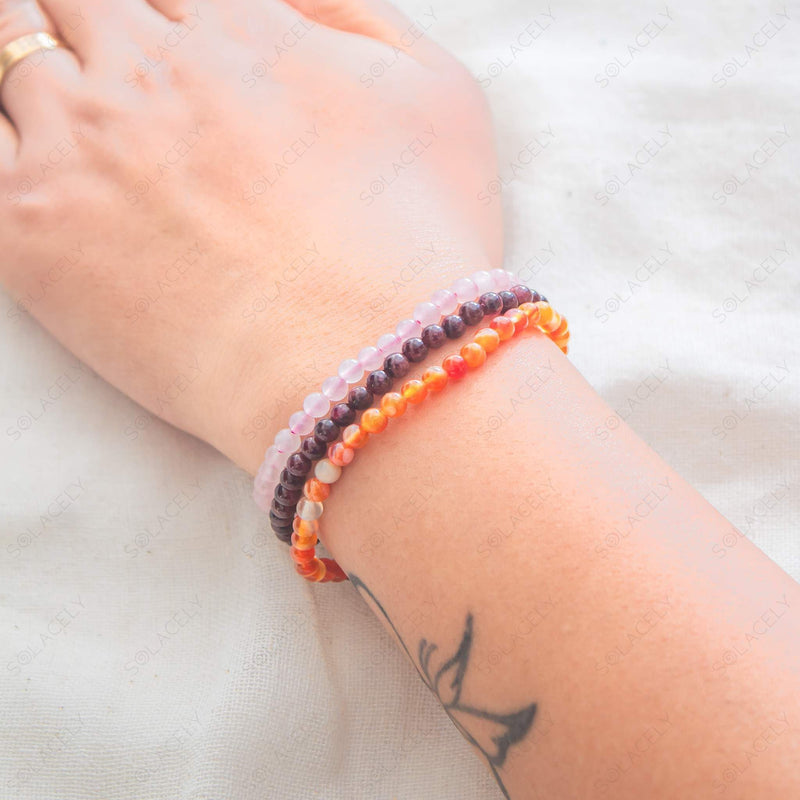
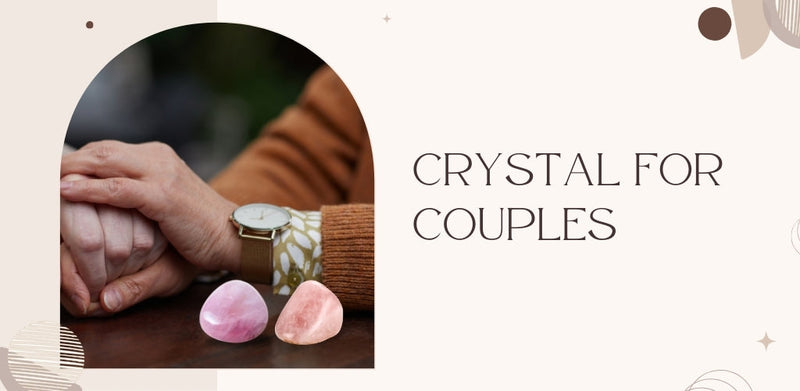
They are the non mechanical option. Two bracelets are matched by stone rather than by magnet, either identical strands or complementary ones, and the connection they express is symbolic. No batteries, no clasps to fail, and nothing to interfere with a medical implant.
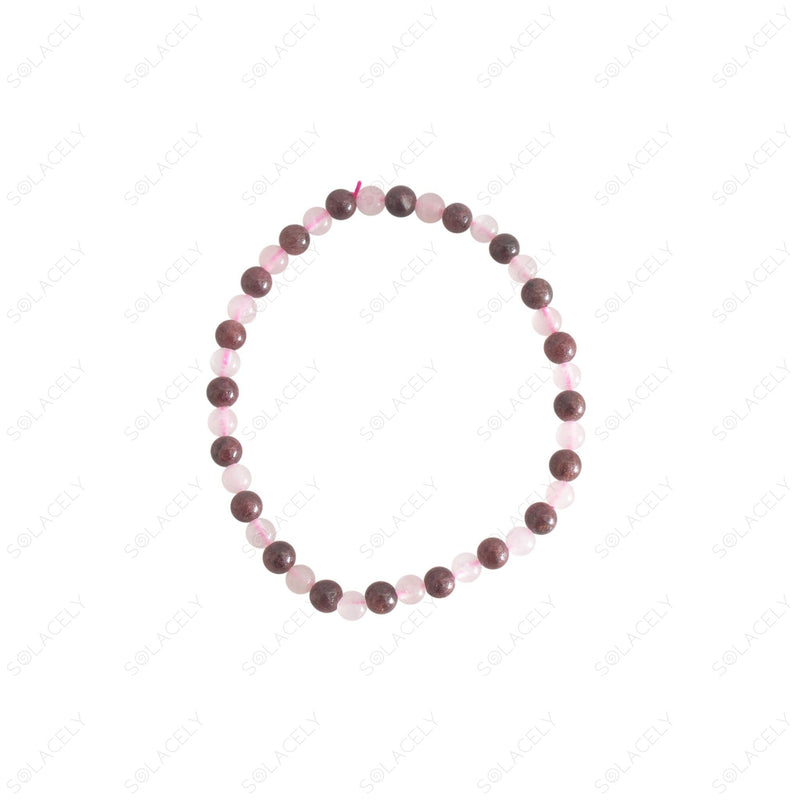
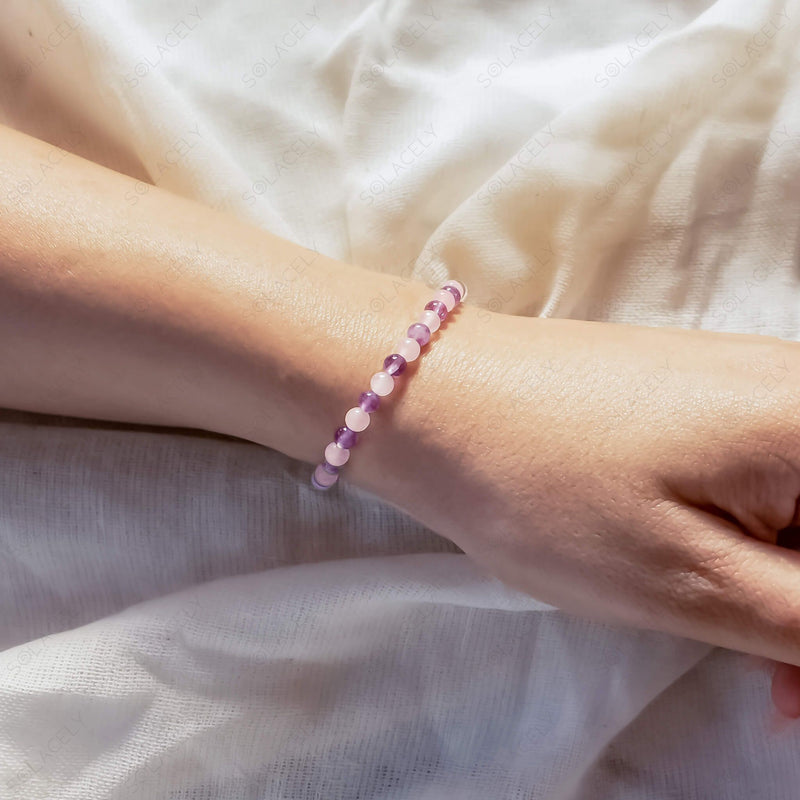
The usual pairings follow traditional associations. Rose quartz with amethyst is the most common, rose quartz for affection and amethyst for calm. Rose quartz with garnet is the warmer version, garnet carrying a long historical link to devotion and commitment. Some couples prefer contrast: one wears black tourmaline for grounding, the other rose quartz, on the reasoning that the pair balances rather than duplicates.
Durability is the practical argument in their favour. Quartz sits at 7 on the Mohs hardness scale, which is hard enough for daily wear on a wrist, and a beaded strand has no moving parts to break. If one of you is heavy handed with jewellery, this is the format that survives. Our guide to crystals for couples sets out the traditional pairings, and rose quartz for relationships covers the most requested stone on its own.
How do you choose a connecting pair?
Start with how often you are physically together, then size both wrists properly, then check the clasp or magnet strength. Sizing is where most of the complaints come from, because a stretch cord that is too tight snaps and one that is too loose spins the feature bead out of position.
- Measure both wrists. Wrap a strip of paper around, mark it, measure flat, then add roughly one centimetre for comfort on a beaded design.
- Match the format to the distance. Together daily means magnetic or split charm. Long distance means electronic, or matched crystals if you would rather avoid the tech.
- Check the metal. Nickel is a common cause of contact allergy in jewellery. Stainless steel, sterling silver and gold plate over brass are all gentler on reactive skin.
- Ask about magnet strength. Mid strength beats maximum. Very strong magnets grab everything metal they pass.
- Consider medical implants first. If either person has a pacemaker or defibrillator, skip magnets entirely.
- Decide on wearing hand. Not a rule, but it helps if you both know. Our note on which hand to wear a crystal bracelet on covers the traditional thinking.
If this is your first pair, keep the design simple. Elaborate mechanisms are the parts that fail, and a plain matched set of stones with one shared charm tends to still be worn a year later. Our crystal bracelets for beginners guide covers sizing and materials in more depth.
What should you expect a connecting pair to do?
Expect a small daily prompt, and that is more than it sounds. You glance at your wrist, you think of the other person, you send the message you were going to forget. Magnetic pairs add the click when your hands meet, and that click is the part couples name when they explain why they kept wearing them.
The stones work the same way. Rose quartz has been the affection stone in crystal practice for a very long time and amethyst the calm one, and a matched pair keeps that intention in view through an ordinary week. What makes couple sets different from any other bracelet is that the marker is shared. Two people are looking at the same thing.
Choose on the things you will live with instead of on the marketing: fit, metal, and how often you are genuinely in the same room. Those three decide whether a pair is still being worn a year later, and none of them show up in a product photograph.
How do you care for a connecting pair?
Take them off before showering, swimming, sleeping and the gym. Water loosens stretch cord over time, chlorine and salt attack plated metal, and a magnetic clasp caught on bedding is how most of them break. Wipe both bracelets with a soft dry cloth every week or so.
Keep magnetic pieces away from cards with magnetic stripes, hotel key cards, mechanical watches and laptop hard drives. Modern chip cards and solid state drives are unaffected, but older stripe cards can still be wiped by a strong neodymium magnet sitting against them in a bag.
For beaded crystal pairs, restring every year or two if they are worn daily. Elastic cord perishes gradually and gives very little warning before it goes. A jeweller will do it cheaply, and it costs far less than replacing a pair that had sentimental value attached to it.
The properties described here reflect traditional and cultural belief around crystals. They are not medical claims and are not a substitute for professional healthcare. Magnetic jewellery has no proven therapeutic effect and may interfere with implanted medical devices. If you are managing a health concern, speak to a qualified practitioner.
Sources
- US Food and Drug Administration, Magnets May Affect Pacemakers and Other Implanted Medical Devices
- National Center for Complementary and Integrative Health, Magnets for Pain: What You Need To Know
- Geology.com, Mohs Hardness Scale
Written by Chetena Sharma. Reviewed by the Solacely editorial team.
Frequently asked questions
About the author


Written by Chetna Sharma, crystal healing practitioner and co-founder of Solacely. Chetna has worked with healing crystals for over a decade and curates Solacely's protective stone collection.