The crystals most used for creativity are carnelian for starting, citrine for confidence in the work, blue lace agate for expressing it, and fluorite for editing. They function as studio cues that mark the beginning of a working session, which is where most creative practice actually breaks down.
Key takeaways
- Carnelian, citrine, blue lace agate and fluorite cover the four distinct stages where creative work stalls.
- The mechanism is a studio ritual, not the mineral. A consistent cue makes starting easier.
- Carnelian is traditionally tied to the sacral chakra, the centre associated with creative and generative energy.
- Fluorite is soft at 4 on the Mohs scale. Keep it on a dish, well away from tools and solvents.
- Metaphysical uses described here are traditional belief, not psychological fact.
Match the stone to where you actually get stuck
Creative block is not one problem, and that is why generic crystal lists for artists rarely help. Starting is a different failure to finishing. Being unable to make a decision is different again from being unwilling to show the work. Pick the stone for the specific point where your practice stalls.
Four stones map onto the four common failure points. Carnelian for not starting. Citrine for the confidence to keep going once it is ugly in the middle. Blue lace agate for showing it or talking about it. Fluorite for the sorting and cutting that turns a sprawl into a finished piece.
That specificity is what makes the practice useful rather than decorative. If you want the wider artist-focused selection, crystals for artists covers stones chosen by discipline instead.
Carnelian for starting
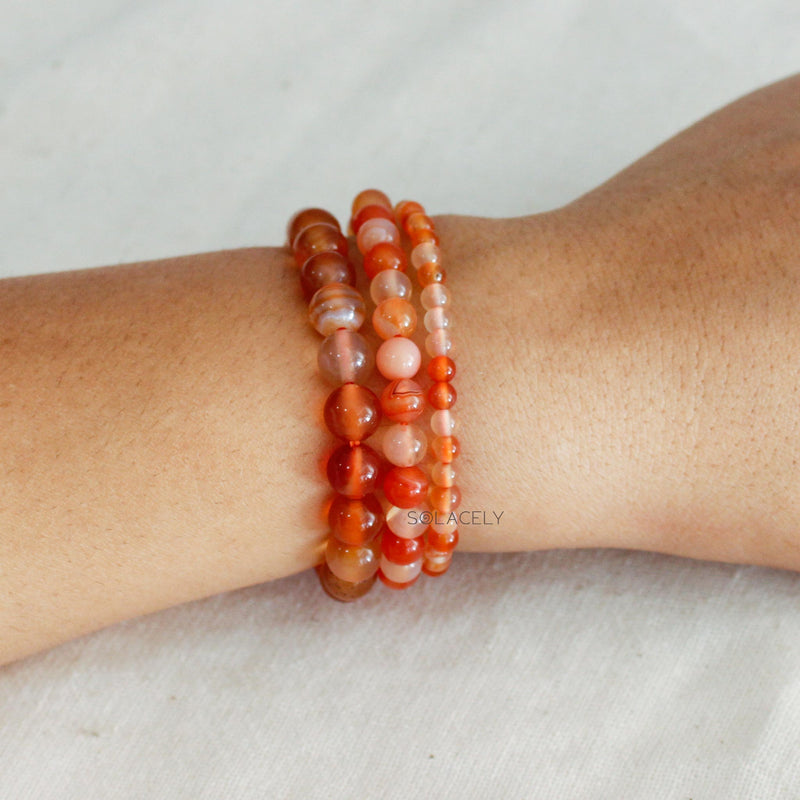
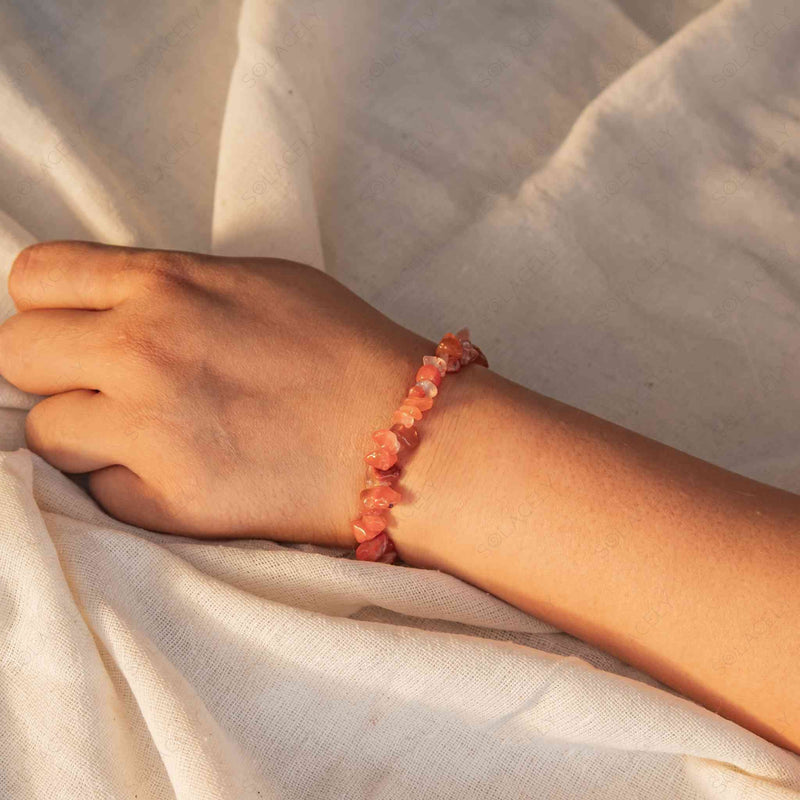
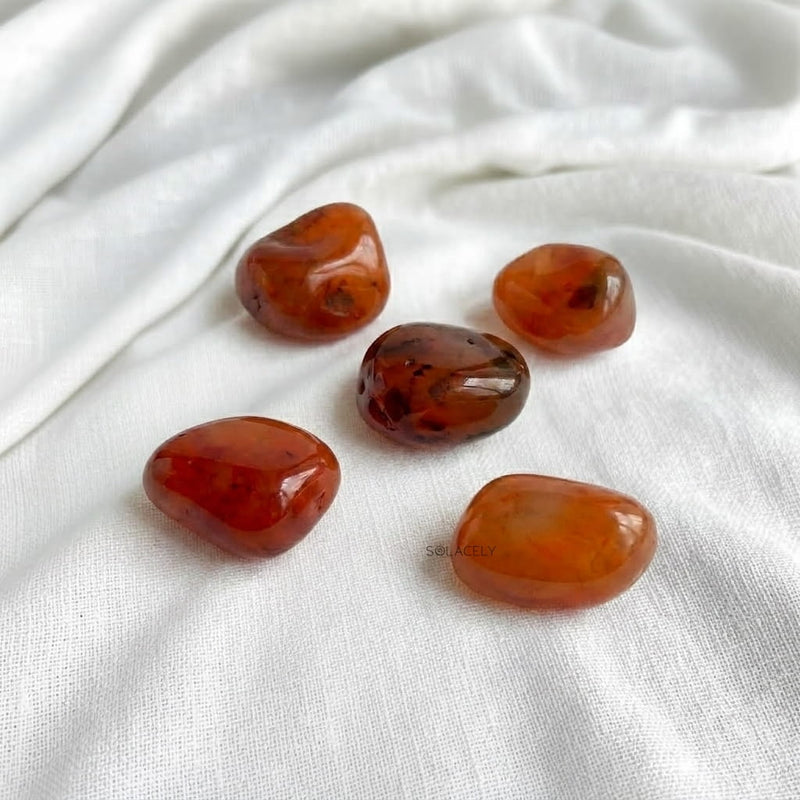
Carnelian is the classic creativity stone and it is the one most worth owning if you only buy one. In tradition it is associated with drive, courage and physical vitality, which translates into the specific act of beginning rather than the ability to have ideas.
Materially it is a chalcedony, a quartz made of crystals too small to see individually, coloured orange to reddish brown by iron oxide. Geology.com notes it has been used ornamentally for thousands of years and that much market material is heat treated to deepen the colour, which is an ancient and standard practice.
At 7 on the Mohs scale it survives a studio, which matters more than it sounds when your workspace involves solvents, clay or a lot of dropping things. In chakra practice it is linked to the sacral centre, covered further in crystals for the sacral chakra.
Citrine and blue lace agate for confidence and expression
Citrine handles the middle of a project, the stretch where the work is visibly worse than the idea and abandoning it feels reasonable. It is associated with optimism and self-belief, and it is the stone people reach for when the problem is discouragement rather than inertia.
According to the Gemological Institute of America, citrine is the yellow to orange variety of quartz, and warming amethyst to bring out that golden tone is a long established practice in the trade. Both are properly citrine, and for a studio piece the choice is purely about the shade you like.
Blue lace agate covers the other side: showing the work, describing it, pitching it, or teaching it. It is traditionally tied to the throat centre and to communication that does not come out defensive. A pale banded chalcedony, it sits at 7 like its relatives. The crystals for the throat chakra guide covers that group.
Fluorite for editing and structure
Fluorite is the stone for the unglamorous half of creative work: choosing, cutting, sequencing and finishing. It is used traditionally for mental order and thinking in sequence, which is exactly the mode required when a project has too many good options and no shape.
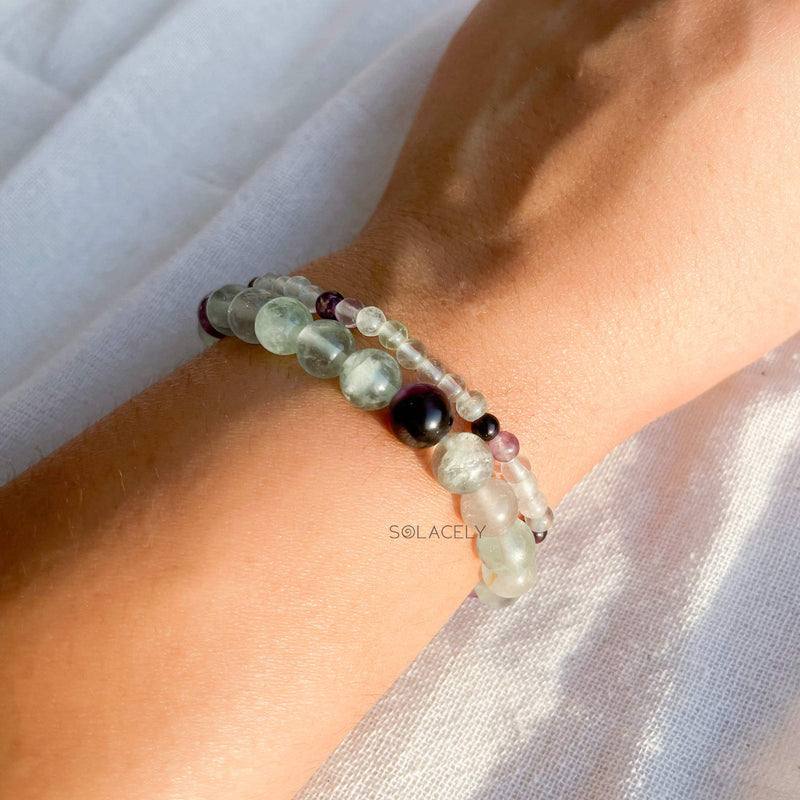
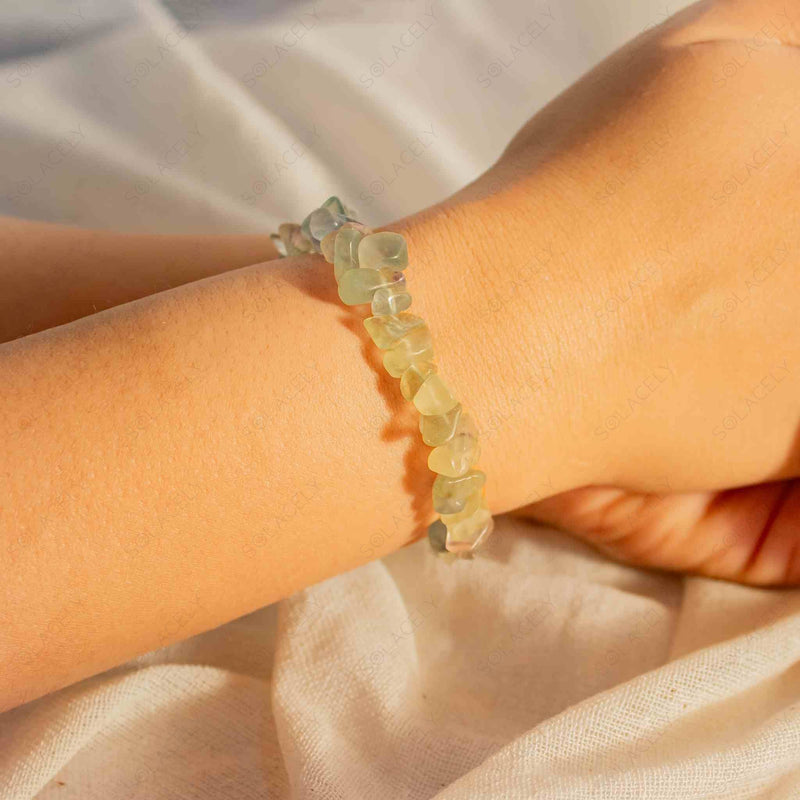
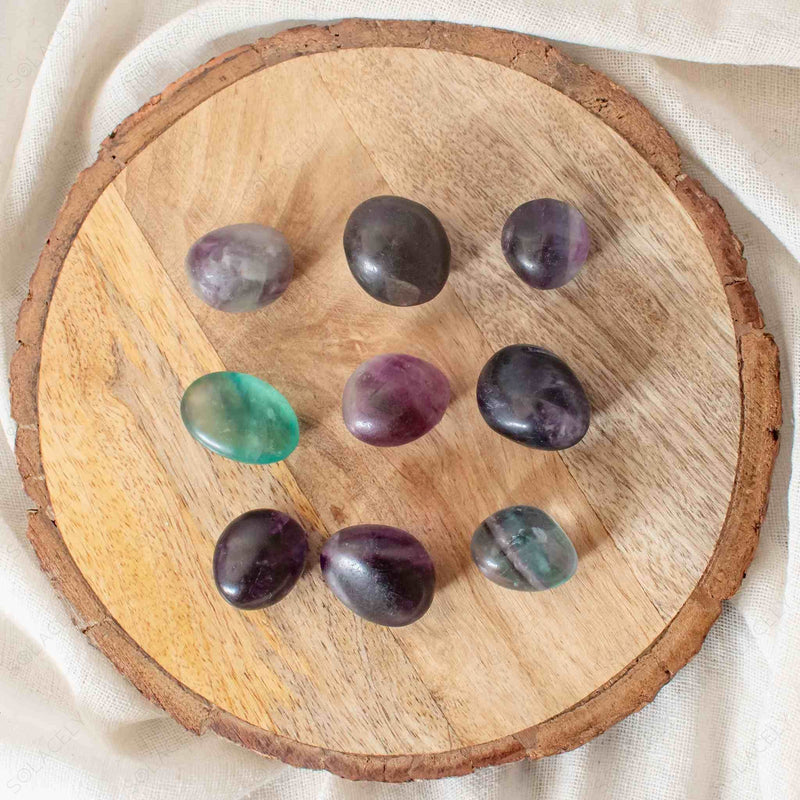
It is also the most fragile stone here by a wide margin. Fluorite is calcium fluoride and sits at 4 on the Mohs scale, soft enough to be scratched by a steel key, with perfect cleavage in four directions. Check anything new against the Mohs hardness scale before letting it share a drawer with harder stones.
In a studio that means fluorite lives on a dish, away from brushes, blades and anything wet. It is genuinely not a stone to carry in a bag with keys, and a chipped fluorite point is the most common casualty in a working artist's collection.
A studio set, stage by stage
| Where you are stuck | Stone | Hardness | How it is used |
|---|---|---|---|
| Cannot begin | Carnelian | 7 | Held before the first mark of a session |
| The ugly middle | Citrine | 7 | Kept in view where you work |
| Too many options | Fluorite | 4 | On a dish beside the plan or notebook |
| Showing the work | Blue lace agate | 7 | Worn on the day, not left in the studio |
| Overwhelm, too much input | Amethyst | 7 | In the room where you rest, not where you work |
Three stones is the practical ceiling. Beyond that a studio shelf becomes an arrangement rather than a set of cues, and the whole effect depends on each object still meaning something specific.
Making the cue actually work
A stone on a shelf does nothing. A stone attached to a repeated action does quite a lot, because it becomes a marker for the transition into working, which is the hardest part of most creative days.
- Tie it to a step you already take. Stone into hand, then the studio light goes on. Same order every time.
- Keep it visible from the working position. If you cannot see it while working, it is decor.
- Move it when the stage changes. Carnelian away, fluorite out, when a project shifts from making to editing.
- Do not add stones during a block. Buying more is a very effective way of avoiding the work.
If the difficulty is sustained concentration rather than starting, that is a different problem, and crystals for focus covers the stones used for it.
Studio care and safety
Studios are hard on stones. Solvents, water, dust, temperature swings and constant handling all take a toll, and the losses are avoidable with two habits.
First, keep stones away from chemicals. Turpentine, white spirit, acetone and strong cleaners dull polish on chalcedony and can etch softer material outright. Keep the set on a shelf rather than the bench itself, and never on a table where solvent gets decanted.
Second, keep crystals out of anything that touches your body or your materials. That means no elixirs, no grinding stones into pigment, and particular caution with malachite, which is a copper mineral, and with any raw material you would be tempted to sand. Cleaning is simple: warm water, mild soap, soft cloth, dried fully, and skip water entirely for fluorite clusters.
What this practice can honestly claim
No stone makes anyone more creative. What it can do is lower the cost of starting, which is a genuinely useful intervention, because most unfinished work is not defeated by lack of talent but by the friction of the first ten minutes.
The best evidence for this is not mineralogical. It is that the artists who report the strongest effect are the ones with the most consistent routines, which is a fairly clear indication of where the effect is actually coming from. Naming that plainly does not weaken the practice, it just puts it on honest footing.
Use the stones as punctuation for a working day. Anything more than that is a claim nobody can support, and anyone who has finished a difficult piece of work knows exactly how much of it was ritual and how much was hours.
The properties described here reflect traditional and cultural belief around crystals. They are not medical or psychological claims and are not a substitute for professional advice. Do not grind, sand or inhale crystal dust, and never use crystals in elixirs or in materials that contact skin. If you are experiencing persistent low mood or burnout, speak to a qualified practitioner.
Sources
Written by Chetena Sharma. Reviewed by the Solacely editorial team.
Frequently asked questions
About the author


Written by Chetna Sharma, crystal healing practitioner and co-founder of Solacely. Chetna has worked with healing crystals for over a decade and curates Solacely's protective stone collection.