Emerald is the birthstone for May. It is the green variety of beryl, coloured by chromium or vanadium, and it sits at 7.5 to 8 on the Mohs scale. Emerald is also the only major gemstone where visible inclusions are accepted rather than penalised, which changes how you should shop for one.
Key takeaways
- May's birthstone is emerald, green beryl. Older traditional lists sometimes offer agate as an alternative.
- Colour is the price driver. Chromium and vanadium produce the green.
- Nearly every emerald has inclusions. The trade calls this the jardin, and it is normal.
- Oiling and resin filling are routine, expected to be disclosed, and not permanent.
- Mohs 7.5 to 8 but poor toughness. Never clean an emerald in an ultrasonic or steam cleaner.
- Emerald is also the gem for the twentieth and thirty fifth wedding anniversaries.
What is the May birthstone?
Emerald, in every modern list. Gemmological bodies give May to emerald and also name it as the anniversary gem for twenty and thirty five years. Some older traditional lists offer agate as a second option for May, which is why you occasionally see it turn up in vintage birthstone jewellery, but emerald is the answer everyone means today.
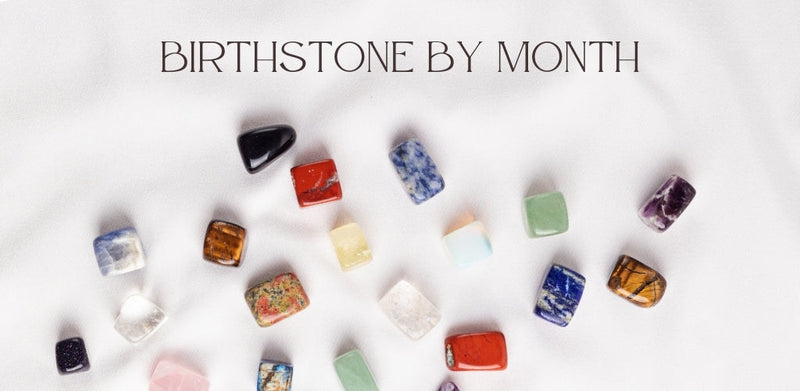
Emerald has one of the longest documented histories of any gem. Egyptian mines were working emerald more than two thousand years ago, and the stone's association with renewal and spring predates the birthstone calendar by a very long way. For how May sits against the rest of the year, see our birthstones by month guide and the neighbouring April birthstone.
What emerald actually is
Emerald is beryl, the same mineral species as aquamarine and morganite. What makes it emerald rather than plain green beryl is chromium, vanadium, or both, sitting in the crystal structure. Beryl is normally colourless. It is the trace element that does everything.
| Mineral | Beryl |
|---|---|
| Colour cause | Chromium and vanadium traces |
| Mohs hardness | 7.5 to 8 |
| Toughness | Poor, because of internal fractures |
| Main sources | Colombia, Zambia, Brazil, Zimbabwe, Afghanistan |
| Typical treatment | Fracture filling with oil or resin |
Colombian material has set the reference for emerald colour for centuries, and the finest stones from Muzo and Chivor are the benchmark against which everything else is described. Zambian emerald tends slightly bluer and often arrives cleaner. Neither is better in the abstract. They are different looks at different prices.
Why emeralds have inclusions, and why that is fine
Emerald forms in a violent geological setting, with the crystal growing while the rock around it is still moving. The result is that almost every emerald carries internal fractures and mineral inclusions. The trade calls this the jardin, French for garden, because under magnification the pattern looks like foliage.
This matters practically. In a sapphire or a diamond, visible inclusions push the price down hard. In emerald, they are expected. Standard grading puts colour first by a wide margin, and a slightly included stone with superb colour will outprice a cleaner stone with weak colour every time. An emerald with no visible inclusions at all is either exceptional and priced accordingly, or it is not an emerald.
Treatments you should ask about
Filling surface reaching fractures with oil or resin has been done for centuries and is standard practice today. It makes those fractures less visible and improves apparent clarity. Cedarwood oil is the traditional filler, various polymers are the modern ones.
Three things follow from that, and they are the practical core of buying an emerald:
- Disclosure is expected. A reputable seller will tell you the treatment level, usually described as minor, moderate or significant. Silence on the subject is the warning sign, not the treatment itself.
- It is not permanent. Oil can dry out or leach over years, and the stone can be re oiled by a professional. Budget for that as maintenance rather than being alarmed by it.
- It dictates cleaning. Ultrasonic and steam cleaning strip filler and can worsen the fractures underneath. Warm soapy water and a soft brush only, always.
Wearing an emerald every day
Hardness and toughness are two different properties and emerald is the clearest example of why that distinction matters. At 7.5 to 8 it resists scratching well. But its toughness is poor, because every one of those internal fractures is a plane along which a sharp knock can propagate.
In practice: pendants and earrings are low risk and fine for daily wear. Rings are the exposed position, and an emerald ring worn while gardening, cooking or lifting will eventually meet a hard edge. If you want an emerald ring for everyday use, choose a protective setting with covered corners. The emerald cut itself was developed for exactly this reason, to remove the vulnerable sharp corners of a rectangular stone.
Alternatives if emerald is not practical
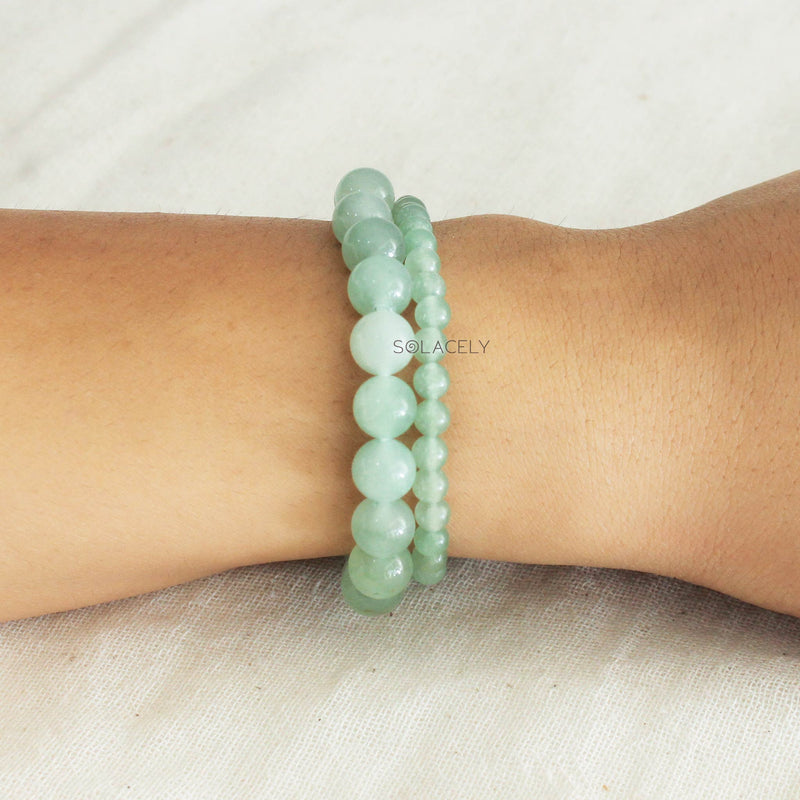
Emerald is expensive and fragile, and neither of those suits every May birthday. Green aventurine is the most common substitute in crystal jewellery, tougher, far cheaper, and carrying a similar traditional association with growth and opportunity. Chrysoprase gives a brighter apple green. Peridot and green onyx are both hardier options for rings.
If it is the meaning rather than the mineral you are after, our guides to crystals for new beginnings and crystals for money cover the green stones most often used for growth and opportunity. For the agate that older lists give as May's alternative, see agate meanings, benefits and uses.
The uses described here reflect traditional and cultural crystal practice. They are not medical claims and are not a substitute for professional healthcare or advice.
Sources
Written by Chetena Sharma. Reviewed by the Solacely editorial team.
Frequently asked questions
About the author


Written by Chetna Sharma, crystal healing practitioner and co-founder of Solacely. Chetna has worked with healing crystals for over a decade and curates Solacely's protective stone collection.