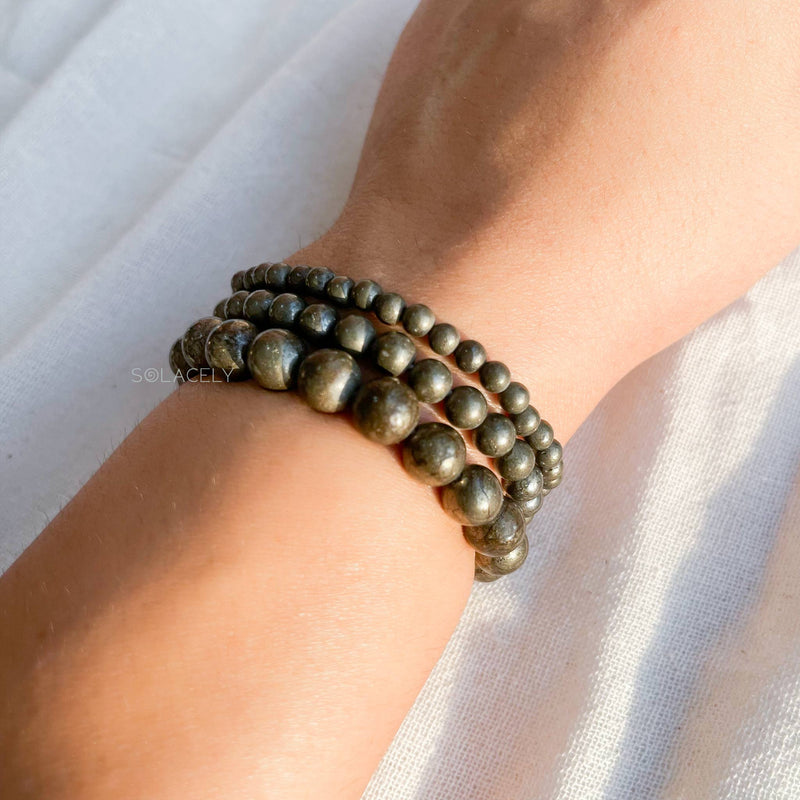
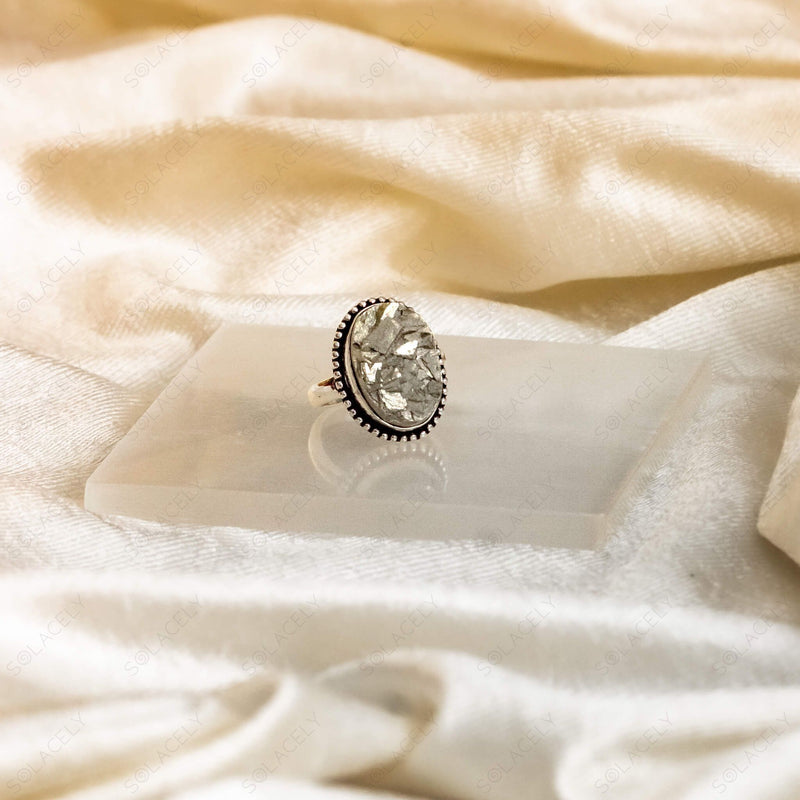
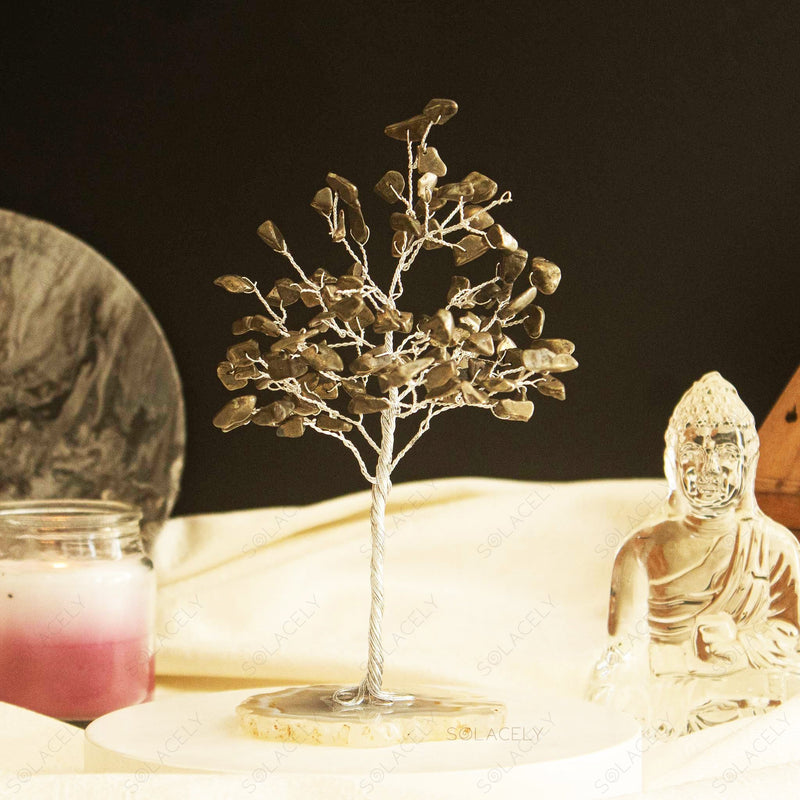
A pyrite pendant is worn for confidence, drive and the nerve to begin. Pyrite is an iron sulfide with a bright metallic gold lustre, long known as the stone of the maker and the merchant, and a pendant keeps it where you notice it during the working day.
Key takeaways
- Pyrite is an iron sulfide with a brassy metallic shine, traditionally kept for drive, confidence and prosperity.
- A pendant is the ideal format because pyrite is heavier than it looks and hangs with real presence.
- It sits around 6 to 6.5 on the Mohs scale, durable enough for regular wear with sensible care.
- Keep pyrite dry. No water cleansing, no salt, and no humid bathroom shelf.
- Its golden lustre is why the stone has been associated with wealth and ambition for centuries.
Why pyrite is worn as a pendant
Pyrite has a physical quality that makes it unusually satisfying to wear. It is dense, so a modest piece has real weight to it, and a pendant is the one format where that weight registers as presence rather than bulk. You feel it settle when you put it on.
The position matters too. Worn at the chest it sits in the field of view whenever you look down at a desk, a notebook or a phone, which is exactly where the intention attached to pyrite tends to be needed. It is a working stone rather than a resting one.
Practically, a pendant also solves pyrite's main care requirement. Hanging free of the wrist means it stays away from hand washing, which is the single most common way pyrite gets damaged. The pyrite meaning and properties guide covers the stone in full.
What pyrite is traditionally kept for
Pyrite is the stone of doing. Where other prosperity stones are associated with attraction and flow, pyrite is associated with effort: starting the thing, holding the line in a negotiation, backing yourself in a room.
That reputation comes partly from its look. A bright gold metallic lustre made pyrite a symbol of wealth and of the earth's abundance across many cultures, and it was carried as a token of prosperity long before anyone described it in modern terms.
The specific associations that recur across sources are worth listing plainly, since they are narrower than most stones.
- Confidence. Kept for self-belief in professional settings rather than social ones.
- Drive and momentum. Reached for when the difficulty is starting rather than deciding.
- Prosperity through work. Long linked to earnings and enterprise rather than luck.
- Protection in business. Traditionally kept as a shield stone for negotiations.
- Willpower. Associated with follow-through past the interesting part of a project.
How to wear a pyrite pendant
The simplest approach is to give it one job and one moment. Pyrite responds well to being tied to a specific act rather than worn as general decoration.
Most people put it on for the working day and take it off in the evening, which suits the character of the stone. Some hold it briefly before a difficult call or a meeting they have been putting off, which turns the pendant into a small physical cue for a decision already made.
Chain length is worth thinking about. A shorter chain keeps the stone high and visible; a longer one lets it sit closer to the solar plexus, which is the centre traditionally associated with personal power and is where many wearers prefer it. Both are correct, so choose on how it feels.
Caring for a pyrite pendant
Pyrite has one firm care rule and it is worth knowing before the first wear, because it protects the piece.
| Practice | Guidance | Why |
|---|---|---|
| Water cleansing | Avoid entirely | Pyrite is iron based and moisture dulls the lustre over time |
| Salt cleansing | Never | Salt is particularly hard on iron minerals |
| Storage | Dry, away from humidity | A bathroom shelf is the worst place for it |
| Cleaning | Soft dry cloth | Restores the shine without any moisture |
| Energetic cleansing | Moonlight, sound, or selenite | All dry methods that suit the stone |
| Wearing | Remove before showering or swimming | The simplest habit that keeps it bright for years |
Follow those and a pyrite pendant holds its brassy shine indefinitely. Ignore the water rule and the surface goes dull, which is the one avoidable disappointment with this stone.
Choosing a pyrite pendant
Look at the lustre first. Good pyrite has a bright, mirror-like metallic shine on its faces, and that brightness is the whole visual appeal. A piece that looks flat in the shop will look flatter at home.
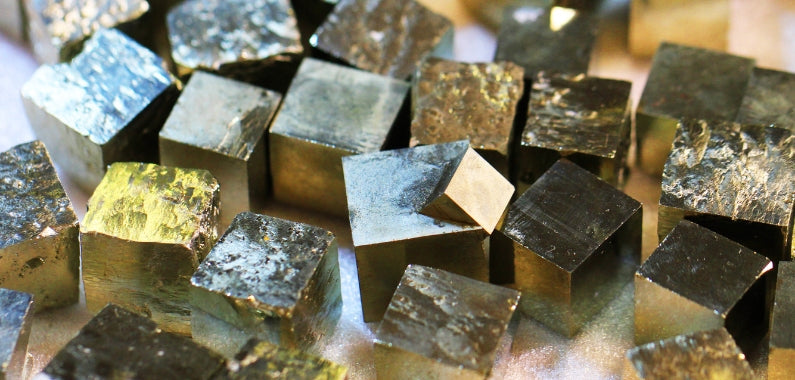
Then look at the form. Raw pyrite shows its natural cubic crystal faces, which is a genuinely striking thing to wear and the reason many people prefer rough pieces to polished ones. Polished cabochons give a smoother, more jewellery-like look, and cubes set in a simple bezel split the difference nicely.
Check the setting properly. Because pyrite is dense, the bail and chain do more work than they would with a lighter stone, so a well made setting matters more here than usual. If you are building a set around it, crystals for money covers what else belongs alongside, and natural pyrite ring benefits compares the two main formats.
Who a pyrite pendant suits
It suits people whose work asks them to put themselves forward. Freelancers pricing a job, anyone returning to work after a break, and people who describe themselves as capable but reluctant to take credit are the wearers who report getting the most from it.
It suits less well anyone looking for calm. Pyrite is a forward stone and it is not a soothing one, so a person already running hot may prefer something grounding alongside it or instead of it. For the spiritual side of the same stone, see the spiritual meaning of a pyrite ring.
Why pyrite looks the way it does
Pyrite forms remarkable natural shapes, and that is a large part of its appeal as a pendant. It commonly crystallises into near perfect cubes with flat, mirror-bright faces, sometimes with fine parallel striations running across them, and those cubes grow that way without any human shaping at all.
It also forms in other striking habits: clustered masses of small bright crystals, and the flat radiating discs collectors call pyrite suns. Any of these can be set as a pendant, and each gives a completely different look while carrying the same tradition.
The brassy colour comes from the iron and sulfur that make up the mineral. That metallic shine is unusually stable in a dry environment, which is why well kept pyrite jewellery holds its brightness for many years and why the dry care rule matters so much.
Pairing a pyrite pendant
Pyrite is rarely worn alone, and the partner stone shifts what the set is for. Three combinations come up most often.
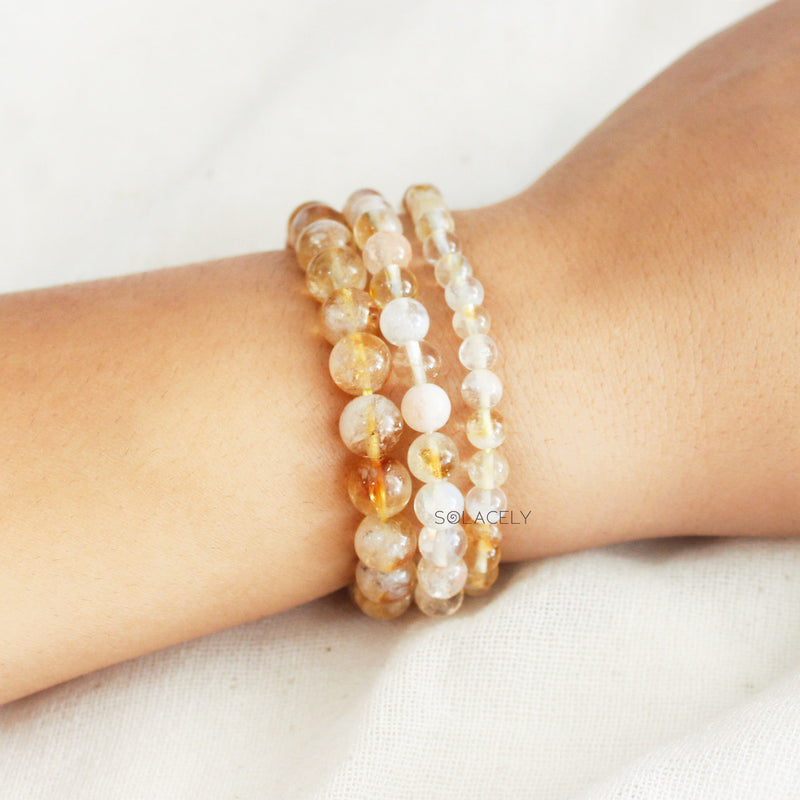
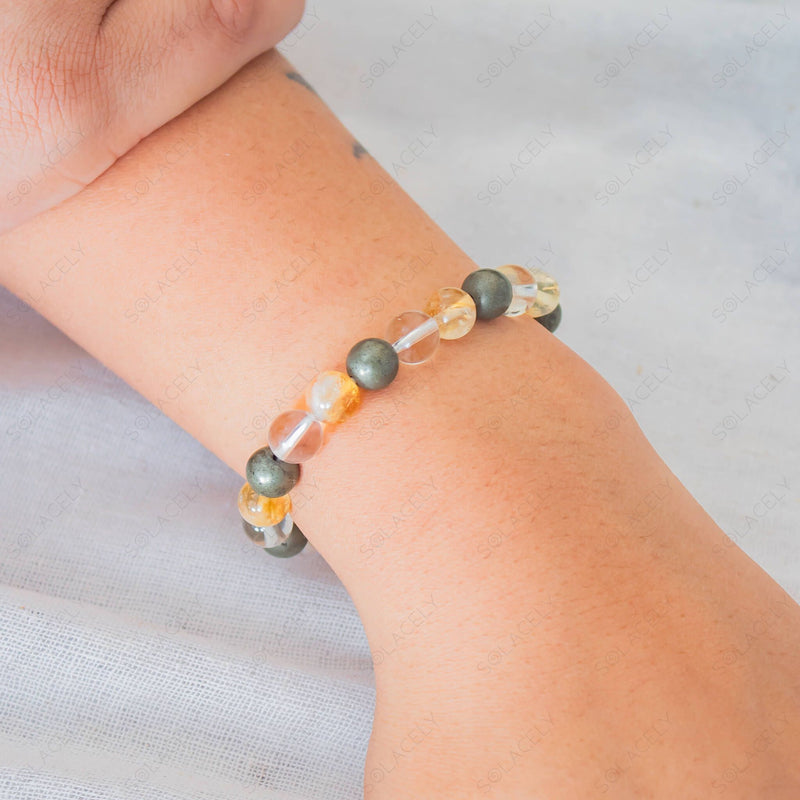
- With citrine. The classic prosperity pairing, adding warmth and optimism to pyrite's push.
- With tiger's eye. For follow-through, since tiger's eye is kept for staying with something.
- With black tourmaline. For anyone who wants steadiness alongside the drive.
- With clear quartz. The neutral option, if you want the pyrite to remain the whole statement.
The properties described here reflect traditional and cultural belief around crystals. They are offered for reflection and wellbeing and are not medical advice, financial advice, or a treatment for any condition. If you are managing a health concern, please speak with a qualified healthcare professional. Keep small stones away from young children, and never place crystals in drinking water.
Sources
Written by Chetena Sharma. Reviewed by the Solacely editorial team.
Frequently asked questions
About the author


Written by Chetna Sharma, crystal healing practitioner and co-founder of Solacely. Chetna has worked with healing crystals for over a decade and curates Solacely's protective stone collection.