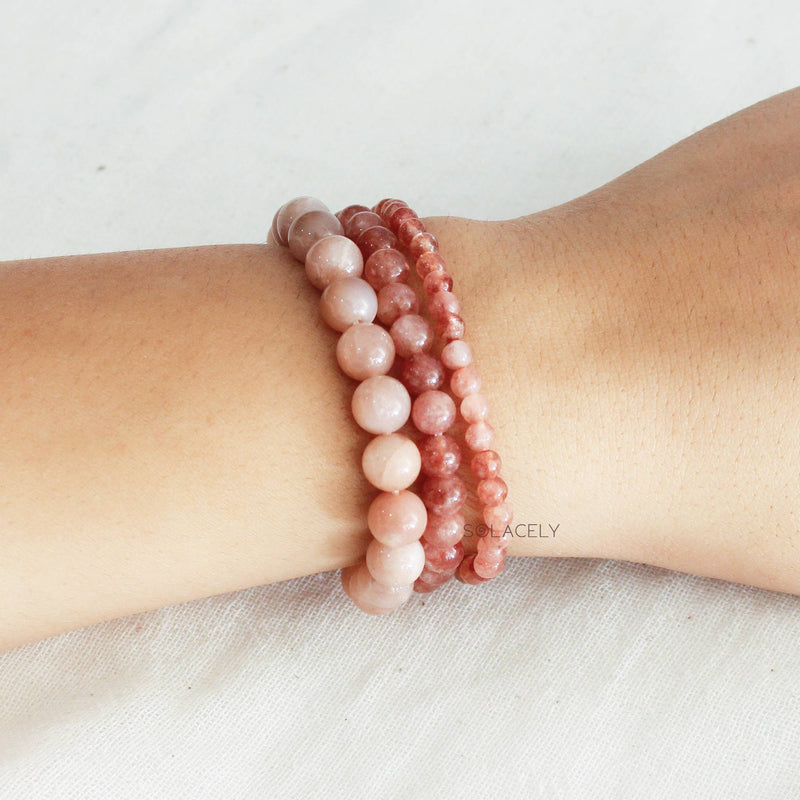
Sunstone is a feldspar containing tiny reflective platelets that flash as the stone tilts, an effect gemmologists call aventurescence. It sits at 6 to 6.5 on the Mohs scale. In crystal tradition it is kept for vitality and visibility, and it is consistently a stone of coming forward rather than withdrawing.
Key takeaways
- Sunstone is a feldspar, usually oligoclase or labradorite, Mohs 6 to 6.5.
- The flash is aventurescence, from copper, hematite or goethite platelets inside the stone.
- Traditionally kept for vitality, warmth and being seen.
- Oregon sunstone contains copper and is that state's official gemstone.
- Cleavage in two directions, so it wants a protective setting in a ring.
- The natural counterweight is moonstone: sun and moon, forward and reflective.
What sunstone is
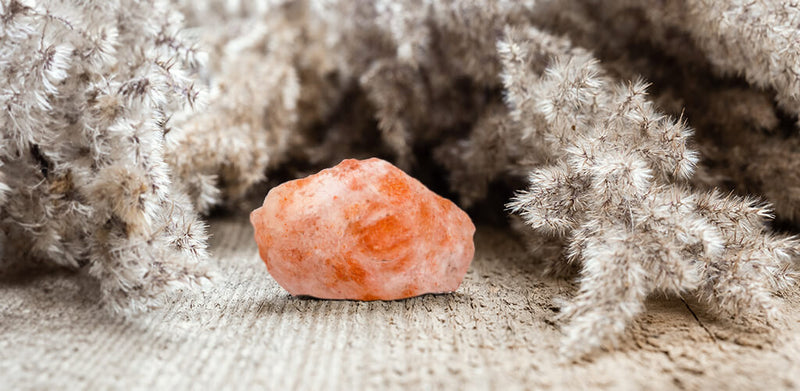
Sunstone belongs to the feldspar family, the most abundant mineral group in the Earth's crust. What makes a feldspar a sunstone is inclusion: microscopic metallic platelets suspended through the crystal, aligned closely enough that light bounces off them together and produces a flash as the stone moves.
Which metal does the flashing depends on where the stone came from. Copper in Oregon material, hematite or goethite almost everywhere else. The effect is structural rather than a surface treatment, so it cannot wear off or be polished away.
| Mineral group | Feldspar, usually oligoclase or labradorite |
|---|---|
| Optical effect | Aventurescence, a flashing shimmer |
| Inclusions | Copper, hematite or goethite by locality |
| Mohs hardness | 6 to 6.5 |
| Cleavage | Two directions |
| Main sources | Oregon USA, India, Norway, Russia, Tanzania |
Oregon sunstone
Oregon sunstone is the standout, and it is unusual among sunstones because the inclusions are metallic copper. That gives it colours no other deposit produces: alongside the familiar warm gold, Oregon material occurs in green and red, and stones showing more than one colour are especially prized.
It was used and traded by Native American peoples of the region long before commercial mining began, and it is now the official state gemstone of Oregon.
Sunstone meaning
The symbolism is solar throughout: warmth, generosity, vitality and being seen. Across the traditions that use it the reading barely varies, which is unusual for a stone that turns up in so many separate places.
The reason is that the stone behaves like the thing it is named after. Sunstone does not glow evenly. It flashes when it catches light and goes quiet when it does not, exactly as sunlight does through moving cloud. A material that behaves like sunlight collects the meanings people already attach to sunlight.
In modern practice that makes sunstone a specific choice rather than a general one. It is kept by people who habitually take the smaller room, defer credit, or find visibility uncomfortable. It has no calming tradition anywhere, which is worth knowing before you buy.
Sunstone and moonstone
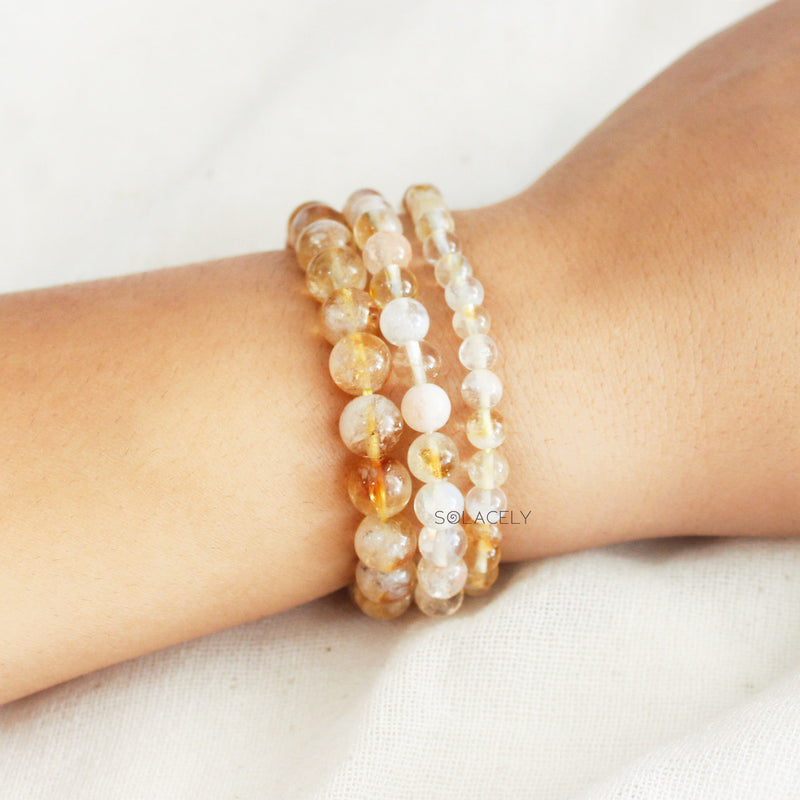
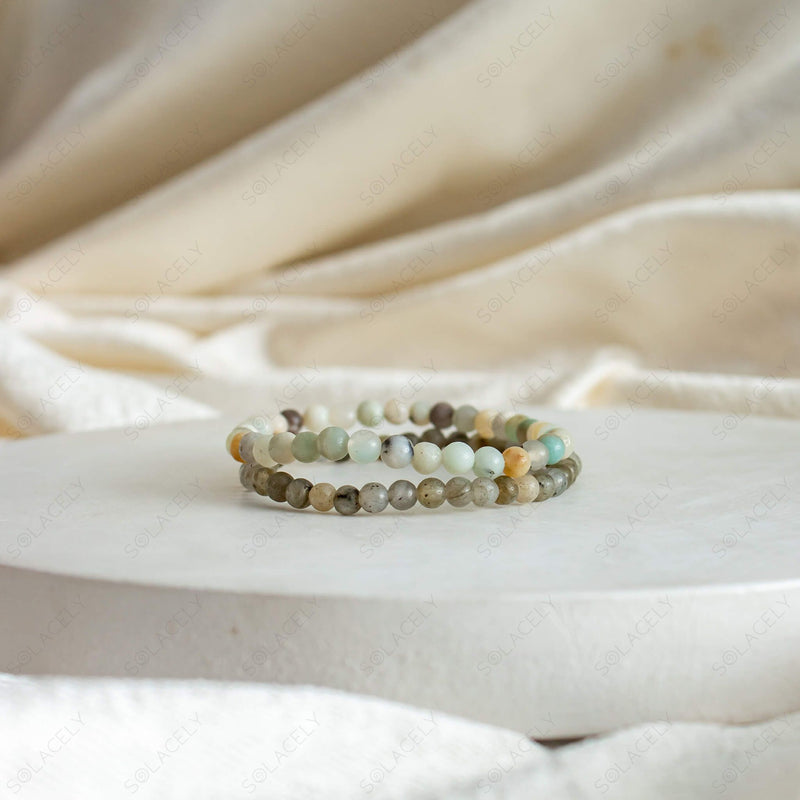
The classic pairing, and a genuinely useful one. Sunstone points outward: doing, showing, asking. Moonstone points inward: reflecting, waiting, sensing. Both are feldspars, both sit at similar hardness, and a bracelet combining them wears evenly.
People wear the pair when they want the forward motion without losing the ability to read a room. It is one of the better balanced combinations in crystal practice, precisely because the two stones are so cleanly opposed.
How to wear it
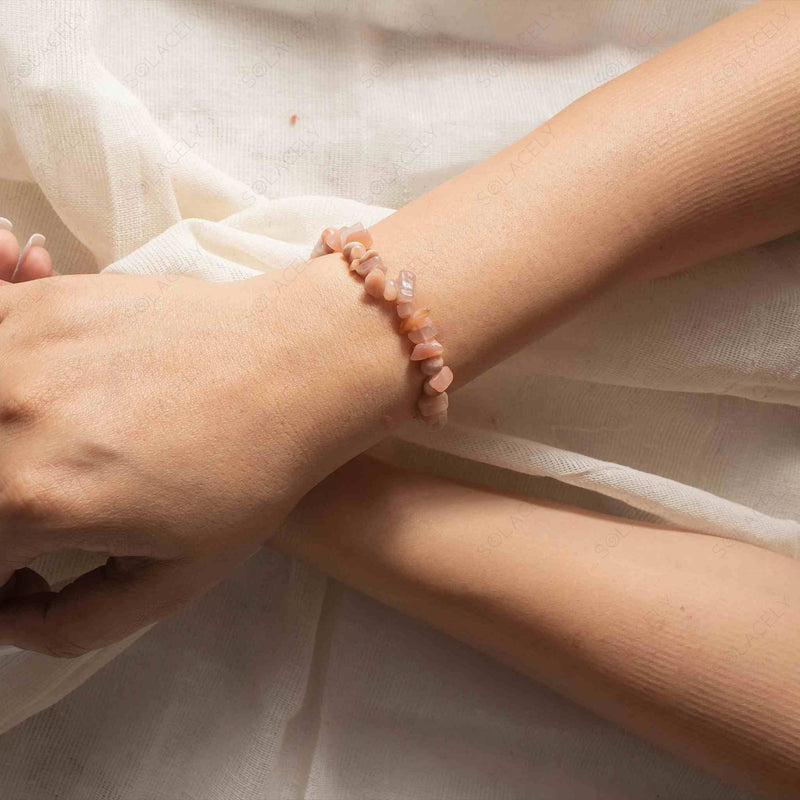
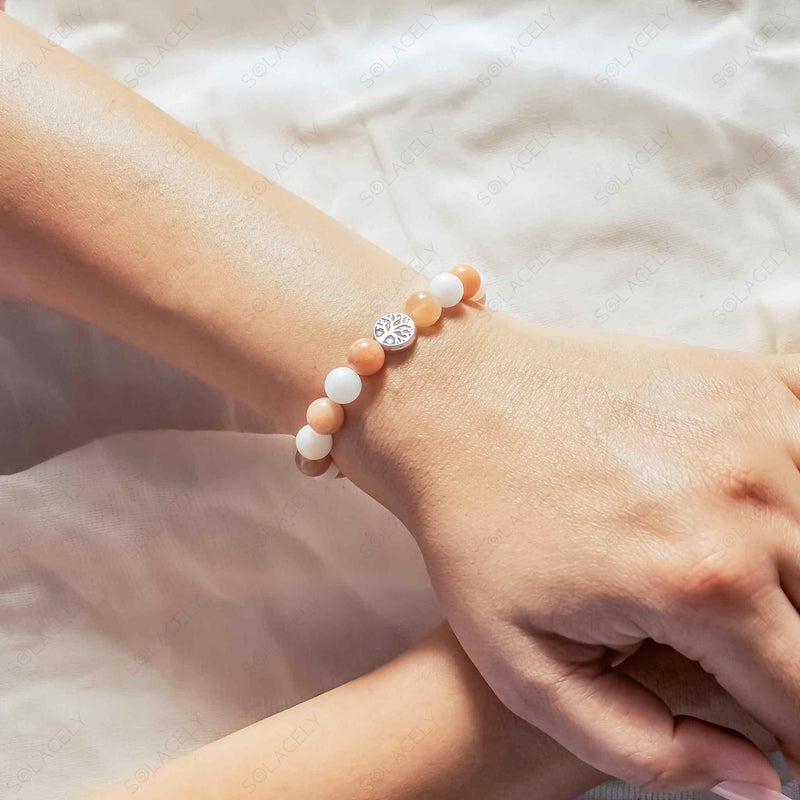
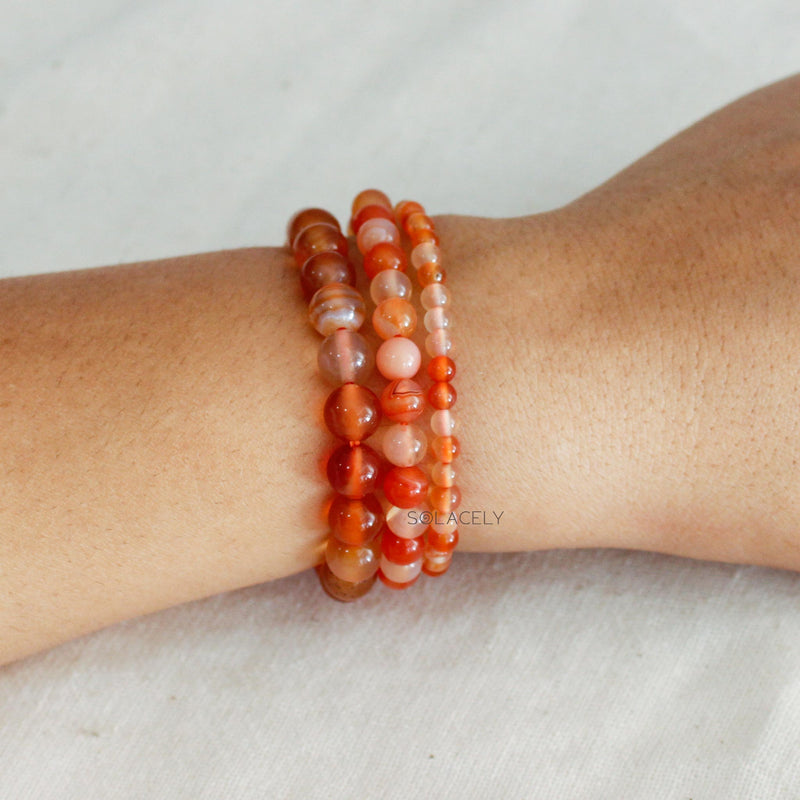
- Bracelet. The most practical format for a feldspar, and the flash catches well in movement.
- Pendant. Sits well and stays out of harm's way.
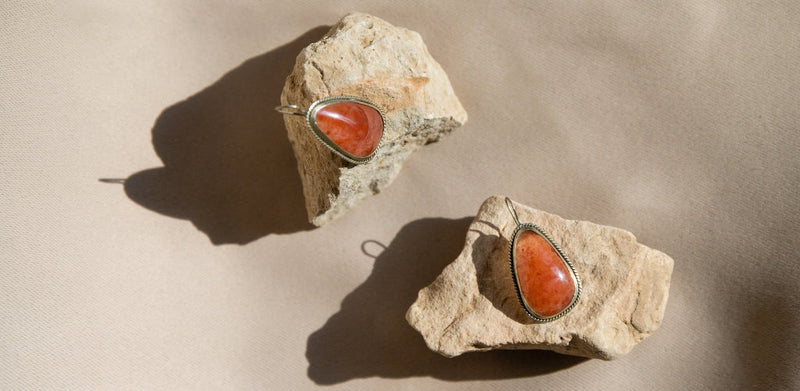
- Ring, in a protective setting. Cleavage means an exposed stone will eventually chip.
- Worn for an occasion. Many people keep it for days that need visibility: presenting, asking, putting a name to something.
Care
Warm soapy water and a soft cloth. Skip ultrasonic and steam cleaners, since both find cleavage planes and sunstone has two sets. Store it away from quartz and harder stones, which will scratch it over time in a shared pouch.
Keep it out of prolonged direct sunlight as a general precaution with coloured stones. The aventurescence itself is structural and will not fade, but the body colour can soften with sustained exposure.
Who sunstone suits
It suits someone who does good work quietly and finds the visible part uncomfortable. That is a specific pattern, and sunstone's tradition speaks to it more directly than the general confidence stones do.
It suits less well someone who is overstimulated and wants quiet, since sunstone points the other way entirely. For that, see crystals for calming. For more on the stone itself, see sunstone properties and sunstone symbolism through history.
The uses described here reflect traditional and cultural crystal practice. They are not medical claims and are not a substitute for professional healthcare or advice.
Sources
Written by Chetena Sharma. Reviewed by the Solacely editorial team.
Frequently asked questions
About the author


Written by Chetna Sharma, crystal healing practitioner and co-founder of Solacely. Chetna has worked with healing crystals for over a decade and curates Solacely's protective stone collection.