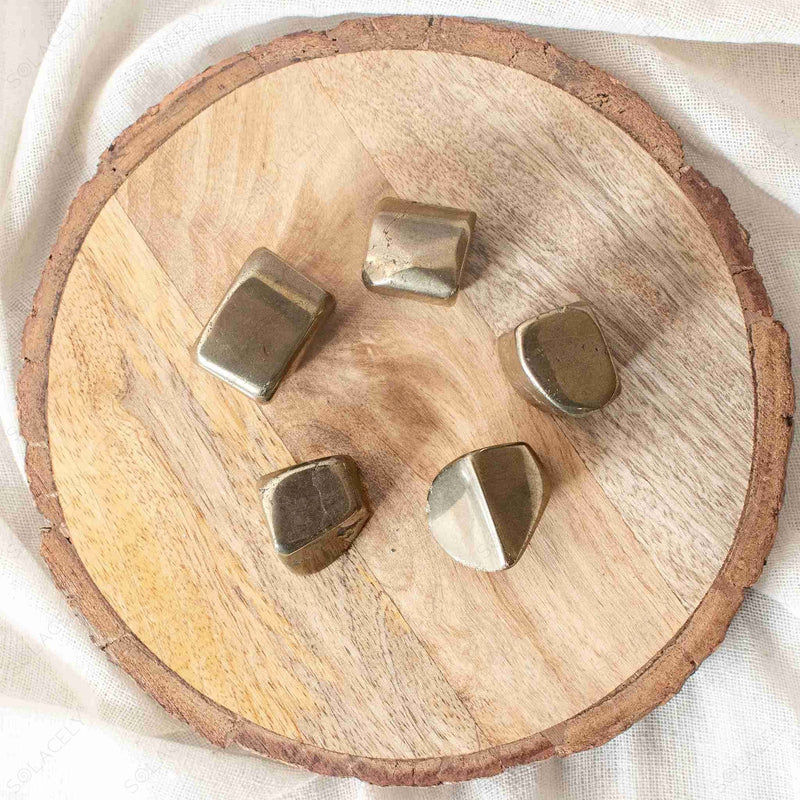
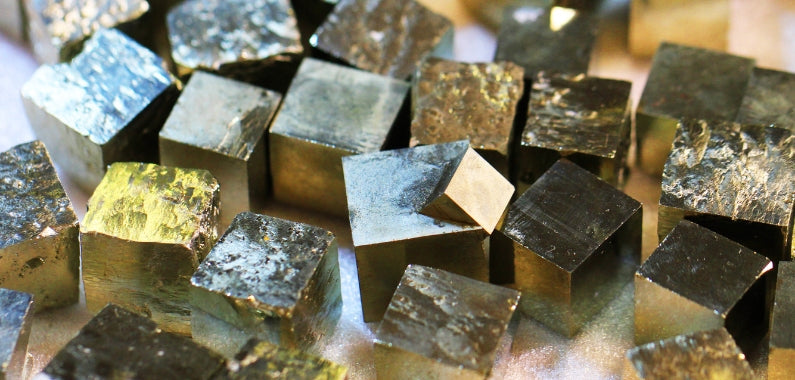
Pyrite takes its name from the Greek pyr, meaning fire, because struck against steel it throws sparks. The other name came later, from prospectors who found it glinting in riverbeds and mistook it for gold. Fool's gold is what they called it afterwards, and the name says more about what they were hoping for than about the stone.
Key takeaways
- The name pyrite comes from pyr, the Greek for fire.
- Struck against steel it sparks, and it was used for exactly that long before anyone confused it with gold.
- Fool's gold was a prospector's word, coined in disappointment.
- It grows in neat cubes with fine striations, and it is much heavier than it looks.
- Today it is kept for confidence, focus and the mindset side of money.
The gold that was not
Cold water over stones, a long day, and then a glint under the surface. Bright, metallic, unmistakably yellow. You reach in.
It happened often enough to earn a name. Pyrite forms in the same kinds of ground that carry gold and it catches light in the same way, so a tired prospector working a river in poor light had every reason to hope. Then the weight is wrong in the hand, or it shatters instead of bending, or it leaves a dark streak where gold leaves a yellow one.
Fool's gold. The word is not really about the mineral. It is about the moment just before, when someone let themselves believe the day had turned, and the name preserves the disappointment rather than the stone.
What it was actually doing
Here is the part the nickname buried.
Strike pyrite sharply against steel and it throws sparks, along with a faint smell of sulphur. That property was known and used long before anyone was panning rivers for gold. Before matches existed, making fire meant carrying something that would spark, and pyrite and iron sulphide minerals like it were among the things people carried for exactly that purpose. The name pyr, fire, was given for what the stone did.
So the sequence runs the wrong way round from how most people learn it. It was not first mistaken for gold and then found to be useless. It was first useful, for something quite specific and quite important, and then somebody wanted it to be something else and named it after their own error.
It was never pretending to be gold. It was doing a different job entirely, and for a while nobody was looking.
Being called a fool
You have probably met this.
The idea that got a look across a table. The plan described as ambitious in the tone that means unrealistic. The thing you were good at that did not count as a proper career, or the thing you cared about that somebody found funny. The particular quiet of being assessed quickly by a person who was not really looking.
What is worth noticing about the riverbed is that nothing about the stone changed. It had the same weight, the same cubic structure, the same capacity to make fire, before and after it was named. The naming was an event in the prospector's day. The stone carried on being iron sulphide.
That is the whole of it, and it does not need pressing further. Being misread is a thing that happens to you. It is not a thing that happens in you.
What we keep it for now
Pyrite is associated with the Solar Plexus, the centre tradition links to confidence and personal will, and it is kept for focus and for the mindset side of money rather than the luck side. It is the stone people reach for before saying a number out loud, or on the morning something opens.
It is not hard to see how the fire story and that intention found each other. A stone that sparks under pressure, kept by people who need to start something. Our guide to pyrite meaning and properties covers how it is used, and our wider guide to crystals for prosperity places it among the others.
It is still heavy in the hand, still cool for a moment before it warms, still growing underground in cubes so neat they look made. And it still, if you are foolish enough to try it, makes a spark.
A small practice
Nothing to buy and nothing to perform. Hold something with a bit of weight to it, a stone or otherwise, and sit with one question for as long as it takes to stop feeling like a question.
What have I been talked out of?
Not to fix today. Just to have looked at.
Back at the river
Somebody knelt in cold water, saw gold, and found something else. They named it for their disappointment and walked on, and the name outlasted them by several centuries.
The stone stayed where it was, doing what it had always done. Heavy, bright, patient, full of fire, waiting for somebody to strike it properly.
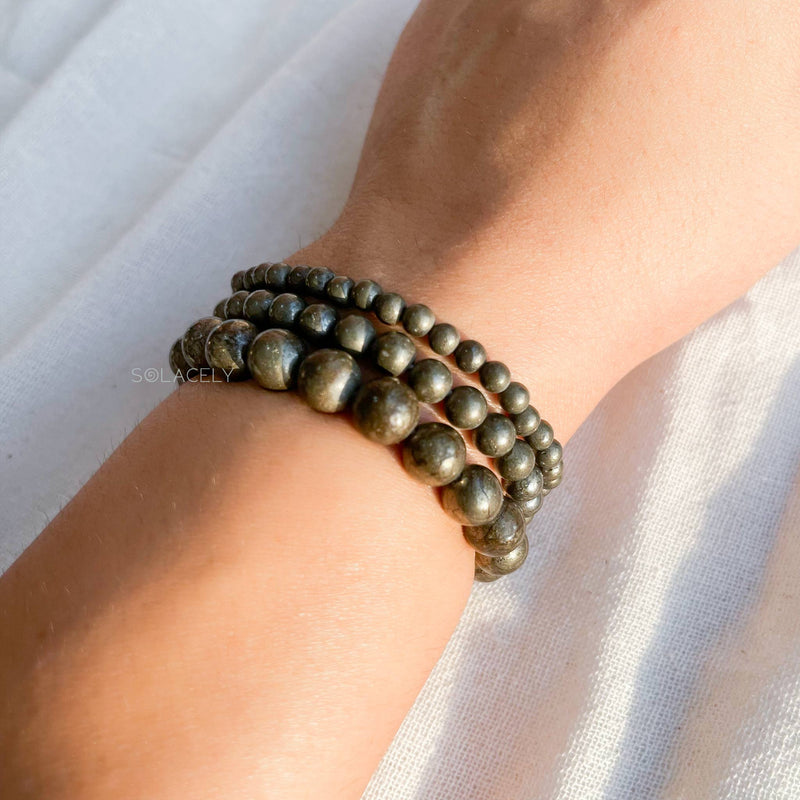
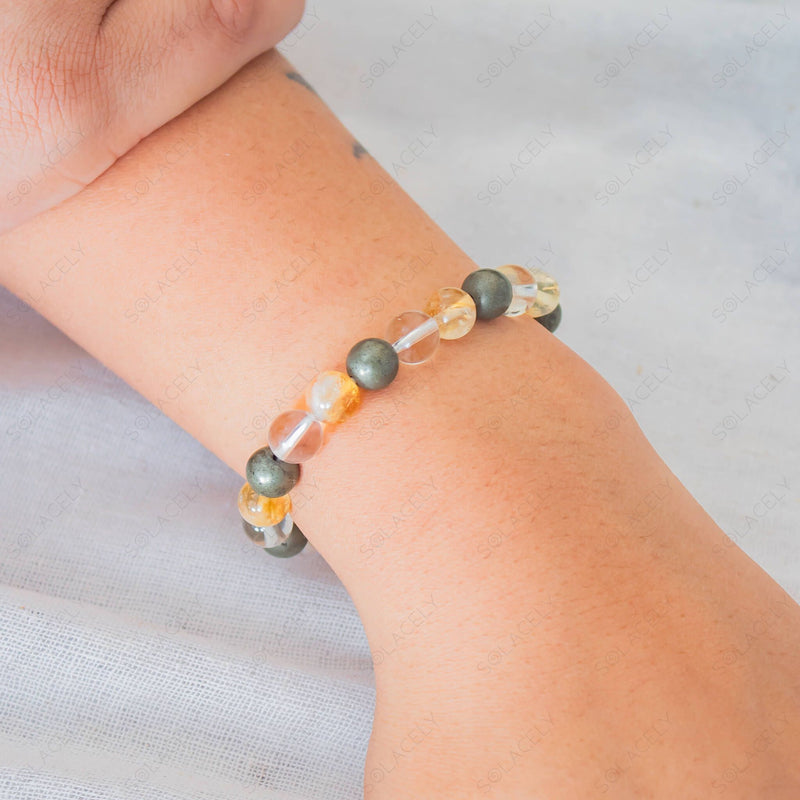
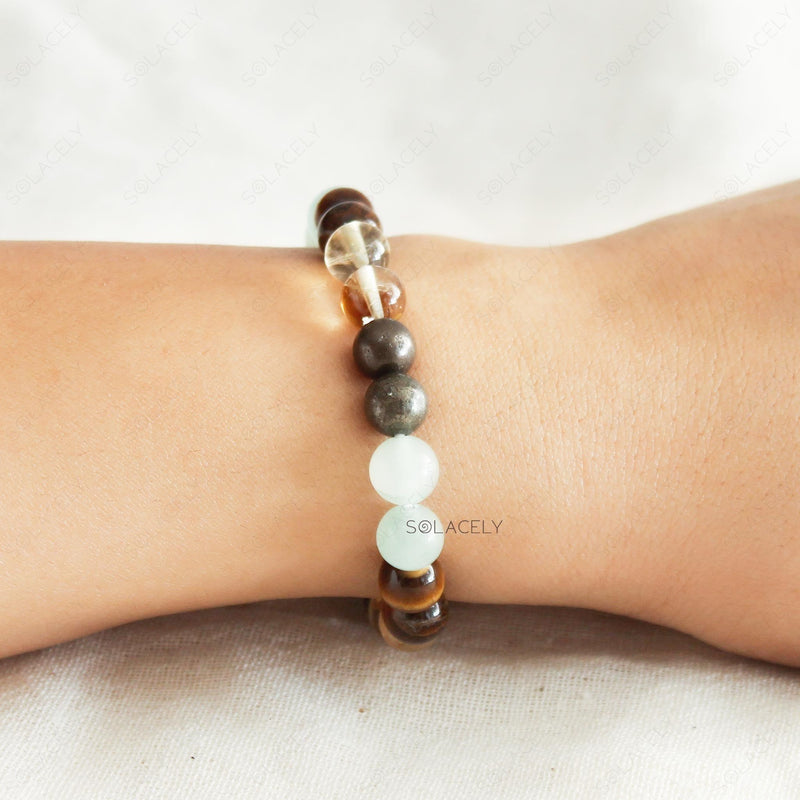
If you would like to hold one, our pyrite bracelet is where most people begin.
The uses described here reflect traditional and cultural crystal practice. They are not medical claims and are not a substitute for professional healthcare, financial or legal advice.
Sources
Frequently asked questions
About the author


Written by Chetna Sharma, crystal healing practitioner and co-founder of Solacely. Chetna has worked with healing crystals for over a decade and curates Solacely's protective stone collection.