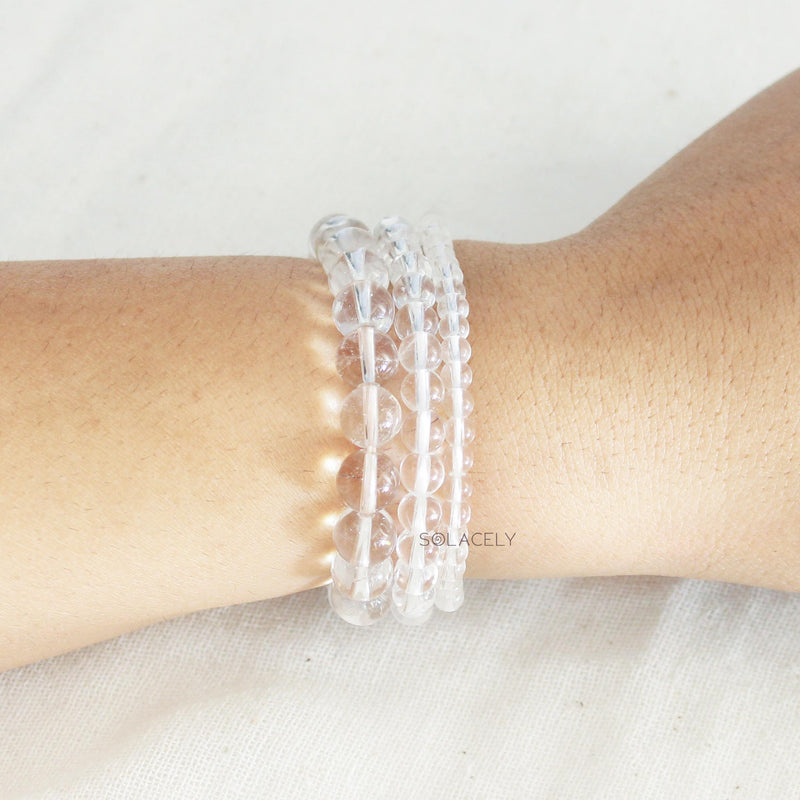
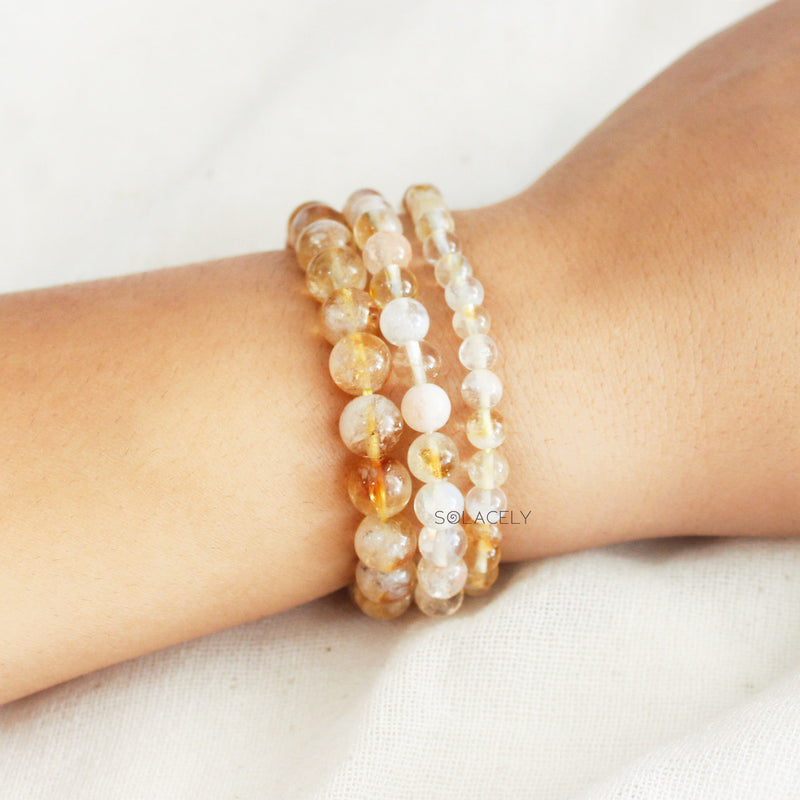
Wear a clear quartz bracelet on your left wrist if you are wearing it alone. Quartz is read as a receiving stone by default, kept for clarity. Worn alongside another stone it does something no other stone on the list does: it takes that stone's side instead.
Key takeaways
- Left wrist when worn alone, for clarity drawn in.
- The wrist follows the partner stone when it is paired, which is unique to quartz.
- Quartz with black tourmaline goes right. Quartz with rose quartz goes left.
- The best first crystal to own, because it suits any intention and any later purchase.
- The least demanding stone here. Water, salt, smoke and sunlight are all safe.
Why the left wrist, worn alone
Crystal practice reads the left as the receiving side and the right as the projecting side. Anything you want to draw in goes left. Anything you want to send out goes right.
On its own, clear quartz sits on the left. What it is kept for is clarity in the plain sense, seeing a situation as it is, and that is something taken in rather than pushed out. It is the neutral all rounder of the whole tradition, and neutral defaults to receiving.
But worn alone is not how most people end up wearing it, which is where the interesting part starts.
Once you know which wrist feels right for wearing Clear Quartz, you can also consider how it can be paired with other stones to suit your intentions. Custom made crystal bracelets can bring Clear Quartz together with complementary stones for a more personal combination.
The rule that only applies to quartz
Clear quartz is traditionally understood as an amplifier. Its role is to strengthen whatever intention it is set alongside rather than to carry one of its own, which is why it appears in almost every crystal grid and on almost every stacked wrist.
That has a direct consequence for this question. If quartz takes on the character of its partner, then it takes on the partner's wrist as well.
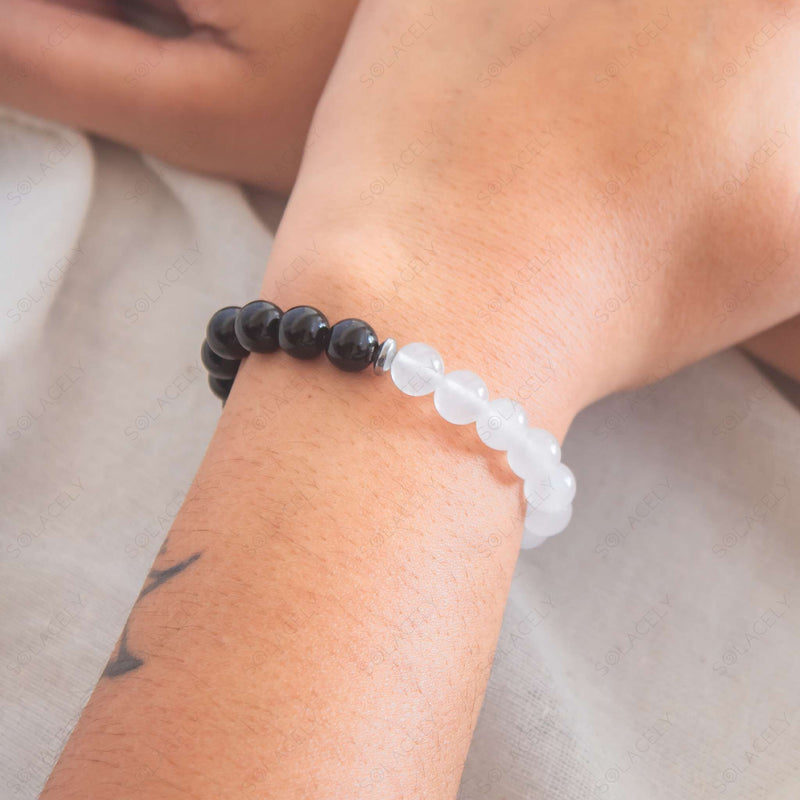
- Clear quartz with black tourmaline or hematite: wear on the right. The pairing is protective, and protection projects.
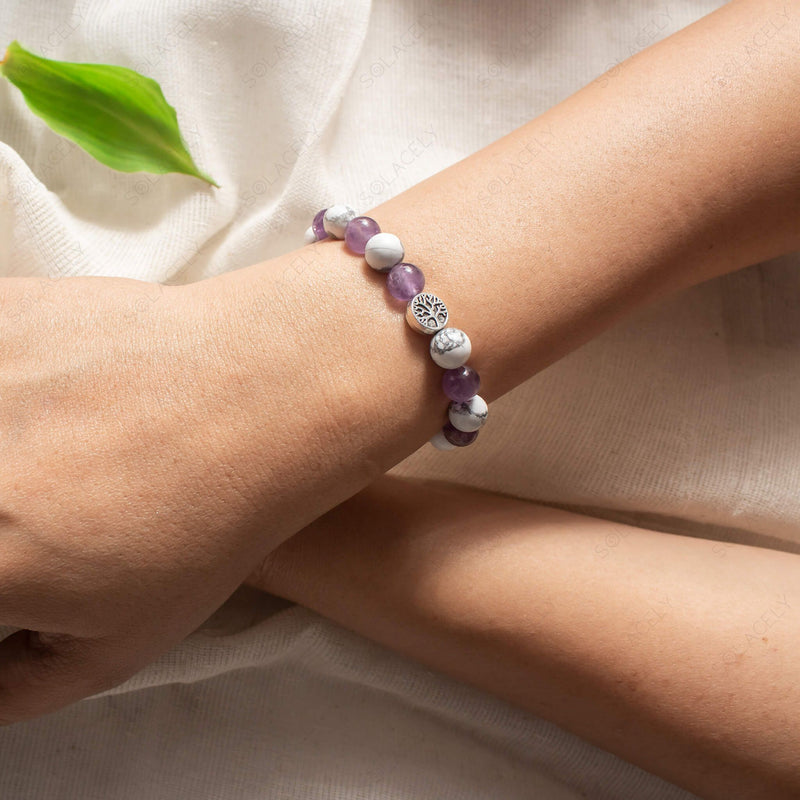
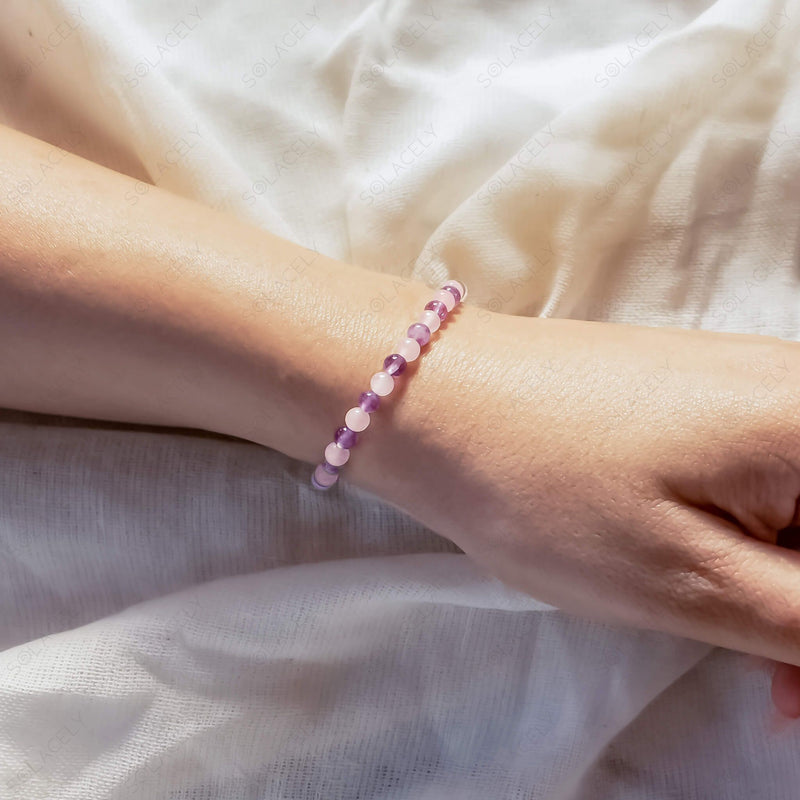
- Clear quartz with rose quartz, amethyst or green aventurine: wear on the left. The pairing is receptive.
- Clear quartz alone: left, as above.
No other stone on the list works this way. Every other stone has a fixed job and therefore a default wrist. Quartz is the one that genuinely depends on what else is on the strand, which is worth understanding rather than memorising.
Why it is the right first crystal
If someone is buying their first bracelet, this is the one to buy, for four reasons that have nothing to do with mysticism.
It suits any intention, so you do not need to have decided what you want before you buy. It is a hard 7 on the Mohs scale, so it survives daily wear on a working wrist. It needs almost no care, so you will not ruin it by accident. And it combines with everything you might add later, so it does not become the odd one out once your collection grows.
Quartz is also the most abundant mineral family in the earth's crust, which is why a good clear quartz bracelet costs a fraction of what a comparable piece in most other stones would. Starting here is sensible rather than a compromise.
What to wear with it on the same wrist
| Partner stone | Mohs | Wrist the pairing goes on |
|---|---|---|
| Amethyst | 7 | Left. Exact hardness match |
| Rose quartz | 7 | Left. Exact hardness match |
| Citrine | 7 | Left. Exact hardness match |
| Black tourmaline | 7 to 7.5 | Right. Slightly harder, wears evenly |
| Hematite | 5 to 6.5 | Right. Softer, so it marks first |
Amethyst, rose quartz, citrine and smoky quartz are all quartz, so they match clear quartz exactly and a mixed strand wears at one rate. Anything softer than about 6 will scuff against it over time, which is the only combining rule worth remembering.
Looking after it
Clear quartz is the easiest stone here to own. It is hard, non porous and chemically stable, so water, salt, smoke, sound and moonlight are all safe, and warm soapy water handles everyday cleaning.
Sunlight is fine too, which sets it apart from amethyst, rose quartz and citrine. Those three pale in strong light because they have colour to lose. Clear quartz does not.
Two small cautions. Avoid sudden temperature changes, since a piece taken from hot water to cold can crack along an internal flaw. And avoid ultrasonic cleaners for any beaded bracelet, since the elastic objects long before the stone does. For the wider question of building a stack, see crystals for clarity and peace.
Where to go next
For the rule applied across every stone, see our pillar guide to which hand to wear your crystal bracelet. For what the stone is and what it is kept for, see clear quartz meaning, properties and benefits.
The uses described here reflect traditional and cultural crystal practice. They are not medical claims and are not a substitute for professional healthcare or advice.
Sources
Written by Chetena Sharma. Reviewed by the Solacely editorial team.
Frequently asked questions
About the author


Written by Chetna Sharma, crystal healing practitioner and co-founder of Solacely. Chetna has worked with healing crystals for over a decade and curates Solacely's protective stone collection.