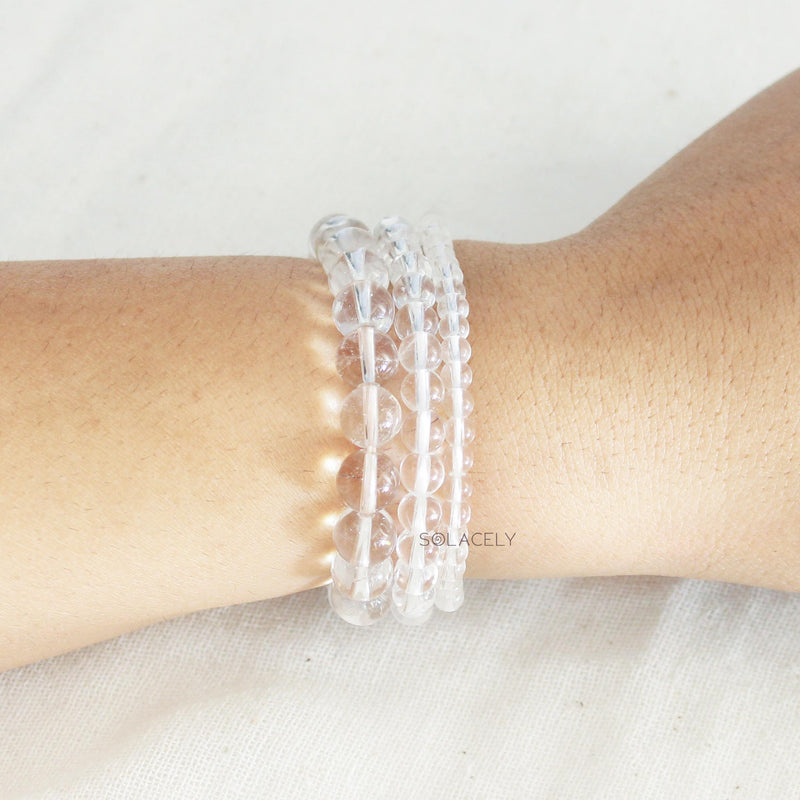
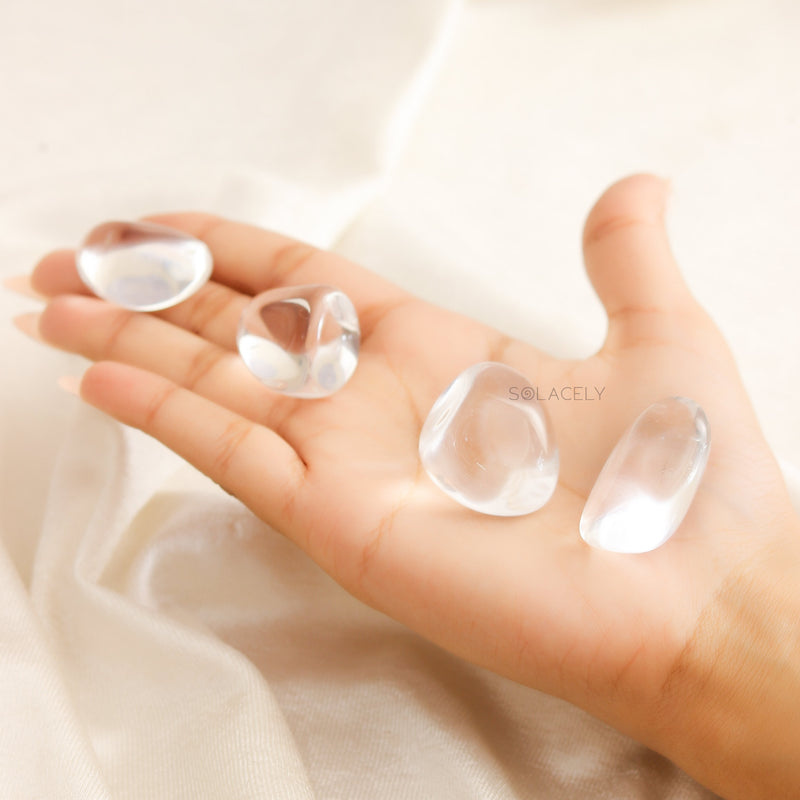
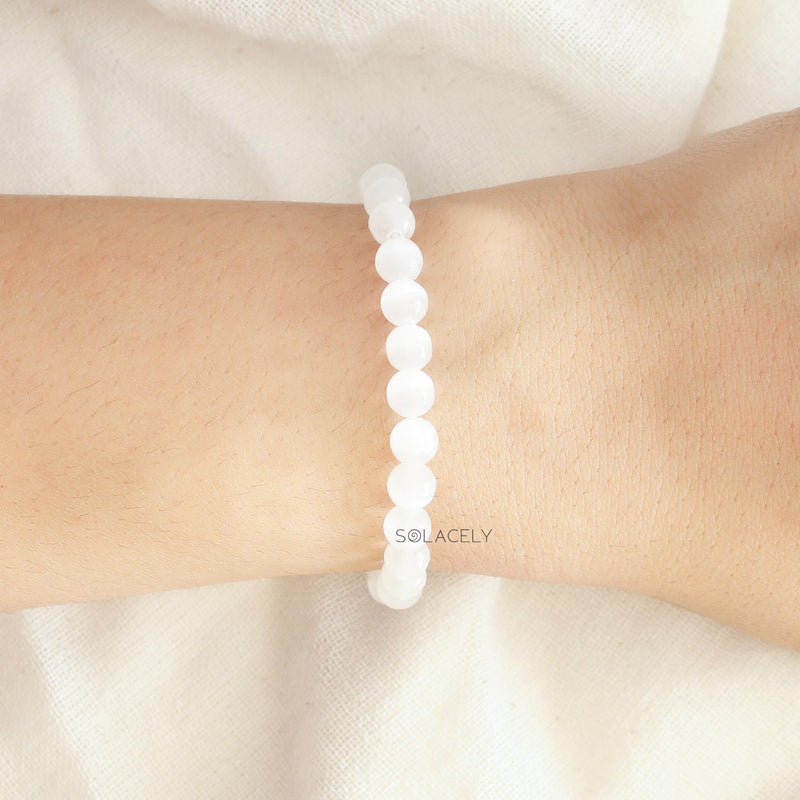
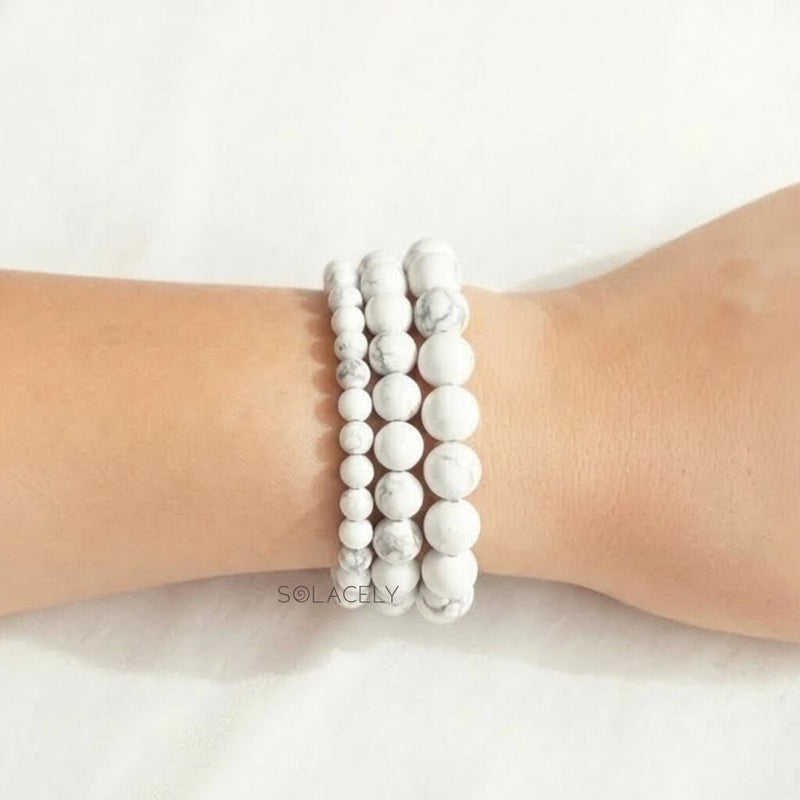
White crystals are the pale, milky and translucent stones: selenite, clear quartz, moonstone, howlite, white agate and mother of pearl. They are traditionally kept for clarity, calm and fresh starts, which is why so many people put one on a bedside table or a desk where they will see it every day.
Key takeaways
- White is a look rather than a mineral family, so the group runs from glassy clear quartz to satin selenite and iridescent mother of pearl.
- Clear quartz and white agate sit at the harder end of the scale and cope well with being worn every day.
- Selenite is a form of gypsum and is very soft, so it should never be soaked, rinsed or left in a damp bathroom.
- Howlite is soft and porous, which is why it prefers a dry cloth to perfume, oils and hand cream.
- Moonstone and mother of pearl are chosen for their sheen, and no two pieces catch the light in quite the same way.
- White stones are long associated with the crown chakra and with clearing a space, which suits bedrooms and desks.
What counts as a white crystal?
A white crystal is any stone that reads as white, milky or colourless in the hand, whether it is transparent like clear quartz, satin like selenite, opaque like howlite or iridescent like moonstone. The group is defined by appearance rather than by one mineral family, so its members come from very different chemistry.
That difference matters more than it might sound. Clear quartz is silicon dioxide and hard enough to scratch glass. Selenite is a crystalline form of gypsum, one of the softest minerals you will ever handle. Howlite is a borate that forms in nodules with grey veins running through it. Mother of pearl is not a mineral crystal at all in the usual sense but the nacreous lining of a shell.
What ties them together is the way they behave in light. White stones bounce light back rather than absorbing it into a single colour, which is why a shelf of them reads as calm and open. It also means the differences between them show up in texture and sheen instead, so the choice is really about which surface you want to look at.
Six white crystals at a glance
The six stones below cover almost everything you will meet on a white shelf. The hardness column is the practical one: anything at 6 or above copes with daily wear on a wrist, while the softer stones are happier in a bowl, a pouch or on a shelf. Traditional associations are given as they have been handed down.
| Stone | Colour and look | Mohs hardness | Traditionally kept for |
|---|---|---|---|
| Selenite | Pearly white with a satin, fibrous sheen | 2 | Clearing a room, quiet and calm |
| Clear quartz | Colourless and glassy through to milky white | 7 | Focus, holding an intention |
| Moonstone | Creamy white with a blue or silvery glow | 6 to 6.5 | Intuition and emotional balance |
| Howlite | Opaque chalky white with grey veining | 3.5 | Settling a busy head, evening wind down |
| White agate | Translucent white to cream, softly banded | 6.5 to 7 | Steadiness and gentle protection |
| Mother of pearl | Iridescent white with a pearl lustre | 2.5 to 4.5 | Soothing, nurturing, new beginnings |
Selenite and howlite: the softest whites
Selenite and howlite are the two white stones that ask something of you in return. Selenite sits at 2 on the Mohs scale and howlite at around 3.5, which puts both well below the hardness of everyday grit. They mark easily, so they belong in a pouch or on a shelf rather than in a jumbled jewellery box.
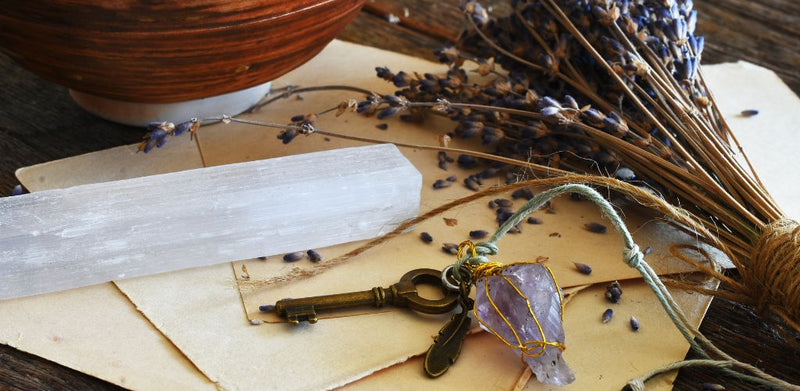
Selenite is a crystalline variety of gypsum, and gypsum is a calcium sulphate that will slowly give itself up to water. That is the single most useful thing to know about it. Never soak a selenite wand, never rinse it under a tap, and keep it out of a steamy bathroom, because prolonged damp dulls the satin sheen that makes it worth owning. A dry cloth and a dry shelf are all it needs. Our full selenite guide covers formats, from towers and lamps to charging plates.
Howlite is porous as well as soft, which means it drinks up whatever it touches. Keep it away from perfume, hand cream and essential oils, and wipe it with a dry or barely damp cloth. People traditionally reach for howlite in the evening, and it is a common partner to amethyst on a bedside table. The howlite guide goes further into how it is worn.
Clear quartz and white agate: the hardwearing whites
If you want a white stone you can put on and forget about, these are the two. Clear quartz sits at 7 on the Mohs scale and white agate at roughly 6.5 to 7, so both shrug off the knocks of a normal day. They are also the two easiest whites to find in every format, from tumbles and beads to spheres and points.
Clear quartz runs from water clear to a soft milky white, and both looks are the same mineral. The milkiness comes from microscopic fluid or gas trapped inside as the crystal grew, so a cloudy point is simply a record of the conditions it formed in. Many people prefer that veiled look on a shelf and save the clearer material for jewellery. Our clear quartz guide covers how it is traditionally used to hold and amplify an intention.
White agate is a banded variety of chalcedony, itself a microcrystalline form of quartz. The bands form as silica rich fluid fills a cavity in layer after layer, which is why every slice looks different. It takes a beautiful polish, wears well in rings and bracelets, and is long associated with steadiness. Choose by the pattern you actually want to look at, since no two nodules band the same way.
Moonstone and mother of pearl: the whites with a sheen
These two are chosen for the way they move in the light rather than for their body colour. Moonstone shows adularescence, a soft blue or silvery glow that seems to float just under the surface. Mother of pearl shows the rainbow shimmer of nacre. Both look completely different in daylight and lamplight.
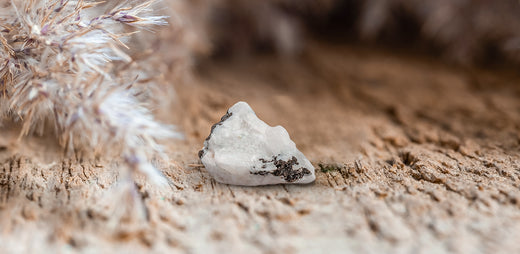
Moonstone is a feldspar, and its glow comes from light scattering between microscopically thin alternating layers within the stone. Gemmological grading pays close attention to how strong and how blue that sheen is, and to how cleanly it moves across the dome when the stone is tilted. Cutters shape moonstone as a cabochon and orient it carefully so the glow sits centred. Our moonstone guide covers the white, grey, peach and rainbow varieties.
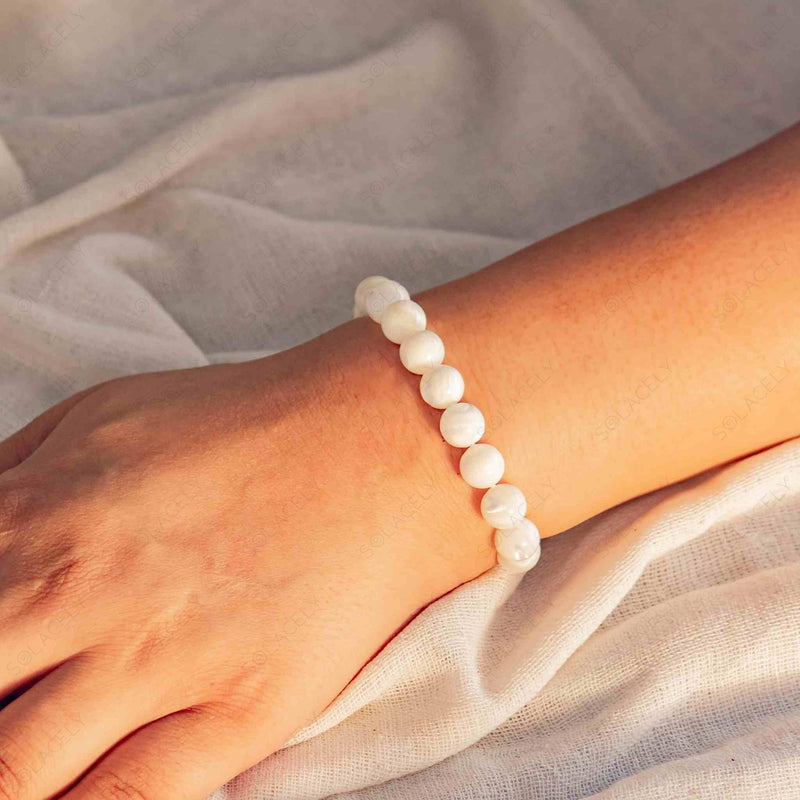
Mother of pearl is the iridescent inner lining of a shell, built up in fine layers of aragonite. It is soft, so it scratches and it dislikes acids, which includes lemon juice and many household cleaners. Wipe it with a soft cloth and put jewellery on last, after perfume and hairspray. It is traditionally kept for calm and for new beginnings, as set out in our mother of pearl guide.
How to use white crystals day to day
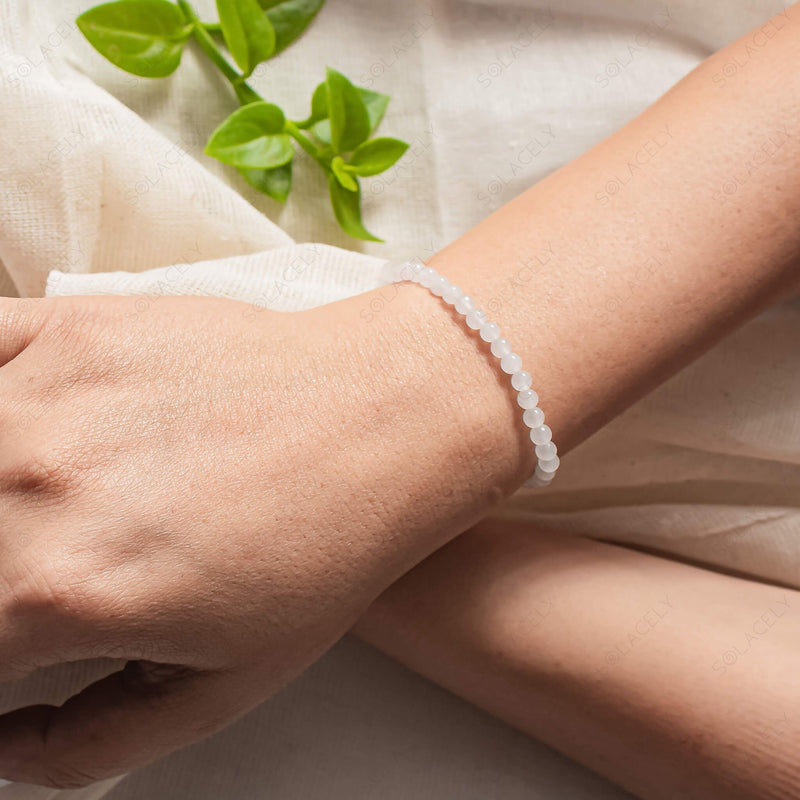
Most people use white crystals in three ways: worn, held or placed. A clear quartz or white agate bracelet keeps the stone in your line of sight as a daily cue. A howlite tumble in a pocket gives you something to reach for in a tense moment. A selenite tower or a moonstone sphere sets the tone of a room without asking anything of you.
Bedrooms and desks are the two places white stones tend to end up. On a bedside table, howlite and selenite are the usual choices for a wind down routine: put the stone where you will see it, take a few slow breaths while holding it, and set a plain intention about leaving the day behind. On a desk, clear quartz is the traditional pick for keeping one task in focus.
White is also the colour long associated with the crown chakra, so these stones turn up at the top of the head in meditation layouts or simply held in the palms. There is no single correct method. Pick one stone rather than six, stay with it for a few weeks, and you will get a far clearer sense of whether it suits you.
Caring for white crystals so they stay bright
White stones show marks more than dark ones, so care is mostly about keeping them dry, clean and stored apart. The rule that matters most is the water rule: selenite, howlite and mother of pearl should never be soaked, while clear quartz and white agate tolerate a brief rinse in cool water and a thorough dry.
For everyday cleaning, a soft dry cloth handles almost everything. Skip ultrasonic cleaners, hot water and household sprays across the whole group. Put bracelets on after perfume, hand cream and sunscreen rather than before, since oils sink into porous stones such as howlite and dull the shine on nacre. Storing each piece flat in its own pouch keeps harder beads from scratching the softer ones.
If you like to cleanse your crystals, choose the dry methods for this group. Moonlight on a windowsill, sound, incense smoke or dry salt on a plate beside the stone rather than touching it are all gentle options that avoid soaking. Keep small beads, chips and tumbles well away from babies and young children, as they present a choking and strangulation risk.
Crystals are kept for comfort, focus and ritual. They are not a medical treatment and nothing here is medical, psychological or safety advice. If you have a health concern, please speak to a qualified professional and carry on with any care that has already been arranged for you. Never put stones in drinking water, and keep small stones, beads and chips away from babies, young children and pets, as they present a choking and strangulation risk.
Sources
Written by Chetena Sharma. Reviewed by the Solacely editorial team.
Frequently asked questions
About the author


Written by Chetna Sharma, crystal healing practitioner and co-founder of Solacely. Chetna has worked with healing crystals for over a decade and curates Solacely's protective stone collection.