A black aura is traditionally read as a sign that a person is carrying heavy, unprocessed emotion, deep fatigue, or is instinctively shielding themselves during a hard season. In aura belief it is not 'evil.' Practitioners see it as a temporary state that eases as rest, release, and grounding return balance.
Key Takeaways
- A black aura is believed to signal exhaustion, grief, or self-protection, not a curse or bad character.
- Common triggers include chronic stress, burnout, unresolved loss, and long periods of illness or overwork.
- Traditional 'cleansing' leans on rest, grounding, meditation, sunlight, and time, not a single quick fix.
- Black Tourmaline is the stone most associated with protection and grounding n and global crystal tradition.
- If low mood or fatigue lasts for weeks, treat it as a health matter and speak to a doctor.
What Does a Black Aura Mean?
In aura reading, a black aura is understood as a dense, absorbing field around a person going through strain: burnout, grief, or a stretch of poor health. Believers describe it as energy turned inward, a kind of shield. It is read as temporary, softening once a person rests and releases what they are holding.
The colour is easy to misread. Popular culture ties black to danger, so people assume a black aura means something sinister. Aura tradition disagrees. It sees black the way you might see a heavy monsoon sky: a passing weather system, not a permanent verdict on who you are.
Think of it as a signal rather than a sentence. A black aura is believed to point toward what needs care, not toward a flaw in your character. Most who work with auras treat it as an invitation to slow down. That framing matters, because fear itself adds to the load a dark aura is said to reflect.
What a Black Aura Is Traditionally Believed to Signify
Across aura tradition, black is linked to three overlapping states: depletion, protection, and unreleased emotion. It is believed to appear when a person has been giving more than they receive, absorbing stress from others, or holding grief they haven't had space to process. The reading is compassionate, not accusatory.
Here is how those threads are usually described:
- Depletion and fatigue. Long hours, disrupted sleep, and skipped rest are said to dull the aura's brightness until it reads dark and heavy.
- Emotional weight. Grief, resentment, or fear that hasn't found an outlet is believed to sit in the field like sediment.
- A protective shield. During conflict or overwhelm, some see black as the aura pulling in tight, a defensive posture rather than a negative one.
- Transition. Big life shifts, loss, a move, a breakup, can temporarily darken the field until things settle.
None of these is fixed. In the same tradition that gives us the bright, expansive white aura of clarity and calm, black is simply the other end of a spectrum every person moves along. You are not stuck in one colour.
Common Causes of a Dark Aura
A black aura is most often attributed to prolonged stress, burnout, unresolved grief, or a long stretch of illness that leaves someone depleted. In this view the aura mirrors lived experience: when life has been heavy, the field reads heavy too. Understanding the trigger is the first step tradition suggests before any cleansing.
Practitioners tend to group the causes into three buckets.
| Cause type | What it looks like | Traditional reading |
|---|---|---|
| Emotional | Grief, heartbreak, chronic worry, suppressed anger | Energy held in, unreleased |
| Physical | Burnout, illness, poor sleep, overwork | The field dims as the body drains |
| Situational | Toxic environment, conflict, major transition | The aura shields or contracts |
The everyday version is familiar to most working adults. A punishing quarter at work, caring for a sick parent, a loss you never fully mourned, these are the seasons a dark aura is said to reflect. It is worth naming plainly: none of this means you have done something wrong.
If you recognise your own life here, that recognition is useful. Tradition holds that once the cause is seen clearly, the state becomes much easier to shift. The heaviness described by a black aura is meant to be temporary, closer to the guarded intensity of a red aura under pressure than to any permanent condition.
How Tradition Suggests You Cleanse and Rebalance
Traditional aura care for a dark field is unglamorous and reassuring: rest, grounding, meditation, sunlight, water, and time. There is no single ritual that 'removes' a black aura. Instead, the practices work slowly, the way recovery works, by restoring what was depleted rather than fighting anything.
Here is a simple, gentle sequence many practitioners recommend:
- Rest first. Sleep and genuine downtime are treated as the foundation. Nothing else is believed to work while you are running on empty.
- Ground yourself. Standing barefoot on grass or soil, a practice with deep roots n tradition, is said to help release heavy energy into the earth.
- Meditate simply. Even ten quiet minutes of breath-focused meditation is used to settle the mind. Research collated by the US National Center for Complementary and Integrative Health links regular meditation with lower stress and better emotional regulation, which supports why the practice endures.
- Let sunlight in. Morning light, fresh air, and a short walk are traditional aura brighteners.
- Cleanse your space. Smudging, a salt bath, or simply opening windows are believed to clear stagnant energy from your surroundings.
- Give it time. The field is said to lighten as life eases, not overnight.
A short daily rhythm of these habits is the heart of it. If you already keep a calming routine for something like a violet aura's inner harmony, the same gentleness applies here, only with more emphasis on rest and grounding.
Crystals Traditionally Linked to Protection and Grounding
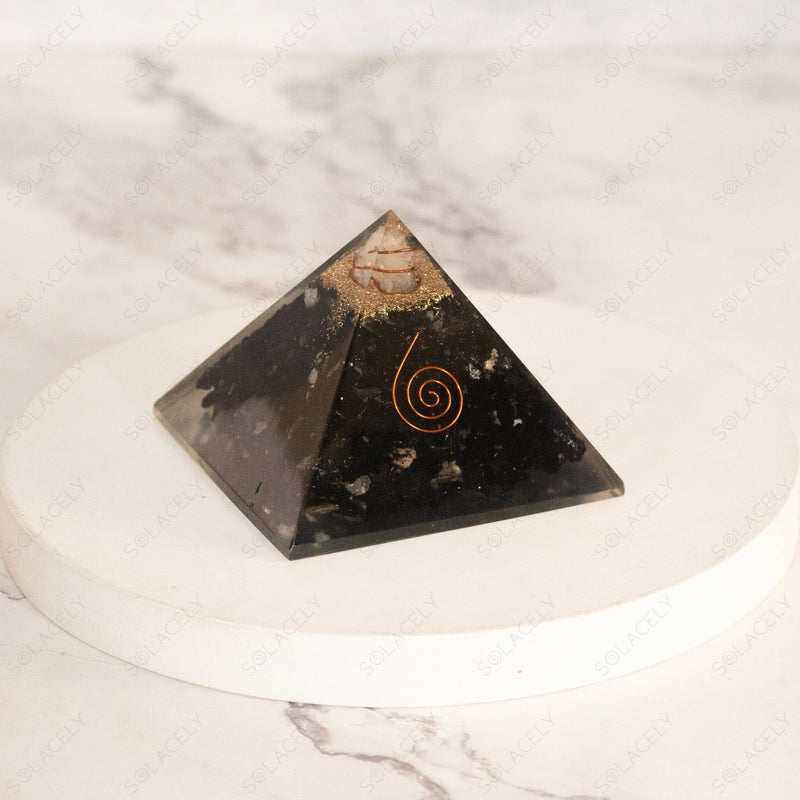
Black Tourmaline is the stone most associated with protection and grounding in crystal tradition, which is why it is the classic companion for anyone working with a dark aura. Its mineral name is schorl, an iron-rich member of the tourmaline group, documented on mineralogy references like Mindat.org. Its deep colour and heft make it feel, to those who use it, like an anchor.
A few stones recur in this context:
| Crystal | Traditional association | Typical use |
|---|---|---|
| Black Tourmaline (schorl) | Protection, grounding | Carried, worn, or placed by the door |
| Black Obsidian | Releasing heavy emotion | Held during reflection |
| Black Onyx | Steadiness, resilience | Worn as a bracelet |
| Smoky Quartz | Gentle grounding | Kept on a desk or bedside |
According to the Gemological Institute of America (GIA), tourmaline occurs in one of the widest colour ranges of any gem family, from pink to green to the opaque black of schorl. That variety is part of why tourmaline carries so many different intentions across traditions.
How people use these stones is simple: carried in a pocket, worn on the wrist, or placed at the entrance of a home. n crystal practice the black stones are the grounding, 'keep me steady' companions, quiet and unshowy. If you are drawn to brighter intentions too, the calming blues linked to a blue aura's steadiness pair naturally with black grounding stones.
How to Care for Your Crystals
Crystal tradition holds that grounding stones should be cleansed periodically, since they are believed to absorb what they help clear. The methods are gentle and take minutes. Consistent, light care is favoured over elaborate ritual, the point is to keep the stone feeling fresh to you.
Common cleansing methods:
- Moonlight. Leave the stone on a windowsill overnight, a widely used and risk-free method.
- Sound. A singing bowl or bell is believed to reset a stone's energy.
- Dry salt. Rest the crystal on or near salt for a few hours, then brush it off.
- Intention. Simply holding the stone and setting a clear, quiet intention.
A practical note on water: soft, opaque, or fibrous stones can be damaged by soaking, so many practitioners keep grounding stones to dry methods. When unsure, moonlight and sound are safe for almost everything. Care little and often, and your pieces stay pleasant to live with.
Buying Grounding Crystals : Price Bands
Grounding crystals span a wide, accessible range.You do not need to spend heavily to begin.
Here is a rough guide for planning a purchase or a gift:
| Band | Tier | Typical piece |
|---|---|---|
| Starter | Entry | Single bracelet, tumbled stone, small raw chunk |
| Considered | Mid range | Grounding set, quality Black Tourmaline point |
| Statement | Premium | Large raw specimen, curated gift box |
For a first grounding stone, a single Black Tourmaline bracelet or tumbled piece is the natural starting point, honest, affordable, and easy to carry. Choose the piece you are actually drawn to. In this tradition, the stone you want to hold is the one that tends to get used, and a stone that gets used is the one that helps.
Common Mistakes When Reading a Black Aura
The biggest mistake is reading a black aura as a moral failing or a permanent curse. Tradition frames it as a passing weather system tied to stress and grief, so panic only deepens the state it describes. A calm, patient response is the point.
A few other missteps to avoid:
- Fear-first thinking. Treating black as 'evil' ignores its protective, grounding meaning and adds needless worry.
- Chasing a quick fix. No single crystal or ritual 'removes' a dark aura overnight; recovery is gradual by design.
- Ignoring the real cause. If burnout or grief is driving the state, no amount of smudging replaces rest and support.
- Skipping medical care. Aura work is for reflection only. Lasting fatigue or low mood belongs with a doctor.
Read alongside the warmer, restorative tones of a green aura's balance, black simply marks where you are today. It is a starting point for care, nothing more final than that.
Sources
- Gemological Institute of America (GIA), Tourmaline gem description: gia.edu/tourmaline
- Mindat.org, Schorl (black tourmaline) mineral data: mindat.org/min-3573.html
- US National Center for Complementary and Integrative Health, Meditation and Mindfulness: nccih.nih.gov/health/meditation-and-mindfulness-what-you-need-to-know
Frequently asked questions
About the author


Written by Chetna Sharma, crystal healing practitioner and co-founder of Solacely. Chetna has worked with healing crystals for over a decade and curates Solacely's protective stone collection.