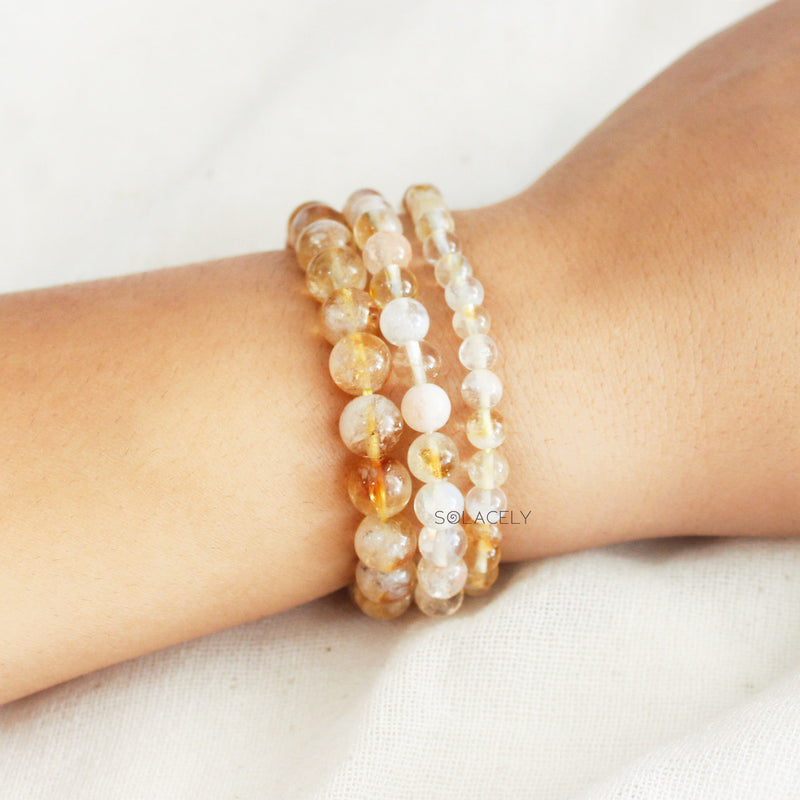
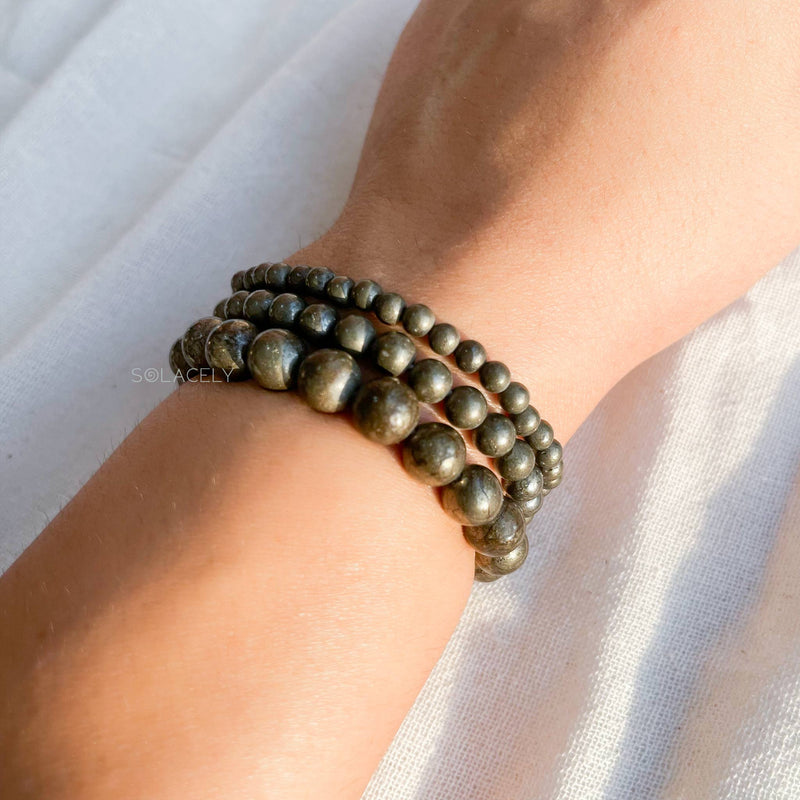
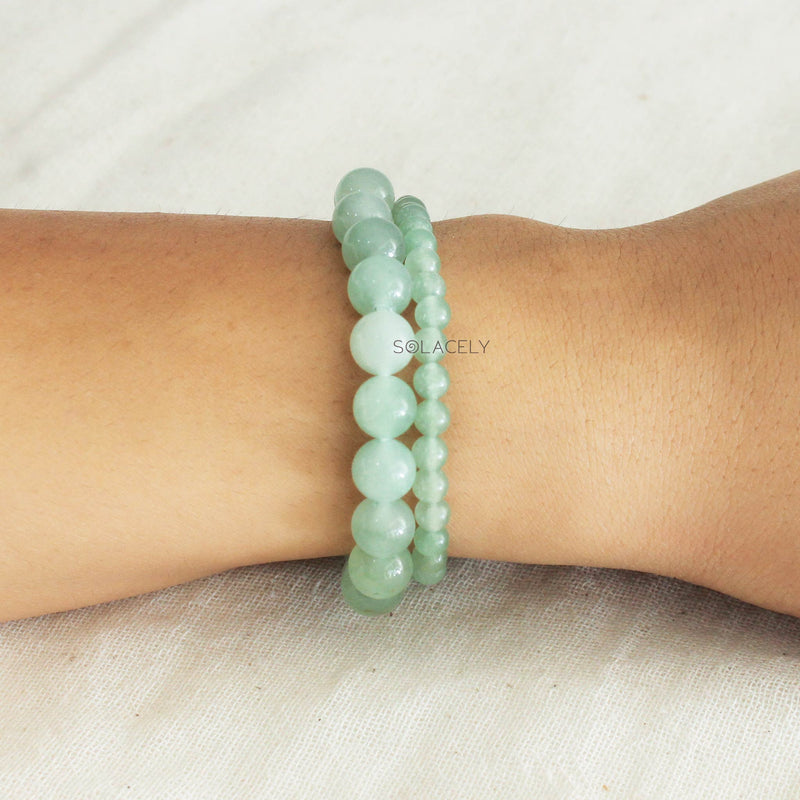
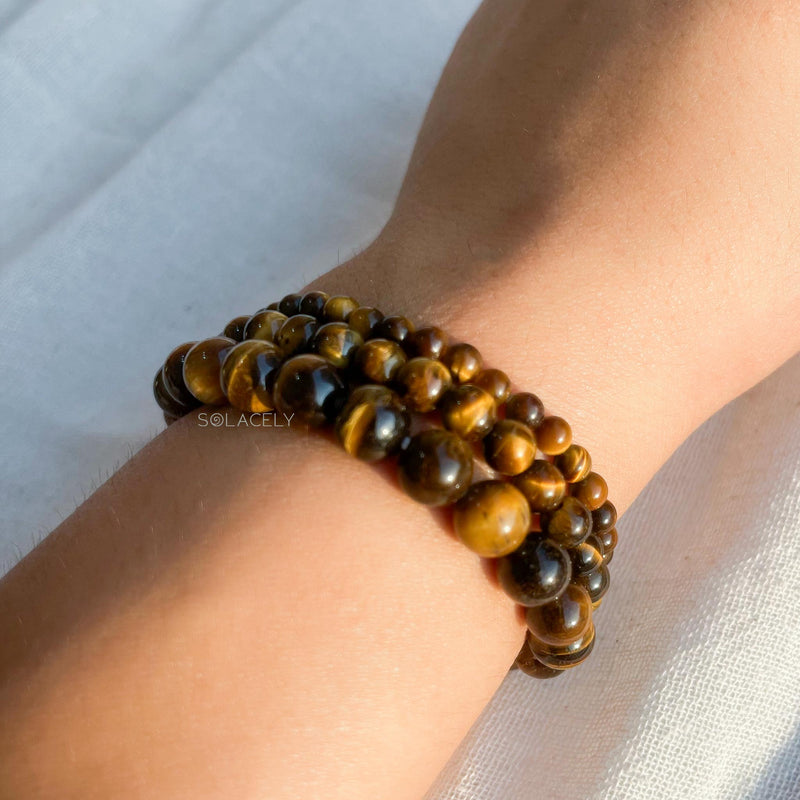
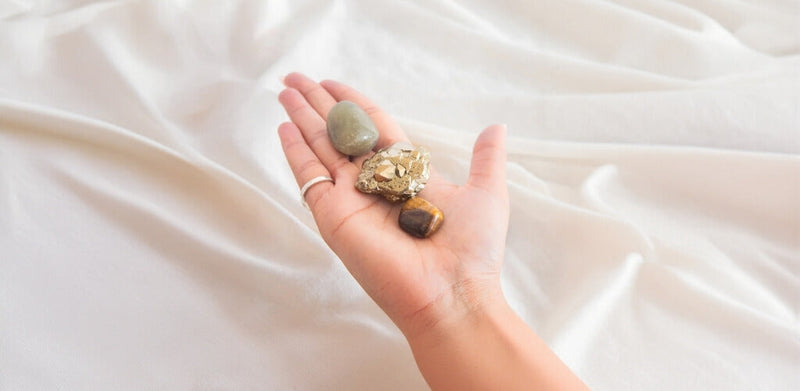
Citrine is the most widely used money crystal, followed by pyrite, green aventurine and tiger's eye. Citrine is the traditional merchant's stone, pyrite is the symbol of material wealth, green aventurine is the stone of opportunity, and tiger's eye is the one reached for when a financial decision needs nerve.
Key takeaways
- Citrine is the default choice. It was kept in traders' cash boxes and is still called the merchant's stone.
- Pyrite is iron sulfide with a brassy gold lustre, hardness 6 to 6.5, and is used for confidence around money rather than luck.
- Green aventurine is the opportunity stone, traditionally carried into interviews, pitches and negotiations.
- Tiger's eye is chosen for nerve and clear headed decisions when money is on the line.
- Citrine runs from a pale lemon through to a deep amber gold, so choose the depth of colour you actually want to wear.
- These are traditional beliefs and focus tools rather than financial advice. A crystal keeps the intention in view while you do the work.
Which crystal is best for money, and why?
Citrine, on tradition and popularity alone. It has the longest documented association with trade, it is hard enough to wear every day, and it is inexpensive. If citrine's yellow does not appeal, pyrite and green aventurine are the strongest alternatives, chosen for different reasons rather than better ones.
| Crystal | Mineral | Mohs | Traditionally used for |
|---|---|---|---|
| Citrine | Quartz | 7 | Optimism, trade, abundance |
| Pyrite | Iron sulfide | 6 to 6.5 | Confidence, material focus, protection |
| Green aventurine | Quartz with mica | 6.5 to 7 | Luck, opportunity, new ventures |
| Tiger's eye | Quartz | 6.5 to 7 | Courage, decisions, grounded risk taking |
The four split neatly into two jobs. Citrine and green aventurine are the optimistic stones, worn when you want to feel open to opportunity. Pyrite and tiger's eye are the sober ones, worn when you need to hold a line, say no to something, or make a decision you have been putting off. Choosing between them says more about your situation than about the minerals.
Worth knowing at the start: a money crystal keeps a financial intention in view while you do the work, and that is how the people who get the most from them use them. Our wider crystals for money round up covers more options, including malachite and jade.
Why is citrine called the merchant's stone?
Because shopkeepers and traders kept a piece in the till. The nickname is a folk one rather than a documented guild practice, but it has stuck for centuries, and it is the reason citrine appears in almost every modern list of money crystals. Its warm gold colour did the rest of the work.
Mineralogically, citrine is simply yellow quartz: silicon dioxide, one of the most abundant minerals in the Earth's crust. Quartz occurs in a long list of coloured varieties including amethyst, rose quartz and smoky quartz, and citrine's yellow comes from trace iron sitting in the crystal structure.
Citrine is also an official birthstone. The Gemological Institute of America lists it for November alongside topaz, which gives it a second reason to appear in gift buying. At 7 on the Mohs scale it stands up to rings, bracelets and everyday knocks without much fuss.
Its colour range is worth knowing before you buy. Warming quartz to draw out the golden tones is a long established and entirely stable practice across the coloured stone trade, and it is why citrine runs all the way from a soft lemon to a deep amber orange without fading back. Choose the depth of gold you want to wear. Our citrine meaning and properties guide goes through the shades and their traditional uses.
What does pyrite actually do in money work?
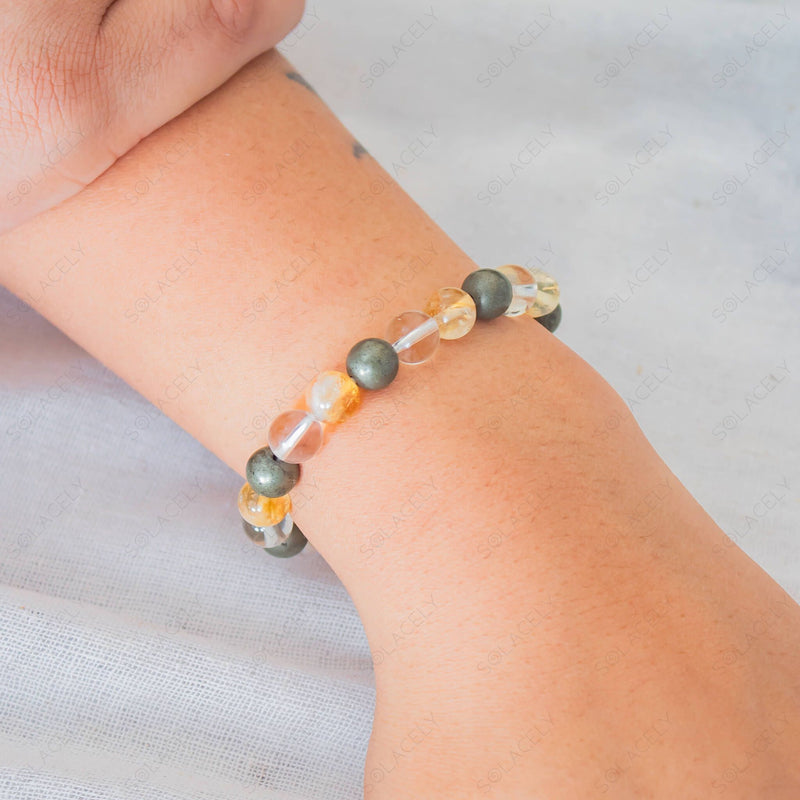
Pyrite is used for the mindset side rather than the luck side. Worn on the wrist, that mindset stays within sight through the day. Our pyrite bracelet is hand-strung and double-knotted, made for wearing rather than shelving. It is iron sulfide, a brassy yellow metallic mineral at 6 to 6.5 on the Mohs scale, so widespread and so gold like in appearance that it picked up the old miners' nickname fool's gold.
That resemblance is the whole basis of its reputation. A cube of pyrite on a desk looks like a small ingot, and tradition assigns it to confidence, self worth around money, and the willingness to ask for what your work is worth. People tend to reach for it during salary conversations and pricing decisions rather than lottery ticket moments.
Practical points matter with pyrite more than with quartz. It can oxidise in humid conditions, developing a dull surface or, in poor specimens, crumbling over years. Keep it dry, keep it out of a bathroom, and do not soak it. It is also unusually heavy for its size, which is part of why a small cube feels so satisfying in the hand. Our pyrite guide covers cubes, clusters and rings in more detail.
Green aventurine and tiger's eye: opportunity and nerve
These two cover the situations citrine and pyrite do not. Green aventurine, a quartz flecked with fuchsite mica at 6.5 to 7, is the opportunity stone. Tiger's eye, golden brown quartz with a moving band of light, is the one for holding steady when a decision carries real risk.
Green aventurine
Its reputation is for luck of the kind you have to show up for. Practitioners carry it to interviews, funding conversations and first days in a new role. Green is the heart chakra colour, so it also carries a slightly softer set of associations than pyrite: growth rather than accumulation. It is one of the cheapest stones on this list and one of the most durable, which makes it a sensible first purchase. See our green aventurine guide.
Tiger's eye
The shifting light band, called chatoyancy, comes from parallel fibrous structures inside the quartz. Tradition treats tiger's eye as a grounding stone for courage, which in money terms means committing to a decision instead of circling it. It is a good pairing with citrine if optimism alone has not been producing action. Read our tiger's eye guide for its history and grading.
How do you actually use a money crystal?
Wear it somewhere you will notice it, or place it where financial decisions happen. There is no elaborate ritual required, and the methods that people stick with are the simple ones. A bracelet you see fifty times a day does more useful reminding than a stone in a drawer.
- Wear it. A citrine or pyrite bracelet on your working hand. Bracelets suit money stones because the wrist is in your eyeline while you work.
- Place it at the point of decision. On the desk, beside the laptop, in the till or the cash box if you run a shop. That is the original merchant's stone practice.
- Carry a tumble. Pocket or wallet. Cheap, discreet, and the touch of it prompts the thought.
- Set an intention once, in specific terms. "Raise my rates by fifteen percent this quarter" beats "attract abundance", because the first one is checkable.
- Pair with a review habit. The stone marks the moment you look at the numbers each week, and keeping that appointment is where the momentum comes from.
Solacely's prosperity bracelets combine citrine, pyrite and green aventurine on one strand for exactly this reason, since most people want the optimism and the nerve at the same time. If your interest is specifically in wealth accumulation rather than income, our guide to crystals for wealth takes a different angle.
What makes a money crystal practice stick?
A specific intention and a place you will see it. Money stones have been kept in tills and cash boxes for centuries because the point of sale is where the decisions happen. The modern equivalent is the desk, the spot where you do the invoicing, or a bracelet on your working wrist.
So why do so many people keep them going for years? Because a physical object attached to a specific intention is a genuinely good prompt. You see the bracelet, you remember the rate you meant to raise, you send the invoice you had been putting off. People describe it as keeping the intention in view, which is where the momentum comes from.
Reviewing it is the part most people skip. Set the intention in checkable terms, then look at it again a month later and see what moved. In our experience that single habit is what separates a stone still being worn next year from one that quietly ends up in a drawer.
Which one should you start with?
Start with citrine if you want one stone and no further thinking. It is the traditional choice, it costs little, it survives daily wear at 7 on the Mohs scale, and it doubles as a November birthstone. Add a second stone only once you know what the first one is not covering.
If you already know your obstacle, choose against it instead. Freeze up when quoting a price? Pyrite. Waiting for something to come along? Green aventurine. Circling a decision for weeks? Tiger's eye. Feeling generally flat about money? Citrine.
Buy from a seller who names the mineral, describes the piece plainly and tells you the size and the finish. Clear description is the best signal of quality in this market, and it makes it far easier to pick the colour and the weight you actually want in the hand.
The properties described here reflect traditional and cultural belief around crystals. They are not medical claims, they are not financial advice, and they are not a substitute for professional guidance. If you are making a significant financial decision, speak to a qualified adviser.
Sources
Written by Chetena Sharma. Reviewed by the Solacely editorial team.
Frequently asked questions
About the author


Written by Chetna Sharma, crystal healing practitioner and co-founder of Solacely. Chetna has worked with healing crystals for over a decade and curates Solacely's protective stone collection.