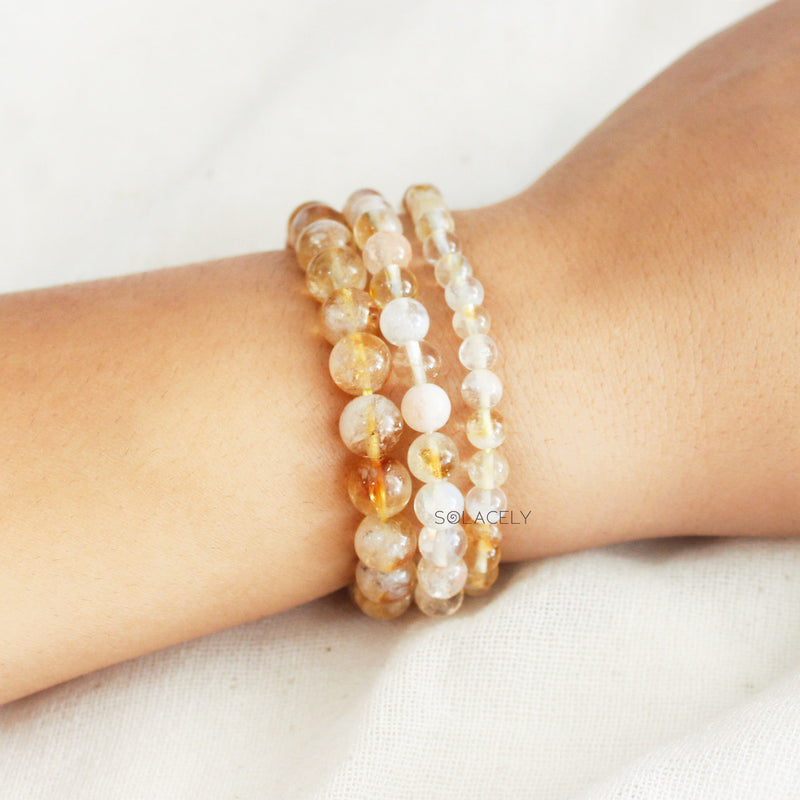
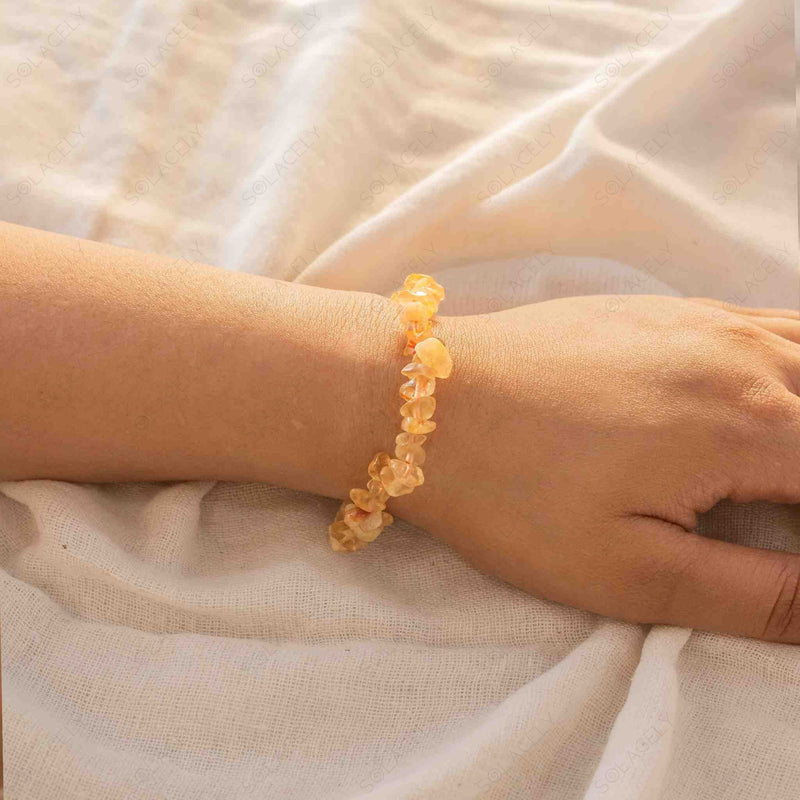
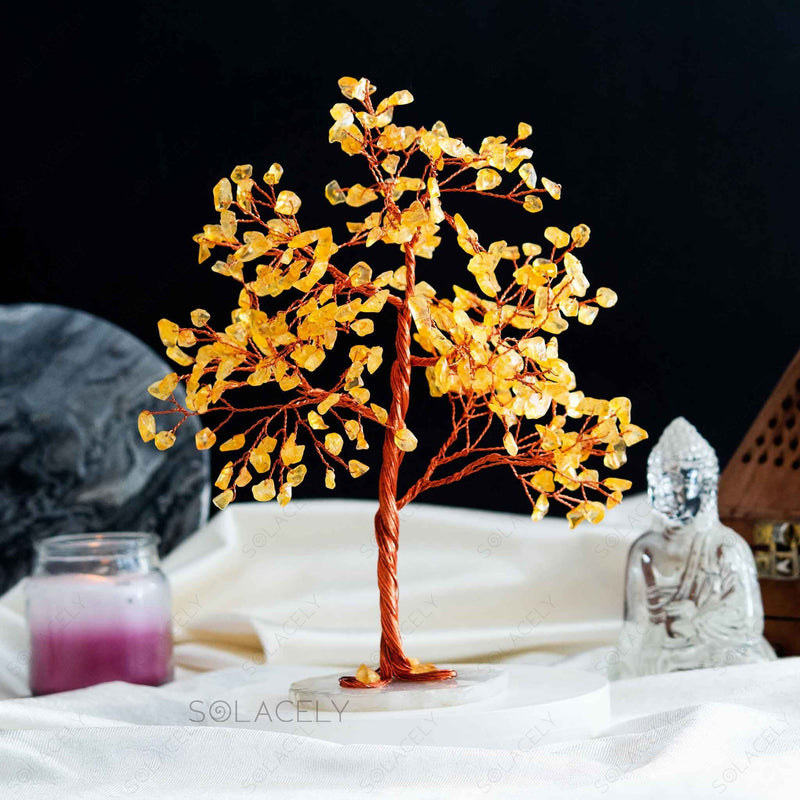
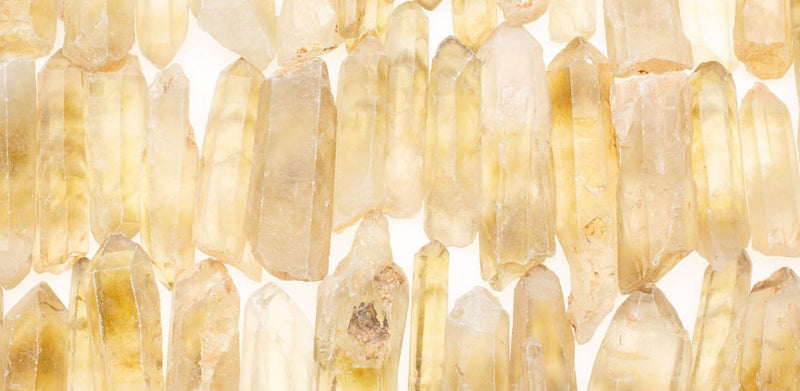
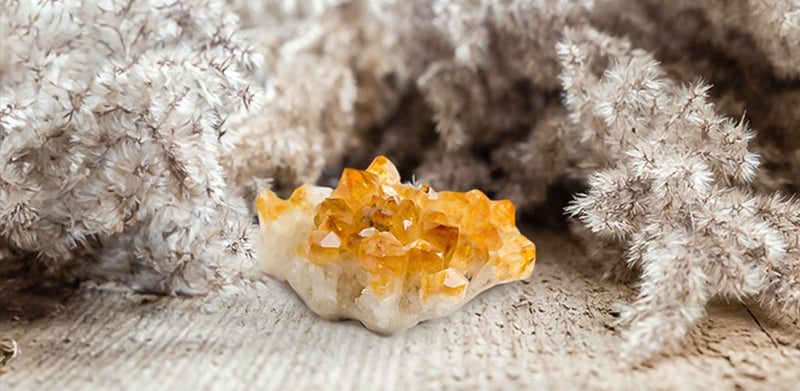
Citrine runs from pale lemon through clear gold to deep honey and rich reddish orange. The colour comes from iron held within the quartz structure. Every shade is citrine, and choosing between them is a question of what suits your skin, your metal and your eye rather than a question of grade.
Key takeaways
- Colour cause is iron within the quartz structure.
- Range runs pale lemon to deep reddish orange. All of it is citrine.
- Madeira is the trade name for the deep reddish grade, after the fortified wine.
- Warmth has shaped this stone throughout its history, and the resulting colour is permanent and stable.
- Evenness matters more than depth. Consistent colour beats intense colour that pools at one end.
- Prolonged direct sunlight can soften the colour over months.
What creates citrine's colour
Quartz is colourless when pure. Every coloured variety of it owes its character to trace elements or to structural features within the crystal. In citrine the agent is iron, and the particular state that iron sits in decides whether you get a delicate lemon or a deep, glowing honey.
That is also why amethyst and citrine are so closely related. Both are iron coloured quartz, and the two sit at different points of the same spectrum. The whole quartz family is set out in our guide to the types of quartz crystals.
The colour range, described usefully
| Name | Appearance | Suits |
|---|---|---|
| Pale lemon | Light, cool tinged yellow | Silver, fair skin, modern settings |
| Clear gold | The classic citrine yellow | Almost anything, the safe choice |
| Honey | Deeper yellow with a warm brown note | Yellow gold, warmer skin tones |
| Madeira | Rich reddish orange | Yellow gold, statement pieces |
Madeira citrine is named after the fortified wine, for its colour rather than any locality. It is the deepest and warmest grade and the one that reads most dramatically in a large faceted stone.
Warmth and citrine colour
Heat and citrine have a long shared history. Warming quartz to draw out its golden and reddish tones is a well established, entirely stable practice used across the coloured stone trade for generations, and it is one reason citrine is available in such a consistent spread of shades at accessible prices.
What matters to you as a buyer is that the result is permanent. The colour will not wash out, rub off or revert. It behaves exactly as any other quartz colour does, and it needs no special handling beyond the sunlight note below.
Judging a stone well
Three things separate a citrine you keep wearing from one that sits in a drawer, and none of them is about depth of colour.
- Evenness. Tilt the stone under a lamp. Colour that sits consistently through the body of the stone always looks better than colour concentrated in one end, whatever the shade.
- Cut and orientation. A well oriented stone shows its best colour face up. Two stones of identical material can look quite different depending on how the cutter placed them.
- Clarity. Citrine is available clean, so hold out for eye clean in a faceted stone. In beads and tumbles small internal veils are normal and part of the character.
Ametrine, where two colours meet
Ametrine is a single quartz crystal showing purple and gold side by side, amethyst and citrine in one stone with a visible boundary between them. It occurs because conditions during growth varied enough for the iron to settle differently within one crystal.
Commercial ametrine comes almost entirely from one place, the Anahi mine in Bolivia, which makes it one of the more geographically concentrated gems in the trade. Cutters usually orient it so the two colours split the stone cleanly down the middle.
Keeping the colour
Citrine's colour is light sensitive over long exposure, which is worth knowing but easy to manage.
- No sunny windowsill. Months of direct sun can soften the colour, and the change is permanent.
- Not on a car dashboard. Heat and light together are the combination to avoid.
- Tell your jeweller. Before any torch work on a setting, make sure they know the stone is quartz.
- Warm soapy water only. No steam cleaner. Ultrasonic is a risk if the stone has any reaching fracture.
Indoor light is not a problem, and normal wear will not affect it. This is about sustained direct exposure rather than daylight in general.
Choosing a shade
There is no correct answer, only a personal one. Pale lemon reads fresh and modern and sits well in silver. Deep honey and Madeira read warmer and richer and are more flattering in gold. Neither is more valuable in crystal terms, and neither carries a different traditional meaning.
For citrine's meaning, properties and care in full, see our complete citrine guide, and for the November listing, citrine as a birthstone.
The uses described here reflect traditional and cultural crystal practice. They are not medical claims and are not a substitute for professional healthcare or advice.
Sources
Written by Chetena Sharma. Reviewed by the Solacely editorial team.
Frequently asked questions
About the author


Written by Chetna Sharma, crystal healing practitioner and co-founder of Solacely. Chetna has worked with healing crystals for over a decade and curates Solacely's protective stone collection.