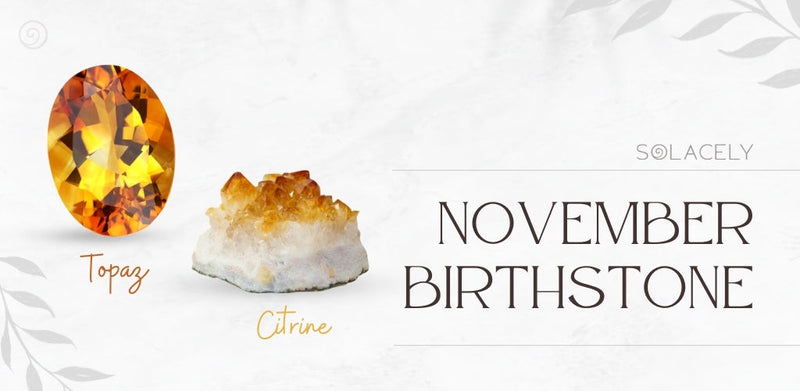
Citrine is one of two birthstones for November, sharing the month with topaz. It is the golden variety of quartz, hardness 7 on the Mohs scale, and it is also the recognised gem for a thirteenth wedding anniversary. For a piece you intend to wear daily, citrine is usually the better of the two November options.
Key takeaways
- November has two birthstones: topaz, the older listing, and citrine, added later.
- Topaz is harder at Mohs 8 but has perfect cleavage, so it chips. Citrine is 7 with none.
- Citrine's warmth comes from iron within the quartz, in shades from pale lemon to deep honey.
- Citrine is also the thirteenth wedding anniversary gem.
- Traditional meaning: warmth, optimism, prosperity. Solar plexus, not heart or crown.
- Keep it out of prolonged direct sun, which can soften the colour over time.
Why November has two birthstones
Topaz held November alone for a long time, and citrine was added to modern lists because it offers a similar warm golden tone at a friendlier price. Gemmological bodies list both, and jewellers stock both, which means a November buyer gets a genuine choice rather than a single option.
Confusingly, the two stones were once conflated in the trade. Golden quartz was regularly sold as topaz, and the term citrine only became standard once gemmology properly separated the species. If you inherit a piece described as topaz that turns out to be quartz, that history is usually the explanation rather than deception. Our November birthstone guide covers both stones side by side.
Citrine or topaz: the practical comparison
| Citrine | Topaz | |
|---|---|---|
| Mineral | Quartz | Topaz, an aluminium silicate |
| Mohs hardness | 7 | 8 |
| Cleavage | None | Perfect, one direction |
| Typical failure | Slow surface scuffing | Clean chip along a plane |
| Price | Approachable | Higher for good colour |
| Best for | Daily rings and bracelets | Occasional wear, protected settings |
Hardness is the number everyone quotes, and it is the less useful one here. Topaz is harder, so it scratches less readily. But it has perfect cleavage in one direction, meaning a knock at the wrong angle can split a clean flake off a facet edge. Citrine has no cleavage at all, so it fails gradually rather than suddenly. For a ring that lives on a hand all day, that difference matters more than a point on the Mohs scale.
Choosing your shade
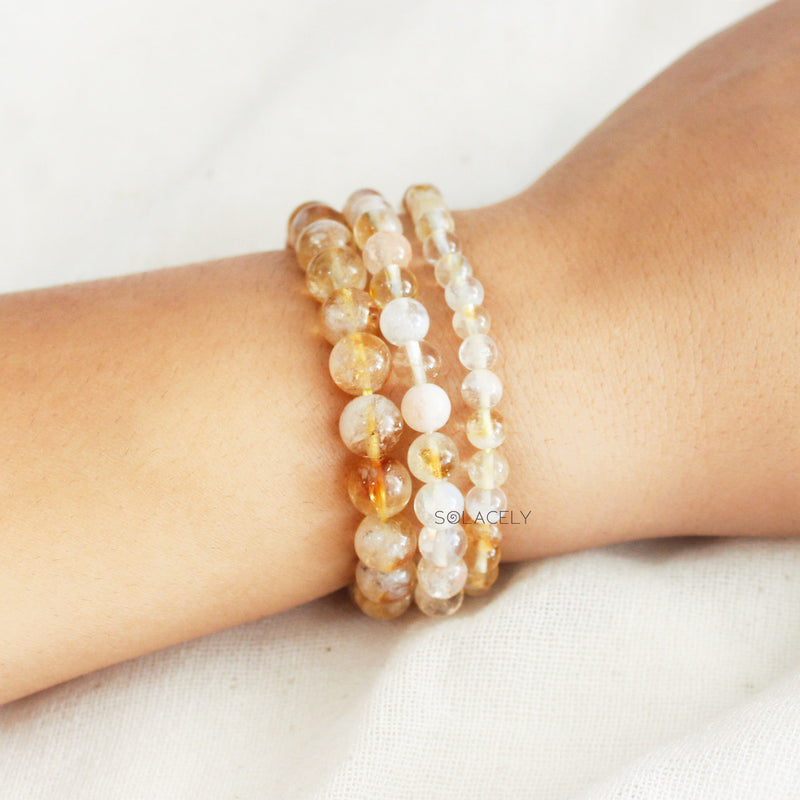
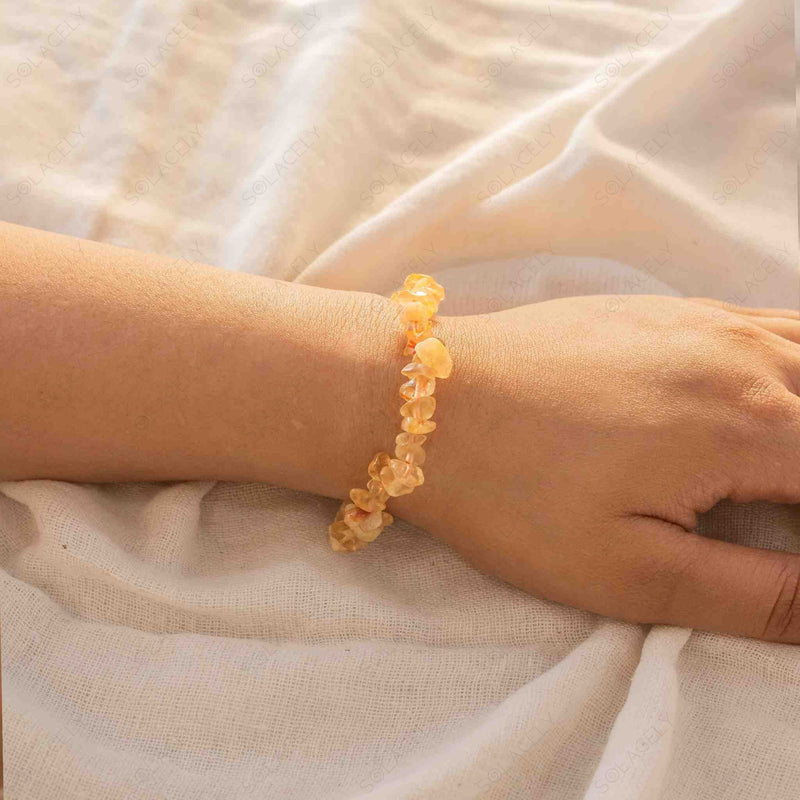
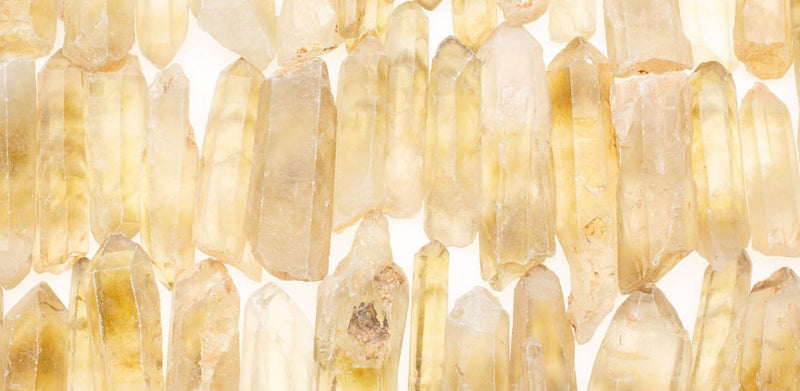
Citrine's colour comes from iron held within the quartz structure, and it runs across a genuinely wide range: pale lemon, clear gold, deep honey, and the rich reddish tone the trade calls Madeira after the fortified wine. All of it is citrine, and none of the shades carries a different traditional meaning.
Warmth and heat have shaped this stone for as long as it has been worn. Gentle warming to bring out the deeper golds is a long established and completely stable part of the coloured stone trade, used across many gem families, and the resulting colour is permanent. What that means for you as a buyer is simple: choose the shade you actually want to look at.
- Pale lemon reads fresh and modern, and sits beautifully in silver.
- Clear gold is the classic citrine look and the most versatile.
- Deep honey and Madeira read richer and warmer, and are most flattering in yellow gold.
The full picture on shade is in our guide to citrine colour.
What the birthstone traditionally means
Citrine's associations are warmth, optimism and prosperity. Its old nickname is the merchant's stone, from the practice of keeping a piece in a till or cash box, and in chakra tradition it belongs to the solar plexus, which links it to confidence and personal will rather than to calm or spirituality.
That gives citrine a distinctly practical character among birthstones. It is not a contemplative gem. If the person you are buying for is starting something, building something or arguing for their own worth, the symbolism fits neatly. Our guides to the spiritual meaning of citrine and citrine meaning, benefits and properties go further.
Buying a citrine birthstone piece
Four things to look at, in order of how much they affect the result:
- Colour. Decide first whether you want pale lemon or deep honey. Everything else follows from that.
- Evenness. Tilt the stone. Colour that sits consistently through the stone will always look better than colour concentrated at one end.
- Clarity. Citrine is available clean enough that you should not accept visible inclusions in a faceted stone. In beads and tumbles, small veils are normal and expected.
- Setting. Because citrine has no cleavage, it does not need a protective setting the way topaz or emerald does. Open settings that show the colour work well.
Care
Warm water, mild soap, soft brush. Skip steam cleaning and avoid ultrasonic if the stone has any reaching fracture. The one real caution is light and heat: prolonged direct sun can soften the colour over months, and it does not come back. Keep it off a sunny windowsill and out of a parked car, and tell any jeweller doing repairs that the stone is quartz before a torch comes anywhere near it.
The uses described here reflect traditional and cultural crystal practice. They are not medical claims and are not a substitute for professional healthcare or advice.
Sources
Written by Chetena Sharma. Reviewed by the Solacely editorial team.
Frequently asked questions
About the author


Written by Chetna Sharma, crystal healing practitioner and co-founder of Solacely. Chetna has worked with healing crystals for over a decade and curates Solacely's protective stone collection.