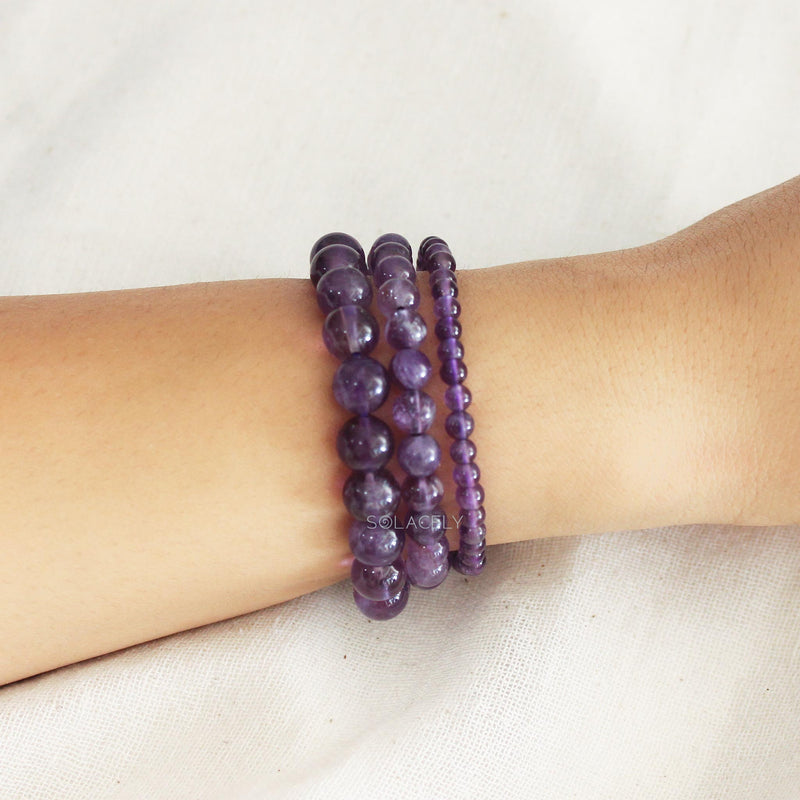
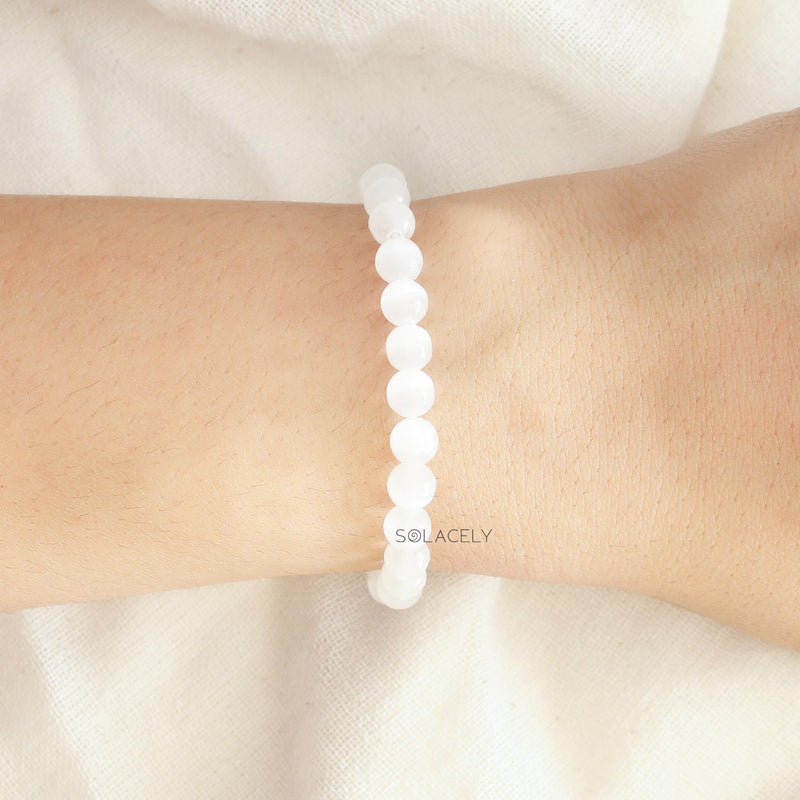
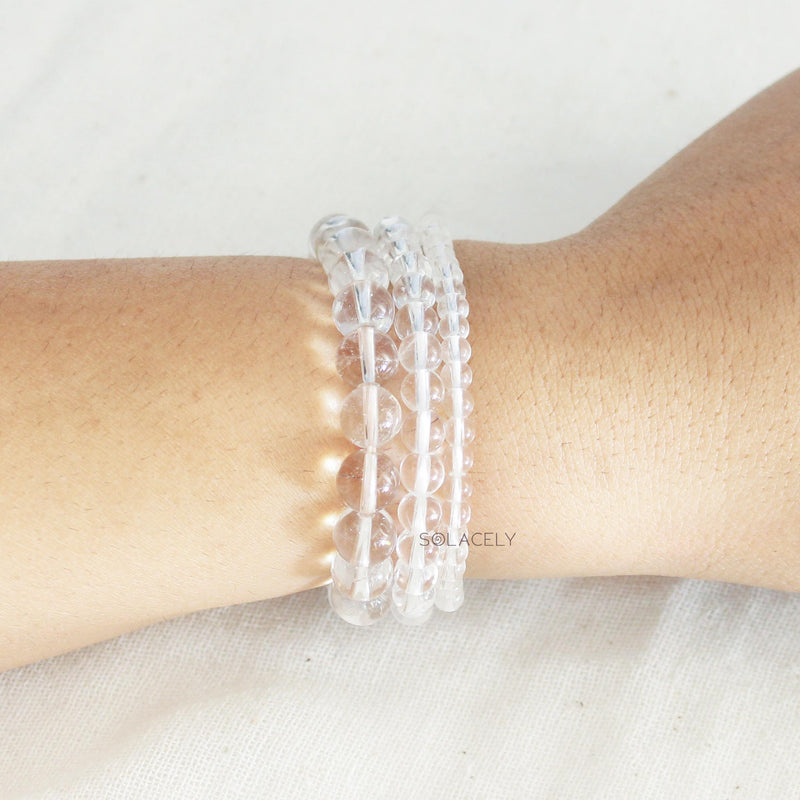
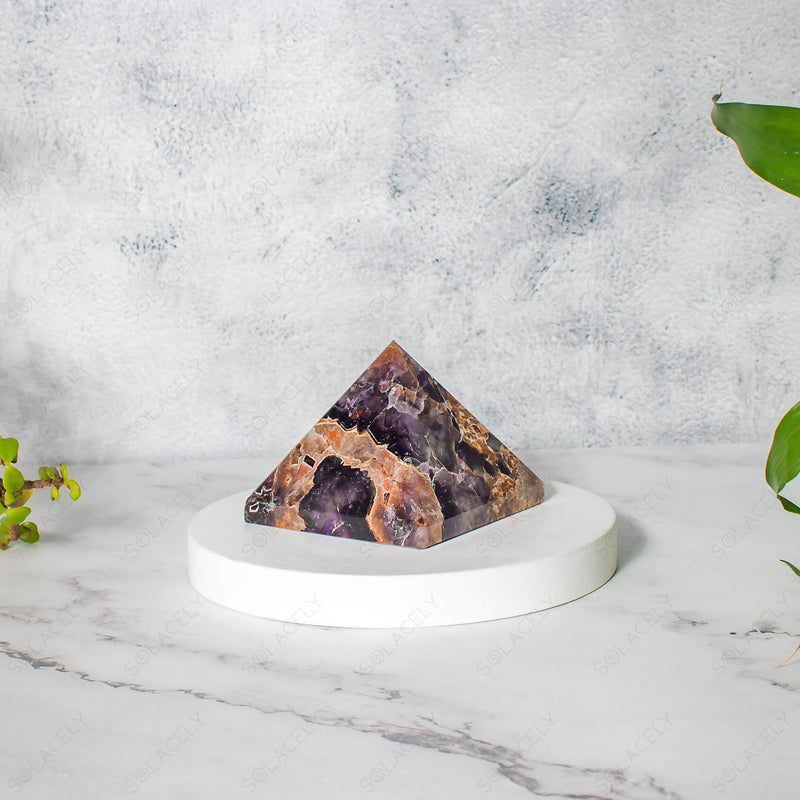
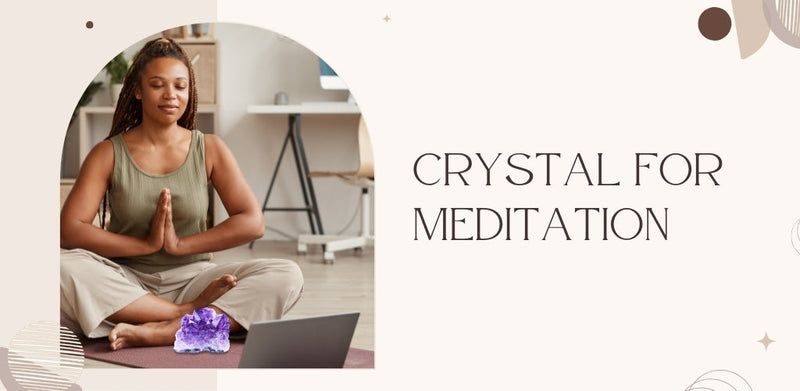
Amethyst, clear quartz, selenite and lepidolite are the crystals traditionally kept for spiritual practice, all assigned to the crown and third eye. They are held as supports for sitting, and the traditions place the work itself in practice, conduct and study carried steadily over years.
Key takeaways
- The conventional four: amethyst, clear quartz, selenite, lepidolite, with labradorite and moonstone for transitional periods.
- Assignments follow colour: violet, white and clear stones map to the crown and third eye.
- Amethyst is for settling, clear quartz for clarity. They do different jobs.
- Selenite is water soluble. Never rinse it. Amethyst fades in sun.
- One or two stones works better than a full seven stone layout.
What the traditions describe
In Buddhist usage, enlightenment means the end of craving and delusion, reached through practice, ethical conduct and study. In yogic usage, samadhi describes a state of absorption arrived at through a disciplined path. Both are long roads, walked steadily.
Crystals enter this territory through Western esoteric practice, where colour correspondences were mapped onto the chakra system and stones assigned to each centre. That is its own coherent tradition with a long history behind it, and the stones below are kept as companions to a sitting practice: things that make it easier to show up, day after day.
The stones and what each is kept for
| Stone | Chakra assignment | Traditional role in practice |
|---|---|---|
| Amethyst | Third eye and crown | Settling a busy mind before sitting |
| Clear quartz | Crown | Clarity; used as an amplifier alongside another stone |
| Selenite | Crown and above | Cleansing a space; the traditional charging stone |
| Lepidolite | Third eye and heart | Emotional steadiness during difficult practice |
| Labradorite | Third eye | Periods of transition and uncertainty |
| Moonstone | Crown | Intuition, cycles, patience with slow progress |
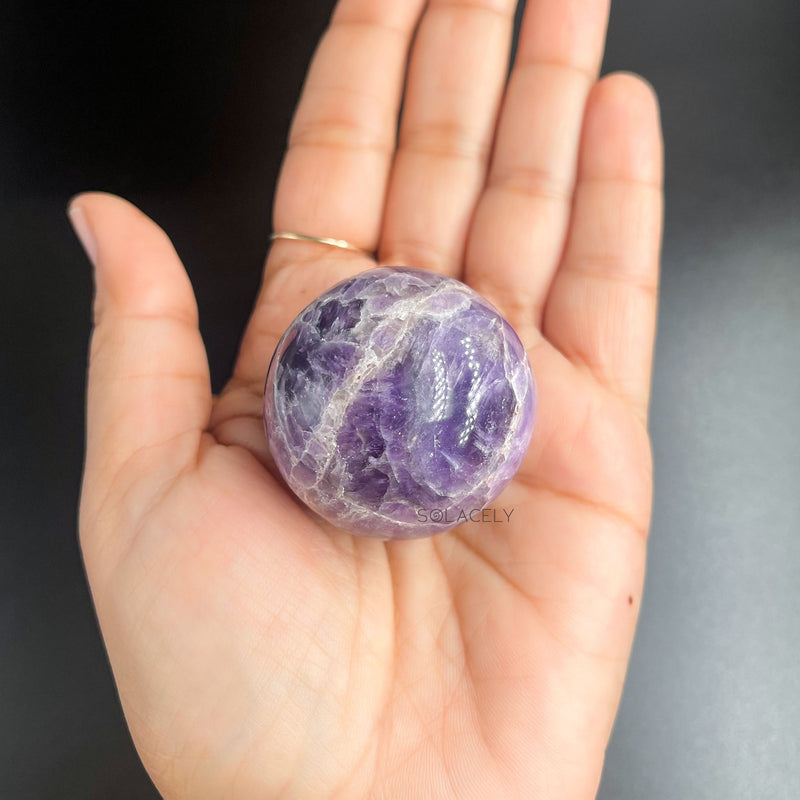
Amethyst is the one nearly everyone starts with. It is the purple variety of quartz, coloured by iron, and the February birthstone. Its long association with sobriety and clear-headedness, present in Greek usage, is the ancestor of its modern role as the settling stone.
How the stones are used in sitting
- Pick one or two. A full seven-stone layout takes longer to arrange than most people sit for.
- Lie down if you are placing. Placement on the forehead or above the head only stays put lying down.
- Hold if you are sitting. Clear quartz in the hands is the usual choice.
- Selenite goes above the head, on the floor or mat, in the conventional layout.
- Then let it be. The stone's job ends once the session starts.
Our crystals for meditation guide covers which stones suit which difficulty.
The crown chakra and why these stones cluster there
Sahasrara, the crown centre, sits at the top of the head and is described in yogic tradition as the point of connection beyond individual identity. It is conventionally assigned violet or white, which is why amethyst, selenite and clear quartz gather here.
Knowing that the correspondence follows colour makes the system easier to use rather than less meaningful: any clear or white stone can stand in for clear quartz. Our crown chakra crystals guide covers the full set, and the beginner's guide to the chakra system covers how the seven centres relate.
Care, especially for selenite
Selenite is the one that catches people out. It is a form of gypsum, soft at 2 on the Mohs scale, and water soluble. Rinsing a selenite wand will dull and eventually dissolve it. Dust it with a dry cloth and nothing else.
Amethyst pales in sustained direct sunlight, so charge it in moonlight or indirect light. Clear quartz is durable at 7 and tolerates water and light. Lepidolite is soft at around 2.5 to 3 and flakes along its layers, so handle it gently and keep it dry.
For a practice that runs over months, our crystals for spiritual strength guide covers the stones people turn to when the practice itself gets hard.
What people describe over time
Usually something quiet: a slightly longer gap between a provocation and their reaction to it, noticed over months rather than days. That is what the traditions point at, and it is why they treat this as slow work.
The stone's contribution is that it makes the sitting easier to keep. If a piece on your cushion means you sit down more often, it has done what it is there for.
Spiritual and metaphysical practices described here are traditional and cultural. They are not medical treatment. Meditation is generally safe but can be challenging for people with certain mental health conditions. Speak to a qualified professional if you have concerns.
Sources
- Gemological Institute of America, Amethyst Description
- NCCIH, Meditation and Mindfulness: Effectiveness and Safety
Written by Chetena Sharma. Reviewed by the Solacely editorial team.
Frequently asked questions
About the author


Written by Chetna Sharma, crystal healing practitioner and co-founder of Solacely. Chetna has worked with healing crystals for over a decade and curates Solacely's protective stone collection.