The crystals kept for the crown chakra are amethyst, clear quartz, selenite, lepidolite and howlite. In chakra practice the crown sits at the top of the head and is associated with perspective and connection, which is why the group runs to violet and white.
Key takeaways
- Amethyst, clear quartz, selenite, lepidolite and howlite are the five stones most kept for this centre.
- The crown, sahasrara, is the seventh centre and sits at the top of the head.
- Amethyst is the primary stone and the most practical, durable at 7 on the Mohs scale.
- Selenite must stay dry. It is a gypsum and genuinely dissolves in water.
- The colour correspondence is violet and white, which is why the group looks so consistent.
What the crown chakra is
In the chakra system the crown, sahasrara in Sanskrit, is the seventh and highest of the centres, sitting at the very top of the head. It is traditionally associated with perspective, with connection to something larger, and with not being wholly defined by the immediate.
Its colours are violet and white, and that correspondence explains the whole group of stones placed with it. Where the third eye below takes deep indigo and the heart takes greens and pinks, the crown takes the palest end of the range.
People turn to it when everything has become very small and immediate, when a difficult period has narrowed their view to the next task, or simply when they want a few quiet minutes. For the centre below, see crystals for the third eye.
Amethyst, the primary crown stone
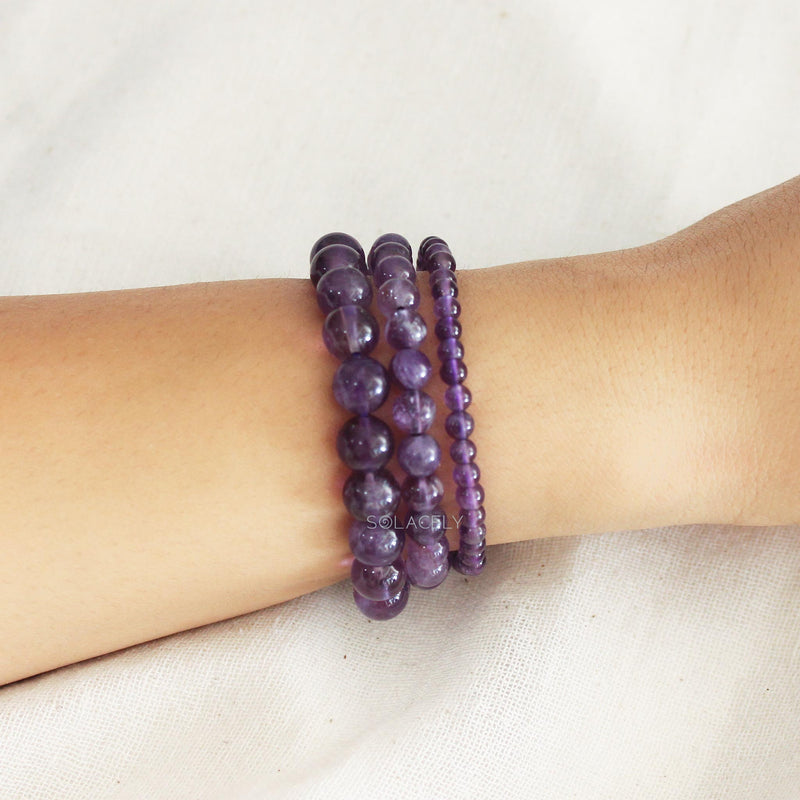
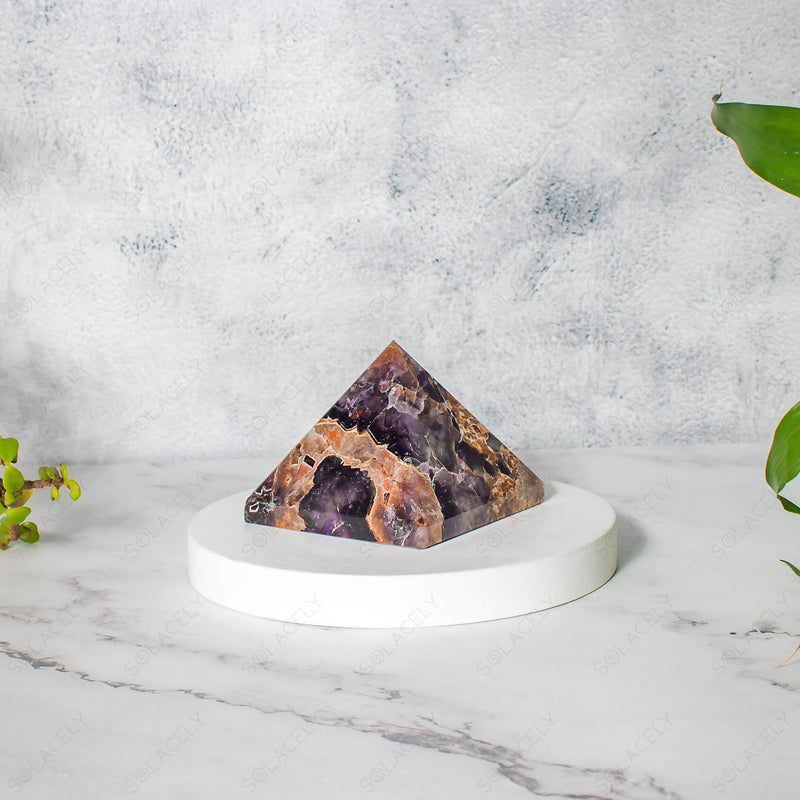
Amethyst is the stone most associated with this centre and the one worth owning first. It is the purple variety of quartz, coloured by iron held within the crystal structure, and it has carried crown associations across essentially every modern source.
It is also by far the most practical of the five. At 7 on the Mohs scale with no cleavage it survives daily wear in any format, it is widely available, and it is inexpensive, which makes it a sensible first purchase for anyone starting with this centre.
Its one care requirement is light. Prolonged direct sunlight softens the purple over months. The amethyst guide covers the varieties in more depth.
Clear quartz and selenite
Clear quartz is the neutral anchor. It carries no narrow association beyond clarity, which is exactly what makes it useful in a crown set: it never competes with whatever intention you bring to a sitting.
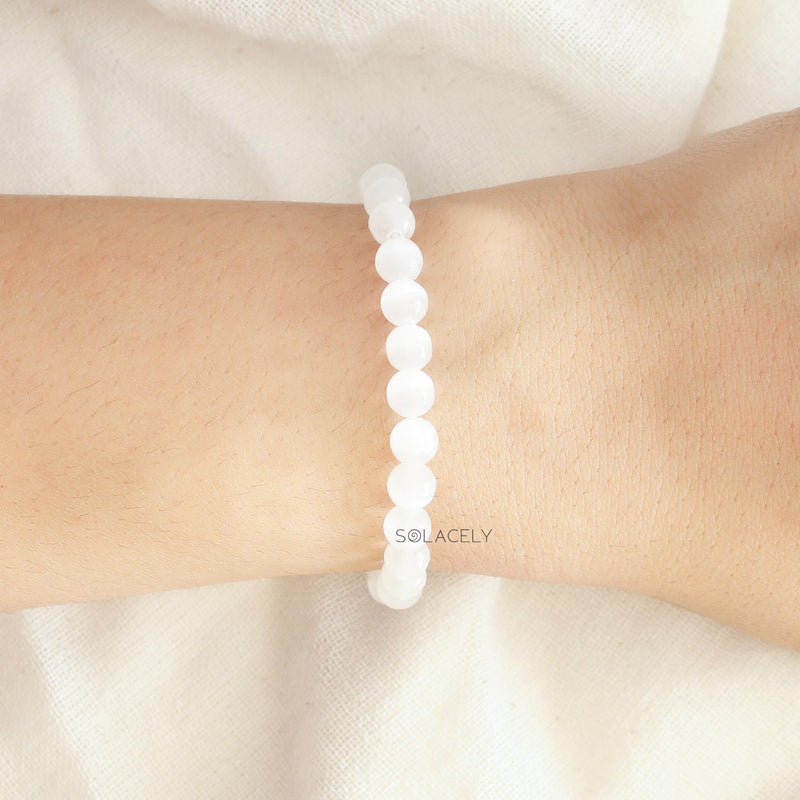
Selenite is the clearing stone, kept for resetting a space before you use it. Its pale translucence and long association with light made it the traditional choice, and the usual practice is passing it around the edges of a room or shelf.
It comes with one absolute rule. Selenite is a variety of gypsum, which is water soluble, so it must never be rinsed, soaked or kept anywhere humid. At 2 on the Mohs scale it is also scratched by essentially everything, so it needs its own storage.
Lepidolite and howlite
Lepidolite is the lilac mica of the group, traditionally kept for calm and for settling an overactive mind. It naturally contains lithium, a fact that gets badly misused in crystal marketing: the lithium is locked in the mineral structure and is not bioavailable, so the traditional association is real while the pharmacological implication is not.
It is soft and it cleaves in sheets, so it belongs on a shelf or in a pendant rather than anywhere it will be knocked. Handle it gently and it will hold up indefinitely.
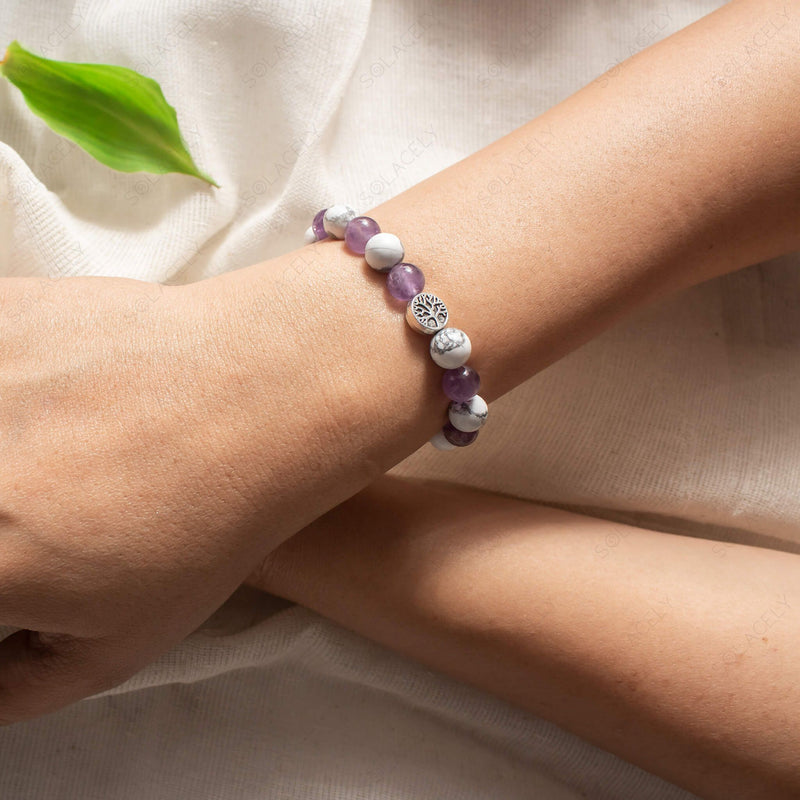
Howlite is the white one, veined in grey, kept for quieting a mind that will not stop. At 3.5 on the Mohs scale it is soft and porous, so wipe it rather than soaking it and keep it away from perfume and cleaners.
Choosing among the five
| Stone | Traditionally kept for | Hardness | Best format |
|---|---|---|---|
| Amethyst | Perspective, settling | 7 | Anything, including daily wear |
| Clear quartz | Clarity, a neutral anchor | 7 | Point or cluster, kept in view |
| Selenite | Clearing a space | 2 | Plate or tower, kept entirely dry |
| Lepidolite | Calm, an overactive mind | 2.5 to 3 | Shelf piece or pendant |
| Howlite | Quieting rehearsal and worry | 3.5 | Tumbled stone on a nightstand |
Start with amethyst and add only if there is a specific gap. Selenite is the natural second because it does something entirely different, and the two together cover both the sitting and the space it happens in.
How crown chakra stones are used
The practices for this centre are the quietest in the whole system, which follows from what it is associated with.
- Lying down. A tumbled stone placed just above the head rather than on it, which is the traditional position.
- Held at the end of a day. Amethyst, a few slow breaths, before anything else winds down.
- In a sitting space. Clear quartz placed in front of you as a focal point.
- Clearing first. Selenite passed around the edges of the room before you begin.
Five minutes is genuinely enough, and it is far more sustainable than half an hour attempted occasionally. If meditation specifically is the practice you are building, crystals for meditation covers the wider set.
Building a chakra set
Working with one centre at a time is far more useful than assembling all seven at once. A full seven stone set looks lovely on a shelf and tends to mean nothing in particular, because no single stone ends up attached to a specific intention.
If the crown is the centre you are drawn to, the honest question is what has actually narrowed: whether you have lost perspective, lost the quiet, or simply lost the habit of stopping. Those point to different stones within the group.
Two stones is a good working set. Add a third only when something changes, and let each keep its own job rather than blurring into a general violet intention.
Caring for the set
Amethyst and clear quartz are easy: warm water, mild soap, a soft brush and a full dry, and both are hard enough to share storage with most of a collection.
The other three all need gentler handling. Selenite must stay entirely dry and wants its own pouch. Lepidolite cleaves in sheets, so avoid knocks and never use an ultrasonic cleaner. Howlite is porous, so wipe it and keep cosmetics away.
For energetic cleansing, moonlight or sound suit all five and neither involves water, which matters given how much of this group dislikes it. Keep amethyst back from a bright windowsill to protect the colour.
The properties described here reflect traditional and cultural belief around crystals and the chakra system. They are offered for reflection and wellbeing and are not medical advice, a diagnosis, or a treatment for any condition. If you are managing a health or mental health concern, please speak with a qualified practitioner. Keep small stones away from young children, and never place crystals in drinking water.
Sources
Written by Chetena Sharma. Reviewed by the Solacely editorial team.
Frequently asked questions
About the author


Written by Chetna Sharma, crystal healing practitioner and co-founder of Solacely. Chetna has worked with healing crystals for over a decade and curates Solacely's protective stone collection.