The third eye chakra, or ajna, sits at the brow between the eyebrows and is associated in crystal tradition with intuition, insight and inner clarity. The stones most often kept for it are amethyst, lapis lazuli, sodalite, azurite, iolite, labradorite, fluorite and blue kyanite. It is the sixth of the seven main chakras, and indigo is its colour.
Key takeaways
- Ajna, the third eye chakra, is the sixth of the seven main chakras and sits at the brow between the eyebrows. Its traditional colour is indigo.
- The eight stones most often used for it are amethyst, lapis lazuli, sodalite, azurite, iolite, labradorite, fluorite and blue kyanite.
- Hardness varies widely: azurite is 3.5 to 4 on the Mohs scale, fluorite 4, lapis lazuli 5 to 5.5, sodalite 5.5 to 6, labradorite 6 to 6.5, amethyst 7 and iolite 7 to 7.5.
- Amethyst is the purple variety of quartz, and its colour comes from traces of iron combined with natural irradiation underground.
- Fluorite has perfect cleavage in four directions and chips easily. Lapis lazuli is porous and usually waxed, so keep it away from soaps and solvents.
What is the third eye chakra?
Ajna is the sixth of the seven main chakras, placed at the brow between the eyebrows. Its Sanskrit name is usually translated as command or perceive, its colour is indigo, and traditional iconography draws it as a two petalled lotus. Practitioners associate it with perception, imagination and inner clarity.
The seven main chakras run up the body from the root at the base of the spine to the crown at the top of the head. Ajna sits second from the top, above the throat and below the crown. That position is why it is described as the point where practice turns from expression outward to perception inward. Our beginner's guide to the chakra system maps all seven.
What do practitioners describe when ajna feels open? Usually a kind of clear headedness. Ideas connect, decisions feel less fraught, imagery arrives easily in meditation, and there is a settled sense of knowing your own mind. Trust in your own judgement is the thread running through most accounts.
When it feels blocked, the descriptions run the other way. People talk about mental fog, circling the same thought without resolution, difficulty picturing anything clearly, and a habit of asking everyone else what to do. Tension around the brow and eyes after long screen days comes up often too.
Indigo is the colour attached to ajna, the deep blue with a violet lean sitting between blue and purple. That is why the brow stones are almost all blue or violet, and why the indigo crystal family overlaps so closely with this list.
Which crystals are used for the third eye chakra?
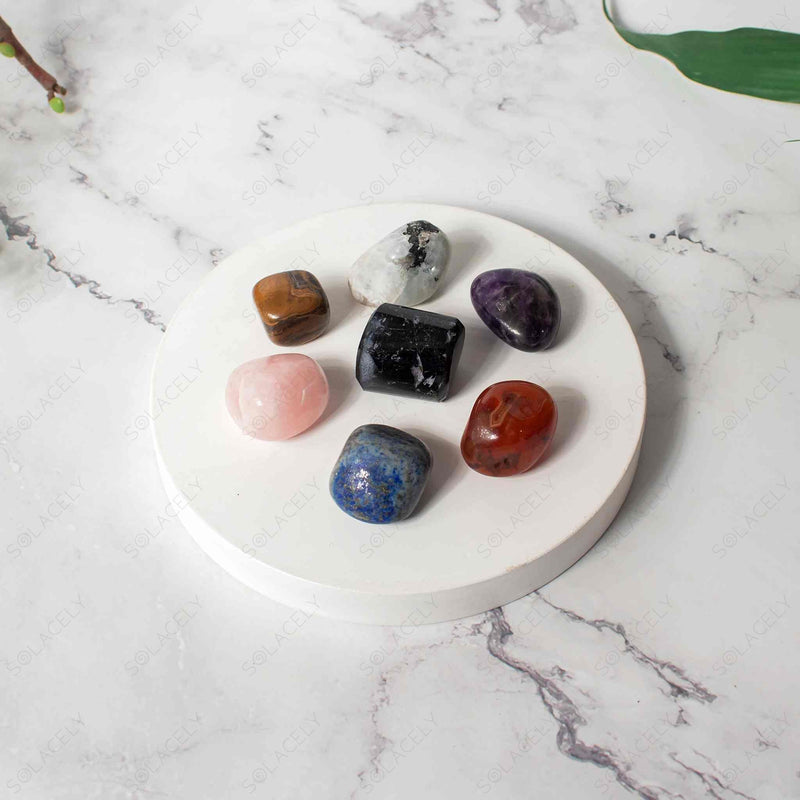
Eight stones carry most of the third eye work in crystal practice: amethyst, lapis lazuli, sodalite, azurite, iolite, labradorite, fluorite and blue kyanite. They span soft copper minerals and hard silicates, opaque rock and transparent gem material, so what they share is colour and tradition rather than chemistry.
Amethyst
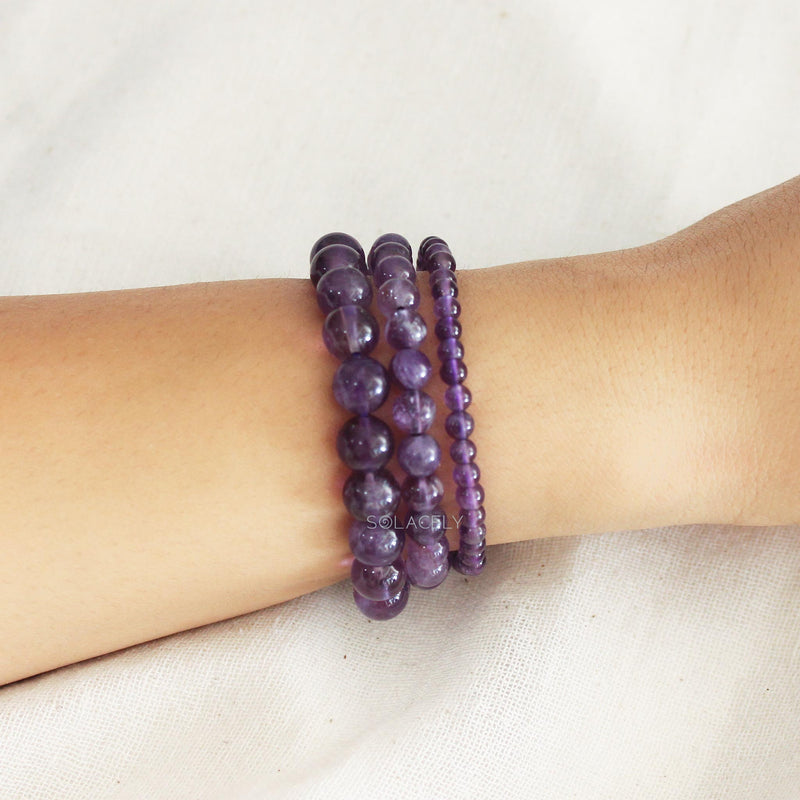
Amethyst is the purple variety of quartz, silicon dioxide, and gemmological reference works place it at 7 on the Mohs scale. Its colour comes from traces of iron combined with natural irradiation underground, which is why one deposit can yield both pale lilac and deep royal purple. It is the calm, meditative brow stone, and our amethyst meaning and properties guide covers its colour range.
Lapis lazuli
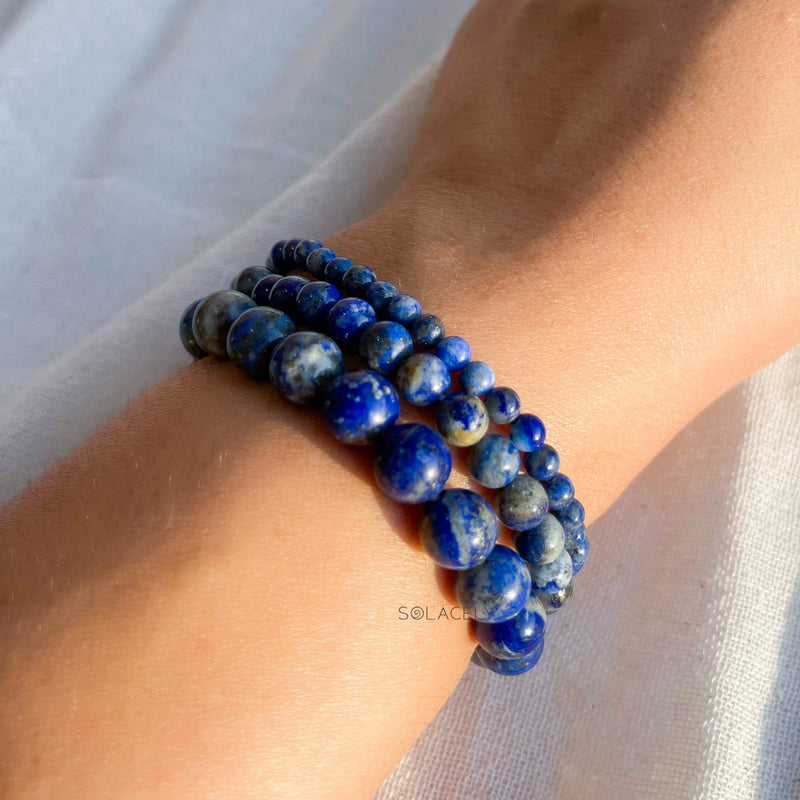
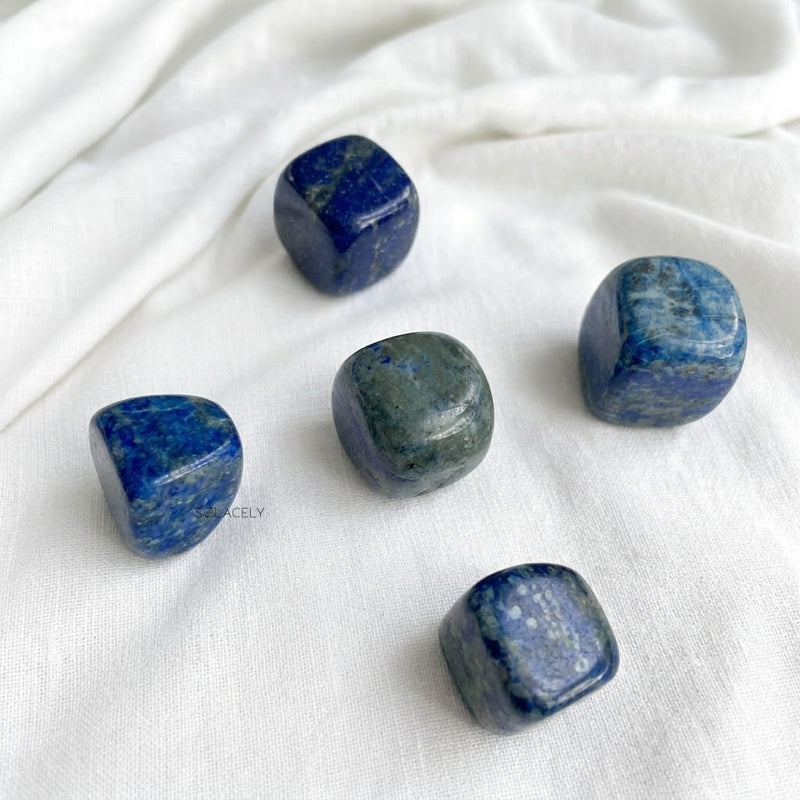
Lapis lazuli is a rock rather than a single mineral, built mainly from lazurite with white calcite veining and brassy flecks of pyrite. It sits at 5 to 5.5 on the Mohs scale. The finest material has come from the Sar-e-Sang valley in north east Afghanistan for thousands of years, and ground lapis gave painters the pigment ultramarine. There is more in our lapis lazuli guide.
Sodalite
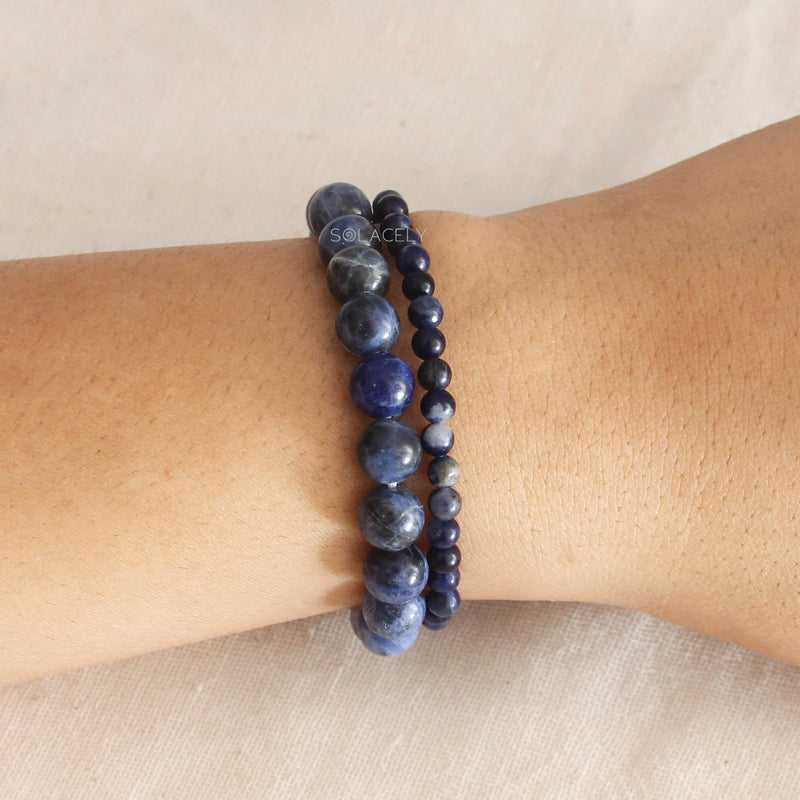
Sodalite is a sodium rich silicate, named in 1811 for the sodium in its chemistry. It is royal blue with white veining and a little softer than amethyst at 5.5 to 6 on the Mohs scale, with well known deposits at Bancroft in Ontario and in Greenland. People reach for it when they want calm, orderly thinking rather than a rush of ideas.
Azurite
Azurite is a copper carbonate hydroxide and the most saturated blue in the group. It is also the softest, roughly 3.5 to 4 on the Mohs scale, and in damp conditions it slowly alters to green malachite, which is why so many specimens show both minerals side by side. It is the classic choice for dreamwork and for holding a question overnight.
Iolite
Iolite is the gem quality form of cordierite, a magnesium aluminium silicate, and at 7 to 7.5 on the Mohs scale it takes daily wear well. It is strongly pleochroic, showing violet blue from one direction and a paler, smokier grey from another. Gem lore ties it to Viking navigators.
Labradorite
Labradorite is a plagioclase feldspar, 6 to 6.5 on the Mohs scale, first described from the coast of Labrador in Canada in the 1770s. Its flash, called labradorescence, comes from light scattering off fine internal layers rather than from anything on the surface. That shifting blue is why it is kept for intuition.
Fluorite
Fluorite is calcium fluoride and grows in cubes and octahedra across an unusually wide colour range, including the purple and violet banding people choose for brow work. It is soft, 4 on the Mohs scale, and the word fluorescence was coined from it. In crystal practice it is the study stone, traditionally kept for tidying scattered thinking.
Blue kyanite
Blue kyanite is an aluminium silicate that grows in long blades, and its hardness depends on direction: roughly 4.5 to 5 along a blade and 6 to 7 across it. It also has perfect cleavage. Kyanite is the alignment stone in crystal tradition, more often held than worn, and it is commonly said to need no cleansing.
How do you use third eye crystals day to day?
Four approaches cover almost everything: lie down with a stone on the brow, hold a palm stone through a short meditation, wear a pendant so the stone sits with you all day, or keep a piece on the bedside table. Repetition matters more than which one you pick.
For brow placement, lie flat on your back somewhere quiet and rest a small tumbled stone just above the bridge of the nose, in the dip between the eyebrows. Flat pieces stay put. Points and clusters roll off. Five to ten minutes is plenty, and many people pair it with slow breathing, counting the exhale.
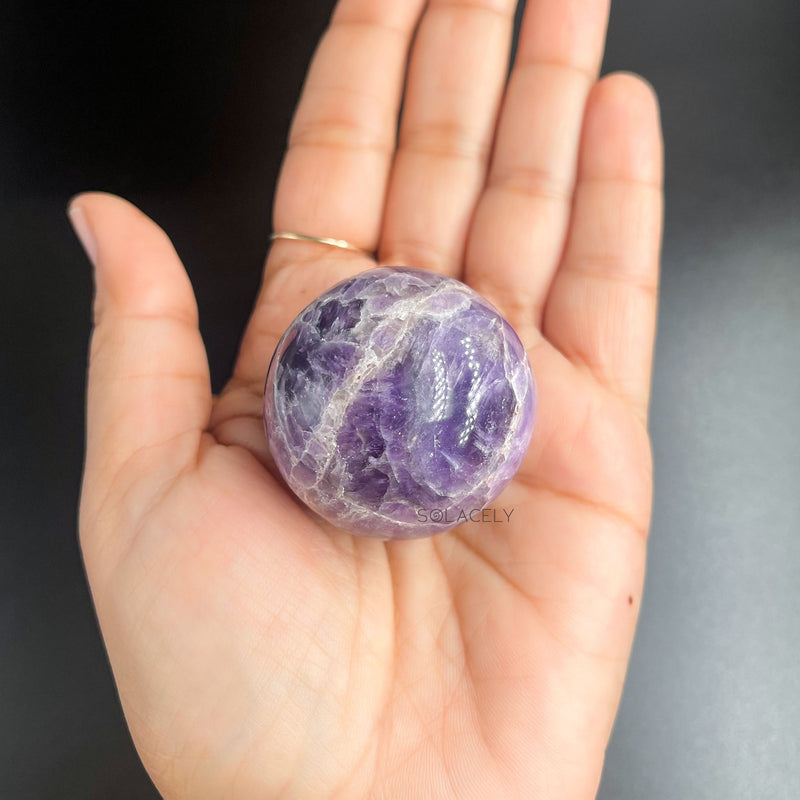
A palm stone is easier if lying down is not practical. Sit, hold the stone in your receiving hand, close your eyes, and let your attention rest at the brow rather than on the stone itself. Amethyst and fluorite both come in generous palm sizes. Our guide to crystals for meditation covers longer sittings.
A pendant keeps the stone with you without any ritual at all, which suits people who forget to sit down. Lapis lazuli and sodalite are the traditional choices there. A bedside piece is the quietest option of the four: amethyst or azurite within reach, so the stone is the last thing you see and the first thing you touch.
How do you care for third eye crystals?
Hardness across this group runs from about 3.5 to 7.5 on the Mohs scale, so no single routine covers them all. The safe default is dry cleaning with a soft cloth, no soaking, no ultrasonic machines and no household cleaners, with two stones needing more attention than the rest.
| Stone | Mohs hardness | Care note |
|---|---|---|
| Azurite | 3.5 to 4 | Shelf specimen, keep dry |
| Fluorite | 4 | Cleavage in four directions, chips easily |
| Blue kyanite | 4.5 to 7, by direction | Store flat, blades split if knocked |
| Lapis lazuli | 5 to 5.5 | Porous and waxed, no soaps or solvents |
| Sodalite | 5.5 to 6 | Dry cloth, avoid long soaks |
| Labradorite | 6 to 6.5 | Durable, avoid sharp knocks |
| Amethyst | 7 | Fades in prolonged direct sun |
| Iolite | 7 to 7.5 | Hard wearing, fine for daily jewellery |
Fluorite needs the most care of the eight. At 4 on the Mohs scale it scratches against a steel key, and it has perfect cleavage in four directions, so a knock at the wrong angle takes a clean chip off a corner. Keep fluorite off keyrings, store it padded and separate, and treat carved fluorite as a display piece rather than everyday jewellery.
Lapis lazuli has a different weakness. Because it is a rock with calcite running through it, it is porous, and polished lapis is normally waxed or resin stabilised to hold its shine. Soaps, solvents, perfume and jewellery dips strip that wax and leave the surface chalky. Wipe it with a dry cloth and take rings off before washing up.
Three shorter notes. Amethyst fades with long, direct sunlight, so a bright windowsill is the one place not to keep it. Kyanite blades split along their cleavage if stored loose in a bowl. Azurite is happiest dry and undisturbed on a shelf.
Which third eye crystal should you start with?
Amethyst, for most people. It is quartz at 7 on the Mohs scale, so it survives daily wear, it comes in tumbles, palm stones and pendants at every price, and its purple sits right beside indigo. Lapis lazuli is the step up if you want the historic stone.
Buy one piece and use it for a month before adding a second. A single amethyst tumble you actually pick up beats a drawer of stones you never touch. Sodalite and fluorite are the affordable additions after that, labradorite if you want the flash.
Crystals are kept as a supportive, traditional practice and are not a treatment for any medical or mental health condition. Nothing here replaces advice, diagnosis or care from a qualified professional, and no crystal should delay or substitute treatment. Keep small stones away from young children and pets because of the choking risk, and never place stones in drinking water.
Sources
Written by Chetena Sharma. Reviewed by the Solacely editorial team.
Frequently asked questions
About the author


Written by Chetna Sharma, crystal healing practitioner and co-founder of Solacely. Chetna has worked with healing crystals for over a decade and curates Solacely's protective stone collection.