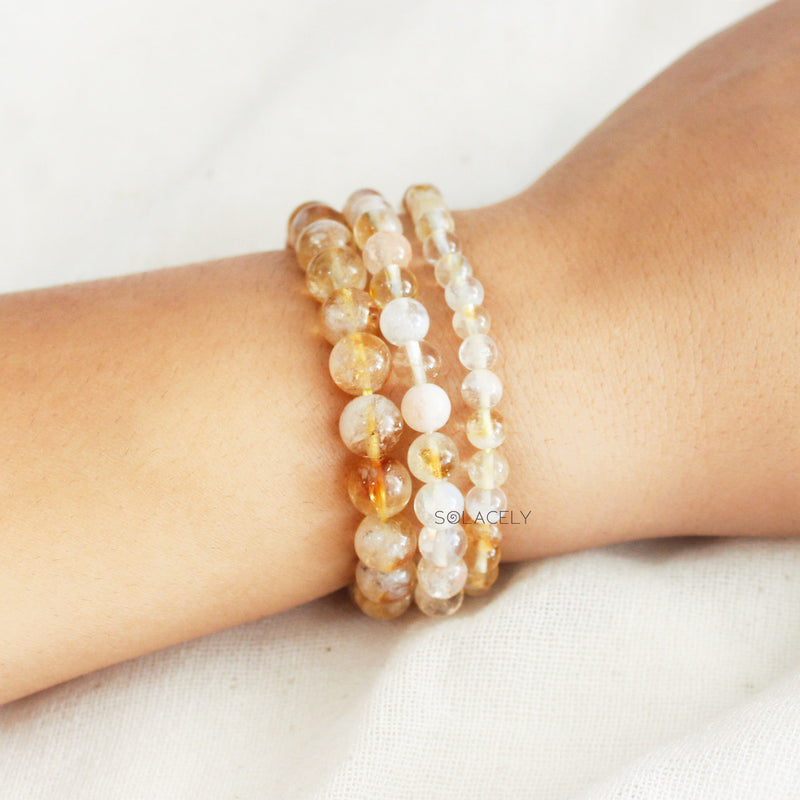
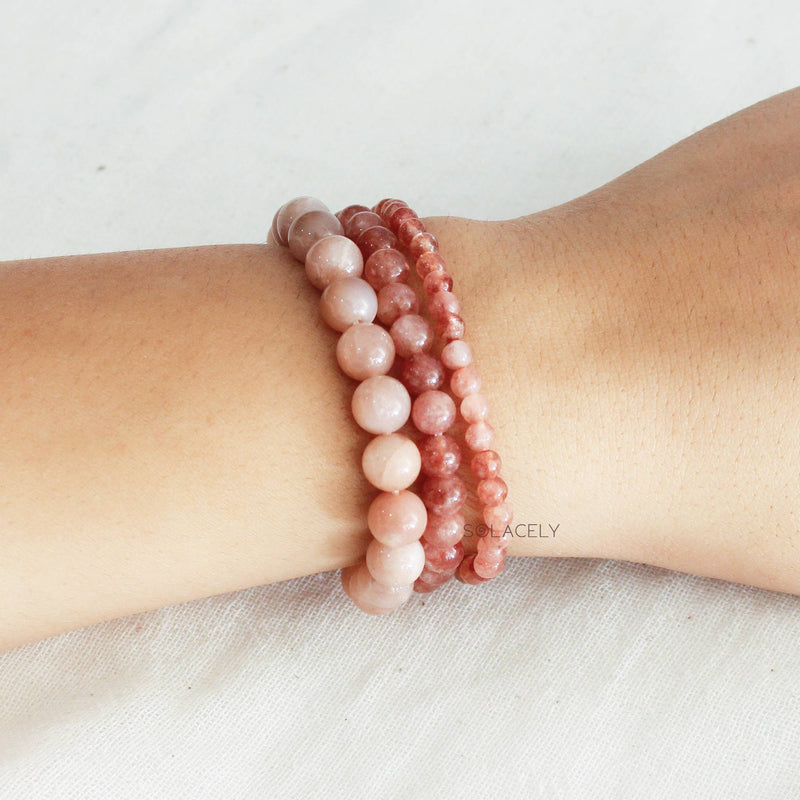
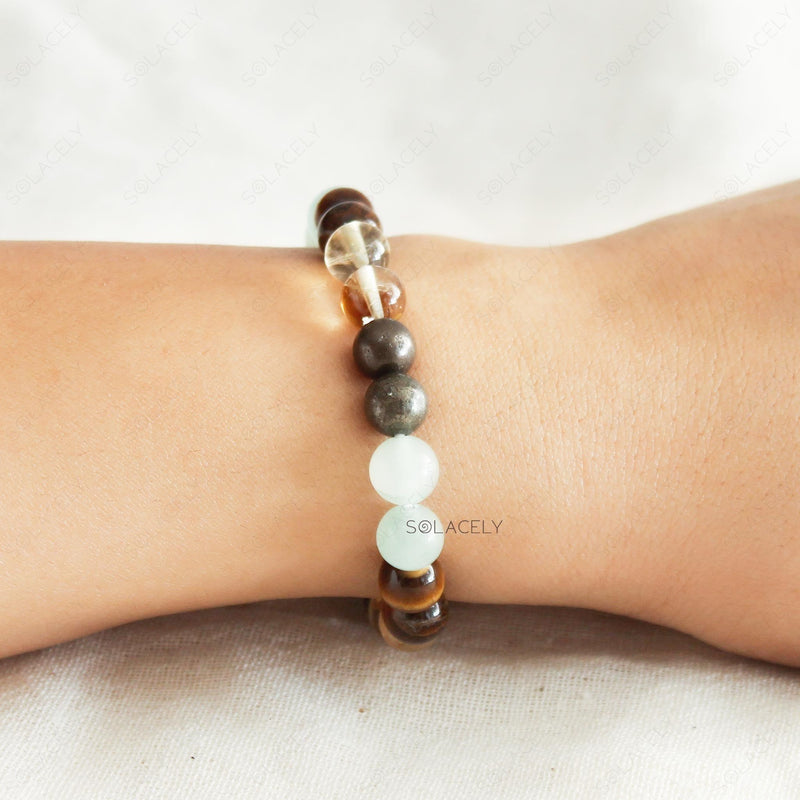
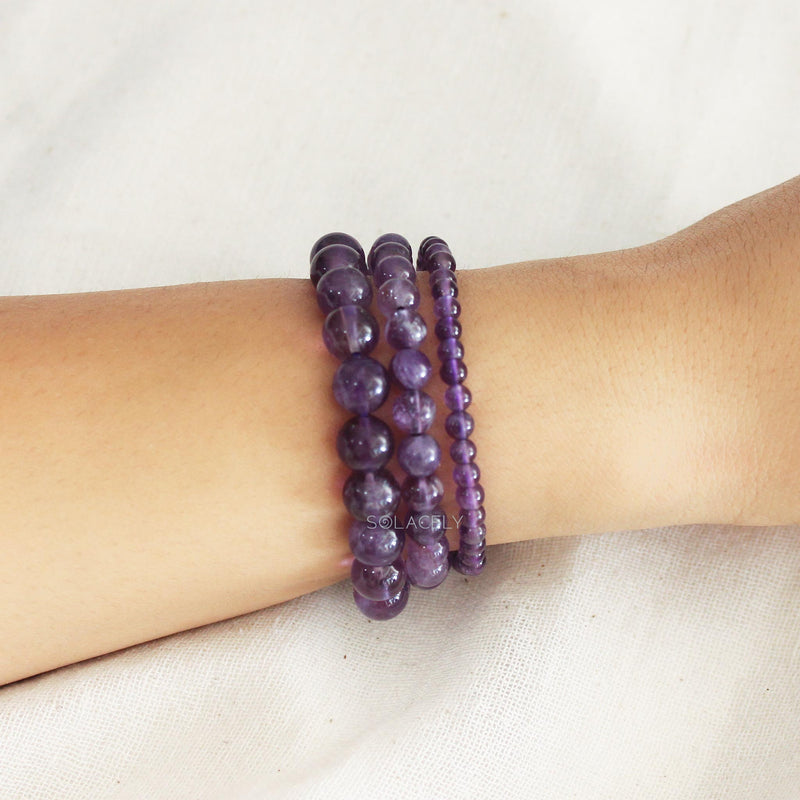
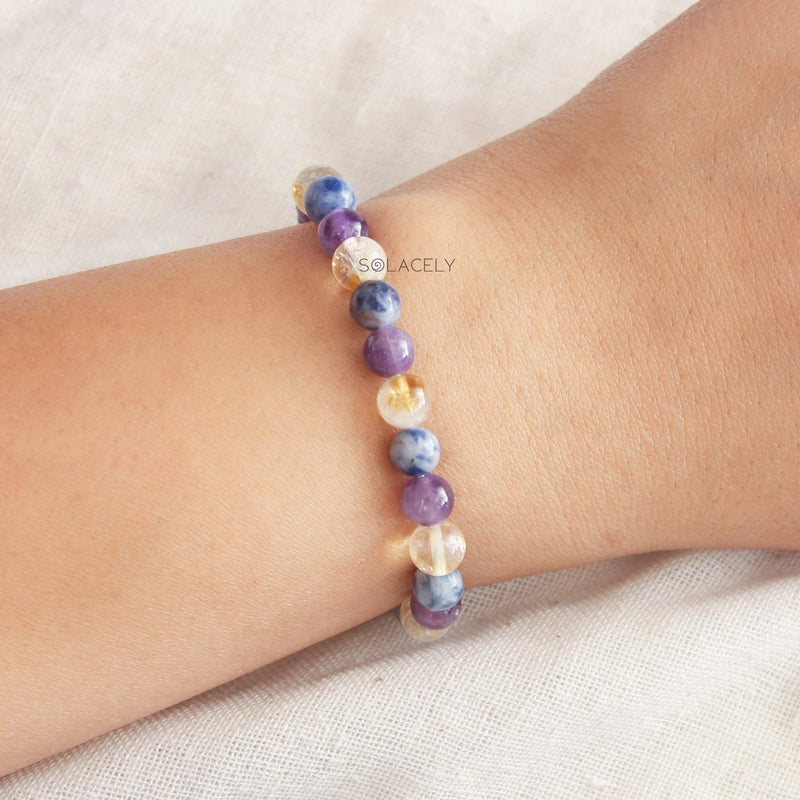
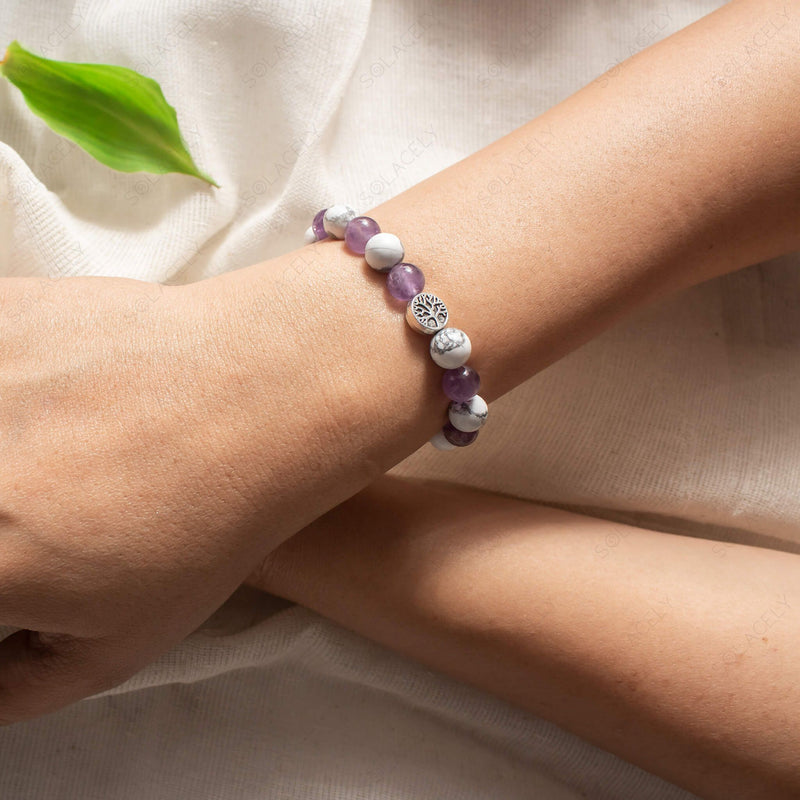
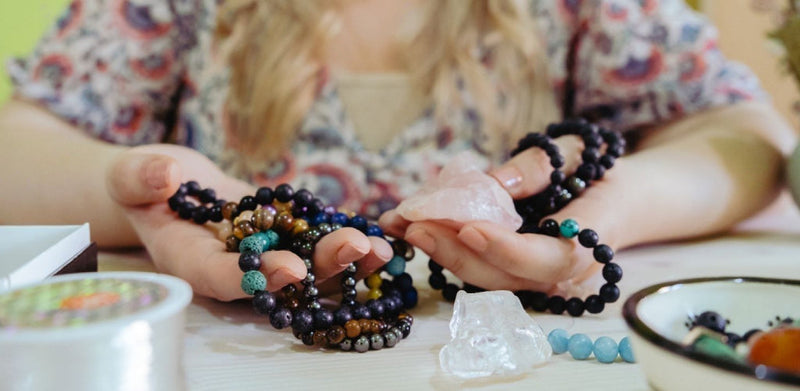
A positive vibes bracelet is a beaded stretch bracelet strung from stones traditionally kept for optimism, calm and warmth. Most versions combine citrine, clear quartz, rose quartz, amethyst, green aventurine, tiger's eye or sunstone on a single strand, so one piece carries several intentions at once rather than just one.
Key takeaways
- The usual line-up is citrine, clear quartz, rose quartz, amethyst, green aventurine, tiger's eye and sunstone, with three to five of them on one strand.
- Every quartz variety on that list sits at 7 on the Mohs scale, which is why these bracelets cope with daily wear. Sunstone is a feldspar at roughly 6 to 6.5.
- Beads come mainly in 6mm, 8mm and 10mm. Measure your wrist, then add about 1cm so a stretch strand sits without straining the cord.
- Put the bracelet on after lotion and perfume have dried, and take it off before you shower or swim.
- Amethyst and citrine can pale after long spells in direct sunlight, so a sunny windowsill is the wrong place to charge them.
- With daily wear, plan on restringing roughly once a year, before the elastic decides for you.
What is a positive vibes bracelet?
It is a single strand of gemstone beads chosen for the mood they are traditionally kept for rather than for one narrow purpose. Sunny stones, calming stones and steadying stones share the same elastic cord. The bracelet is worn as a daily cue for the tone you want to set.
There is no fixed recipe, and that is the point. Two bracelets sold under the same name can hold completely different stones. What they share is the brief: keep the wearer's outlook warm, settled and open. Makers work from a small pool of stones long associated with cheerfulness, affection and clear thinking, then balance the colours so the strand also looks good.
If this is your first beaded strand, the practical side matters more than the stone list. Bead size, wrist measurement and cord quality decide whether you actually wear it. Our guide to crystal bracelets for beginners walks through those basics before you commit to a combination.
Which crystals go into a positive vibes bracelet?
Seven stones do most of the work: citrine, clear quartz, rose quartz, amethyst, green aventurine, tiger's eye and sunstone. Six of those are quartz varieties, which puts them at 7 on the Mohs scale. Sunstone belongs to the feldspar group and is a little softer, closer to 6 to 6.5.
| Stone | Family | Mohs | Traditionally kept for |
|---|---|---|---|
| Citrine | Quartz | 7 | Cheerfulness, confidence, abundance |
| Clear quartz | Quartz | 7 | Clarity and focus on an intention |
| Rose quartz | Quartz | 7 | Warmth, self-kindness, affection |
| Amethyst | Quartz | 7 | Calm and a settled mind |
| Green aventurine | Quartz | 7 | Good fortune and fresh starts |
| Tiger's eye | Quartz | 7 | Steadiness and nerve |
| Sunstone | Feldspar | 6 to 6.5 | Warmth, energy, optimism |
Citrine is the stone most people picture first, and its golden range runs from pale champagne to deep madeira. Warming quartz to draw out those tones is a long established and entirely stable practice across the coloured stone trade, so choose the shade you actually want to look at. Our full guide to citrine covers its colour range in more depth.
How are the stone combinations chosen?
Most makers build around one anchor stone, add one or two supporting stones, then finish with something steadying. The anchor sets the theme, usually citrine or sunstone for a bright bracelet. The supports soften or sharpen it. The steadying bead keeps the strand from feeling one-note.
A common build looks like this. Citrine anchors the warmth. Rose quartz brings the softer, kinder note. Amethyst settles the whole thing down. Then a few beads of tiger's eye or black onyx give the strand weight and a visual full stop. Green aventurine often stands in for citrine when someone wants the same optimism in a quieter colour.
Clear quartz turns up in almost every version, and it earns its place twice over. In crystal tradition it is the amplifier, kept to keep an intention sharp. Visually, it breaks up blocks of colour so the strand reads as deliberate rather than busy. If you want the background on that role, see our clear quartz meaning guide.
Three or four stone types is the sweet spot. Beyond five, the strand starts to look like a sample card and the intention gets diluted along with it.
Which wrist should you wear a positive vibes bracelet on?
The most widespread guidance puts a receiving bracelet on the left wrist and a projecting one on the right. A positive vibes bracelet is usually worn on the left, since the intention is to draw warmth and optimism in. Plenty of people wear theirs on the right and are perfectly happy.
Traditions differ because they come from different places. The left-to-receive idea travels with several Eastern practices, and feng shui bracelets in particular are almost always worn on the left. Other lineages put the emphasis on the dominant hand, on the logic that whatever you wear there goes out into the work you do. Neither one cancels the other out.
There is a practical tiebreaker too. Your dominant wrist takes more knocks against desks, door handles and steering wheels, so a bracelet worn there wears its cord out faster. If you write with your right hand, the left wrist is kinder to the elastic. We go into the different schools of thought in our piece on which hand to wear a crystal bracelet on.
How do you wear one day to day?
Size it properly, put it on last when you are getting ready, and take it off before water. Those three habits do more for a beaded strand than any ritual. A well-sized bracelet you can forget about gets worn. A tight one gets left in a drawer within a fortnight.
Sizing a stretch strand
Wrap a tape measure snugly around your wrist just below the bone, then add about 1cm, or half an inch, for the bracelet length. Add a little more for 10mm beads, since larger beads need more room to sit around the curve of the wrist. A strand that has to be forced over your hand is stretching the cord every single time you put it on.
When to put it on
Get dressed, apply lotion and perfume, wait for both to dry, then slide the bracelet on. Oils and alcohol seep into the drilled holes and along the cord, where they attract grime and shorten the elastic's life. The same logic applies at the end of the day. Take it off before you shower, swim, wash up or go to the gym.
Stacking
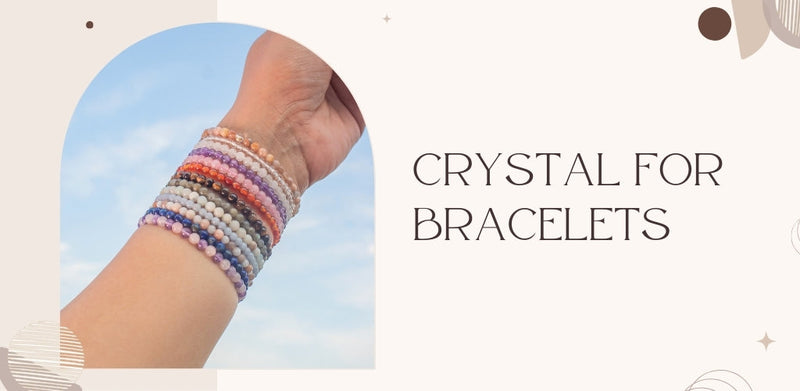
Stacking two or three strands is common and looks intentional if you keep one thing consistent, usually bead size or a repeated colour. Many people pair a bright bracelet with a grounding one, then wear both on the same wrist. Sunstone stacks particularly well with citrine, as we cover in our notes on sunstone for positivity.
How do you care for a positive vibes bracelet?
Wipe it with a soft dry cloth, store it flat and away from bright light, and keep it out of water. Quartz is hard enough for daily wear at 7 on the Mohs scale, but the elastic cord holding the beads is the weakest part of the piece and needs the most thought.
Amethyst and citrine can lose colour after long spells in strong sunlight, which is worth knowing if you have heard the advice about charging crystals on a windowsill. That is the one place these two should not sit. A shaded shelf, a dish on a side table or a bowl of dry rice all work. Moonlight is the gentler option if you like an overnight ritual.
For cleansing, skip water entirely with a strung bracelet. Even on water-safe stones, soaking swells the cord and traps moisture where you cannot dry it. Sound, incense smoke, a few hours on a selenite plate or simply setting it down somewhere quiet with your intention are all kinder to the piece.
Then there is the cord itself. With daily wear, elastic gives up somewhere around the twelve month mark, usually with no warning at all. Restring it before that happens. Any bead shop will do it cheaply, and it costs far less than chasing beads across a car park.
Crystals and crystal jewellery are offered for personal, spiritual and decorative use. Nothing here is medical advice, and crystals are not a treatment for any physical or mental health condition. Please speak to a qualified healthcare professional about any health concern, and never delay or replace medical care. Keep small beads away from young children and pets, as they are a choking hazard, and never place stones in drinking water.
Sources
Written by Chetena Sharma. Reviewed by the Solacely editorial team.
Frequently asked questions
About the author


Written by Chetna Sharma, crystal healing practitioner and co-founder of Solacely. Chetna has worked with healing crystals for over a decade and curates Solacely's protective stone collection.