Wear receiving stones on your left wrist and projecting stones on your right. Anything you want to draw in, such as love, calm, prosperity or intuition, goes left. Anything you want to send out, release or keep at a distance goes right. Every stone below follows from that one rule.
Key takeaways
- Left = receiving. Rose quartz, amethyst, citrine, moonstone, green aventurine.
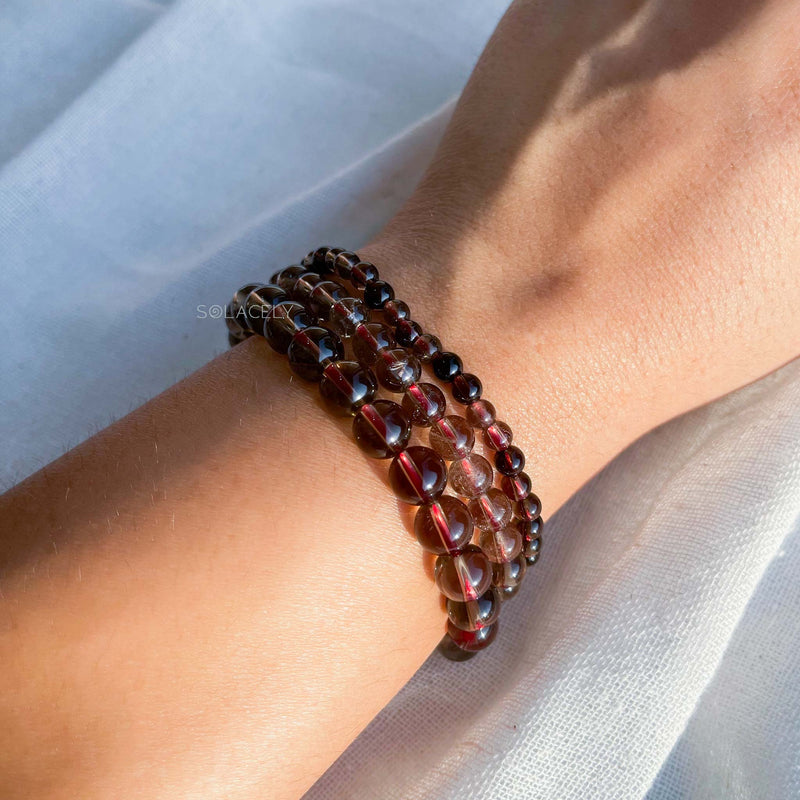
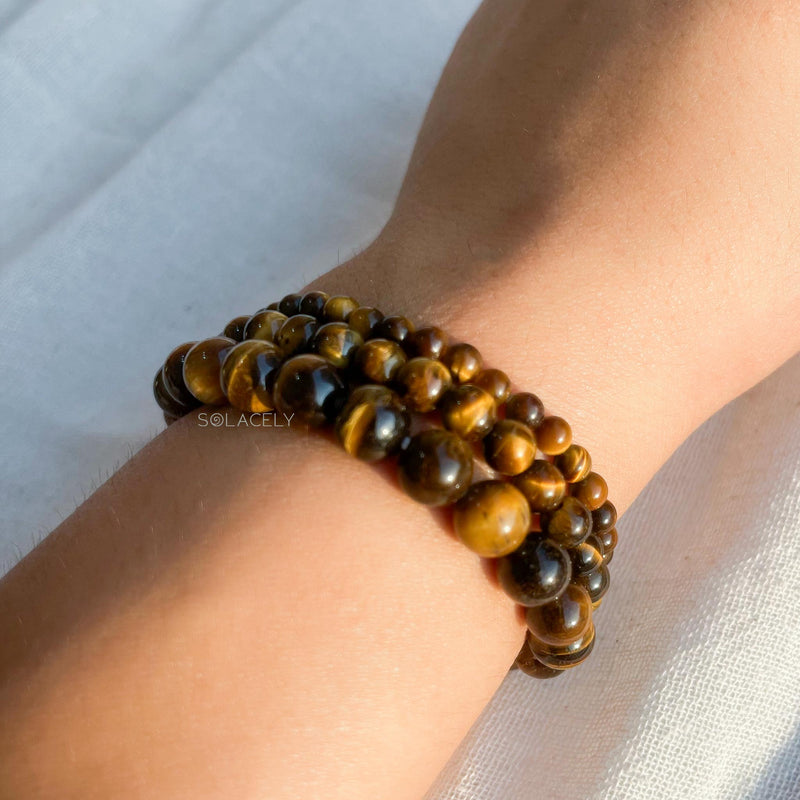
- Right = projecting. Black tourmaline, hematite, smoky quartz, pyrite, tiger's eye.
- The test: does this stone bring something in, or send something out?
- Wearing one on each wrist is common, and keeps the two jobs separate.
- Switching wrists changes the intention, not the stone. Nothing is undone.
- Full table of 43 stones below.
The rule, and why it works
Crystal practice divides the body into two sides. The left is passive and inward, the side that takes things in. The right is active and outward, the side that acts on the world. It is the same logic behind giving with the right hand and receiving with the left in many older customs.
For most people the left is also the hand used less, which makes it the natural home for something you are quietly carrying rather than working with. That is a practical reason on top of the traditional one.
Once you know which wrist feels right for your intention, the next step is choosing the crystals that resonate with you. If you have specific intentions in mind, you can design your own crystal bracelet by combining stones that complement your goals and personal style.
So the question is never really which hand. It is what the stone is for. Answer that and the wrist follows automatically.
The one test that settles it
Finish this sentence about your stone: I am wearing this to...
- If it ends with bring something in, wear it left. Love, calm, luck, money, intuition, confidence you want to grow.
- If it ends with keep something out, let something go, or put something across, wear it right. Protection, grounding, releasing, projecting authority. For protection stones specifically, a black tourmaline bracelet is the most common starting point.
That covers nearly every stone without needing to look anything up. The table below is for when you want to check.
All 43 stones, and which wrist
Sorted by wrist, then alphabetically. Where a stone has its own detailed guide, the name links to it.
Left wrist: receiving stones
| Stone | Why the left |
|---|---|
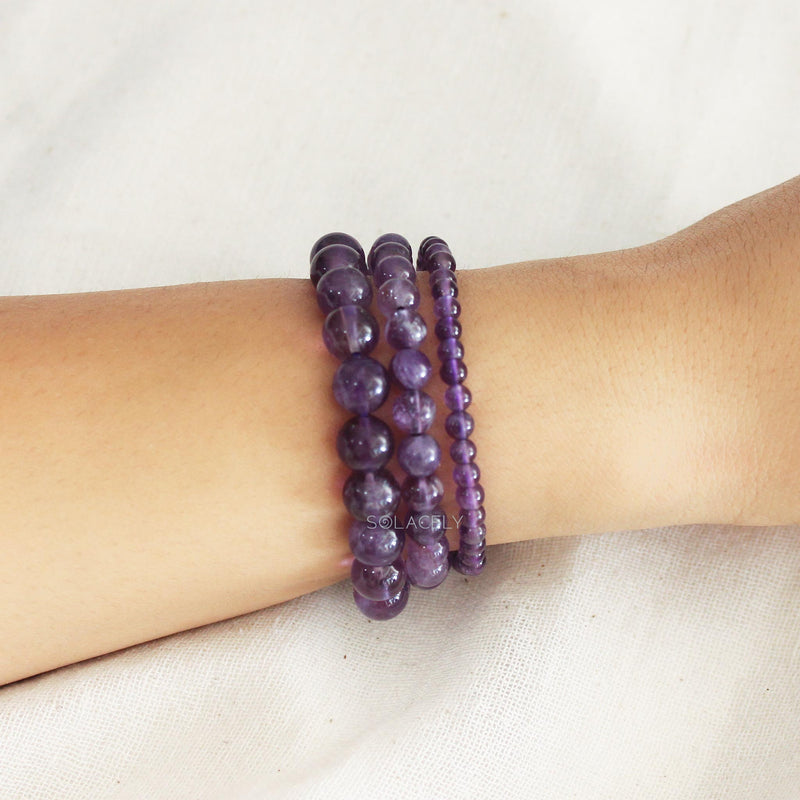
| Amethyst | Settling a busy mind, taken in rather than sent out |
| Amazonite | Composure before speaking, drawn in first |
| Angelite | Quiet and reassurance |
| Aquamarine | Calm under pressure |
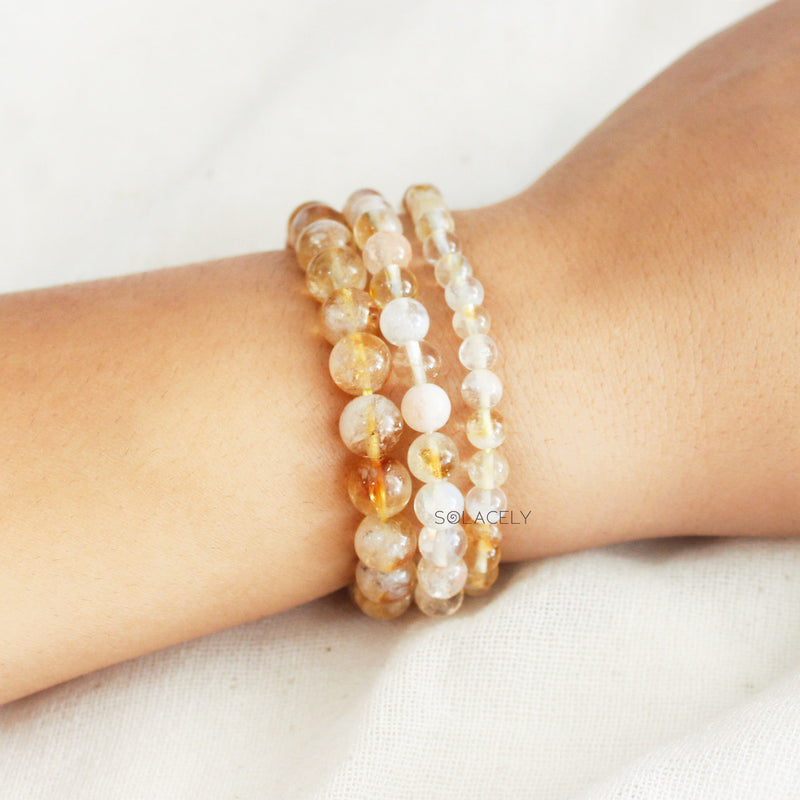
| Citrine | Drawing prosperity and warmth toward you |
| Clear Quartz | Clarity, the neutral all rounder |
| Green Aventurine | Opportunity and openings arriving |
| Green Jade | Steady growth and prosperity coming in |
| Howlite | Quieting tension before an event |
| Kunzite | Softening toward yourself |
| Lapis Lazuli | Insight and clear thinking |
| Labradorite | Sensing your way through a transition |
| Larimar | Ease and cooling |
| Lepidolite | Steadiness through emotional swings |
| Malachite | Transformation drawn inward |
| Moonstone | Intuition and cycles, the archetypal receiving stone |
| Mother of Pearl | Gentleness and protection of a soft kind |
| Peridot | Renewal and lightness |
| Pink Opal | Emotional repair |
| Rainbow Fluorite | Focus and mental order |
| Rhodochrosite | Self compassion |
| Rhodonite | Forgiveness and healing after hurt |
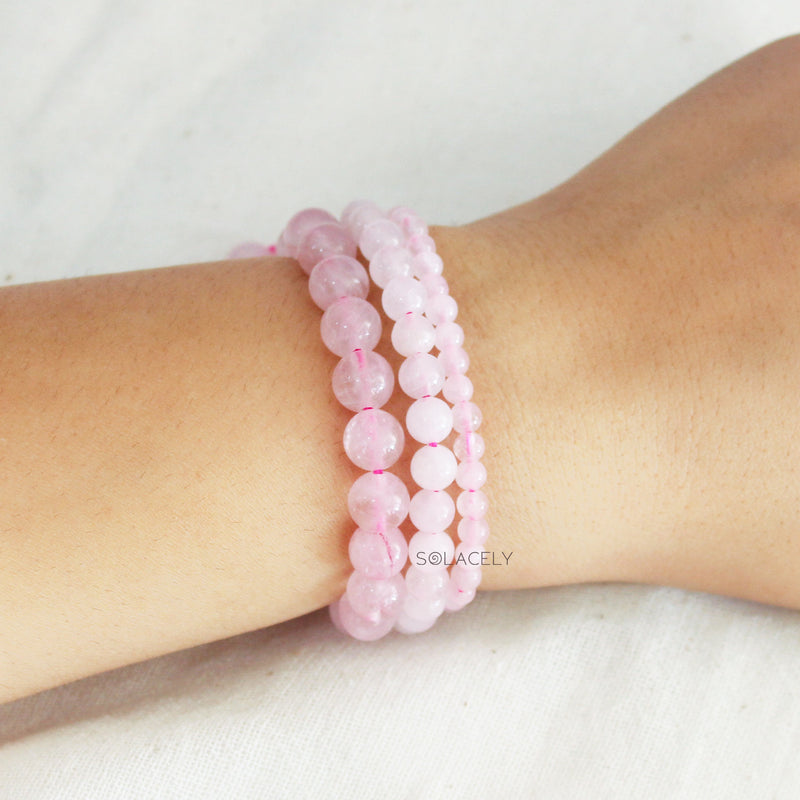
| Rose Quartz | Love and self kindness taken in |
| Selenite | Clearing and quiet, received |
| Sodalite | Logical calm and structured thought |
| Turquoise | Steadiness and honest speech |
Right wrist: projecting stones
| Stone | Why the right |
|---|---|
| Black Obsidian | Deflecting, and facing what needs facing |
| Black Onyx | Self discipline projected outward |
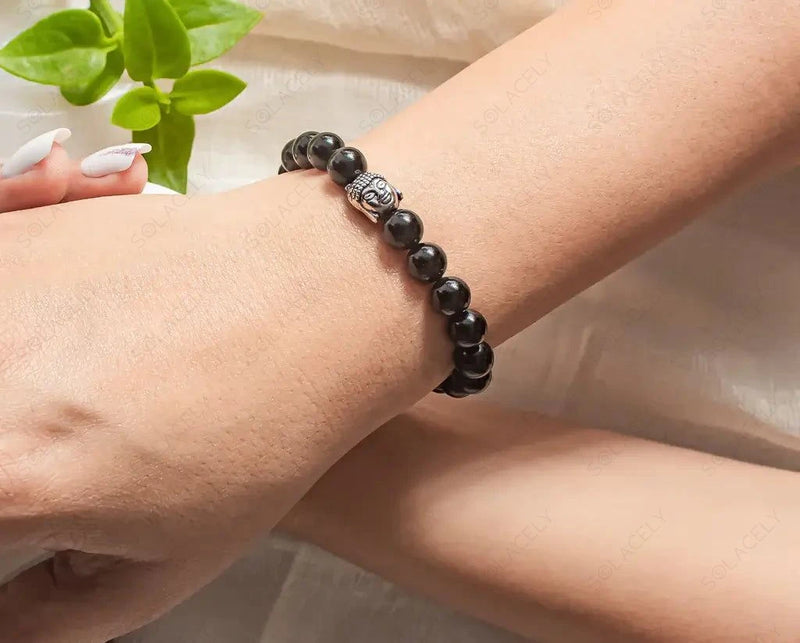
| Black Tourmaline | The boundary stone. What does not get through |
| Bloodstone | Courage and stamina put into action |
| Carnelian | Motivation, pushing a stalled thing forward |
| Dalmatian Jasper | Playfulness and breaking a stuck mood |
| Evil Eye | Turning unwanted attention away |
| Garnet | Drive and commitment expressed |
| Hematite | Grounding and holding a line |
| Protection bracelet | Mixed protective stones, worn outward facing |
| Pyrite | Will and earned confidence projected |
| Red Jasper | Endurance and steady physical drive |
| Smoky Quartz | Releasing what has built up |
| Sulemani Hakik | Traditional protection against ill will |
| Sunstone | Vitality and visibility, sent outward |
| Tiger's Eye | Nerve and courage in the moment |
Either wrist
| Stone | Why |
|---|---|
| Seven Chakra | Covers all seven centres, so neither side dominates. Wear it wherever you will notice it. |
The stones with two valid placements
A handful genuinely work on either side, depending on the intention, and it is worth knowing which.
- Citrine. Left to draw prosperity in. Right when you are about to state a price, since it is a solar plexus stone and that side is about what you ask for.
- Rose quartz. Left for self kindness. Right when the warmth is meant for other people, which suits carers.
- Amethyst. Left to settle yourself. Right if your role is setting the tone for a room.
- Black tourmaline. Right to hold a boundary. Left if the trouble is feeling unmoored rather than exposed.
- Clear quartz. The genuine wildcard. Worn alone it goes left, but paired it takes the wrist of whatever it is paired with.
- Labradorite. Left for intuition. Right when you are wearing it for its second tradition as a shield.
Wearing bracelets on both wrists
This is the arrangement most regular wearers settle into, and it is the tidiest. Receiving stones live on the left, projecting stones on the right, and the two wrists keep doing separate jobs.
The classic pair is sunstone and moonstone, one on each wrist, since they are cleanly opposed and matched in hardness. Another common setup is rose quartz left and black tourmaline right, for staying open without absorbing everyone else's mood.
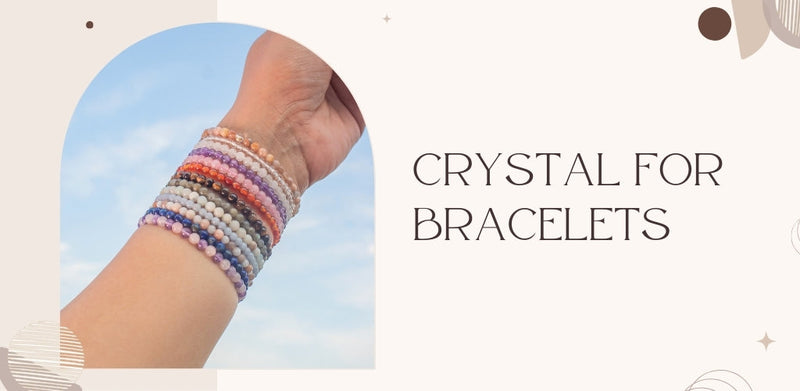
If you stack several on one wrist, keep the stones within about a point of each other on the Mohs scale so they wear evenly. Our guide to crystals for bracelets covers combining and sizing in detail.
Does it matter if you get it wrong?
No. Nothing is undone by wearing a stone on the other side. The convention is a way of keeping your own intention legible to you, so switching wrists simply changes what you are telling yourself each time you notice it.
Plenty of people move a bracelet from one wrist to the other as their situation changes: citrine on the left through a slow season, on the right in the week they have to negotiate. That is the system working as intended rather than a mistake.
Left handed? Read this
Most practitioners keep left as the receiving side regardless of handedness, because the convention describes the body's two sides rather than which hand you write with.
There is one practical exception worth taking seriously. If you are left handed, your left wrist meets more door frames, desks and keyboards than your right, so a softer stone will wear faster there. For fragile stones such as moonstone, labradorite or fluorite, comfort and durability are a fair reason to switch sides.
Care, whichever wrist
The elastic fails long before the stones do. Take any beaded bracelet off for showering, swimming and the gym, and expect to restring a daily wear piece after a year or two.
Three stone specific rules cover most of the list. Amethyst, rose quartz, citrine and smoky quartz all soften in colour with sustained direct sunlight. Pyrite must stay dry and must never be salt cleansed. Selenite and lepidolite are soft and water sensitive, so they are better off the wrist entirely. New to this? Start with crystal bracelets for beginners.
The uses described here reflect traditional and cultural crystal practice. They are not medical claims and are not a substitute for professional healthcare or advice. Keep small beads away from young children, as loose beads are a choking risk.
Sources
Written by Chetena Sharma. Reviewed by the Solacely editorial team.
Frequently asked questions
About the author


Written by Chetna Sharma, crystal healing practitioner and co-founder of Solacely. Chetna has worked with healing crystals for over a decade and curates Solacely's protective stone collection.