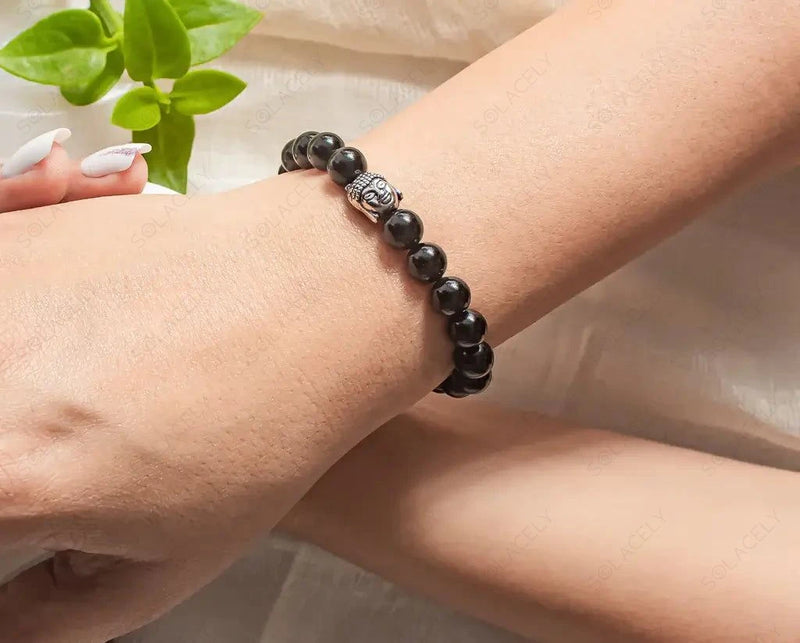
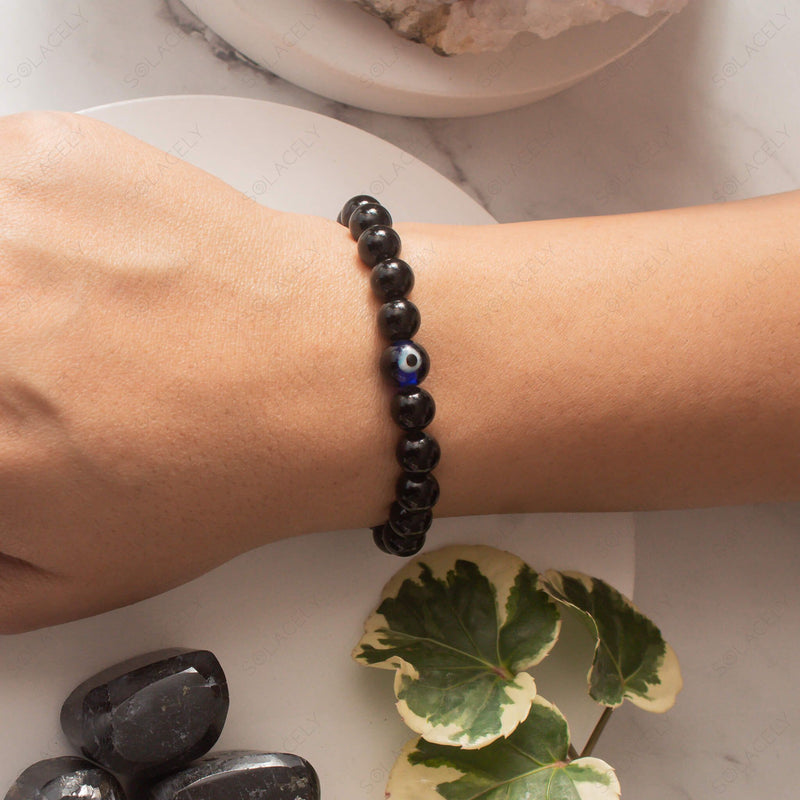
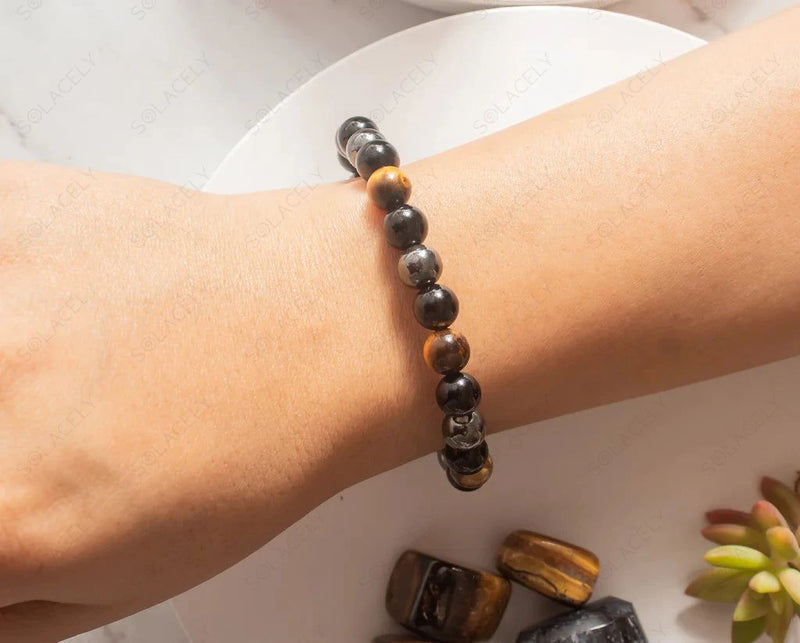
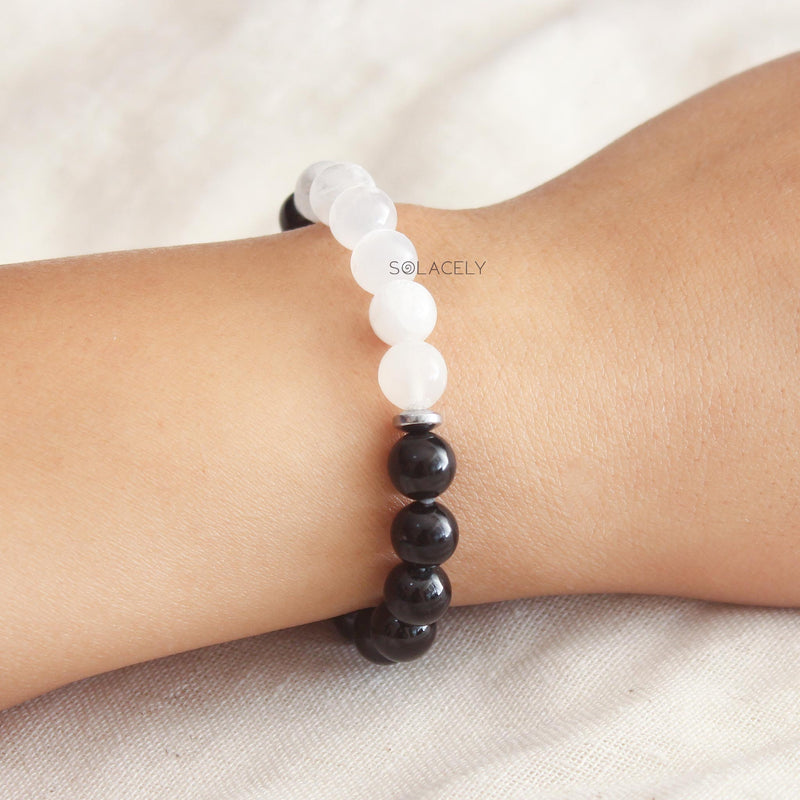
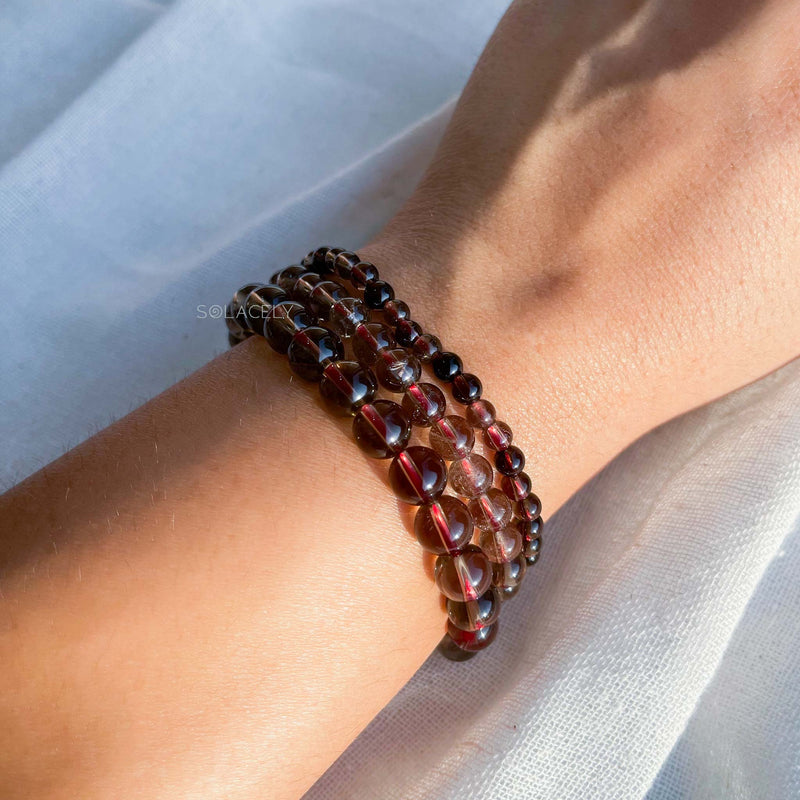
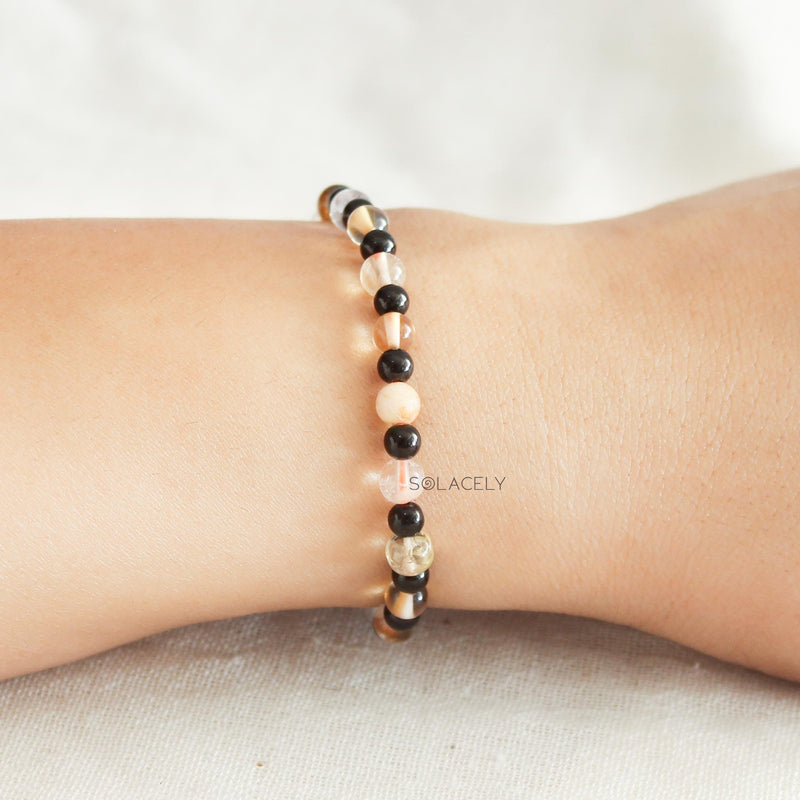
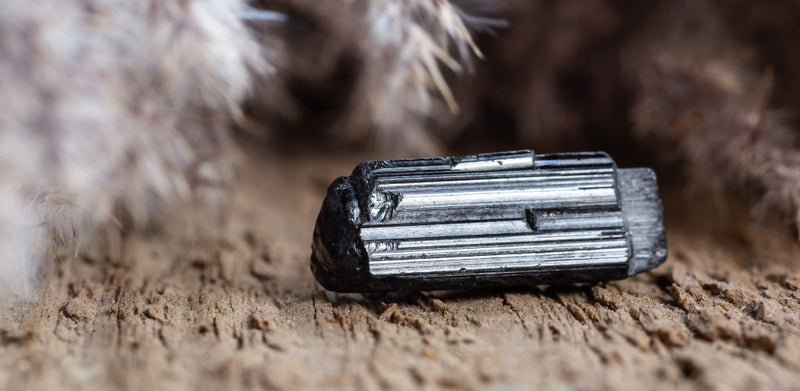
Wear a black tourmaline bracelet on your right wrist. Black tourmaline is the boundary stone of crystal practice, kept for what does not get through, and the right is the projecting side. The left is the exception, chosen when you want the steadiness inward rather than the boundary outward.
Key takeaways
- Right wrist for the usual intention: holding a line with the world outside.
- Left wrist when the aim is feeling steadier in yourself.
- Wearing one on each wrist is common for people in high contact work.
- Pairs best with smoky quartz, which matches it closely on hardness.
- One of the least demanding stones to look after. Water, sound, smoke and moonlight are all safe.
Why the right wrist
Crystal practice treats the left as the receiving side and the right as the projecting side. Anything meant to be drawn in goes left. Anything meant to be sent out, deflected or held at a distance goes right.
Black tourmaline is the clearest case of a right hand stone there is. Its entire tradition is about what does not get in: the draining colleague, the open plan office, the family weekend that leaves you flat. That is outward facing work, so the right wrist matches the intention.
It is worth understanding the reasoning rather than just following it, because it makes the exception below obvious rather than arbitrary.
When to wear it on the left
Some practitioners wear black tourmaline on the left, and it is a considered choice rather than a mistake.
The left placement reads as grounding taken in rather than a boundary pushed out. It suits someone whose difficulty is feeling scattered or unsettled in themselves rather than exposed to other people. If you bought the stone because of a person or a place, the right is the better fit. If you bought it because you feel unmoored, the left makes sense.
Wearing one on each wrist
Two black tourmaline bracelets, one per wrist, is a common arrangement and worth knowing about. Tradition reads it as a complete boundary rather than a directional one, and it is popular with nurses, teachers and anyone whose day involves absorbing other people's states from every direction.
Black tourmaline is also among the more affordable stones, because schorl is the most abundant member of the tourmaline family, so doubling up costs less than it would with almost any other protective stone.
Once you know which wrist feels right for wearing Black Tourmaline, you can also choose a bracelet style that matches your personal preferences and intentions. You can create your own crystal bracelet by selecting the stones and design details that feel most meaningful to you.
What to wear with it on the same wrist
| Partner stone | Mohs | What it adds |
|---|---|---|
| Smoky quartz | 7 | Settling what has already built up |
| Black onyx | 6.5 to 7 | Steadiness and self discipline |
| Hematite | 5 to 6.5 | Grounding, though it dulls first |
| Rose quartz | 7 | Keeps the practice open rather than only closed |
Smoky quartz is the standard partner at 7 against tourmaline's 7 to 7.5, so the two wear evenly and the bracelet reads as one dark object. We cover the pairing in smoky quartz and black tourmaline. Selenite is the traditional companion for clearing, but it is soft and water sensitive, so keep it off the wrist and beside the bed instead.
Looking after it
This is the easy part. Black tourmaline is hard, non porous and chemically stable, so water, sound, smoke and moonlight are all safe for cleansing, and warm soapy water handles everyday cleaning.
Two small cautions. Avoid ultrasonic cleaners, because tourmaline crystals have deep striations along their length and can be brittle across them. And as with any beaded bracelet, take it off for the shower and the gym so the elastic lasts.
Where to go next
For the rule applied across every stone, see our pillar guide to which hand to wear your crystal bracelet. For what the stone is and what it is kept for, see black tourmaline meaning and properties.
The properties described here reflect traditional and cultural belief around crystals. They are not medical claims, they are not claims about physical shielding, and they are not a substitute for professional healthcare. If you are managing a health concern, speak to a qualified practitioner.
Sources
Written by Chetena Sharma. Reviewed by the Solacely editorial team.
Frequently asked questions
About the author


Written by Chetna Sharma, crystal healing practitioner and co-founder of Solacely. Chetna has worked with healing crystals for over a decade and curates Solacely's protective stone collection.