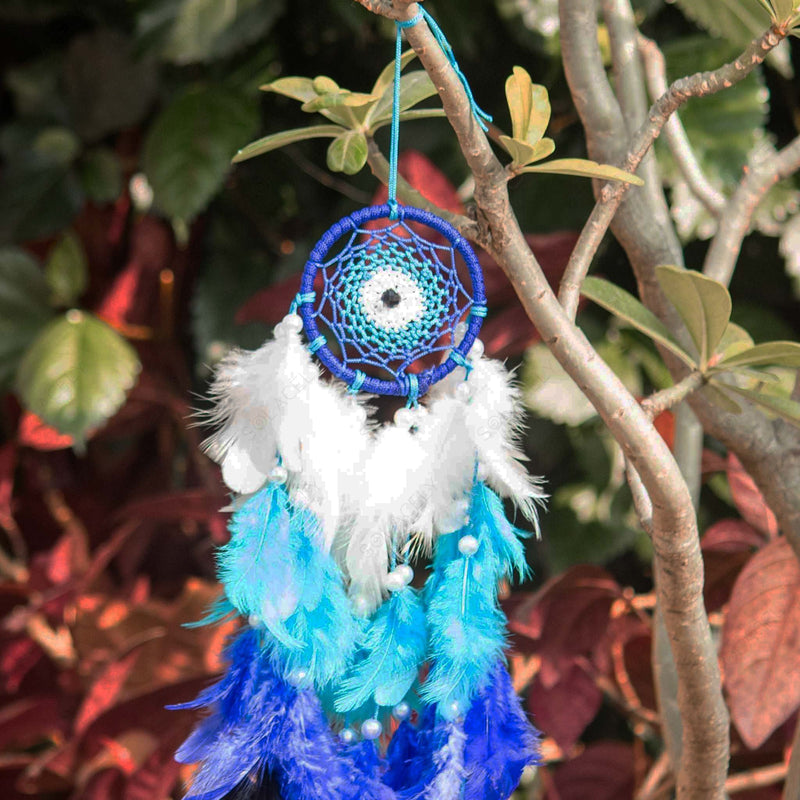
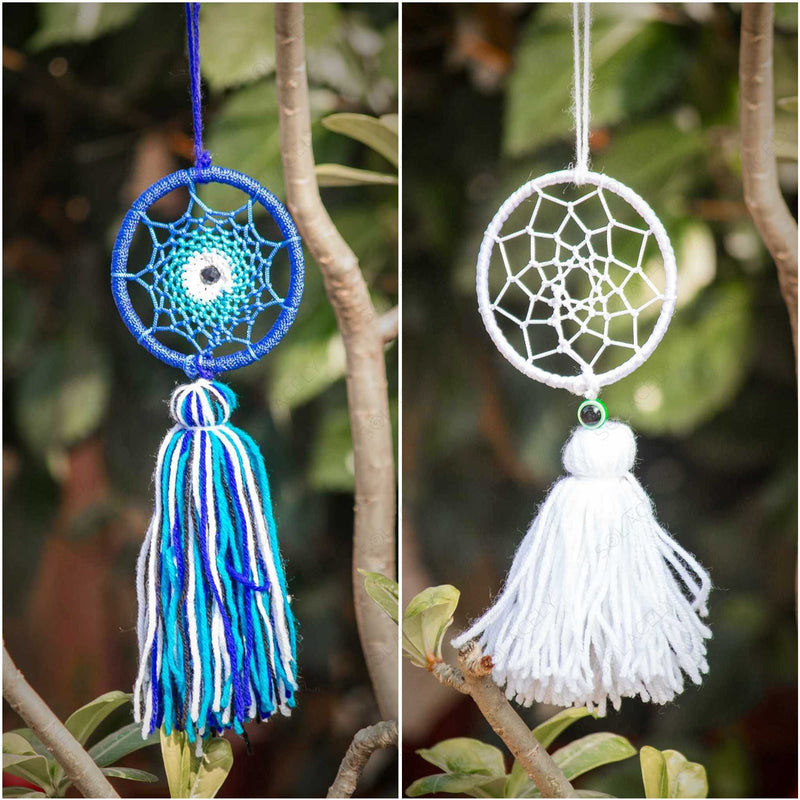
A dreamcatcher is a handmade hoop with a woven web at its centre, hung with feathers and beads, that comes from Native American (Ojibwe) tradition. Its meaning is protection during sleep: the web is believed to catch bad dreams while good dreams slip through to the sleeper. Today it is also a calm-intention décor piece.
Key Takeaways
- A dreamcatcher is a willow or metal hoop holding a woven net, finished with feathers and beads, traditionally hung above a bed.
- It originated with the Ojibwe (Chippewa) people of North America and later spread across many tribes, per Encyclopaedia Britannica.
- Symbolism: the hoop is the circle of life, the web filters dreams, feathers guide good dreams down, and beads mark the trapped or the sacred.
- Tradition holds that bad dreams tangle in the web and fade at dawn, while good dreams pass through the centre and glide down the feathers.
- decorative dreamcatchers span a wide range depending on size, material, and handwork.
What Does a Dreamcatcher Mean?
A dreamcatcher means protection and peaceful sleep. In its original Ojibwe context it is a protective charm, a woven web set in a hoop that was hung near a sleeping child or elder. The core idea is simple: keep harmful dreams away and let good ones reach the dreamer. It reads as care made visible.
Beyond the bedroom, the object carries a broader meaning of watchfulness and safety. A spider's web inspired the design, and the web stands for the way life is connected, thread to thread. When you gift or hang one, you are passing on a wish for rest, safety, and gentle nights.
That is why the dreamcatcher travels so well as a symbol. It works as folk protection, as art, and as a quiet reminder to slow down. If you want it purely as home styling, our guide on where to place dream catchers shows how the same piece changes a room's mood.
The Origin: Ojibwe and Native American Tradition
According to Encyclopaedia Britannica, the dreamcatcher (or dream catcher) originated with the Ojibwe (Chippewa) people of North America and later spread to many other Native American nations, partly through the pan-Indian movement of the 20th century. It was traditionally a small, handmade hoop of bent willow strung with sinew or plant fibre.
Ojibwe oral tradition ties the object to Asibikaashi, the Spider Woman, a protective figure who watched over the people. As the community grew and scattered across a wide land, she could no longer reach every cradle. Mothers and grandmothers began weaving webs in small hoops to carry that protection to each child, catching harmful influences the way a spider's web catches what drifts into it.
The Ojibwe are one of the largest Indigenous groups in North America, living around the Great Lakes and into Canada, as Britannica notes. Their language, Anishinaabemowin, gives us the roots of many of these traditions. Treating the dreamcatcher with respect means remembering it is a living cultural object, not just a craft trend.
Anatomy of a Dreamcatcher
A dreamcatcher has four parts: a hoop, a woven web, hanging feathers, and beads. The hoop was traditionally willow, bent while green; the web was sinew or nettle fibre woven inward toward a small central hole. Feathers hang from the base, and beads sit within the web or along the threads.
Modern pieces swap materials for durability. Metal or rattan hoops replace willow, cotton or nylon thread replaces sinew, and dyed craft feathers stand in for wild ones. The proportions stay familiar, though: a round frame, a taut inner net, and a soft fringe below.
Here is how the classic parts map to what they represent:
| Part | Traditional material | What it symbolises |
|---|---|---|
| Hoop | Bent willow | The circle of life, unity, the cycle of day and night |
| Web / net | Sinew or plant fibre | Filtering dreams, the connected web of life |
| Feathers | Bird feathers | Breath and air; a soft path for good dreams |
| Beads | Wood, bone, or stone | The trapped bad dreams, or the sacred spider |
| Central hole | The open middle | The gap good dreams pass through |
When you display a dreamcatcher online or in a shop, each of these features deserves a clear photo. Give every image descriptive alt text, for example 'handwoven willow dreamcatcher with white feathers and turquoise beads,' so the piece is accessible to screen-reader users and legible to search engines.
The Symbolism of the Web, Feathers, and Beads
The symbolism sits in three elements. The web is the filter, modelled on a spider's web, and stands for how everything in life is linked. The feathers represent breath and air, offering good dreams a gentle slide down to the sleeper. The beads mark either the bad dreams caught in the threads or the sacred spider herself.
The web is the heart of the object. Its inward spiral leaves a small opening at the centre, and that geometry is the whole point: it looks delicate but purposeful. Many families read the web as a map of connection, a reminder that no one sleeps entirely alone.
Feathers carry their own meaning. In many Native American traditions feathers are sacred and tied to the breath of life, which is why they hang where a good dream would need to travel downward. A single central feather sometimes represents the breath itself.
Beads finish the story. Some tellings say each bead is a nightmare frozen in the web at dawn; others say a single bead is the spider, keeping watch. Both readings point the same way, toward protection.
How a Dreamcatcher Is Believed to Work
Tradition holds that a dreamcatcher filters dreams while you sleep. Hung above the bed where morning light reaches it, the web is said to snare bad dreams, which tangle in the threads and dissolve when the sun rises. Good dreams find the small central hole, pass through, and drift down the feathers to the sleeper.
The nighttime logic is tidy. Bad dreams, drawn to the web, get caught like anything else that meets a spider's silk. They cannot reach the person below. Because they are trapped in the open air, the first light of day is believed to clear them away, resetting the web for the next night.
Good dreams behave differently in the story. They know the way through the centre and glide gently along the feathers, arriving softly. Whether you take this literally or not, the effect many people report is real enough: a calmer bedtime and a small ritual of safety, much like keeping an amethyst tree on a bedside shelf for its restful association. These are cultural beliefs, not medical claims.
Choosing a Dreamcatcher
Choose a dreamcatcher by material, craftsmanship, size, and the intention behind it. A well-made piece has an even, taut web with a clean central hole, secure feathers, and a sturdy hoop that holds its round shape. Handwoven pieces feel warmer and last longer than mass-glued ones. Match the size to the wall or window you have in mind.
A few things to weigh before you buy:
- Web quality. Look for even spacing and a firm weave. A sagging or lopsided net signals rushed work.
- Materials. Natural fibre, real wood beads, and a solid hoop age better than plastic and hot glue.
- Size. Small (10 to 15 cm) suits a car mirror or a narrow gap; large (25 cm plus) makes a wall statement.
- Beads and stones. Some pieces add crystal beads such as amethyst or rose quartz for a calm or love intention.
- Colour. Neutral whites and creams read classic; jewel tones add drama.
For a small, meaningful token, a dreamcatcher pairs naturally with other intention pieces like a crystal car charm for a rear-view mirror, or sits beside softer décor such as crystal tree décor on a shelf. Buy the one you will actually love looking at daily.
Where to Place a Dreamcatcher
The traditional spot is above the head of the bed, where morning light can reach the web. Placement follows the intention: bedrooms for restful sleep, windows to catch the light, and living spaces, cars, or study nooks for a calm focal point through the day. Keep it where you will see it often.
Common placements that work n homes:
- Above the bed: the classic position, ideally near a window so daylight touches the web.
- In a window: the feathers move with the breeze and the beads catch light.
- Living room wall: a large piece becomes an art focal point.
- Car mirror or study desk: a small dreamcatcher adds a calming, personal touch.
Our full walkthrough on where to place dream catchers covers room-by-room ideas and vastu-minded corners. There is no single rule. The best place is the one where the piece feels present and cared for rather than forgotten in a corner.
Caring for and Gifting a Dreamcatcher
Care is light-touch: dust the web gently, keep feathers dry, and avoid long direct sun that can fade dyed thread. As a gift, a dreamcatcher signals protection and good rest, which makes it a warm, personal present for housewarmings, new babies, birthdays, or anyone starting a fresh chapter.
To keep it looking new, blow or brush dust off the web with a soft makeup brush, and smooth the feathers by hand. Do not soak it. If the beads are crystal, an occasional wipe keeps them bright.
As a gift, the meaning does the work. A dreamcatcher suits griha pravesh (housewarming), a new baby's room, a friend moving cities, or a quiet birthday. Pair it with a short note explaining the symbolism so the wish lands. For a matched, personal gift set, some buyers add a keepsake like matching couple bracelets or a small silver piece; if you go the silver route, our guide to 925 sterling silver explains what to look for. Decorative dreamcatcher prices depend mostly on size and handwork.
Sources
- Encyclopaedia Britannica, Dreamcatcher: britannica.com/topic/dreamcatcher
- Encyclopaedia Britannica, Ojibwa (Ojibwe / Chippewa people): britannica.com/topic/Ojibwa
Frequently asked questions
About the author


Written by Chetna Sharma, crystal healing practitioner and co-founder of Solacely. Chetna has worked with healing crystals for over a decade and curates Solacely's protective stone collection.