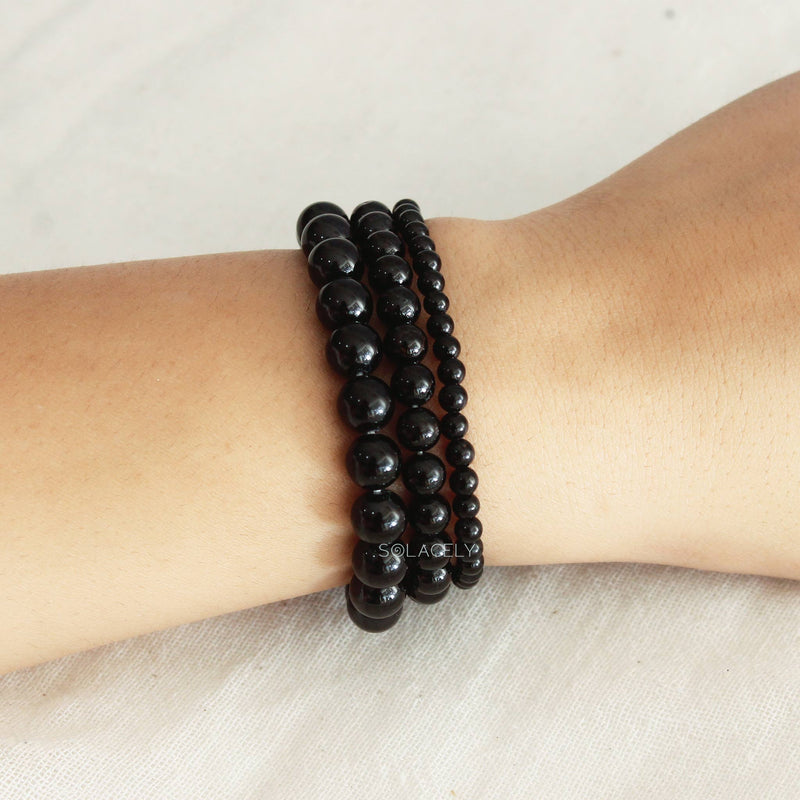
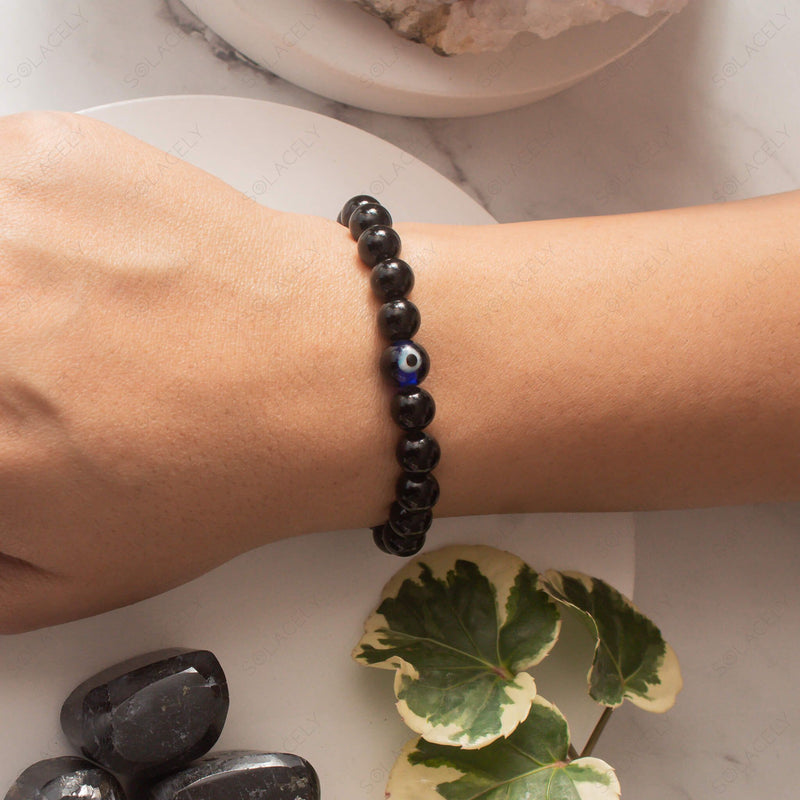
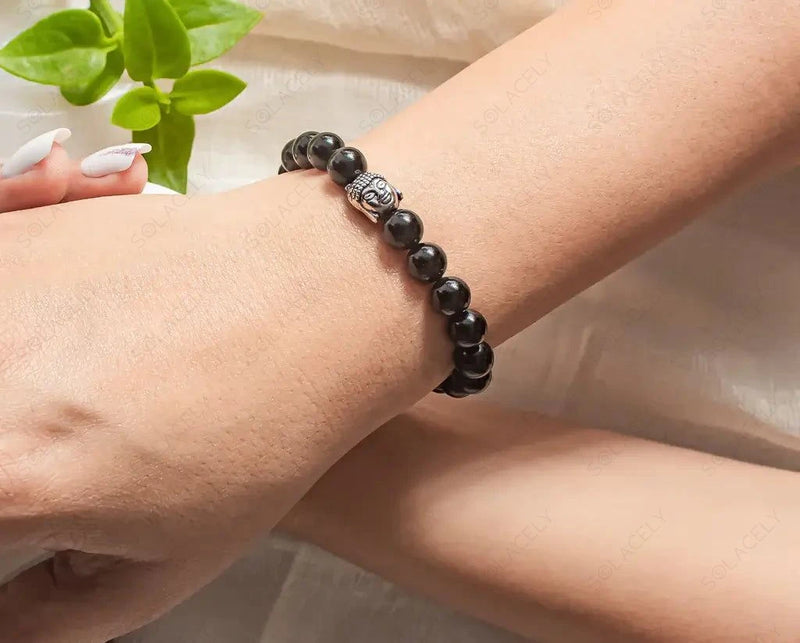
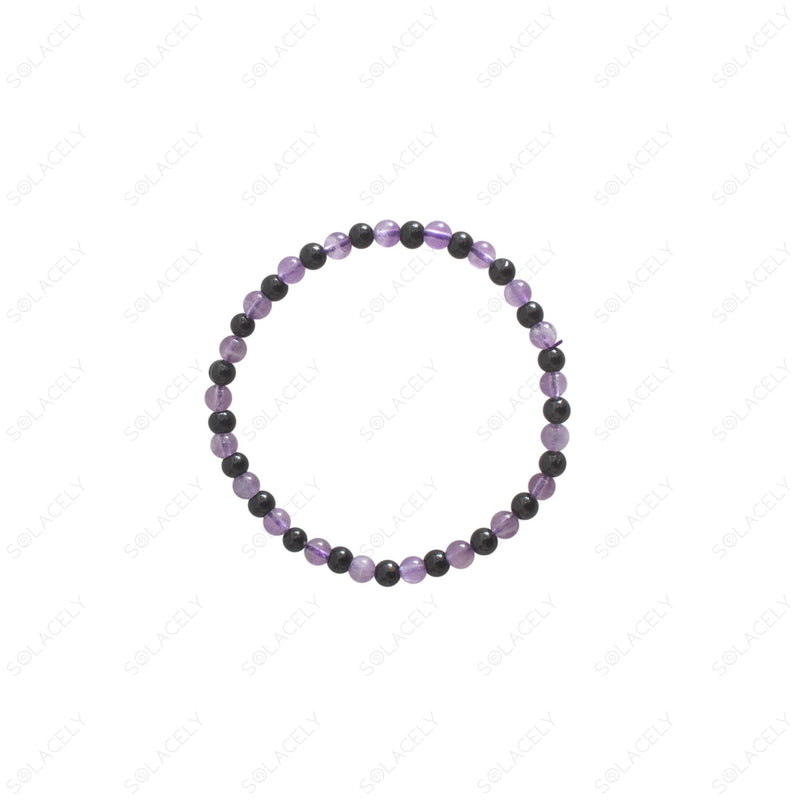
It happens at an ordinary moment. You reach for your bag, the cord gives, and black beads scatter across the floor, with a small catch in your chest. In crystal tradition, a black tourmaline bracelet that breaks is read as a stone that has carried a great deal with you and finished a chapter, and it is not a sign of bad luck.
There is a practical side too. The stone itself is rarely what gives way: the elastic cord tires first, and a few small habits decide how long it lasts.
Key takeaways
- In crystal tradition, a broken black tourmaline bracelet is read as a stone that has absorbed what it could hold, not as bad luck.
- Black tourmaline is 7 to 7.5 on the Mohs scale with no cleavage, so the beads usually survive. The elastic cord is what wears out.
- A common cause of a snapped cord is overstretching it every time you put the bracelet on.
- Water, body oils, lotion and perfume all tire elastic faster.
- Your beads can be kept, restrung, placed somewhere meaningful or let go.
- If bracelets keep breaking, check the fit first. One size too small means the cord is under strain all day.
First, the meaning many people hold
Many people who work with crystals read a broken black tourmaline bracelet as a stone that has done a lot of carrying. The traditional readings differ in detail, but they share a tone of gratitude rather than alarm, and none of them treats a bracelet breaking as a bad omen.
It absorbed what it could hold. Black tourmaline is long associated with drawing heavy energy away from the wearer. In that reading, a bracelet that breaks after a hard few months has simply reached its limit.
Its purpose is complete. Some traditions see stones as companions for a particular season. When the season closes, the stone releases you.
It took the hit for you. Black tourmaline is kept as a shield, and a shield that cracks is understood to have stood between you and something you did not need to carry.
It is a prompt to look at what you are carrying. Others take the moment as an invitation to pause. What have the last few months asked of you, and is there a weight you could set down now?
Whichever reading speaks to you, the common thread is thanks. The bracelet kept you company.
What wears out first: the cord
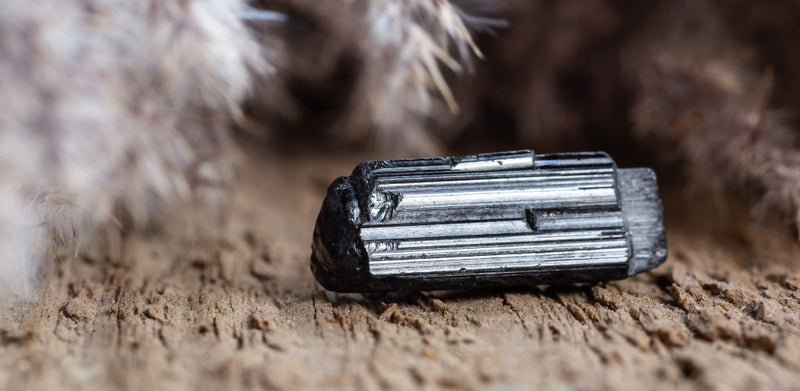
Black tourmaline, the black variety of tourmaline known as schorl, sits at 7 to 7.5 on the Mohs hardness scale and has no cleavage plane, which makes it one of the more durable beads you can wear every day. When a bracelet breaks, the beads are almost always whole. The cord is what has tired.
Tourmaline does have a slight brittleness, so a very hard knock can occasionally chip a bead at its drill hole. Far more often, the cord has simply reached the end of its working life.
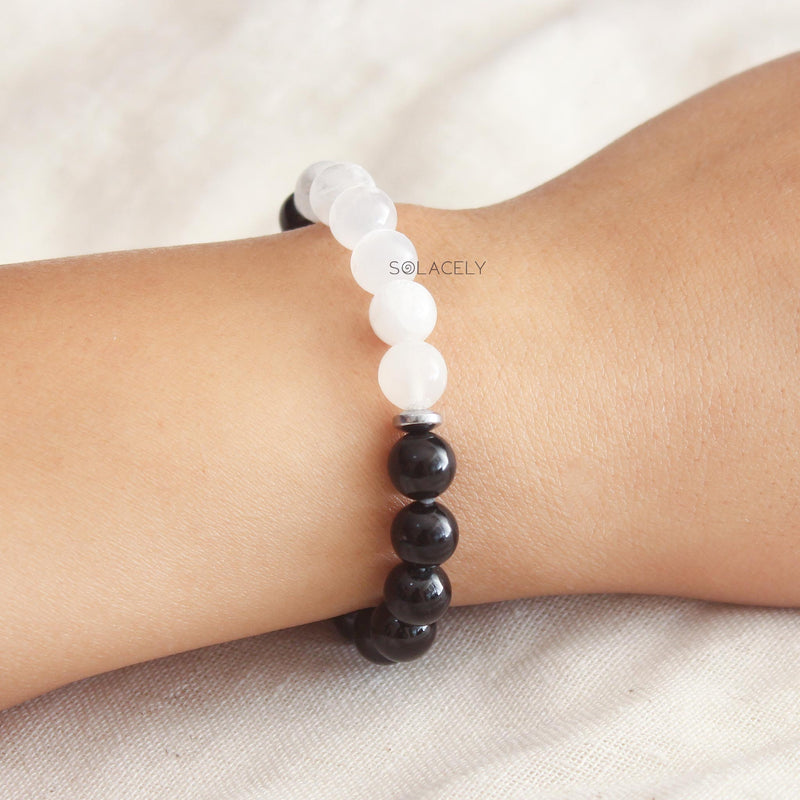
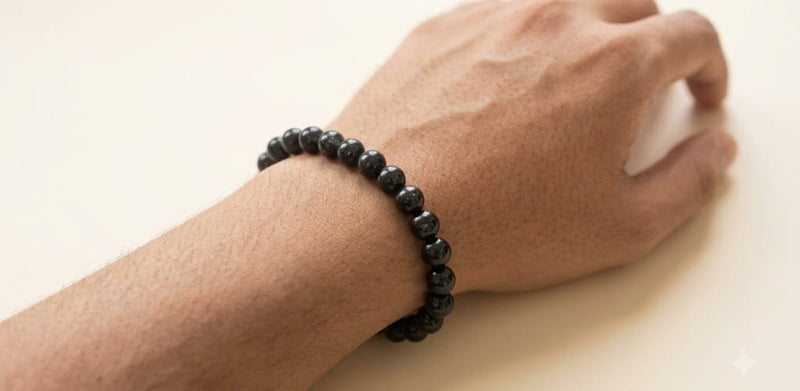
Elastic ages with use. Every stretch takes a little of its spring, so a cord lasts months rather than years with daily wear. Our black tourmaline bracelet is hand-strung on durable elastic cord with no clasp, which keeps it comfortable and easy to wear, and means the cord deserves a little care.
The one nobody tells you about: overstretching when you put it on
Most people put on a beaded bracelet the way they put on a hair tie: pulled wide over the whole hand in one quick movement. That is the hardest stretch the cord meets all day, and it happens every morning.
Try this instead. Fold your thumb in toward your palm and bring your fingers together, so your hand is as narrow as it can be. Then roll the bracelet gently over your knuckles rather than dragging it open. Take it off the same way. It takes a few seconds longer, and it is the single most useful habit for making a stretch bracelet last.
Water, oils and perfume
Elastic cord does not like being wet. Showers, swimming and a sweaty workout all soften it over time. Body oils, hand cream, sunscreen and perfume are harder on it still, because they sit on the cord and slowly break down its stretch. Take the bracelet off for water, and put it on last, once creams and scent have dried.
Why do crystal bracelets break?
Crystal bracelets break for the same handful of reasons, whatever the stone. Almost all come back to the cord: how far it is stretched, how often it gets wet, what touches it, and whether the bracelet fits the wrist it sits on.
| What happens | What it does to the cord | What helps |
|---|---|---|
| Pulling it wide over the hand | Stretches the elastic beyond its comfortable range every day | Narrow the hand and roll it over the knuckles |
| A bracelet that is too small | Keeps the cord under tension all day | Measure your wrist and choose the right size |
| Water, sweat, lotion and perfume | Softens and weakens the elastic over time | Take it off for water, put it on last |
Can both things be true?
Yes. A cord wearing out and a chapter closing can be the same event, described in two registers: the language of materials and the language of meaning. Neither cancels the other, and you do not have to choose between them to make sense of the moment.
You can know the elastic tired and still feel that the timing meant something. Keep whichever understanding serves you.
What to do with the beads
There is no single right thing to do with the beads from a broken bracelet. People keep them, restring them, place them somewhere meaningful, or let them go. Many like to hold them for a moment and say thank you before deciding.
- Keep them. A small dish or pouch on a bedside table keeps the stones close.
- Restring them. A local jeweller or bead shop can restring the beads, or you can do it at home with fresh stretch cord. Many people cleanse the beads first, and our guide on how to cleanse and charge crystals covers gentle methods.
- Place them somewhere. Near the front door or in the soil of a potted plant, letting the stones keep watch in a new form.
- Let them go. Some people return the beads to the earth with thanks. That is a complete ending too.
Whatever you choose, keep loose beads away from small children and pets.
Making the next one last longer
A stretch bracelet lasts longest when it is rolled on gently, taken off for water, put on after perfume and lotion, and stored flat rather than stretched over something. Each takes a moment, and together they add real life to the cord.
- Roll it on over a narrowed hand, and take it off for showers, swimming and the gym.
- Store it flat in a pouch or small dish. Hanging it over a hook or a bottle keeps the cord stretched.
- Cleanse gently. Moonlight, incense smoke and sound suit a strung bracelet. Avoid soaking it.
- Give it rest days. A cord that takes turns with others ages more slowly.
Our guide to the black tourmaline crystal bracelet covers wearing and caring for it in more depth.
When it keeps breaking: look at the cord and the fit first
If bracelets keep breaking, check the fit first. A bracelet one size too small is overstretched every time you put it on and stays under tension all day, so even a good cord gives out early. Measuring your wrist and choosing the right size usually settles it.
Our bracelets come in wrist sizes from S at 6 inches to XXL at 8 inches. Measure around your wrist with a soft tape, just above the wrist bone, and compare it with our size guide. If a bracelet leaves a mark or feels snug, the next size up will be kinder to the cord.
It is also worth looking at the pattern. Most repeat breaks trace back to one habit, such as the gym, swimming or daily perfume, that is easy to change.
Things that hold you for a season
Some things hold you for a season and then, quietly, they do not. A routine that got you through a hard winter. A bracelet you reached for every morning without thinking.
When something like that comes apart, it is fair to feel the small loss, and fair to notice what it helped you through. Gather what is left, say thank you, and decide in your own time what comes next.
The meanings described here reflect traditional and cultural crystal practice. They are not medical claims, crystals do not treat, prevent or relieve any condition, and they are not a substitute for professional healthcare. If you are struggling with stress, anxiety or low mood, please speak to a doctor. Loose beads are a choking hazard, so keep them away from small children and pets, and never place crystals in drinking water.
Sources
Frequently asked questions
About the author


Written by Chetna Sharma, crystal healing practitioner and co-founder of Solacely. Chetna has worked with healing crystals for over a decade and curates Solacely's protective stone collection.