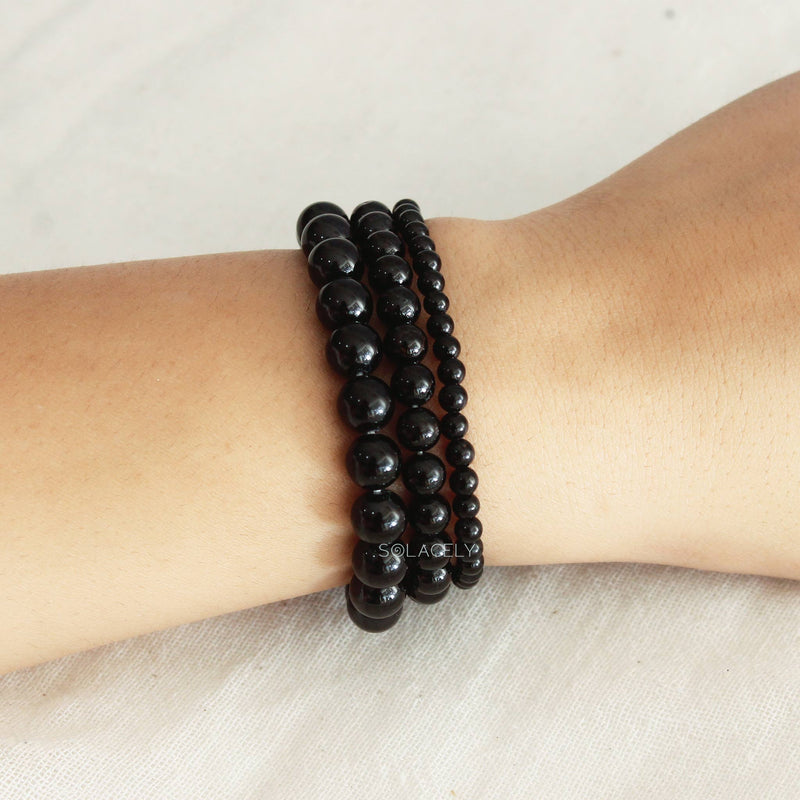
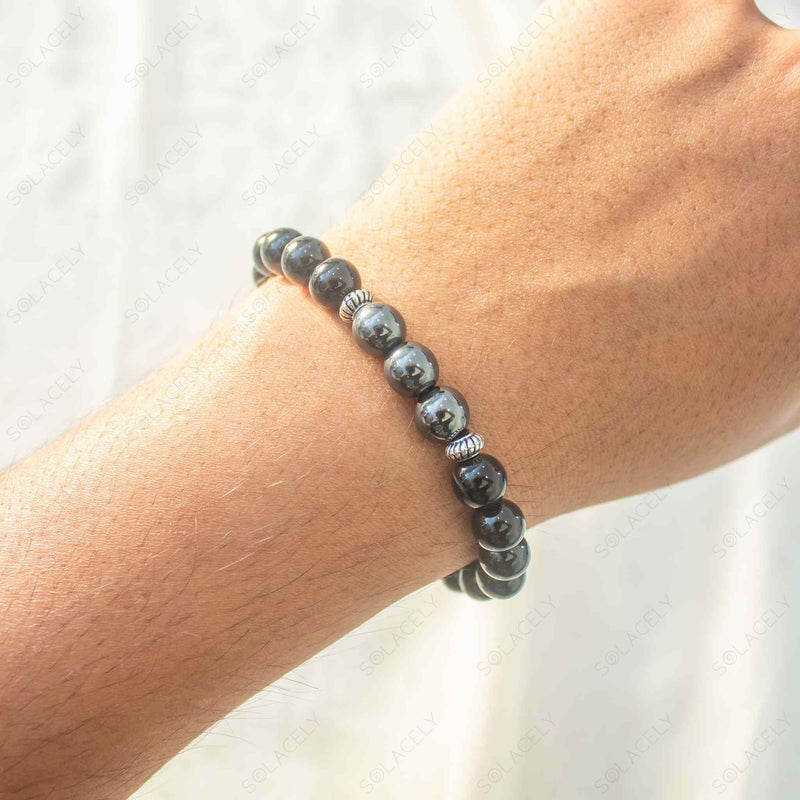
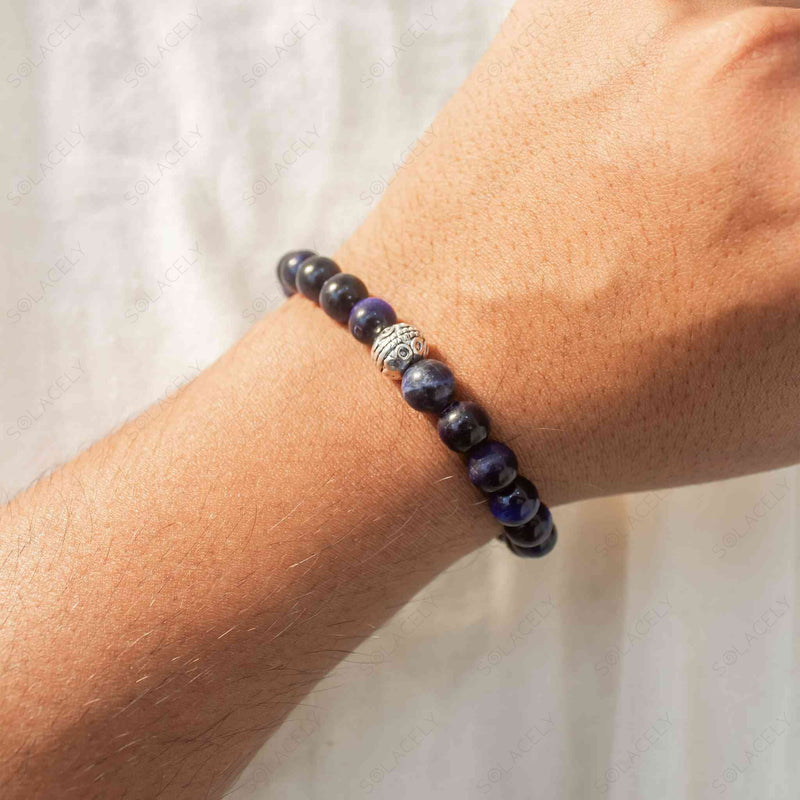
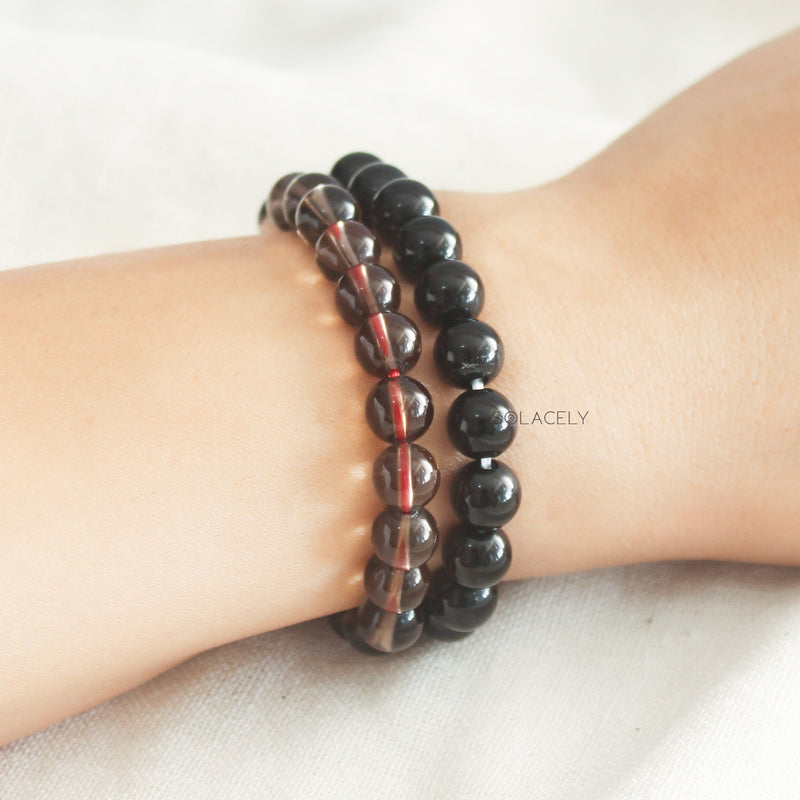
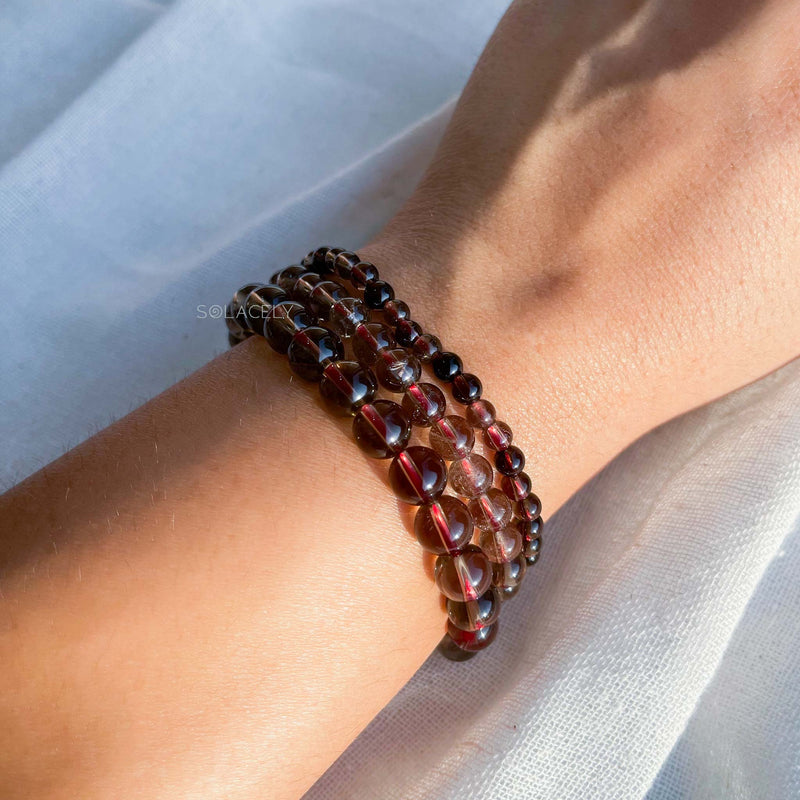
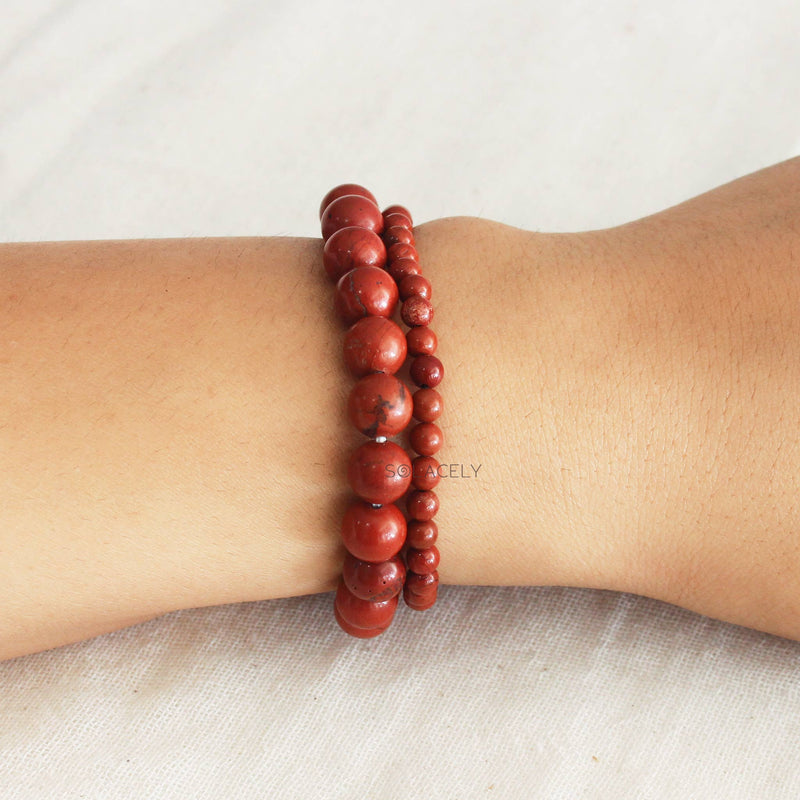
A black tourmaline crystal bracelet is a string of polished black tourmaline beads worn on the wrist, valued in crystal tradition as a stone of protection and grounding. People wear one to feel shielded from negativity, steadied through a stressful day, and connected to the present. It does not literally block energy or harm. Its honest value is as a wearable reminder and a grounding cue: the weight of the beads on your wrist keeps a calming, protective intention with you, understood as reflective self-care rather than a physical shield.
Key Takeaways
- A black tourmaline bracelet is polished black tourmaline beads worn on the wrist, linked in tradition with protection and grounding.
- People wear one to feel shielded from negativity and steadied through stress; its honest role is a wearable grounding cue, not a literal shield.
- Black tourmaline is a durable silicate mineral (Mohs 7 to 7.5), so a bracelet stands up well to everyday wear.
- Many wear it on the left wrist to receive calm and on the right to release tension, though either is fine; wear what feels right.
- These are traditional, belief-based associations, not medical or scientific claims; a bracelet is not a treatment for any condition.
What is a black tourmaline crystal bracelet?
A black tourmaline crystal bracelet is simply a bracelet made from beads of black tourmaline, usually smooth, round, polished stones strung on elastic or thread. Black tourmaline, also called schorl, is one of the most popular protective stones in crystal tradition, and wearing it as a bracelet is a way to keep that stone, and the intention it carries, with you all day.
People choose a black tourmaline bracelet mainly for its traditional associations with protection and grounding. The idea is that the stone helps you feel shielded from negativity, whether that is a draining environment, a stressful commute, or a difficult interaction, while keeping you calm, steady, and present. It is a favourite for daily wear precisely because a bracelet is always there on your wrist.
Understood honestly, the bracelet is a wearable focus for a protective, grounding intention, not a device that acts on the world. For more on the stone's protective tradition, our guide to crystals for protection goes deeper, and for its role in inner steadiness, our note on crystals for spiritual strength is a natural companion.
What is black tourmaline, really?
Before the lore, it helps to know the stone itself. Black tourmaline is a natural mineral, a complex boron silicate, and the black, iron-rich variety is properly known as schorl. According to Encyclopaedia Britannica, tourmaline is a group of related silicate minerals that occur in many colours, with schorl being the common opaque black form used in most black tourmaline jewellery.
It is a genuinely good stone for a bracelet on practical grounds. Tourmaline rates about 7 to 7.5 on the Mohs hardness scale, which makes it durable enough to stand up to daily wear without scratching easily, though like any bead it can chip if struck hard. Its deep, glassy black colour is also striking and easy to pair with anything, which adds to its everyday appeal.
One naturally interesting property is that tourmaline is pyroelectric and piezoelectric, meaning it can develop a small electrical charge when heated or put under pressure. This is a real mineral property, not a healing mechanism, and it is often misrepresented in marketing. It is worth enjoying as a fascinating fact about the stone, not as evidence that a bracelet acts on your body or energy.
Why people wear a black tourmaline bracelet
People reach for a black tourmaline bracelet for a handful of traditional reasons, all centred on feeling protected and grounded. The table below sums up the common motivations and the honest way each works.
| People wear it for | Traditional idea | Honest take |
|---|---|---|
| Protection | Shielding from negativity | A reassuring reminder of your own boundaries |
| Grounding | Feeling settled and present | The bead weight is a tactile anchor |
| Stress relief | Calm in draining situations | A cue to pause and breathe |
| Daily wear | Keeping the stone close | An always-there focus for intention |
Notice that each honest take is about your own mindset, not a force acting on the world. That is the sensible way to wear one: as a steady, reassuring cue. For pairing black tourmaline with a stone of growth and optimism, our guide to green aventurine and black tourmaline explores a popular combination.
How a black tourmaline bracelet honestly works
Let us be clear and honest, because a commercial page owes you that. There is no scientific evidence that black tourmaline blocks negative energy, absorbs electromagnetic radiation, or protects your body or aura in any physical way. A bracelet does not act on the world around you, and any claim that it shields you from harm or radiation is not supported by science.
What a bracelet genuinely offers is psychological and symbolic, and that is not nothing. Wearing an object you associate with protection and calm can give a real sense of reassurance and steadiness, and the physical weight of the beads on your wrist is a tactile anchor that reminds you to pause, breathe, and stay grounded. That reminder, repeated through the day, can genuinely help you feel calmer.
So the honest mechanism is a wearable cue, not a shield. If glancing at your bracelet or feeling it on your wrist prompts you to take a steadying breath in a stressful moment, that is a real, useful benefit, and it works through you, not through the stone. Understood that way, a black tourmaline bracelet is a meaningful, grounding accessory rather than a magic protector.
If you want to make your bracelet more personal, you can choose the stones and design details that best match your intentions. A custom crystal bracelet can be created around the qualities you want to keep close while wearing Black Tourmaline.
How to wear and care for a black tourmaline bracelet
Wearing a black tourmaline bracelet is simple, and the main question people ask is which wrist. In crystal tradition, the left wrist is the receiving side, so wear it there to take in calm and grounding, and the right is the giving or releasing side, so wear it there to let go of tension. Neither is a rule; wear it wherever feels comfortable and right to you, and our guide to which hand to wear your crystal bracelet explains the tradition in more detail.
If you are still choosing, our black tourmaline bracelet comes in 4mm, 6mm and 8mm, hand-cleansed and charged by singing bowl before it reaches you.
Caring for the bracelet keeps it looking its best for years. Black tourmaline is durable, but the bracelet's elastic or thread is not, so avoid yanking it on and off, keep it from hard knocks, and take it off before heavy activity, showering, or swimming, since water and soap can weaken the cord over time. A wipe with a soft, dry or barely damp cloth is enough to clean the beads.
If you like to cleanse your bracelet in the spiritual sense, black tourmaline is often reset with sound, moonlight, or a brief pass through incense smoke rather than soaking, which protects the stringing. Many people cleanse it after a particularly draining day. Our step-by-step on how to cleanse and charge crystals covers gentle methods that suit a bracelet.
Choosing a genuine black tourmaline bracelet
If you are buying a black tourmaline bracelet, a little care helps you get a genuine, well-made piece you will enjoy wearing. Real black tourmaline is a deep, opaque black, often with faint vertical striations running along the beads, a natural feature of the crystal rather than a flaw. It feels cool and solid in the hand, and it has a subtle glassy lustre when polished.
Every piece in our black tourmaline pieces is natural stone, with an authenticity certificate available.
Be a little cautious of very cheap, uniformly glossy black beads sold in bulk, since some are dyed glass or reconstituted stone rather than natural tourmaline. Buying from a seller who describes the material honestly is your best safeguard. Bead size is down to preference: chunkier beads make a bolder statement, while smaller ones sit more discreetly for everyday wear.
Above all, choose a bracelet whose weight and look you like, since the whole point is that you will actually wear it. A piece you reach for daily does its gentle, grounding job far better than a finer one left in a drawer.
Common mistakes with a black tourmaline bracelet
A few misunderstandings can lead to disappointment or a shorter-lived bracelet. Keep these in mind so yours stays a genuine, grounding part of your day.
- Expecting a literal shield. A bracelet cannot block energy or radiation. Wear it as a grounding cue, not a protective device.
- Treating it as medicine. Black tourmaline does not treat or cure any condition. It is not a substitute for medical or mental-health care.
- Soaking it in water. Water and soap weaken the elastic or thread, so keep the bracelet dry and cleanse it with gentle methods.
- Yanking it on and off. Rough handling stresses the cord. Roll it on and off gently to make it last.
- Believing the radiation claims. Tourmaline's pyroelectric property is a mineral fact, not proof it protects you. Enjoy it as trivia, not a benefit.
The properties described here reflect traditional and cultural belief around crystals. They are not medical claims, they are not claims about physical shielding, and they are not a substitute for professional healthcare. If you are managing a health concern, speak to a qualified practitioner.
Frequently Asked Questions
What is a black tourmaline bracelet good for?
A black tourmaline bracelet is traditionally worn for protection and grounding, to feel shielded from negativity and steadied through a stressful day. Honestly, its benefit is psychological and symbolic: the beads on your wrist act as a wearable cue to pause, breathe, and stay present, which can genuinely help you feel calmer. It does not physically block energy or radiation. Understood as a grounding reminder rather than a shield, it is a meaningful daily accessory.
Which wrist should I wear a black tourmaline bracelet on?
In crystal tradition, the left wrist is the receiving side, so wear your bracelet there to take in calm and grounding, and the right wrist is the giving or releasing side, so wear it there to let go of tension. Neither is a strict rule, and there is no scientific basis for either, so wear it on whichever wrist feels comfortable and right to you. Consistency and comfort matter more than the side.
Does black tourmaline really protect you?
There is no scientific evidence that black tourmaline blocks negative energy, absorbs radiation, or protects you physically. Its protective reputation is a traditional, symbolic one. What is real is the reassurance of wearing something you associate with steadiness and boundaries, which can help you feel calmer and more grounded. So it protects in a psychological sense, as a comforting reminder, not as a literal barrier. For real fear or distress, lean on trusted support too.
Can a black tourmaline bracelet block EMF or radiation?
No. Despite common marketing claims, there is no evidence that black tourmaline blocks electromagnetic fields or radiation. Tourmaline does have a genuine pyroelectric property, developing a small charge when heated, but that mineral fact does not translate into shielding your body from EMF. Please do not rely on a bracelet for radiation protection. Enjoy it as a grounding accessory with an interesting mineralogy, not as a protective device.
How do I care for a black tourmaline bracelet?
Black tourmaline is durable at about 7 to 7.5 on the Mohs scale, but the stringing is the weak point, so avoid yanking it on and off, keep it from hard knocks, and remove it before showering, swimming, or heavy activity, since water weakens the cord. Wipe the beads with a soft, dry or barely damp cloth. To cleanse it spiritually, use sound, moonlight, or incense smoke rather than soaking, which protects the elastic.
Is a black tourmaline bracelet a medical treatment?
No. A black tourmaline bracelet is not a medical device and does not treat, cure, or prevent any physical or mental-health condition. Its value is as a traditional, grounding accessory and a personal reminder to stay calm and present, which is a form of self-care, not medicine. If you have a health concern, please see a qualified doctor or mental-health professional, and treat any crystal bracelet as a gentle, supportive supplement to real care.
Sources
- Encyclopaedia Britannica - Tourmaline, mineral group, schorl, and properties: https://www.britannica.com/science/tourmaline
- Gemological Institute of America - Tourmaline description and durability: https://www.gia.edu/tourmaline
- National Center for Complementary and Integrative Health (NIH) - Meditation and Mindfulness: What You Need To Know: https://www.nccih.nih.gov/health/meditation-and-mindfulness-what-you-need-to-know
About the author


Written by Chetna Sharma, crystal healing practitioner and co-founder of Solacely. Chetna has worked with healing crystals for over a decade and curates Solacely's protective stone collection.